Table of content
Table of content
Oral diseases affect nearly 3.7 billion people — roughly half the planet — and they are the most common group of noncommunicable conditions in the world.1 Most of them start without any pain at all. By the time something hurts enough to make you book an appointment, it has usually been building quietly for a while.
That’s the useful thing to know before you read the list. Almost every problem below has an early stage that is easier, cheaper and less invasive to deal with than the late one — and the early stage is nearly always silent.
The 27 conditions below are the common dental problems dentists actually see day to day, grouped by type, with what causes each one and how it’s treated. Some you’ve probably had. Some you might have right now without knowing.
Decay, cavities and enamel damage
The first five are the ones almost everyone meets at some point. They also share a pattern: each has a quiet early stage and a loud late one.
1. Tooth cavity (dental caries)
Plaque forms on the tooth surface and converts the sugars in food and drink into acid, which destroys the tooth over time.1 Untreated dental caries in permanent teeth is the single most common health condition in the world according to the Global Burden of Disease 2021.1
Early on there is often no pain, which is the whole problem. A small cavity gets a filling. One that has reached the pulp needs a root canal or a crown. The longer it runs, the bigger the job — see cavity treatment and how to fix tooth decay.
2. Enamel demineralisation
Before a cavity actually forms, enamel starts losing minerals — you may notice chalky white patches. This is the one stage on this whole list that can still be reversed, with fluoride and better brushing habits. Most people don’t know they’re at this point, because nothing hurts yet. More in our guide to tooth enamel health.
3. Dental erosion
Different from decay. Erosion isn’t driven by bacteria — it’s acid from fizzy drinks, fruit juice, frequent vomiting or reflux dissolving enamel directly. Teeth look worn and more yellow, sensitivity sets in, and the damage adds up every time the acid hits.
Treatment starts with removing the acid source. Depending on how much enamel has gone, composite bonding, veneers or crowns rebuild what’s left.
4. Tooth sensitivity
The sharp, brief pain from hot coffee or cold water. Usually thin enamel, a root surface exposed by receding gums, or a hairline crack letting temperature reach where it shouldn’t. Desensitising toothpaste helps mild cases; where gum recession is the cause, a graft is sometimes what actually resolves it. Our article on the six common causes of tooth sensitivity goes through each one.
5. Tooth abscess
A pocket of infection at the root tip or in the gum that won’t clear on its own. Throbbing pain, swelling, a raised temperature and a foul taste are the usual signs. It needs draining, antibiotics, and the underlying cause treated — root canal or extraction. This is one to get seen promptly rather than manage at home; see tooth infection treatment and dental cyst treatment.
Gum and bone disease
This group is the one that costs people teeth, and it’s also the one that stays painless the longest.
6. Gingivitis
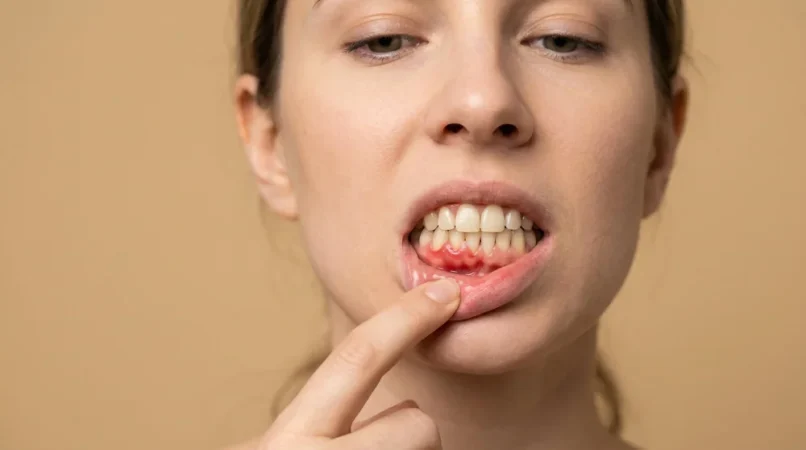
Gums that bleed when you brush, look red or swollen, and sometimes cause bad breath — but don’t actually hurt.1 Plaque sitting along the gumline is almost always behind it. Because it’s painless, people can have it for years without noticing. A professional clean and better home technique reverses it at this stage, which is why catching it here matters so much.
7. Periodontitis
What gingivitis becomes when it’s left alone. The infection moves below the gumline; in its more severe form the gum comes away from the tooth and the supporting bone, and teeth become loose.1 Severe periodontal disease is estimated at more than 1 billion cases worldwide, with poor oral hygiene and tobacco use as the main risk factors.1
The signs are loose teeth, persistent bad breath, gums visibly pulling back and deep pockets around the teeth. Treatment is scaling and root planing to clean below the gumline, then keeping it stable. The earlier this is caught, the more of the supporting bone stays where it is.
8. Gum recession
Gum tissue pulls away from the tooth, exposing the root. Roots are softer than enamel, decay faster, and are more sensitive. Causes vary — brushing too hard is a surprisingly common one, alongside gum disease, grinding, or naturally thin gum tissue. Mild cases respond to technique correction; advanced recession usually needs a graft. See receding gums and gum graft cost in the UK.
9. Bone loss in the jaw
Jawbone shrinks where there’s no tooth root stimulating it — after an extraction, after long-standing gum disease, sometimes under an ill-fitting denture. Implants become harder to place without grafting first. This is far easier to prevent than to rebuild, which is the argument for replacing a missing tooth sooner rather than later. Our guide to rebuilding jawbone covers the options.
10. Tartar (calculus)
Hardened plaque. Once it has mineralised onto the tooth, brushing doesn’t touch it — only a professional scale removes it. It sits at the gumline and between teeth feeding the bacteria that cause gum disease, and it builds on itself. That’s the reason regular cleans exist. More in how to clean tartar from teeth.
Structural and injury-related problems
These six are mechanical rather than bacterial — something has cracked, been pushed, blocked, or is pulling where it shouldn’t.
11. Broken or chipped teeth
From biting something hard, a knock, or an existing crack that finally gives way. A minor chip may just need smoothing or bonding. A larger fracture may mean a crown, or a root canal first and then a crown. A vertical root fracture running lengthwise through the root is the one exception — that usually ends in extraction and replacement. See how to fix a chipped front tooth.
12. Bruxism (teeth grinding and clenching)
Most people who grind at night have no idea they do it. Around 1 in 10 people grind their teeth while sleeping, and up to 1 in 5 clench while awake.2 Signs include ridges on the inside of the cheeks, tooth-prints on the sides of the tongue, worn or cracked teeth, aching jaw muscles and routine headaches.2
A custom night guard takes the load off the teeth while the rest is addressed.3 Stress is usually somewhere in the mix, which is harder to sort but worth the effort. Our article on bruxism damage to veneers and implants covers what it does to restorations.
13. Impacted wisdom teeth
Third molars without enough room to come through properly, stuck in the jaw or gum, partially or fully. Pain, swelling, recurring infections, and sometimes damage to the tooth next door. Many need to come out surgically. Some sit quietly for years and can simply be monitored with an X-ray — that’s a decision for the imaging, not for guesswork. See wisdom teeth recovery.
14. Impacted teeth other than wisdom teeth
Wisdom teeth get the attention, but canines and premolars can also fail to erupt — blocked by a neighbouring tooth, sitting at the wrong angle, or with no space to come into. It’s often picked up on a routine X-ray in someone who has no symptoms at all. Treatment ranges from creating space orthodontically and guiding the tooth into place, to surgical exposure. More in impacted tooth treatment.
15. Dry socket
A complication after an extraction where the blood clot protecting the healing socket is dislodged or dissolves. It typically starts two to four days after the procedure rather than immediately, which catches people out. A medicated dressing from the dentist is what settles it — painkillers alone help but don’t resolve it. Smoking is the single biggest risk factor, covered in smoking after a tooth extraction.
16. Restricted frenum (tongue tie / lip tie)
The frenum is the small fold of tissue connecting the tongue to the floor of the mouth, or the lip to the gum. When it’s too tight it limits movement, and in adults it can gradually pull the gum away from the front teeth or hold a gap open between them. A frenectomy — releasing the band with a blade or a laser — is a short procedure under local anaesthetic. Full detail in our guide to frenectomy.
Cosmetic and aesthetic problems
Appearance is the reason most people first book, and in each of these four the treatment depends on the underlying cause rather than the look itself.
17. Tooth discolouration and staining
Surface stains from coffee, tea, wine and tobacco come off with whitening or a professional clean. Staining inside the tooth — from old tetracycline use, trauma or fluorosis — behaves differently and doesn’t bleach out. Veneers or crowns are what change the colour there. See tooth discolouration.
18. Yellow teeth
Usually a combination of surface staining and natural dentine showing through thinner enamel — dentine is yellow, and enamel thins with age. Whitening handles the staining. Bonding or veneers handle the structural side when the enamel itself has worn. Smoking, certain drinks and simply getting older are the main contributors; more in yellow teeth to white teeth.
19. Small teeth (microdontia)
Teeth that are proportionally small for the jaw, leaving gaps and an uneven look. Composite bonding or veneers build them out to a more natural proportion — often without drilling the underlying tooth at all, which is the part most patients don’t expect.
20. Gummy smile
Too much gum showing above the teeth when you smile. The cause varies: excess gum tissue, a short or overactive upper lip, where the teeth sit in the jaw, or a skeletal difference. The treatment depends entirely on which of those it is — gum contouring, lip repositioning, botulinum toxin in the upper lip muscle, or orthodontics. Identifying the cause before committing to a treatment is the whole game here. See gummy smile treatment.
Breath, taste and saliva
Two problems that people tend to treat as social embarrassments rather than dental signals. Both are worth mentioning at a check-up.
21. Dry mouth (xerostomia)
Saliva is the mouth’s own defence — it rinses, buffers acid and carries minerals back to the enamel. When it drops, decay risk rises. The NHS lists the main causes as dehydration, medicines, breathing through the mouth at night, anxiety, cancer treatment and oral thrush; a dry mouth that persists can also point to conditions such as diabetes or Sjögren’s syndrome.4
Practically: sip water through the day, keep some by the bed, and check the leaflet of any medicine you take for dry mouth as a side effect.4 Tell your dentist about it, because it changes how often you need checking.
22. Bad breath and a persistent bad taste
Bad breath — halitosis — is very common and usually treatable at home.5 The NHS advice is brushing teeth and gums twice a day for two minutes, cleaning the tongue once a day with a scraper, cleaning between the teeth daily, keeping check-ups, and keeping dentures clean and out overnight.5
A persistent bad or metallic taste that brushing doesn’t shift is a different signal. There’s usually something behind it — an abscess, a gum infection, a failing old filling, or dry mouth from medication. That one is worth investigating rather than masking. More in bad breath causes and treatment.
Bite, alignment and jaw problems
People come to these four for the appearance and stay for the function. Uneven wear, jaw strain and areas that are hard to clean all trace back to how the bite meets.
23. Malocclusion (crooked or misaligned teeth)
When the bite doesn’t line up — overbite, underbite, crossbite, crowding. People focus on the look, but the functional side matters too: uneven enamel wear, jaw strain, and areas that are genuinely hard to clean. Braces or clear aligners handle most cases. Where the jawbones themselves are out of position, surgery is sometimes part of the plan — less often than people assume. See crooked teeth.
24. Buck teeth (overjet)
Upper front teeth that protrude horizontally beyond the lower ones. An oral habit carried on too long is one common cause; a jaw discrepancy is another. Mild to moderate cases respond well to orthodontics. When the skeletal position is the driver, surgery is sometimes part of the treatment. Options in fixing buck teeth.
25. Tooth gap (diastema)
A space between teeth, most often the upper front two. Sometimes it’s a tooth-to-jaw size mismatch, sometimes a frenum sitting too low. Bonding, veneers or orthodontics can close it. And some gaps are perfectly fine to leave alone — if there’s no structural issue and it doesn’t bother you, there’s no clinical reason to treat it. See tooth gap treatment.
26. TMJ disorder (TMD)
Problems with the temporomandibular joint, the one connecting the jaw to the skull. Clicking or locking on opening wide, pain in front of the ears, headaches, earache, difficulty chewing. Often tied to grinding, stress, or a bite that isn’t quite right.
First-line treatment is conservative — a splint, physiotherapy, a softer diet for a while, and addressing the stress component.2 Surgery is rarely the answer and almost never the first step. See TMJ disorders and our TMJ treatment page.
Missing teeth
The end point of most of the problems above, and the one where acting sooner changes the options available later.
27. Missing teeth
More common than most people expect: the WHO estimates complete tooth loss at almost 7% of people aged 20 and over, rising to 23% among those aged 60 and over.1 Losing teeth is generally the end point of a long history of decay or gum disease, though trauma accounts for some of it.1
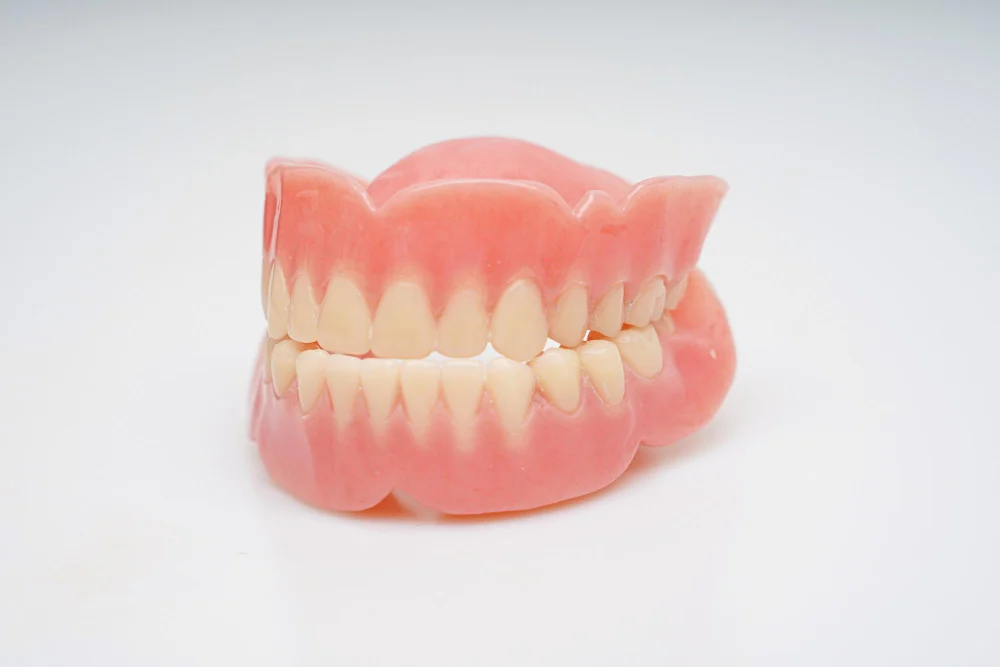
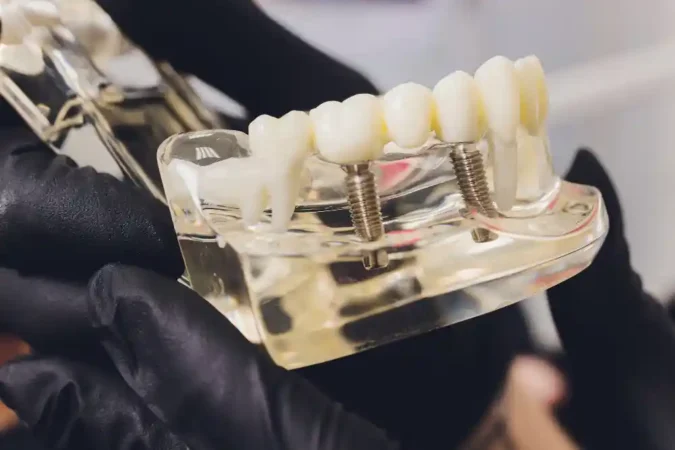
A gap isn’t only cosmetic. The teeth either side drift into the space over time, the bone beneath resorbs without a root stimulating it, and chewing becomes uneven. Implants are the most complete replacement — they sit in the bone and function like natural roots. Bridges and partial dentures are the alternatives when implants aren’t suitable. None replicates the original exactly, but all three are a better position than leaving the space. Compared side by side in dental bridge vs implant.
When to see a dentist urgently
Most of the list above can wait for a normal appointment. A few can’t, and it’s worth knowing which.
- Facial swelling from an abscess, particularly if it’s spreading towards the eye or the neck — same-day care.
- A knocked-out adult tooth — there’s roughly an hour to get it reimplanted if it’s kept clean and moist. Handle it by the crown, not the root.
- A severe crack extending into the root, or bleeding after an extraction that won’t settle.
- Toothache without swelling can usually wait for the next available slot — but book it, because it rarely resolves by itself.
How are dental problems diagnosed?
Clinical examination plus X-rays as the baseline. Digital X-rays show what the eye can’t — decay tucked between teeth, bone levels, root anatomy, problems that haven’t declared themselves yet. 3D CBCT scans go further for complex cases: implant planning, impacted teeth, root infections, orthodontic assessment.
At DentSpa every new patient gets a full examination with the relevant imaging and a written plan that separates what’s urgent from what can wait. You can see the imaging setup on our facilities page and the specialists on our doctors page.
Can dental problems heal on their own?
One can: very early enamel demineralisation can remineralise with fluoride. Everything else on this list needs treating — decay spreads, gum disease advances, lost bone doesn’t regrow.
One thing worth knowing: a toothache that disappears on its own usually means the nerve has died, not that the problem has gone. That’s the most commonly misread signal in dentistry, and the reason a pain that stops is still worth an appointment. Our article on a failed root canal covers what that looks like after treatment.
How to prevent common dental problems
The NHS list is short and it hasn’t changed in years.6
- Brush twice a day with fluoride toothpaste.6
- Clean between the teeth every day with floss or interdental brushes.6
- Cut down on sugar — and on how often, not just how much. Frequency is what drives the acid attacks.6
- Keep the check-up interval your dentist sets. It isn’t six months for everyone: the NHS says it can be anywhere from 3 months to 2 years depending on your risk, and good oral health may mean only every 12 to 24 months.7
Add a night guard if you grind, and treat reflux if it’s eroding enamel. That’s genuinely most of it. The gap between knowing this and doing it consistently is where the majority of the 27 problems above begin.
Dental treatment in Turkey: why patients choose Istanbul
Istanbul draws a steady stream of UK patients, and cost is only part of it. For a list this broad, what actually matters is whether the clinic has the right specialist for your problem rather than one generalist covering all 27.
- A department for each area — periodontics, endodontics, oral surgery, orthodontics, restorative and cosmetic. Your case goes to whoever specialises in it.
- Accreditation you can check yourself. DentSpa appears on the public Global Healthcare Accreditation register, where it is the only dental clinic listed.8 The detail is in our article on being a GHA-certified dental clinic in Turkey.
- Recognition from outside the clinic — the title of best dental clinic in Europe in odontology, awarded by The European Awards in Medicine,9 and the Straumann Achievement Award.
- A written, itemised plan before anything starts, and an after-treatment team that follows up once you’re home.
On cost: it depends entirely on which of the problems above you have and how far it has gone. Our dental treatment prices in Turkey page sets out UK, US and Turkish ranges treatment by treatment, and the wider picture is in our guide to dental tourism in Turkey. A figure for your own case comes from a written quote after your scans are reviewed, not from a table.
One thing that applies wherever you’re treated: keep a local dentist for routine checks. Care abroad and care close to home work together.
If something on this list sounds familiar, the most useful next step is a proper look with current imaging. Send your X-rays, or just describe what you’re noticing, through our free online consultation — one of our specialists will tell you straight what’s likely going on, what it would involve, and whether it needs dealing with now or can wait.
Frequently asked questions
What are the most common dental problems?
How many people have dental problems?
Can dental problems heal on their own?
When is a dental problem an emergency?
How are dental problems diagnosed?
How do you prevent common dental problems?
How often should I have a dental check-up?
Is grinding my teeth actually a problem?
Why does a dry mouth matter for my teeth?
How much does dental treatment cost in Turkey?
Sources
- World Health Organization — Oral health fact sheet. who.int
- Leeds Teaching Hospitals NHS Trust, Leeds Dental Institute — Clenching and grinding your teeth (bruxism). leedsth.nhs.uk
- NHS — Teeth grinding (bruxism). nhs.uk
- NHS — Dry mouth. nhs.uk
- NHS — Bad breath. nhs.uk
- NHS — Take care of your teeth and gums. nhs.uk
- NHS — Dental check-ups. nhs.uk
- Global Healthcare Accreditation — accredited and certified organizations register. globalhealthcareaccreditation.com
- The European Awards in Medicine — DentSpa Clinic, European Award in Medicine in Odontology. theeuropeanawards.eu














 70%
70%