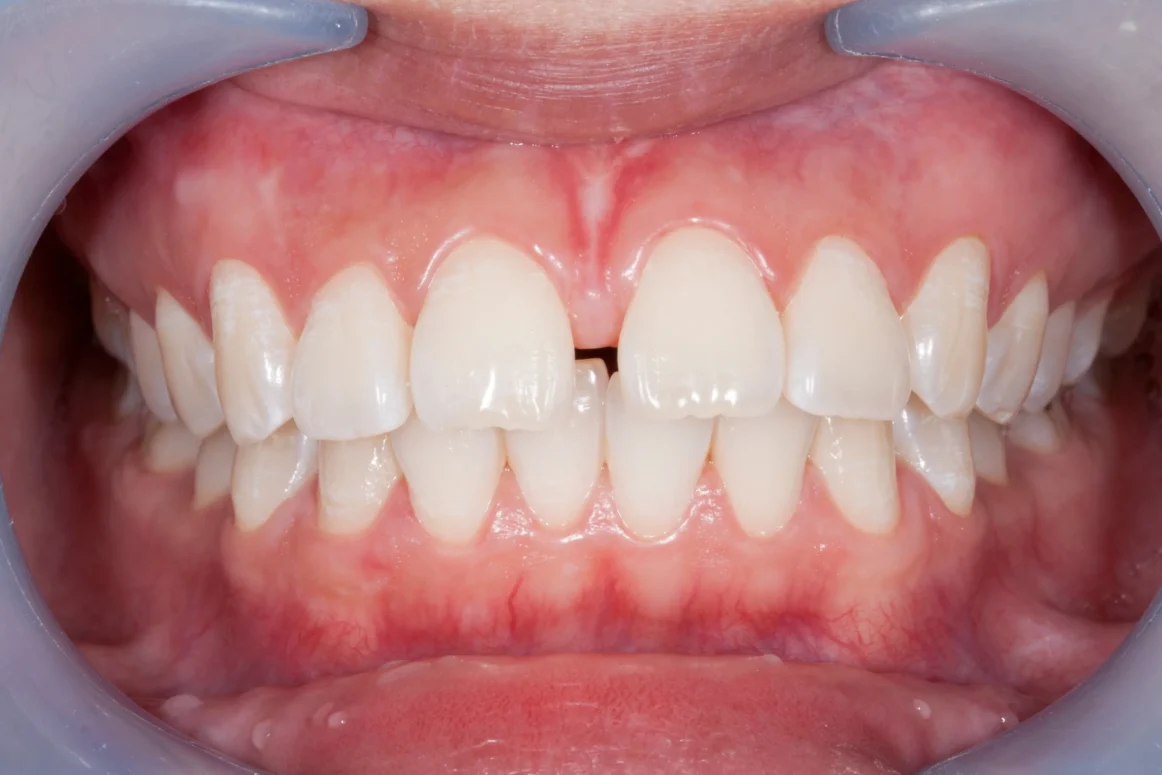
Quick answer: A tooth gap — known clinically as a diastema — is simply a space between two teeth, most often the two upper front teeth. Many gaps are harmless and some people keep them by choice. If you want to close one, the main options are composite bonding, veneers, or clear aligners/braces, with the right choice depending on what caused the gap in the first place.
This guide explains why gaps form, when they matter, how each treatment works, and what closing a tooth gap costs in the UK compared with Turkey.
What is a tooth gap?
A diastema is a space or gap between two teeth.¹ It can appear anywhere, but the most common is the midline diastema — the gap between the upper front teeth. Gaps are very common, and in children they’re often a normal part of growth that closes as the adult teeth come through. In adults, whether to treat a gap is usually a personal choice rather than a medical necessity — unless it’s caused by an underlying problem.
What causes a gap between teeth?
Tooth gaps form for several reasons, and identifying the cause matters because it changes the treatment:¹
- Teeth size vs jaw size — small teeth in a larger jaw leave spaces.
- Missing or undersized teeth — gaps open up when a tooth is small, absent, or lost.
- A large labial frenum — the small fold of tissue connecting your upper lip to your gums can sit low and force a gap between the front teeth.
- Tongue thrusting — pushing the tongue against the front teeth when swallowing can gradually create spaces.
- Gum disease — bone loss due to gum disease can let teeth drift and gaps appear in adults.
- Habits — thumb-sucking and similar childhood habits can pull teeth forward.
Because a gap from gum disease is very different from a gap caused by a low frenum or a missing tooth, an examination is the only reliable way to plan treatment.
Do tooth gaps need to be fixed?
Not always. A small gap with healthy teeth and gums is usually harmless, and plenty of people prefer to keep theirs. Treatment makes sense when the gap bothers you cosmetically, affects your speech or bite, or is a sign of something that needs attention — such as active gum disease or a missing tooth that’s letting the others drift.
How to close a tooth gap: your options
The best option depends on the size of the gap and its cause.
Composite bonding
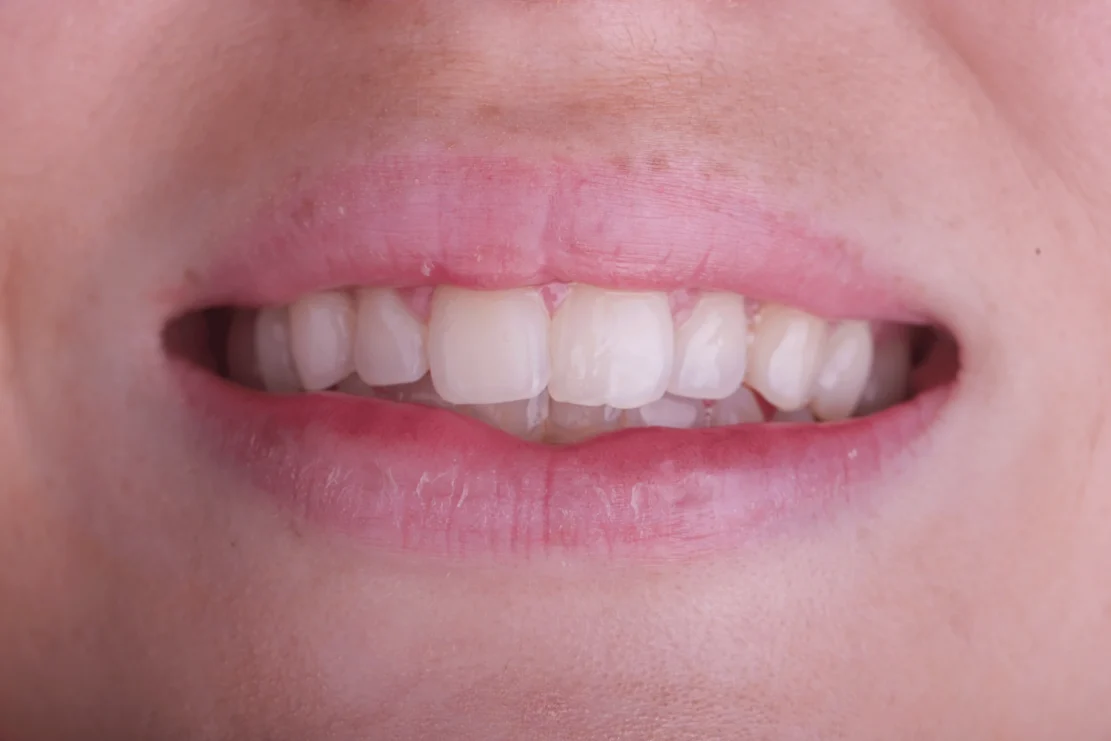
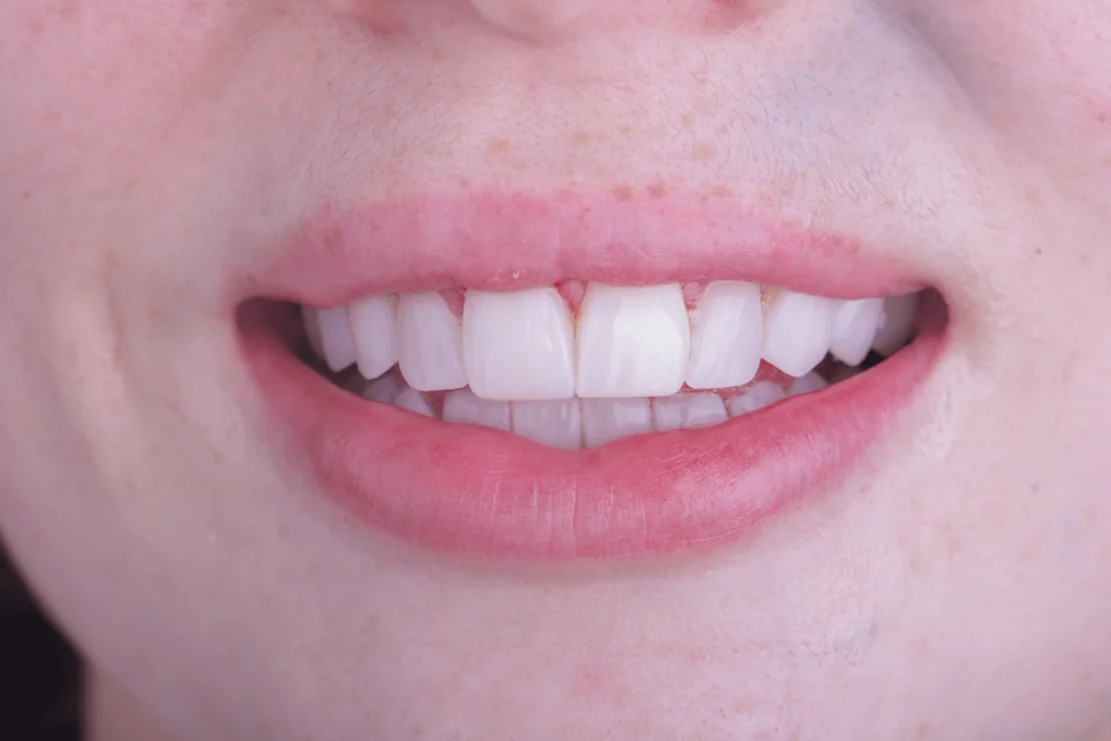
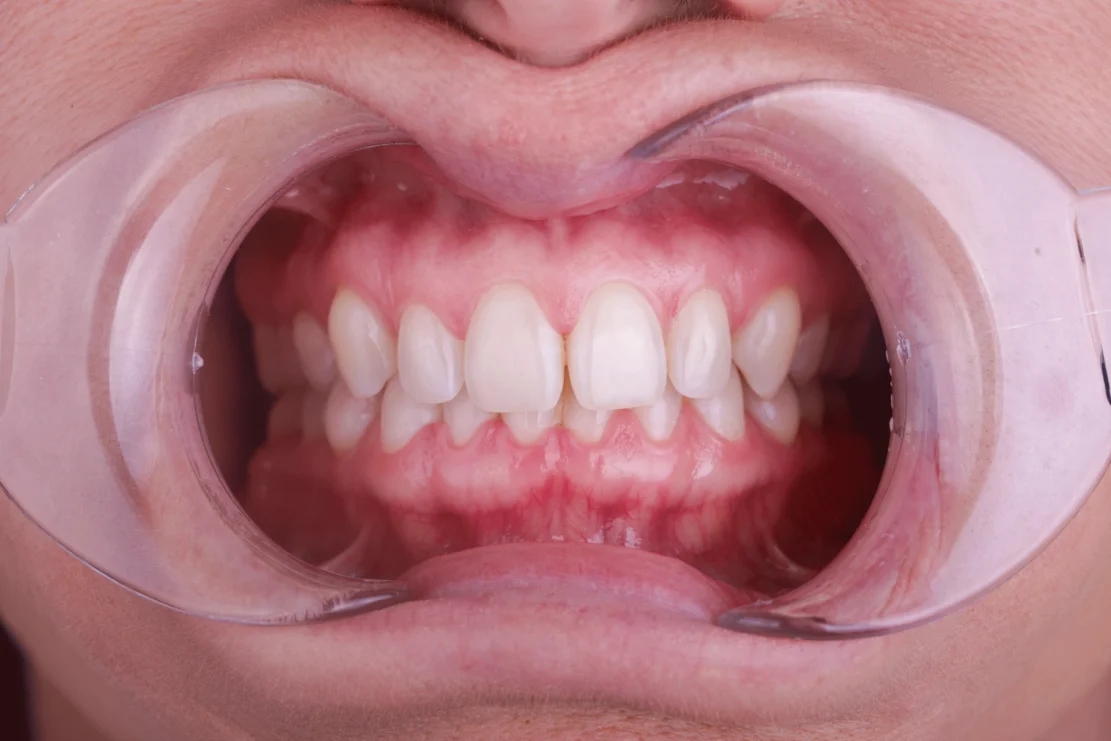
For small to moderate gaps, tooth-coloured resin is added to the sides of the teeth to close the space, usually in a single visit. It’s quick, conservative and more reversible than veneers. If you’re choosing between resin and porcelain, our guide to composite bonding versus veneers compares them.
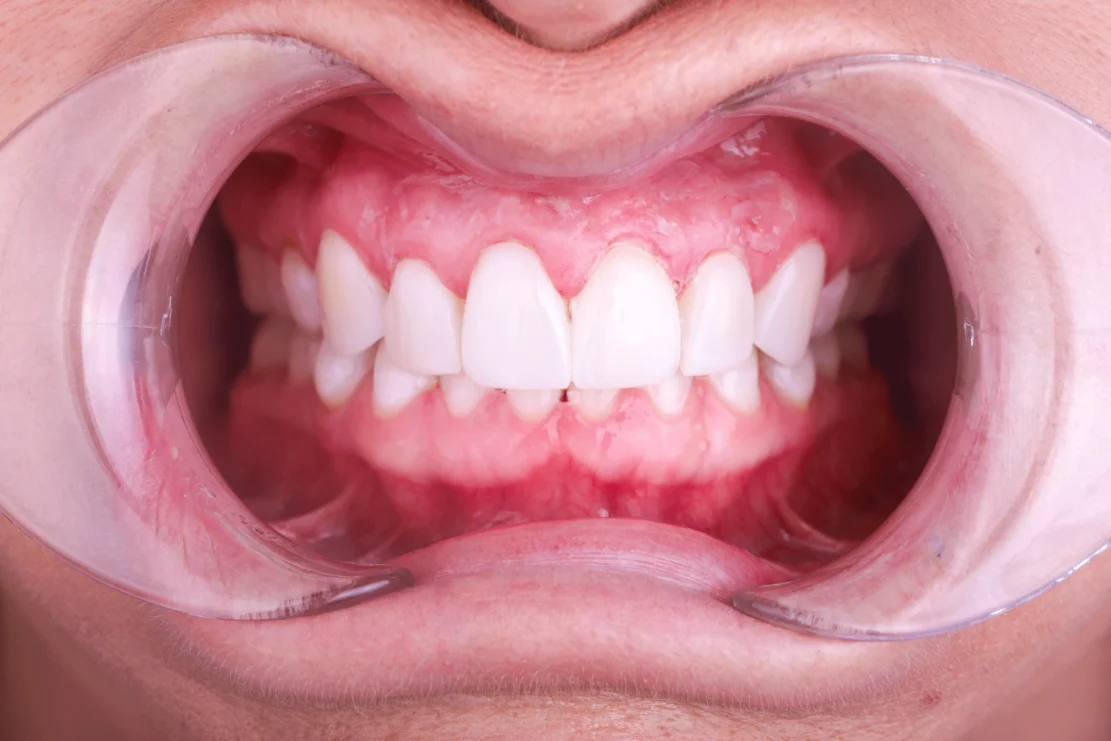
Before & After
Veneers
Thin porcelain shells bonded to the front of the teeth can close a gap and reshape the smile at the same time, which suits people who also want to change tooth colour or shape. See materials and process on our veneers in Turkey page.
Clear aligners or braces
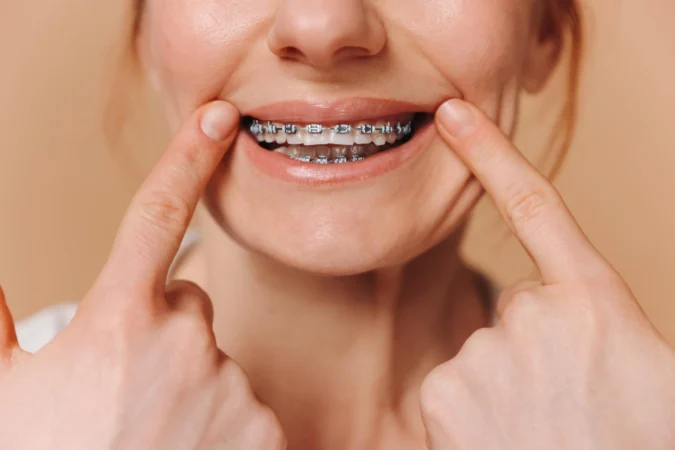
If the gap is part of wider spacing or alignment, moving the teeth is often the better long-term fix than masking the space. Clear aligners gently close gaps while keeping treatment discreet — more in our guide to affordable clear aligners and the broader options for crooked or misaligned teeth.
Treating the cause
- If a large labial frenum is the culprit, a minor procedure called a frenectomy may be done before or alongside gap closure so it doesn’t reopen.
- If the gap is from a missing tooth, the space is usually closed by replacing the tooth — for example with a dental bridge or an implant — rather than just filling it.
How to fill a gap after a tooth extraction
This is a slightly different situation. After an extraction, you generally shouldn’t simply “fill” the empty space cosmetically — leaving a gap can let neighbouring teeth tilt and the opposing tooth over-erupt over time. The usual options to restore the space are a dental implant, a bridge, or a partial denture. Your dentist will advise how long you can safely wait and which replacement suits the site. A temporary option can hold the space while a permanent restoration is planned.
What affects the cost of closing a tooth gap?
Cost depends on the method and the number of teeth involved. Bonding a single small gap sits at the lower end; veneers or a course of aligners cost more. Private cosmetic dentistry is expensive in the UK, which is why many patients compare prices abroad. At DentSpa, gap-closure treatments — bonding, veneers and clear aligners — are offered at up to around 70% less than typical UK private prices, with the exact figure depending on your case, so a personalised quote follows an assessment.
DentSpa was named Best Clinic in Dentistry in Europe at the European Awards in Medicine 2024 (Odontology), has treated more than 50,000 international patients, and is TDB- and ISO-certified — so closing a gap abroad still means qualified, supervised care with aftercare once you’re home.
Thinking about closing your gap?
The right option depends on what caused the gap, so the simplest first step is a free consultation: upload a few photos for a preliminary view, or message our team on WhatsApp to ask which treatment would suit you. No pressure — just honest advice from a dentist.
Frequently asked questions
Why is there a gap between my teeth?
How do you fill a tooth gap?
Is a gap between teeth rare?
Do tooth gaps need to be fixed?
Can a tooth gap come back after treatment?
Sources
- Cleveland Clinic — “Diastema: Definition, Causes & Treatment” — https://my.clevelandclinic.org/health/diseases/23477-diastema
Before & After















 70%
70%