
Table of content
Most cavities don’t hurt. That’s exactly why people ignore them until they do. By the time a tooth is keeping you up at night, the decay has usually been there for months — and what would have been a straightforward filling has become a root canal.
The single most useful thing to understand about tooth decay is that it moves through stages, and only the first one is reversible. Everything after that is repair.
Why Didn’t It Hurt Until Now?
Bacteria in your mouth feed on sugar and produce acid. That acid pulls minerals out of your enamel. Your saliva spends the rest of the day putting them back. For most people it roughly balances out — until something tips the scale.
That something isn’t always diet. Dry mouth is a bigger driver than most people realise. Many common medications reduce saliva flow — antihistamines, antidepressants, blood pressure drugs — and without enough saliva to buffer acid and rinse debris away, cavities accelerate even in people who barely touch sugar. Some people also have naturally thinner enamel and will contend with this regardless of how carefully they brush. Two people, the same diet, entirely different cavity histories.
According to the National Institute of Dental and Craniofacial Research, enamel can repair itself in very early decay, using minerals from saliva and fluoride.1 Once a physical hole forms, that window closes. The tooth cannot rebuild what’s gone.
Plaque also hardens into tartar within days if it isn’t removed, and once calcified no toothbrush touches it. It sits below the gum line and drives chronic low-grade inflammation — quietly, for years. That’s the other half of the problem, and it’s covered in our guide to deep cleaning and root planing.
Before a Hole Forms — the Reversible Stage
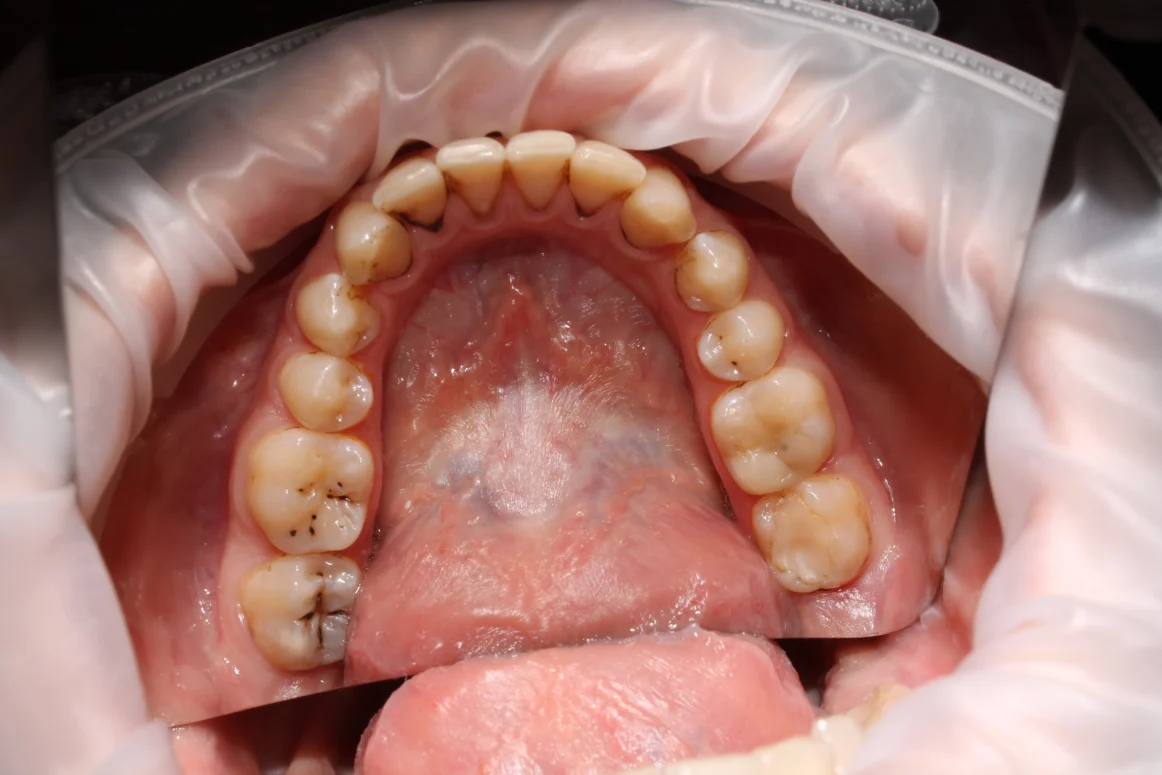
A chalky white patch on enamel is demineralisation — mineral loss that hasn’t yet become a cavity. At this stage professional fluoride treatment can reverse the damage: no drilling, no anaesthetic, none of what people dread about dental visits.
This is the only point in the process where decay can genuinely be undone rather than repaired. It’s also the stage that gets missed most often, precisely because there’s no pain to prompt a visit.
An Established Cavity
Once there’s a hole, it gets filled. Composite resin is tooth-coloured and bonds directly to the natural tooth structure. Digital X-rays come first, because sealing over decay that wasn’t fully cleared traps it inside and the damage continues underneath.
The American Dental Association’s clinical guideline on caries treatment confirms selective removal as the standard approach.2 Where the cavity is too large for a filling but the tooth is still sound, an inlay or onlay is the more conservative option before a crown — the survival data for those is strong, so it’s worth asking about.
When Decay Reaches the Nerve
The pulp — the inner chamber holding the nerves and blood vessels — becomes infected when decay goes deep enough. Sometimes that’s agonising. Sometimes there’s no pain at all until an abscess forms.
Root canal treatment removes the infected tissue, cleans and disinfects the canals, and seals the tooth. A crown goes on afterwards to protect what’s left.
The procedure’s reputation is worse than the reality. With proper anaesthesia most patients say it felt similar to a filling. The pain people remember is the infection before the appointment, not the treatment itself.
When the Tooth Can’t Be Saved
Some teeth are too far gone. When that happens, filling the gap fairly promptly matters — not for appearance, but because neighbouring teeth drift into the space, the bite changes, and the jawbone resorbs with nothing left to stimulate it. Measured across human studies, an untreated extraction site loses 29–63% of its ridge width within six months.3
Dental implants replace the root as well as the visible tooth, which is what stops that bone loss. The alternatives, and how they compare, are in bridge vs implant, and if bone has already been lost, it can be rebuilt first.
I’m Pregnant — Does That Change Anything?
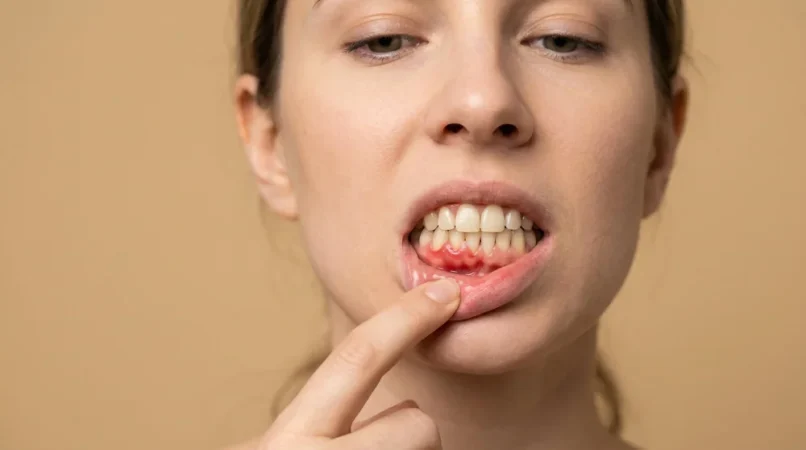
Yes, and the mechanism is well documented. Elevated oestrogen and progesterone increase blood flow to gum tissue and dampen local immune responses, making gums more reactive to bacteria — pregnancy gingivitis, which affects a substantial proportion of pregnant women.4 It usually resolves after delivery, but left untreated it can progress to periodontitis and real tissue loss.
Morning sickness adds enamel erosion on top. Stomach acid is corrosive, and there’s one counterintuitive thing worth knowing: don’t brush immediately after vomiting. The acid temporarily softens enamel and brushing at that point strips it away. Rinse with water, wait, then brush.
Research has linked untreated periodontal disease during pregnancy to preterm birth and low birth weight, although causality is still being studied.5 What isn’t in question is that dental treatment is safe throughout pregnancy — digital X-ray equipment uses minimal radiation and scans are taken with a lead apron as standard. More detail is in our guide to dental care during pregnancy.
What Actually Slows Decay Down
- Fluoride toothpaste, used correctly. Brush, spit, don’t rinse — the residual fluoride left on the enamel keeps working. Rinsing straight afterwards washes most of the benefit away.
- Flossing. A large share of each tooth’s surface sits between the teeth, unreachable by any brush. That’s where interproximal cavities form, and they’re among the most preventable and most commonly missed.
- Eating patterns, not only what you eat. Constant snacking means constant acid exposure. Meals with gaps between them give saliva time to neutralise and remineralise. A chocolate bar eaten quickly does less damage than a sugary coffee sipped across a four-hour meeting.
- Professional cleanings. Tartar below the gum line can’t be removed at home, full stop.
What doesn’t work: oil pulling has no credible clinical evidence behind it, and antimicrobial mouthwash reduces surface bacteria only marginally. Neither reverses an existing cavity. Once the structure is breached, it needs a dentist.
Signs You Shouldn’t Ignore
Don’t wait for pain. By the time a tooth hurts on its own, the nerve is usually already involved — which moves the treatment from a filling to a root canal.
Get it looked at if you notice sensitivity to cold or sweet that lingers after the trigger is gone, a visible dark spot, persistent bad breath that brushing doesn’t clear, or swelling near a specific tooth. Swelling especially — that often means an abscess and needs attention quickly.
A clinical exam with digital X-rays shows what’s happening between the teeth as well as on the surface. The point of going before anything hurts is simple: the options are fewer, and more expensive, once it does.
Not sure where you stand?
Before any commitment, you can speak with the clinical team online and get a clear picture of your situation from home. International patient coordinators cover English, French, Arabic, Spanish, Russian, Italian and German.
DentSpa is licensed by the Turkish Ministry of Health, certified to ISO 9001 and ISO 10002, a member of the Turkish Dental Association, and holds the Certification for Excellence in Medical Travel Patient Experience from Global Healthcare Accreditation.6 It was named best dental clinic in Europe in the odontology category at the European Awards in Medicine. Over 50,000 international patients have been treated at the Şişli clinic — their feedback is in the verified Trustpilot and Google reviews, and how treatment is arranged for people travelling in is on the international guests page.
Frequently asked questions
Can tooth decay be reversed?
Why doesn't my cavity hurt?
I brush twice a day — why do I still get cavities?
Should I rinse after brushing?
Do oil pulling or mouthwash fix cavities?
Is dental treatment safe during pregnancy?
Sources
- 1. National Institute of Dental and Craniofacial Research — Tooth Decay and The Tooth Decay Process: How to Reverse It. NIH.
- 2. American Dental Association — New Tooth Decay Treatment Guideline, 2023; and Caries Risk Assessment and Management.
- 3. Tan WL, Wong TLT, Wong MCM, Lang NP. A systematic review of post-extractional alveolar hard and soft tissue dimensional changes in humans. Clin Oral Implants Res. 2012;23(Suppl 5):1–21. pubmed.ncbi.nlm.nih.gov/22211303
- 4. Moldovan IM, et al. Impact of Hormones and Lifestyle on Oral Health During Pregnancy. Medicina. 2024;60(11):1773. pmc.ncbi.nlm.nih.gov/articles/PMC11596282
- 5. Oral Health and Pregnancy Outcomes: A Narrative Review. 2025. pmc.ncbi.nlm.nih.gov/articles/PMC12297142
- 6. Global Healthcare Accreditation — DentSpa Strengthens Global Trust in Turkey’s Dental Services with GHA Certification, 16 July 2026.














 70%
70%