Table of content
Table of content
Buck teeth can make you feel like your smile pulls attention before you even speak. Many people live with the discomfort of teeth that lean forward, lip strain, or a dental profile they do not love. The good news, though, is there’s a fix and people don’t have to live with it if they don’t want to.
In this article, we will explain what buck teeth are, why they happen, how mild or severe they can be, and the practical cosmetic options adults can use to improve their smile.
By the end, you should know the realistic options for treatments without going through orthodontics, and the next steps you should take to get a confident smile.
What Are Buck Teeth?
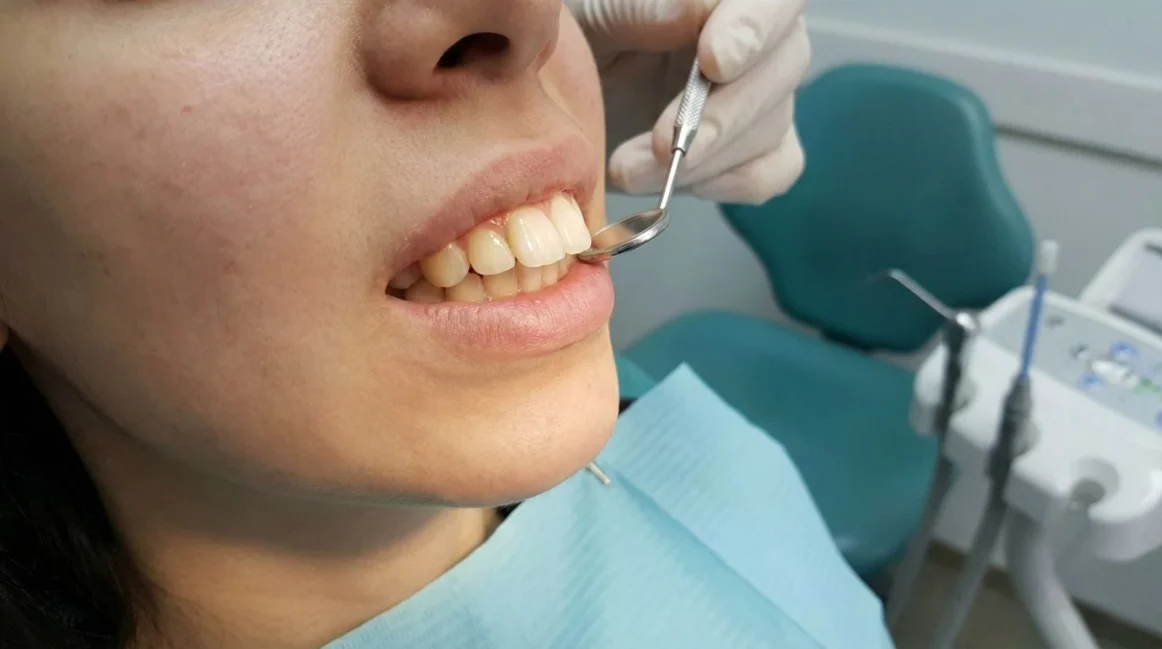
Buck teeth — clinically called increased overjet — describe the horizontal protrusion of the upper front teeth beyond the lower ones, which changes the balance of the smile. Clinically, the appearance can come from the teeth themselves or from the relationship of the upper and lower jaws. It’s common: a systematic review of malocclusion worldwide recorded increased overjet in 20.14% of adults with permanent dentition,1 so if this is you, you’re far from alone.
In an adult, overjet shows as a protrusion of the front teeth or strain on the lips when closing. It results in a dental profile that looks more convex than normal. For some people, buck teeth are a beauty issue; for others, it’s a case that affects biting and general tooth use.
What Causes Buck Teeth?
The causes of buck teeth are many, and in some cases, they overlap. Here are the most common causes.
- Childhood habits like thumb sucking.
- Long-term pacifier use in early years.
- Tongue thrusting when speaking or swallowing.
- Genetics that influence jaw size and tooth shape.
- Early tooth loss that changes natural alignment.
- Trauma that shifts the front teeth.
Some of these causes can lead to buck teeth if they become a habit and persist over time. Where a gap has opened up alongside the protrusion, that is covered separately in our guide to closing a tooth gap.
How Severe Can a Buck Tooth Be?
If you’re looking to correct buck teeth, the severity of your case could be divided into three levels, namely, mild, moderate, and severe. The differences between them are judged by:
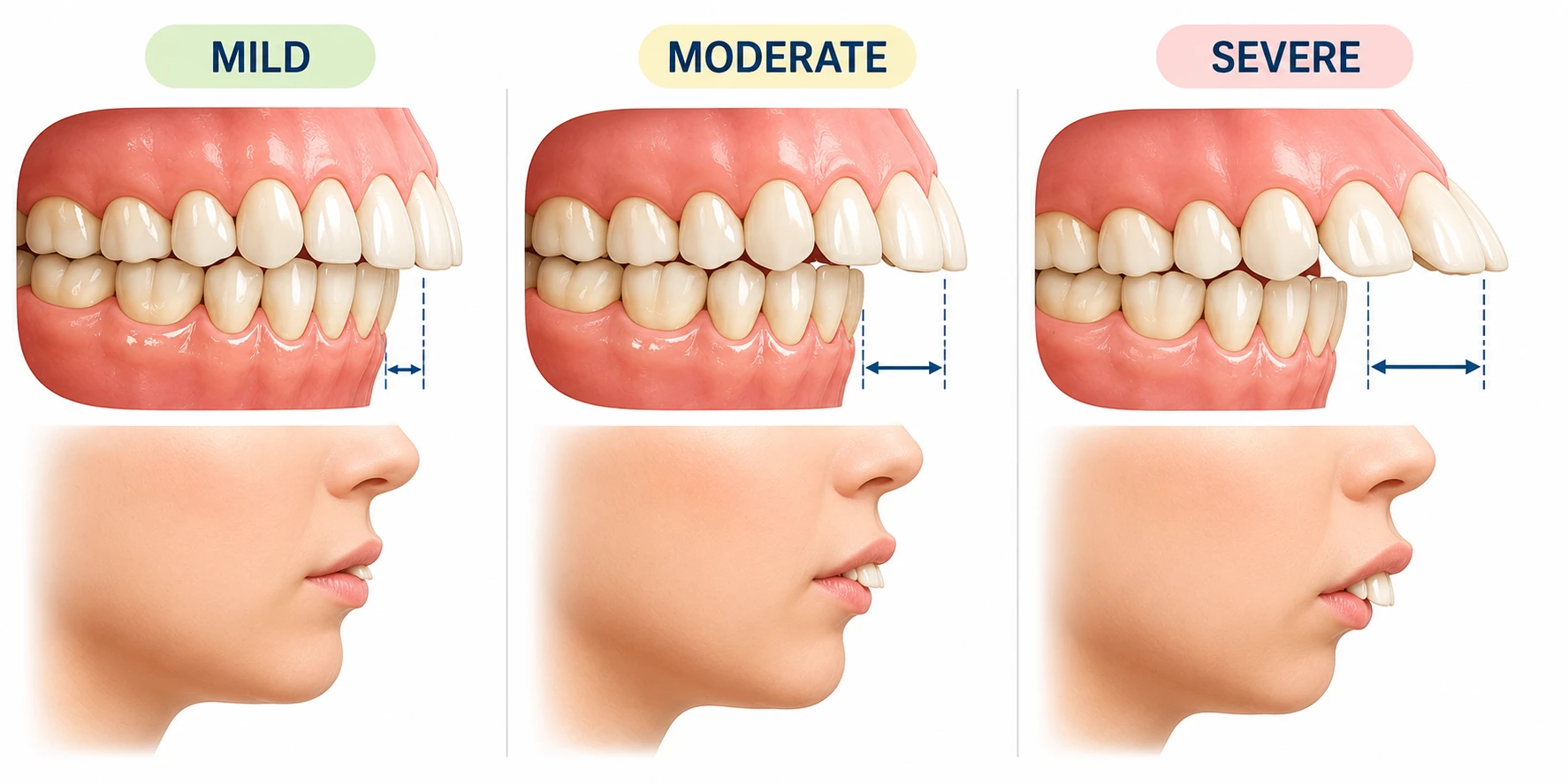
| Mild | Moderate | Severe |
|---|---|---|
| Slightly forward tooth | Visible forward projection | Jaw relationship issues |
| Spacing issues | Some bite imbalance | Functional impact on chewing |
| Cosmetic concerns only | Often treated with a combined cosmetic plan | Usually requires orthodontics or a multidisciplinary plan before cosmetic work |
| Ideal candidates for cosmetic corrections | — | — |
Cosmetic or Orthodontic Treatments: Which is The Preferred Choice
Orthodontics, such as braces or clear aligners, moves teeth and is excellent for many patients.
While they are a solid option, this blog focuses on adult patients who prefer cosmetic treatments with lesser healing timelines. Cosmetic treatments can also be the preferred choice when the protrusion is mild enough that reshaping produces the desired result. If you would rather move the teeth than reshape them, the options are set out in our guide to straightening teeth without braces.
Still, we ensure we evaluate bite stability and advise when an orthodontic consult is the right call.
How to Get Rid of Buck Teeth With Cosmetic Options
Here, we will explain the clear, practical treatments adults choose when they want faster cosmetic improvements without long orthodontic timelines.
We will break down the process so you know exactly what each option does and what to expect.
Diagnosis and Treatment Planning
At the beginning of a diagnosis, a dentist will listen to what the patient wants to change, then check the tooth position, gum health, enamel condition, and the overall bite. He will also take digital photographs and radiographs to see the tooth roots and jaw structure.
This helps a dentist know if the issue is majorly cosmetic or if there are other hidden concerns that should be treated first.
Then we discuss realistic outcomes, the timeline, and maintenance needs so that the patient can choose confidently. It is also here that we inform patients if the best solution for their dental work is an orthodontic treatment, not cosmetic work.
Can Veneers Fix Buck Teeth?
Veneers can correct the shape and appearance of mild or moderate buck teeth. They work by changing the visible front surfaces so the smile looks balanced.
When the case is right, veneers also last well: a systematic review covering roughly 6,500 porcelain laminate veneers estimated 95.5% survival at ten years,2 so this isn’t a short-term fix. Composite veneers cost less and can be done in a single visit, but they need refreshing sooner: a systematic review of 1,821 anterior composite restorations followed for at least three years found annual failure rates between 0% and 4.1%, with colour, shape and surface staining — rather than fracture — the usual reason work placed for appearance needs attention.3 That trade-off between durability, cost and speed is a big part of choosing between them, and it is taken apart properly in our comparison of composite bonding vs veneers.
What Veneers Can Do
- Improve the angle of the front teeth.
- Make protruding teeth appear straighter.
- Hide chips, cracks, and uneven edges on the teeth.
- Brighten the entire smile with one treatment.
- Create a smooth and symmetrical Hollywood smile.
What Veneers Cannot Do
- Veneers cannot move the root of a severely protruded tooth.
- They cannot replace orthodontics when the bone structure is significantly misaligned.
Types of Veneers To Choose in Cosmetic Treatments
| Porcelain Veneers | Composite Veneers |
|---|---|
| Has high strength | It can be applied in one visit. |
| Natural translucency | It is budget-friendly. |
| Long lifespan in cases of thin enamel | Reversible in many cases. |
| Great for Hollywood smile designs | Great for mild protrusion and first-time cosmetic treatments. |
How thin the ceramic can go, and how it is bonded, is covered in our guide to laminate veneers — and what actually determines how long the result holds is in veneer longevity.
Note: Veneers will not physically move the tooth root. They only change shape and appearance. This is why we emphasize proper case selection before recommending veneers as the primary solution.
Bonding and Recontouring for Small Aesthetic Adjustments
For a subtle protrusion or when a single tooth needs softening, we often use composite bonding. Bonding lets us add or remove small amounts of material to harmonize the tooth shape.
Meanwhile, recontouring is the removal of tiny amounts of enamel to adjust angles and reduce the appearance of prominence.
These techniques are minimally invasive and usually require little to no anesthesia. They are also repairable and can be combined with whitening for a quick smile boost.
Combined Treatments for Smile Makeovers
Many adult cases benefit from a combination approach. That means we might blend treatments to give the most natural final result when necessary.
This could be performing whitening first, then veneers on some teeth, then bonding or recontouring on the others. The order matters: only natural teeth respond to whitening, so the shade is settled before any ceramic is made and matched to it.
Gum alignment or contouring can also help if the gumline adds to the unbalanced look of the tooth. Since the goal is facial harmony, the dentist can take liberties to get the smile improvement the patient wants.
When Dental Implants or Crowns Can Be Part of the Solution
Crowns or dental implants are not common in a regular buck teeth correction plan, but they can be very important in a complex treatment plan.
If a protruding front tooth is damaged or missing, it can be replaced using a dental implant or a crown. This way, they can help reposition the visible tooth line, giving the teeth an improved balance. Where the choice is between facing a tooth and covering it, that line is drawn in our comparison of veneers vs crowns.
Crowns can be used when:
- A front tooth is structurally weak.
- There is heavy discoloration.
- The tooth needs a full protective cover.
Implants help when:
- A front tooth is missing.
- A tooth is damaged beyond repair.
- Replacement is the only viable long-term choice.
When a front tooth is replaced, it changes the whole front tooth line — but front teeth sit in the “smile zone,” where colour-matching and gum shape matter most. That’s why it’s worth understanding how front teeth implants are planned in Turkey before you decide, since the aesthetic demands are higher than for a back tooth.
Implants aren’t the only route, though, and they aren’t right for every buck-teeth case. If you’d rather avoid surgery or your case is mainly cosmetic, it helps to weigh the alternatives to dental implants — bridges, bonding, or veneers — so the choice fits your mouth, not just the gap.
In rarer, complex cases where a front tooth has been missing long enough that the upper jaw has lost significant bone, standard implants may not anchor well. That’s when more advanced options like zygomatic implants enter the conversation. This is uncommon in buck-teeth correction, but it’s worth knowing the option exists.
Aftercare and Long-Term Maintenance
To protect the results of your dental procedure, you should:
- Use a soft brush and brush gently, not rigorously.
- Use a low-abrasive toothpaste.
- Wear a night guard if you clench while sleeping.
- Avoid using your teeth to open packages.
- Schedule regular checkups.
- Treat tongue thrusting if you’re still doing it.
With attentive care, veneers and bonding can last many years and continue to support a confident Hollywood smile. If you grind at night, that is the single factor most worth addressing first — see how bruxism affects veneers and implants.
Who Is a Good Candidate for Cosmetic Treatments?
As we previously stated, cosmetic options are minor treatments and cannot replace orthodontic treatments where required.
To be a good candidate for cosmetic treatment, you need to have good gum health, adequate enamel, and a normal expectation for your smile.
People with severe jaw-based protrusions, active gum disease, and other habits detrimental to tooth health may require other forms of treatment. Where gum disease is present, it is treated first — the reason is set out in our guide to veneers and implants with gum disease.
This is why we always recommend a detailed evaluation before starting cosmetic work. This lets a dentist choose the best, safest, and most satisfying path for your dental procedures.
The Step-by-Step We Take With Patients
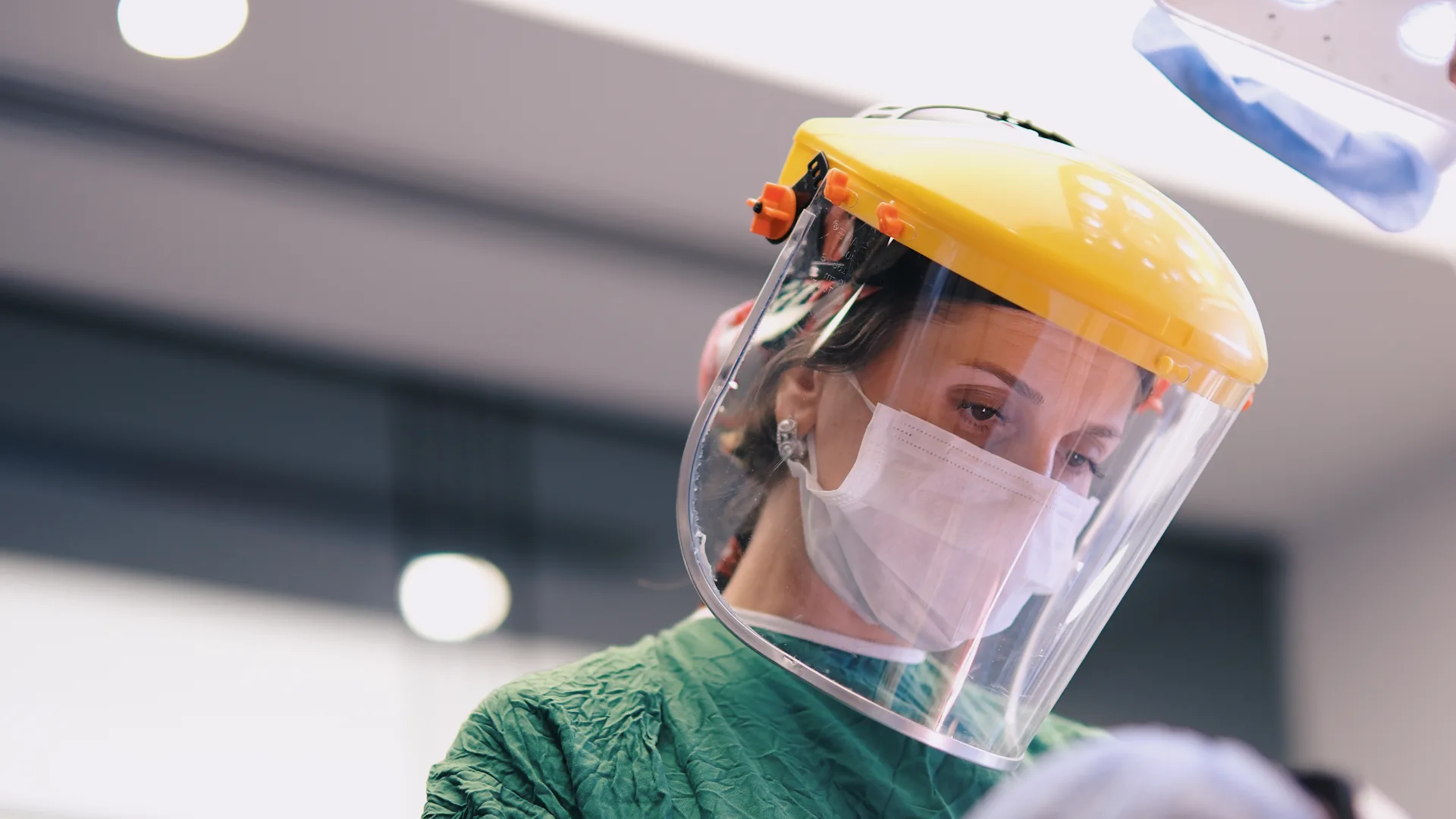
Let’s outline the typical pathways so you know what to expect when you book a cosmetic consultation.
- Your dentist performs a full oral exam, including photographs and radiographs.
- They listen to your smile goals and explain realistic outcomes.
- The dentist then prepares a tailored plan for you that may include tooth whitening, bonding, veneers, and minimal recontouring.
- Then they proceed with the conservative treatments, the try-in and the shade check while you are in the chair, so any adjustment happens before anything is bonded.
- Finally, the definitive restorations are fitted and follow-ups are scheduled, so both your comfort and the longevity of the work are checked.
Why Choose DentSpa
Where you have cosmetic work done matters as much as the treatment itself, because the result lives on your face for years. Here’s what DentSpa brings to a buck-teeth case.
An award-winning, certified clinic
DentSpa was named best dental clinic in Europe in the odontology category at the European Awards in Medicine,4 is licensed by the Turkish Ministry of Health, certified to ISO 9001 and ISO 10002, and a member of the Turkish Dental Association. For treatment planned from abroad, it also holds the Certification for Excellence in Medical Travel Patient Experience from Global Healthcare Accreditation5 — which assesses the information you get before travelling, care coordination, and aftercare once you are home.
A specialist team that plans together
Cosmetic cases are planned jointly by dentists, prosthodontists and periodontists — many of them PhD-level and active in teaching hospitals and universities. For buck teeth, that combined view is what keeps the result both balanced to look at and stable to bite on.
The experience of high volume
DentSpa has treated more than 50,000 international patients since it was founded in Istanbul in 2018. That scale means veneers, bonding and smile makeovers are everyday work here, with premium materials — porcelain, zirconia and E.max. You don’t have to take our word for the result: see real cases in the smile gallery and read the verified Trustpilot and Google reviews.
Honest planning
Cosmetic treatment is recommended only when it genuinely suits your case; if orthodontics is the safer route, we’ll tell you. And what does not happen is quality being reduced to reach a number — material, planning and execution follow the same standard whatever the size of the case. The price advantage over the UK or US comes from the cost base in Istanbul, not from doing less; the figures are set out in our guide to dental treatment prices in Turkey.
Want to talk through your options? Book a free consultation and send a few photos for a personalised assessment, or message us on WhatsApp. If you are still comparing clinics, the questions worth asking any of them are in how to find a dentist in Turkey.
Frequently asked questions
Can Buck Teeth Lead to Gum Disease?
Are Buck Teeth Harmful or Just Cosmetic?
How common are buck teeth?
Will Cosmetic Treatments Look Natural or Too Obvious?
Is Bonding Strong Enough to Correct Buck Teeth?
Can Veneers Fix Buck Teeth Permanently?
Sources
- Alhammadi MS, Halboub E, Fayed MS, et al. — Global distribution of malocclusion traits: A systematic review. Dental Press Journal of Orthodontics, 2018.
- Alenezi A, Alsweed M, Alsidrani S, Chrcanovic BR — Long-term survival and complication rates of porcelain laminate veneers in clinical studies: a systematic review. Journal of Clinical Medicine 2021;10(5):1074.
- Demarco FF, Collares K, Coelho-de-Souza FH, et al. — Anterior composite restorations: A systematic review on long-term survival and reasons for failure. Dental Materials 2015.
- The European Awards in Medicine — DentSpa Clinic — European Award in Medicine in Odontology
- Global Healthcare Accreditation — DentSpa Strengthens Global Trust in Turkey’s Dental Services with GHA Certification













 70%
70%