Table of content
Table of content
A single dental implant typically costs £2,583 privately in the UK, according to myTribe Insurance’s August 2026 pricing research.1 The NHS says implants are usually only available privately,2 so for most people that private figure is the one that applies. The total depends on how many implants you need and whether bone grafting is required.3
How much does a single dental implant cost in the UK?
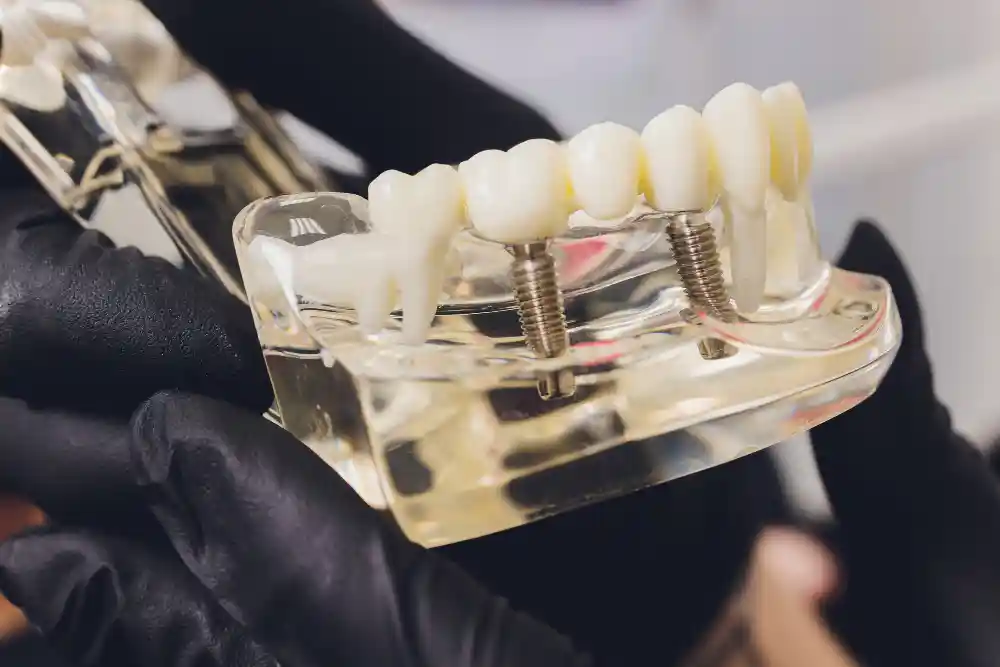
The £2,583 figure is a UK reference point, not a treatment plan for an individual patient.1 The Association of Dental Implantology explains that implant treatment normally involves several stages: assessment and X-rays, implant placement, a healing or integration period, and the fitting of the replacement tooth or teeth.3
So when you compare a dental implant cost, check what the quoted fee actually covers. The important question is not simply whether a price is £2,583 or another figure. It is whether the written plan accounts for the stages you actually need.
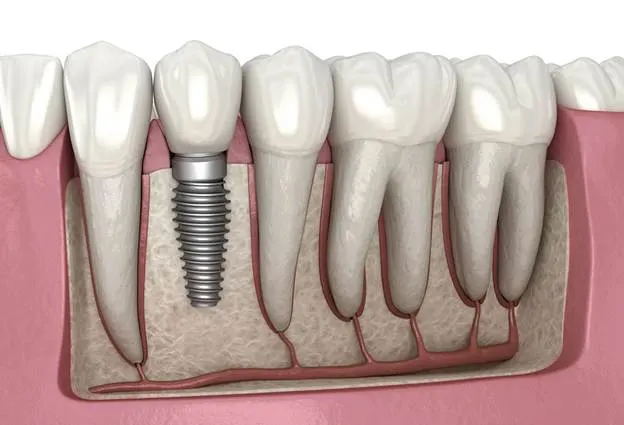
There are other ways to replace one missing tooth. The same myTribe research puts a conventional bridge at around £1,960 and a partial denture at £675.1 On the NHS in England, Band 3 is £332.10 and can include dentures and a fixed replacement such as a bridge, but not an implant.2 4
| Replacement | Typical private price | NHS Band 3 (England) |
| Dental implant | £2,583 | Not included |
| Conventional bridge | About £1,960 | £332.10 |
| Partial denture | £675 | £332.10 |
The comparison is about price, not about deciding which treatment is right for you. If you want to understand the differences between an implant and a bridge in more detail, our guide to dental bridge versus implant options explains what each approach involves and why the choice needs to be based on the individual tooth.
Can you get dental implants on the NHS?
Usually, no. The NHS says implants are usually only available privately and are expensive. It also says that, although rare, implants are sometimes available on the NHS for patients who cannot wear dentures for certain reasons, such as mouth cancer or an accident.2
Access is not uniform. The Royal College of Surgeons of England says the guidance on NHS dental implant availability is vague and that this ambiguity has led to significant variation in access.5
You therefore should not assume that an implant will be covered simply because replacing the missing tooth is clinically appropriate. If you think you may be one of the rare cases, our article on dental implants on the NHS sets out who the NHS considers and why routine cases are not funded.
What changes the price of dental implants?
The biggest point is that there is no sensible way to price every implant case by multiplying the single-implant figure.
For one missing natural tooth, the Association of Dental Implantology says one implant is normally enough. With two, three or more missing teeth, however, you do not necessarily need one implant for every tooth. The exact number depends on the quality and volume of bone at each potential implant site.3
Bone matters in another way. If there is not enough suitable bone, bone grafting may be needed. The Association of Dental Implantology says this will almost invariably increase the length of time treatment takes.3 If bone grafting is being discussed, our guide to bone grafting for dental implants explains what that stage means and why it can change the treatment plan.
Your gums also need to be considered. The Association of Dental Implantology says gum disease is a major cause of bone loss and that, where bone has been reduced, implant treatment can be more complicated but not impossible. Gum problems are understood and treated before implant treatment begins.3
Tooth grinding can also affect planning. The Association of Dental Implantology says grinding can be compensated for by placing additional implants, choosing appropriate restorative materials and providing a night-time bite guard.3
These are the reasons a headline price cannot tell you exactly what your own treatment will cost.
Before starting, you should have the details in writing. The Association of Dental Implantology says the written summary should give you an overview of the treatment stages, how long treatment is likely to take, how many implants are required and what the fees are expected to be.3 Age UK likewise says you should have details of private treatment and associated costs in writing before you agree to it.6
That written plan is the number worth comparing.
How much do full mouth dental implants cost in the UK?
There is no independent UK figure to give you. myTribe’s research prices a single implant only, and neither the NHS nor Age UK publishes implant prices.1 2 6
The reason a figure is hard to publish is straightforward. A full mouth treatment is not the single-implant figure multiplied by the number of teeth. The Association of Dental Implantology says larger spaces do not necessarily require one implant per tooth, and that the number depends on the quality and volume of bone at the potential implant sites.3
All-on-4 is one name used for a full-arch implant approach. If you are considering that type of treatment, our All-on-4 dental implants treatment page explains the approach so you can see what is being discussed before you compare treatment plans.
The reliable figure for your own case comes after a clinical assessment and X-rays, followed by a written treatment plan. That is where the number of implants, treatment stages and expected fees should be set out.3
How long does treatment take, and how long do implants last?
Implant treatment is usually measured in months, not days. The Association of Dental Implantology says treatment normally involves several stages over three to nine months. From implant placement to placing the first tooth or teeth, treatment can vary from six weeks to six months. Poorer bone can extend treatment beyond six months.3
As for longevity, the evidence gives a useful figure without promising a lifetime. A 2019 systematic review in the Journal of Dentistry, covering 18 studies, found a 96.4% estimated 10-year survival at implant level.7 The Association of Dental Implantology gives the simpler general figure of around 95% and says personal oral hygiene and regular maintenance reviews have the most influence on how long implants last.3
So the sensible question is not whether an implant will last forever. It is how the proposed treatment will be planned, maintained and reviewed over time.
What about having implants placed abroad?
If the UK private dental implant cost is more than you expected, travelling for treatment is one option to look into properly. Our guide to dental implants abroad explains the wider process and the questions worth asking before you travel.
DentSpa is in Şişli, Istanbul, and treatment can cost up to 70% less than UK private prices. The difference comes from the local cost base in Turkey, including staff and laboratory costs, not from less work, different materials or a shorter treatment.
The first step at DentSpa is a clinical assessment, not a price. The free consultation starts with the findings and what you want to achieve. A dentist explains, in your own language, why one approach is recommended and why another is not, what is needed, and how many visits the treatment realistically takes. Quality is never reduced to reach a price.
The General Dental Council (GDC) publishes a list of questions for patients considering treatment abroad, and says you should always be assessed by a qualified dentist before being given a treatment plan and cost estimate.8 Here is how DentSpa answers four of those questions.
How many times have you carried out the procedure I am having?
DentSpa places over a thousand Straumann implants a year, a figure Straumann publishes on its own certificate-verification page.
If you want more context about that record, our article on the Straumann achievement award explains the credential and why treatment experience is worth asking about.
Are you regulated by a professional body and do you have to be registered with them?
DentSpa is licensed by the Turkish Ministry of Health, certified to ISO 9001 and ISO 10002, and is a member of the Turkish Dental Association (TDB). Each one is listed on our accreditations and certifications page, so you can check them yourself.
What aftercare do you provide?” and “Who can I contact for advice after the treatment?
Implant treatment abroad normally involves more than one visit, because the implant needs time to heal before the final tooth or teeth are fitted.3 Follow-up continues from Istanbul after you return home.
DentSpa holds the Global Healthcare Accreditation Certification for Excellence in Medical Travel Patient Experience. The GHA certification covers the patient journey: communication before treatment, coordination during treatment and follow-up afterwards.
If aftercare is an important part of your decision, our guide to a GHA-certified dental clinic in Turkey explains what the certification covers and why patient coordination matters.
The days between appointments are yours to spend in Istanbul.
Do you have any references or testimonials from previous patients?
You do not have to take our word for it. Verified patient reviews are on our reviews page, and patients share their experience in their own words on Instagram.
DentSpa has also been named Best Dental Clinic in Europe at the European Awards in Medicine, in the Odontology category. You can read more about that recognition in the European Awards in Medicine article.
These credentials do not replace a clinical assessment. They give you information to consider alongside the questions the GDC recommends asking.
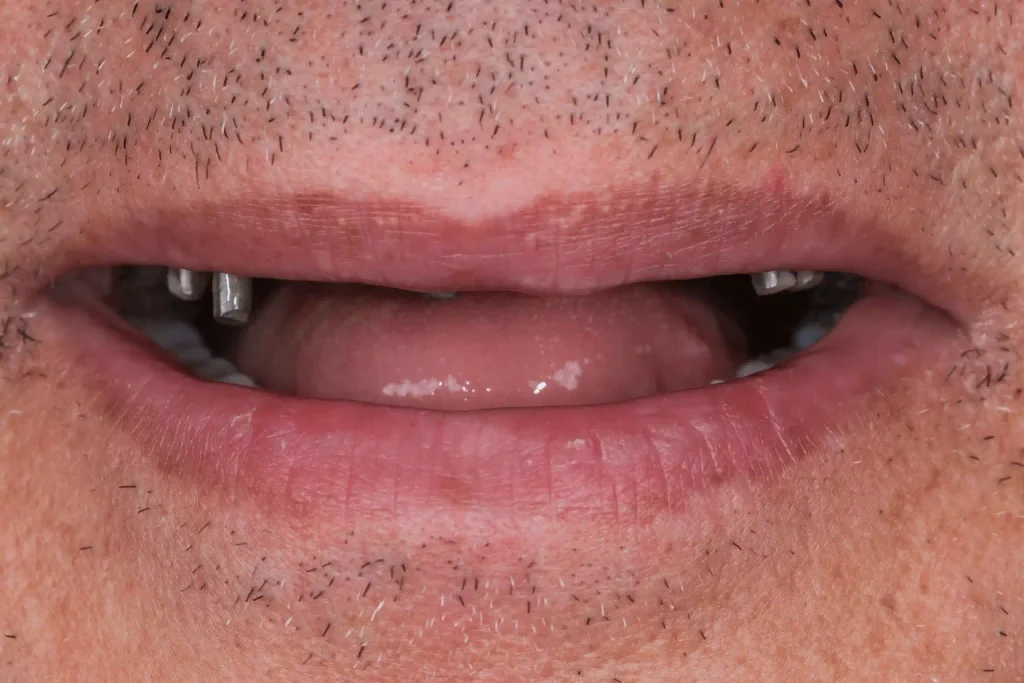
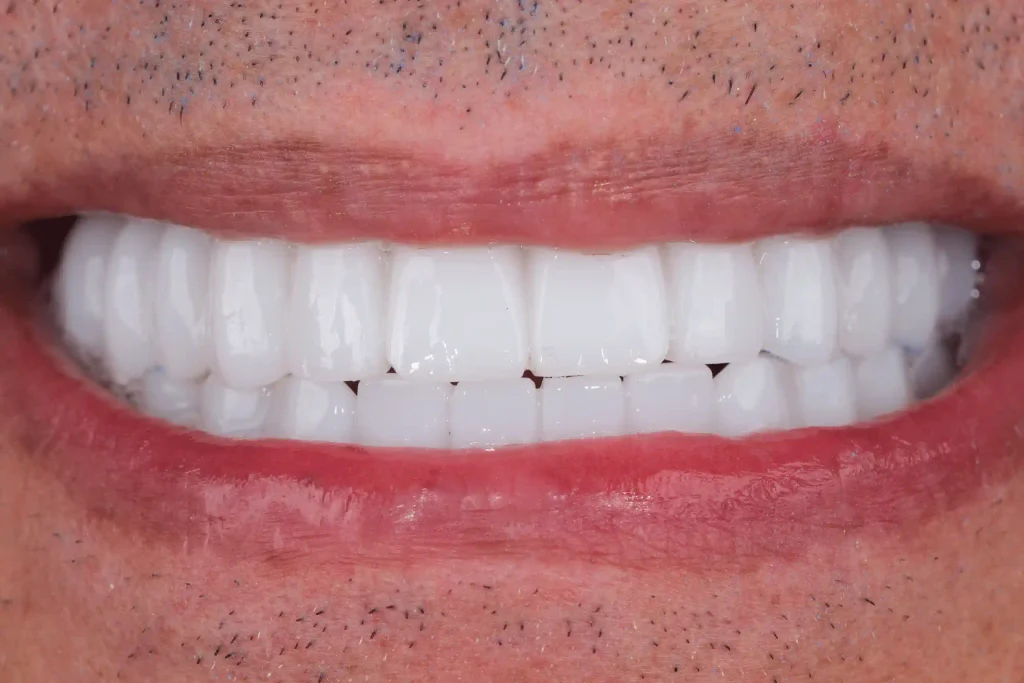
Compare the written plan, not the headline figure
Start with the UK reference point: £2,583 for a single dental implant, according to myTribe Insurance’s August 2026 research.1 Then look beyond the number.
Ask whether the plan covers assessment and X-rays, implant placement, the healing stages and the replacement tooth or teeth. Check how many implants are actually required. Ask whether bone grafting or gum treatment changes the plan. Then make sure the expected fees are provided in writing.3 6
If you are considering treatment in Istanbul, the same principle applies. Our tooth implant procedure page describes the treatment itself, and the decision should start with the clinical findings and a written treatment plan. To discuss your case, contact the clinic for a free consultation.
Frequently asked questions
How much do dental implants cost in the UK?
Can I get a tooth implant on the NHS?
How many teeth can one implant replace?
How much is a full set of dental implants in the UK?
Are dental implants worth the money?
Is there a cheaper alternative to dental implants in the UK?
How long do dental implants last?
Sources
- myTribe Insurance — How much does private dental treatment cost in the UK? (pricing research August 2026) — https://www.mytribeinsurance.co.uk/treatment/cost-of-private-dental-treatment-uk
- NHS — Dental treatments — https://www.nhs.uk/live-well/healthy-teeth-and-gums/dental-treatments/
- Association of Dental Implantology — Considering Dental Implants? A patient’s guide to dental implant treatment — https://consideringdentalimplants.co.uk/_userfiles/pages/files/consideringdentalimplants.pdf
- NHS — How much NHS dental treatment costs — https://www.nhs.uk/nhs-services/dentists/how-much-nhs-dental-treatment-costs/
- Royal College of Surgeons of England, Faculty of Dental Surgery — Guidance on the standards of care for NHS-funded dental implant treatment (2019) — https://www.rcseng.ac.uk/-/media/files/rcs/fds/publications/implant-guidelines.pdf
- Age UK — Factsheet 5: Dental care: NHS and private treatment (May 2026) — https://www.ageuk.org.uk/siteassets/documents/factsheets/fs5_dental_care_nhs_and_private_treatment_fcs.pdf
- Howe MS, Keys W, Richards D — Long-term (10-year) dental implant survival: a systematic review and sensitivity meta-analysis, Journal of Dentistry, 2019 — https://pubmed.ncbi.nlm.nih.gov/30904559/
- General Dental Council — Going abroad for your dental care — https://www.gdc-uk.org/docs/default-source/going-abroad-for-dental-treatment/going-abroad-for-your-dental-care















 70%
70%