
Table of content
Crooked teeth can be corrected in several ways, and the right one depends on your specific case — how the teeth look, the state of your bite, and whether any teeth are also damaged. The main options are:
- Porcelain veneers — cover and visually straighten front teeth in two visits.
- Composite bonding — reshape minor gaps or rotations in a single visit, with no enamel removal.
- Dental crowns — for teeth that are both misaligned and structurally damaged.
- Jaw surgery — when the misalignment comes from the jaw structure, not the teeth.
This guide explains what causes misalignment, which treatment fits which case, and what each one involves — so you can work out what’s realistic for your situation before committing to anything.
Why are my teeth crooked in the first place?
Crooked teeth develop through a mix of factors, and knowing the cause matters because it determines which treatments will work.
Genetics is the most common one. Jaw size, tooth size, and the tendency toward crowding, overbites, or underbites all run in families. According to Proffit et al.’s Contemporary Orthodontics, skeletal jaw discrepancies — where the problem originates in bone structure rather than tooth position — account for a significant proportion of adult malocclusion cases.
A separate driver is the change in human jaw size over generations. Research by Corruccini (1984) traced a measurable reduction in jaw dimensions across populations that shifted to softer, processed diets — less chewing, less jaw development, more crowding. This isn’t something you caused; it’s largely structural.
Childhood habits — prolonged thumb sucking, pacifier use, mouth breathing — can affect how teeth erupt and the development of the palate. Trauma during development, or tooth loss that left gaps for adjacent teeth to shift into, can produce misalignment in adults who had straight teeth earlier in life.
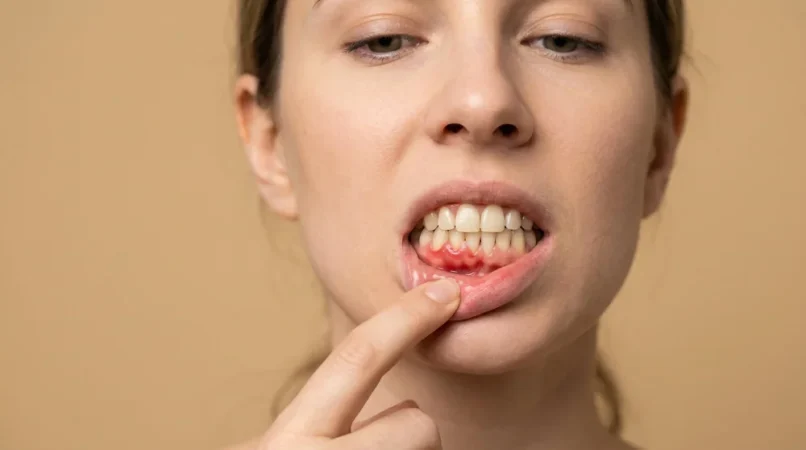
Gum disease is worth mentioning separately. Severe periodontitis — bone and tissue loss around the roots — causes teeth to loosen and shift. This isn’t cosmetic misalignment. It’s a structural problem that needs to be resolved before any other treatment can be considered.
Does crooked actually matter, beyond how it looks?
For mild cases — slightly overlapping front teeth, minor crowding — the impact is mostly cosmetic. But left untreated over years, misalignment creates problems that go beyond appearance.
Overlapping teeth are harder to clean. Toothbrush bristles and floss can’t reach surfaces that are pressed against adjacent teeth, which means plaque accumulates in those areas regardless of how well someone brushes. Cavities and gum disease follow.
Uneven bite pressure is the other issue. When teeth don’t meet correctly, some absorb more force than they’re designed to handle. Over time this causes wear, chipping, and in some cases cracks that reach the nerve. People with misaligned bites often develop jaw discomfort or headaches and don’t connect it to their teeth until a dentist points it out. TMJ problems linked to bite misalignment are worth understanding before they become chronic.
What treatments actually fix crooked teeth?
The honest answer is that it depends on what “crooked” means in your specific case. Some treatments move teeth. Others change how teeth look without moving them. Both can be the right choice, depending on the situation.
Veneers — for appearance, not movement
Porcelain veneers are thin shells bonded to the front surface of teeth. They don’t straighten teeth in any mechanical sense — they change how teeth look by covering irregular surfaces, closing gaps, and creating visual alignment. For patients whose bite is functional but whose front teeth are uneven, overlapping, or discoloured, veneers can produce a dramatically improved smile in two visits without orthodontic treatment.
The trade-off: a small amount of enamel is removed permanently to create room for the veneer. This is irreversible, so it’s a decision worth thinking through carefully.
Composite bonding — for minor corrections without removing enamel
Composite bonding uses a tooth-coloured resin applied directly to the tooth and sculpted into shape. Where veneers require preparation, bonding typically doesn’t — which makes it reversible, and that difference matters more than most people realise when choosing between them.
It’s well-suited to minor gaps, slightly rotated front teeth, or small chips — cases where the misalignment is limited and the bite is sound. Completed in a single visit. The full process, including what to expect on the day and how long results last, is covered on our composite bonding page.
Dental crowns — when teeth are crooked and structurally compromised
Crowns become relevant when a tooth is both visually misaligned and structurally damaged — heavily worn, cracked, or weakened by previous treatment. In these cases, a crown restores the full shape of the tooth while also correcting its visible position. When we recommend crowns over veneers or bonding, and what the process involves at DentSpa, is explained in detail here.
Orthodontic treatment — when teeth need to move
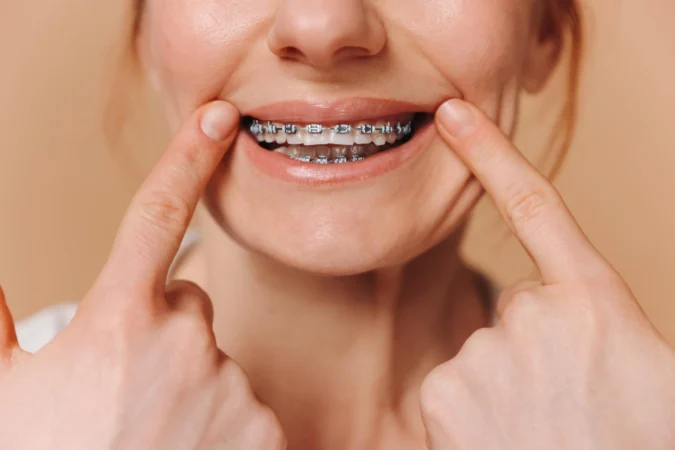
Veneers, bonding, and crowns change how teeth look or restore their structure — they don’t reposition them. Where teeth genuinely need to be moved rather than reshaped, orthodontic treatment such as clear aligners is the relevant route, and whether it applies to your case is something a consultation can clarify.
Jaw surgery — when the problem is skeletal
Some misalignment originates in the jawbone itself, not the teeth. When the upper and lower jaws don’t align correctly — severe overbites, underbites, or asymmetry — repositioning teeth through veneers or aligners doesn’t fix the underlying structure. Jaw surgery at DentSpa addresses skeletal misalignment that cosmetic and orthodontic approaches can’t resolve.
Which treatment is right for my situation?
A rough guide based on the most common presentations:
Mildly overlapping or uneven front teeth with a functional bite — veneers or composite bonding, depending on whether enamel removal is acceptable and how long results need to last.
Small gaps or slightly rotated teeth, no structural damage — composite bonding. One visit, no enamel removal, reversible.
Teeth that are misaligned and also cracked, worn, or heavily restored — crowns.
Teeth that need to actually move into different positions — orthodontic treatment.
Misalignment caused by jaw structure — surgical assessment first.
The only reliable way to know which applies to you is a clinical assessment with imaging. Photographs and descriptions can point in a direction, but they can’t confirm bone structure, bite alignment, or the condition of existing restorations.
Why fix this in Turkey?
Many DentSpa patients have lived with crooked teeth for years — not because treatment wasn’t available at home, but because it was expensive, slow, or felt like an overwhelming commitment.
Cosmetic dentistry in the UK or Germany runs significantly higher than equivalent treatment in Istanbul. The materials — the porcelain and the composite systems — are the same. What’s different is operating cost, and those savings pass directly to the patient.
DentSpa has treated over 50,000 international patients since 2018, holds ISO 9001 certification, and was recognised as the Best Dental Odontology Clinic in Europe in 2024. The team includes specialists with PhDs and academic appointments handling cosmetic and restorative cases daily.
Istanbul is under four hours from most major European airports. For patients combining cosmetic work with other dental treatment, the logistics of doing everything in one or two trips are considerably simpler than managing a multi-month treatment at home.
Book a free consultation
Our coordinators speak English, French, Arabic, Spanish, Russian, Italian, and German. A consultation is free, requires no commitment, and gives you a clear clinical picture of which treatment fits your situation and what the full timeline and cost would be.
Frequently asked questions
Is it too late to straighten crooked teeth as an adult?
No, it’s never too late to straighten your teeth. Many adults successfully undergo treatments like braces or Invisalign to correct misalignment, improving both the appearance and function of their teeth.
How can crooked teeth be treated?
Crooked teeth can be treated using options such as braces, Invisalign, veneers, or in some cases, surgical procedures. The treatment choice depends on the severity of the misalignment and the patient’s specific needs.
Are crooked teeth only an aesthetic problem?
While crooked teeth can affect appearance, they can also contribute to dental problems such as difficulty cleaning between teeth, increased risk of cavities, bad breath, and issues with the bite.
What causes crooked teeth?
Crooked teeth can result from several factors, including genetics, overcrowding, thumbsucking during childhood, early loss of baby teeth, or facial injuries.
References
- Corruccini, R.S. (1984). An epidemiological transition in dental occlusion in world populations. American Journal of Orthodontics, 86(5), 419–426.
- Proffit, W.R., Fields, H.W., & Sarver, D.M. (2018). Contemporary Orthodontics (6th ed.). Elsevier.
- Gresnigt, M.M., Kalk, W., & Ozcan, M. (2012). Clinical longevity of ceramic laminate veneers bonded to teeth with and without existing composite restorations. Clinical Oral Investigations, 17(3), 823–832.
- Demarco, F.F., et al. (2015). Anterior composite restorations: A systematic review on long-term survival and reasons for failure. Dental Materials, 31(10), 1214–1224.
- Proffit, W.R., & White, R.P. (1991). Surgical-Orthodontic Treatment. Mosby Year Book.
- American Dental Association — Orthodontics and Malocclusion. ada.org










 70%
70%