Table of content
Table of content
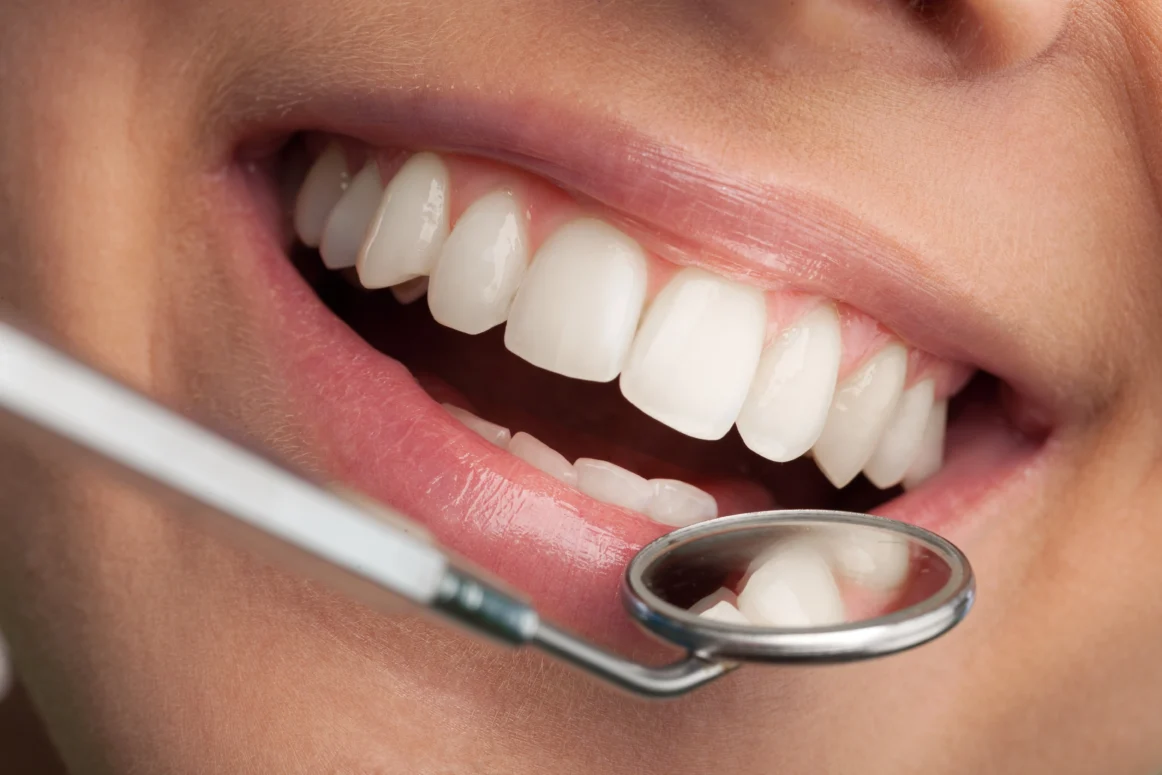
Tooth enamel loss rarely starts with pain. Most people don’t wake up one day feeling something is wrong.
Instead, they notice it slowly. A change in colour. A thin, almost see-through edge on a tooth that used to look solid. A strange sensitivity near the gum line that wasn’t there before.
At that point, people start asking questions, often quietly, about tooth enamel health. Is this normal? Is it reversible? Or is something already going wrong?
The honest answer sits in two halves. Enamel that has physically worn away does not grow back — it contains no living cells, so unlike bone it cannot rebuild itself. But enamel that has only been softened by acid is a different stage, and at that point the NHS states a dentist can prescribe fluoride treatments such as mouthwash or varnish to reverse early tooth decay.1 Knowing which stage you are at is the whole point of an assessment.
Why Is My Tooth Enamel Eroding?
This is usually where people feel lost, because there isn’t one clear answer.
Most of the time, it’s not a single habit — it’s a few things stacking up without anyone realising.
Some of the reasons behind enamel erosion tend to look like this:
- Acid exposure
Sometimes it’s soda. Sometimes it’s not. We often see it with citrus, sparkling water, or reflux. People don’t always connect stomach acid or “healthy” drinks with enamel loss, but they matter. - Brushing habits
A lot of people brush well — just too hard. More pressure feels productive, but over time it wears enamel down, especially along the gum line. - Electric toothbrush use
Electric brushes aren’t bad, but they don’t stop anyone from pressing. If anything, they can make it easier to overdo it without noticing. - Whitening done repeatedly without supervision
Not once or twice. Repeated use. Especially when enamel is already thin and nobody checks whether it can tolerate it — the limits are set out in our guide to whitening strips. - Braces, even years ago
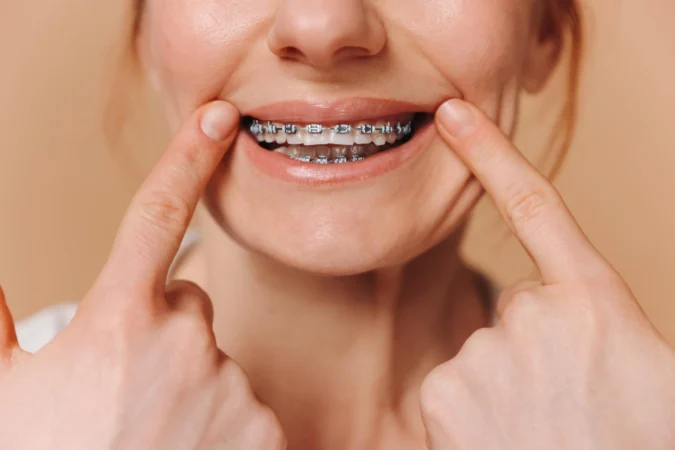
Not because braces ruin enamel, but because cleaning around them is hard. Plaque tends to sit in the same spots, and those spots stay weaker long after the braces are gone. - Gum recession
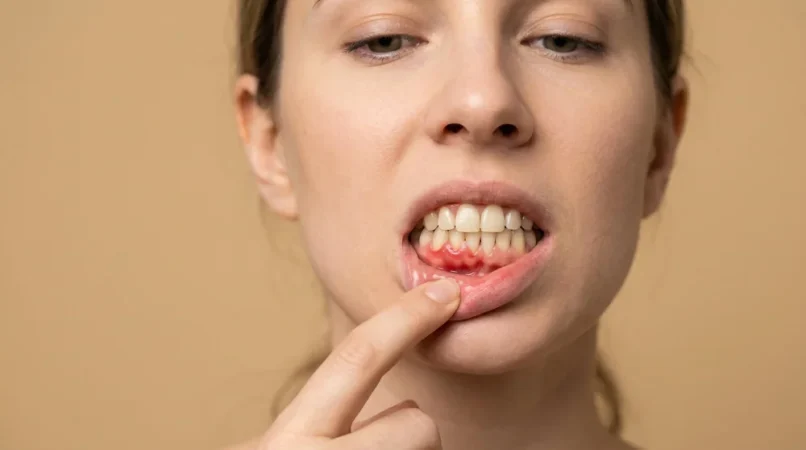
When gums move back, the surface near the root gets exposed. That surface is root dentine rather than enamel — softer, more acid-sensitive, and far quicker to wear, which is why root decay starts there.
Enamel erosion rarely has one clear cause. It’s usually a mix. And unless that mix is understood, treating the surface alone doesn’t really solve the problem.
Symptoms of Tooth Enamel Erosion You Shouldn’t Ignore
Most people don’t notice enamel erosion because it hurts — they notice it because something looks or feels different.
A few common signs people describe:
- The tooth looks narrower where it meets the gum
The base of the tooth may start to look slightly “pinched” or thinner compared to the rest of the tooth. - A faint yellow or darker shade near the gum line
There is a measured reason for this: enamel at the cervical third of a tooth averages only 0.3 to 0.4 mm thick.2 When that thins further, the darker dentine underneath shows through, creating a yellow or shadowed band. The other causes of colour at the gum line are in our guide to brown stains on teeth. - Sensitivity when brushing that wasn’t there before
Especially when brushing close to the gums. Some people notice a quick sting or discomfort that comes and goes. - Teeth feel rough or notched at the gum line
Running your tongue along the base of the tooth may feel uneven or slightly indented. - Cold drinks trigger sensitivity near the gums, not the whole tooth
The reaction feels localised, rather than affecting the entire tooth.
What makes this tricky is that none of these signs feel urgent. There’s often no visible cavity, and no obvious damage — which is why enamel erosion is easy to overlook until it progresses. The NHS makes the same point about check-ups generally: detecting problems early can mean they’re easier to treat, and if they are not treated they may lead to damage that is harder, or even impossible, to repair.3
Why Do Teeth Become Translucent or See-Through?
It often starts at the edges. Someone notices that the tips of their teeth look lighter than the rest. Not white. Lighter. Almost see-through. And once you notice it, you can’t unsee it.
What’s happening is that the enamel is getting thinner. Enamel is supposed to block light. When it wears down, light passes through more easily and the darker dentine underneath shows through. That’s what gives teeth that transparent look people describe as translucent enamel teeth — covered in full in our guide to why teeth turn transparent.
At first, many people think it’s just cosmetic. But it usually isn’t.
Transparent or clear enamel teeth tend to be weaker. They chip more easily. They feel more sensitive. Some people say their teeth just “don’t feel right anymore,” even if they can’t explain why. If an edge has already chipped, that is dealt with in how to fix a chipped front tooth.
By the time enamel looks see-through, toothpaste and home tricks don’t really help. There’s nothing left to strengthen in those areas — only something to protect.
If your teeth are starting to look thinner, more yellow at the edges, or slightly see-through, it’s worth paying attention. An enamel evaluation can help you understand what’s happening and what can still be protected before it progresses.
Can Tooth Enamel Be Repaired?
This is one of the most common questions, and it deserves an honest answer.
What cannot be repaired
- Lost enamel cannot grow back — it contains no living cells, so unlike bone it has no mechanism to rebuild itself
- Advanced erosion cannot be reversed naturally
What can be managed or restored
- Enamel that has been softened rather than lost can be remineralised — the NHS states a dentist can prescribe fluoride treatments such as mouthwash or varnish to reverse early tooth decay1
- Protective treatments can slow further damage
- Cosmetic and restorative solutions can rebuild appearance and function
Understanding this distinction is key when considering tooth enamel erosion repair options. Softened enamel is a window; lost enamel is a rebuild.
Treatment for Tooth Enamel Erosion
Enamel loss doesn’t behave the same way in every mouth. Some teeth hold up. Others don’t. And you don’t always know which situation you’re in right away.
When dentists think about treatment, it usually goes in a few general directions — not steps, not rules, just ways of handling the problem.
- Sometimes the goal is simply to stop things from getting worse
If enamel loss is still early, there may be nothing to “fix” yet. Fluoride or remineralisation treatments might be used just to support what’s left. Think of it more as maintenance than treatment. - Sometimes there are specific spots that need help
A sharp edge. A sensitive area. A place that keeps catching your tongue. That’s where bonding or sealants come in — not for the whole tooth, just where it’s needed. - Sometimes the tooth is starting to struggle
When enamel loss reaches a point where the tooth feels weaker or looks noticeably worn, restorations like veneers may be discussed. Not because of appearance alone, but because the tooth needs backing — and where more structure has gone, a crown may be the better answer. - The gum line often changes the plan
Erosion near the gums behaves differently. That area wears faster and reacts more. Treatment there is usually careful and conservative, focused on protection rather than making things look perfect.
Timing matters more than people expect
One thing that often gets missed is timing. People ask about teeth whitening or cosmetic changes early on, but if enamel health isn’t stable, those treatments can make things worse. Thin, translucent enamel is also the situation where whitening tends to disappoint, because the greyness comes from light passing through rather than from stain. That’s why decisions usually aren’t made all at once. It’s more of a “deal with this first, then see” approach.
How to Strengthen Tooth Enamel at Home (Realistically)
Home care plays an important role, but it has limits.
Helpful habits include:
- Using a soft-bristle toothbrush
- Avoiding overbrushing
- Limiting acidic foods and drinks
- Waiting about an hour before brushing after acid exposure — acid temporarily softens the surface, and brushing while it is softened removes more of it
- Brushing twice daily with fluoride toothpaste and cleaning between the teeth every day3
What home care cannot do is rebuild enamel that has already worn away. Its role is prevention and protection, not repair. It is also worth knowing what does not work: abrasive home whitening removes surface rather than lightening it, and removing enamel exposes more of the darker dentine underneath — so scrubbing harder can leave a tooth looking worse.
When Home Care Is No Longer Enough
You should consider professional care if:
- Your teeth look increasingly translucent
- Enamel loss is visible at the gum line
- Sensitivity persists despite good hygiene
- Tooth colour continues to worsen
- You’re unsure whether the change is cosmetic or structural
At this stage, an examination tells you which of the two stages you are at — and that is the difference between a fluoride course and a restoration.
From Managing Symptoms to Treatment Options
By the time people start looking into professional enamel treatment, they’ve usually reached a quiet conclusion: this isn’t something a new toothpaste or another home trick is going to fix.
That’s when the priorities change. It stops being about quick solutions and starts being about finding care that’s medically sound, properly supervised, and still realistic in terms of cost.
For many patients, that’s why Turkey enters the picture. What matters there is what you can verify rather than what you are told: a Ministry of Health licence, an International Health Tourism Authorisation Certificate — required by Turkish law for any clinic treating foreign patients — and accreditation you can look up yourself. How the whole journey is organised is set out in our guide to dental tourism in Turkey.
Being able to focus on treatment, stay somewhere comfortable, walk around the city and not rush back to work changes how people feel about care. It stops being another thing squeezed into a schedule and becomes something you actually take care of.
Why Choose DentSpa Turkey
Enamel loss isn’t something we treat casually at DentSpa. In fact, it’s one of those issues we see often because it’s usually underestimated early on.
Many patients come to us after trying to manage enamel erosion on their own — switching toothpaste, changing brushes, avoiding certain foods — and still feeling unsure whether they’re actually protecting their teeth or just delaying the problem.
We don’t start with treatment. We start by understanding why the enamel loss happened, because a restoration placed over an unaddressed cause simply wears in the same way. Once the cause is under control, what’s left is protected and, where needed, rebuilt.
What you can check before you commit
- Experience you can check
More than 50,000 international patients have been treated at DentSpa since it was founded in Istanbul in 2018, many travelling specifically for complex restorative care. Read the verified Trustpilot and Google reviews rather than taking our word for it. - Independent recognition
DentSpa was named best dental clinic in Europe in the odontology category at the European Awards in Medicine,4 and is licensed by the Turkish Ministry of Health, certified to ISO 9001 and ISO 10002, and a member of the Turkish Dental Association. - A team built for complex decisions
Treatments are led by PhD-level specialist dentists, professors, and associate professors working across restorative, cosmetic, and preventive dentistry. Enamel restoration often sits between disciplines, and having that collaboration under one roof makes a real difference. - No one-size-fits-all solutions
Enamel care is never isolated. We look at bite forces, gum health, previous dental work, and long-term stability before recommending bonding, protective treatments, or restorations. The goal isn’t just to make teeth look better — it’s to keep them functional. - Care that continues after you fly home
DentSpa holds the Certification for Excellence in Medical Travel Patient Experience from Global Healthcare Accreditation,5 which assesses the information you get before travelling, care coordination, and the handover of aftercare. - Clear communication, in your own language
From the first online consultation to aftercare, explanations are clear, unhurried, and in a language you’re comfortable with. You’re never pushed into a decision you don’t fully understand.
At DentSpa, enamel restoration isn’t about quick cosmetic results. It’s about preserving what’s left, protecting what matters, and avoiding unnecessary treatment later on. If you are still comparing clinics, the questions worth asking any of them are in how to find a dentist in Turkey.
Protect Your Smile With Professional Guidance
Tooth enamel loss rarely announces itself in an obvious way. For most people, it starts quietly. A tooth looks a bit more see-through than it used to. Cold drinks feel sharper. The colour doesn’t seem to respond the way it once did. None of these feel urgent on their own, which is why many people try to handle it themselves or hope it will settle.
The problem is that enamel doesn’t heal once it’s gone. You can protect what remains, but you can’t grow it back. That’s why early changes and advanced erosion need very different approaches. Some people only need guidance and small adjustments to stop things from progressing. Others need careful planning to keep their teeth strong and comfortable in the long run.
If you’ve reached the point where you’re unsure — where home care no longer feels like it’s making a difference — that uncertainty itself is usually the signal. A professional evaluation doesn’t mean committing to treatment. It simply gives you clarity: how much enamel is left, where the risk really is, and what can realistically be done to protect your smile before the damage becomes harder to manage.
Book your free consultation with one of our specialists, or message us on WhatsApp — and find out which stage you are actually at.
Frequently asked questions
Can tooth enamel grow back?
Why is my enamel thinner near the gums?
Is enamel erosion just cosmetic?
Can toothpaste rebuild worn enamel?
Should I whiten my teeth if my enamel is thin?
Why shouldn’t I brush straight after something acidic?
Can an electric toothbrush cause enamel loss?
How do I know if my enamel loss is early or advanced?
Sources
- NHS — Tooth decay
- Yu H, Zhao Y, Li J, et al. — Minimal invasive microscopic tooth preparation in esthetic restoration: a specialist consensus. International Journal of Oral Science 2019;11:31.
- NHS — Take care of your teeth and gums
- The European Awards in Medicine — DentSpa Clinic — European Award in Medicine in Odontology
- Global Healthcare Accreditation — DentSpa Strengthens Global Trust in Turkey’s Dental Services with GHA Certification











 70%
70%