You cannot remove hardened tartar at home. Once plaque mineralises, it is chemically bonded to the tooth — a brush, floss, mouthwash or a home scraper will not shift it, and trying can injure the gum. Removing it takes an ultrasonic scaler and hand instruments, which means a dentist or hygienist. What you can do at home is stop the next lot forming, and that part is entirely in your hands.
This guide covers why brushing can’t do it, what the professional removal actually involves instrument by instrument, what happens below the gum line, and how to keep it from coming straight back.
What Tartar Actually Is
Tartar — clinically, dental calculus — is plaque that has hardened. Plaque itself is a soft, sticky film of bacteria that reforms on your teeth within hours of brushing. Left in place, minerals in your saliva crystallise inside it, and within a few days the soft film becomes a hard deposit locked onto the enamel.
That is the whole difference, and it explains everything else about the problem:
| Plaque | Tartar (calculus) | |
|---|---|---|
| Texture | Soft, sticky film | Hard, rough, crusted |
| Colour | Colourless to pale | Yellow, brown, sometimes near-black |
| Removed by | Brushing and interdental cleaning | Professional scaling only |
| Timescale | Reforms within hours | Forms over days, then stays |
It collects where a brush struggles: along the gum line, between teeth, and classically behind the lower front teeth, where a salivary duct opens directly onto them. Its surface is porous and rough, so it holds pigment from coffee, tea and tobacco — which is why it is often noticed as discolouration first. That overlap is covered in our guide to brown stains on teeth.
Being rough, it also gives fresh plaque more to grip. Tartar accumulates faster once there is already tartar there.
Can You Remove Tartar at Home?
No. And the reason is worth understanding, because it is not about effort.
Plaque is on the tooth; a brush wipes it away. Calculus is mineralised onto the tooth, mechanically interlocked with the enamel surface. Bristles cannot generate the force to fracture that bond, and neither can floss or any mouthwash. Brushing harder does not change the physics — it just wears enamel and irritates the gum margin.
So brushing remains essential, but for a specific job:
- Brushing and interdental cleaning prevent plaque from mineralising in the first place.
- Neither removes calculus once it has formed.
The NHS is clear on where this leads if it is left: gum disease is caused by plaque building up and irritating the gums, and in the early stages the advice is cleaning between the teeth daily and having the teeth cleaned by a hygienist.1 That is a small intervention, and it is the whole reason not to leave it.
Can you scrape tartar off yourself?
Home scaler kits are widely sold, and the honest answer is that they are the wrong tool used blind.
Three things go wrong. You cannot see the deposit you are working on, particularly the part below the gum. Enamel is hard but the root surface just beneath the gum line is not, and a slip gouges it. And most tartar in an established case sits under the gum, so even a careful job at home removes the visible portion and leaves the part that actually matters — while the smooth-looking result suggests the problem is solved.
Removing the top and leaving the rest is the specific reason this is worth having done properly rather than approximately.
Do baking soda, oil pulling or vinegar dissolve tartar?
No, and there is published evidence rather than just opinion behind that.
The American Dental Association reviewed the popular home remedies. A strawberry and baking-soda mixture produced no measurable whitening. A charcoal-and-salt mixture was found to be abrasive and ineffective, and left teeth with a yellow cast that the authors attributed to enamel being removed during brushing.2
Acidic approaches — vinegar, lemon juice — are worse for a simple reason: calculus is a calcium phosphate mineral, and so is your enamel. Anything acidic enough to attack the deposit attacks the tooth underneath it at the same time, and the tooth does not grow back. What that costs is set out in our guide to protecting tooth enamel.
Tartar-control toothpaste is the one home product that does something real — but note what it does: it slows plaque from mineralising. It does not remove what has already hardened.
How Dentists Remove Tartar
The procedure is called scaling, and it uses two instruments that do different jobs.
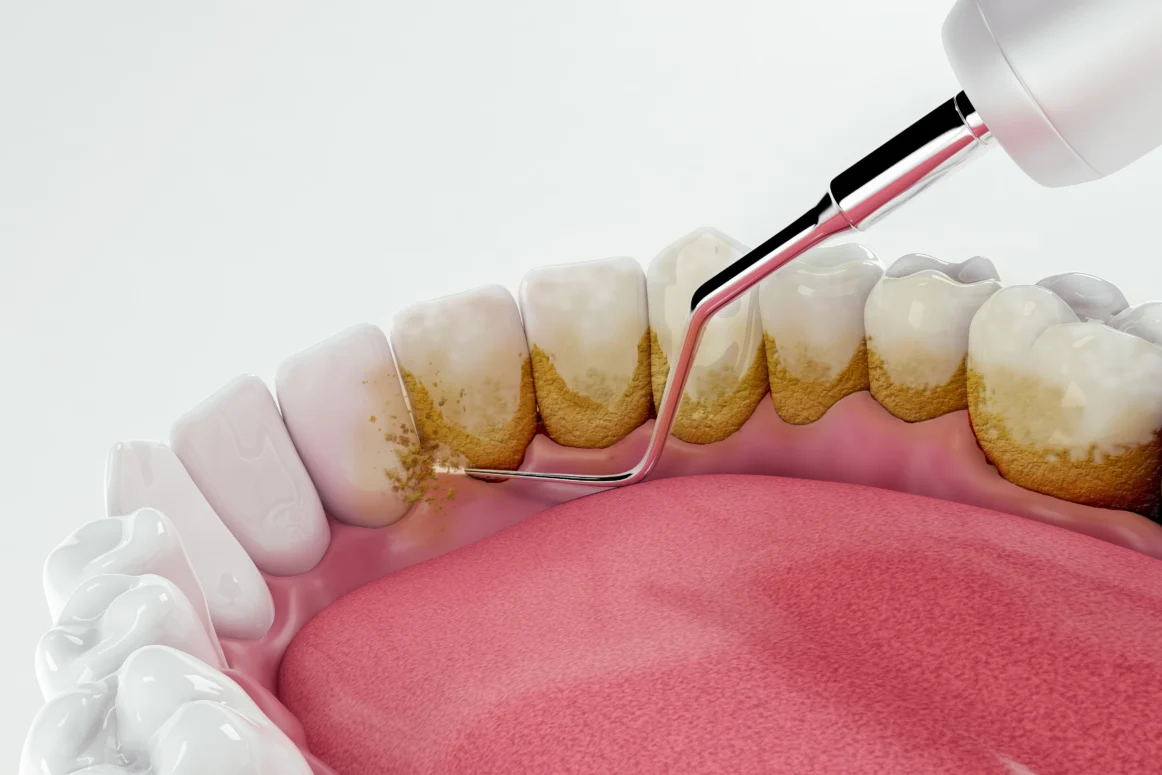
- An ultrasonic scaler. The tip vibrates at high frequency and fractures the deposit off the tooth rather than scraping it, while a water spray cools the tip and washes the debris away. This does the bulk of the work, and it is where the buzzing and the water come from.
- Hand instruments (curettes and scalers). Fine hand tools finish the job by feel, reaching the areas the ultrasonic tip cannot follow — under the gum margin and around the curve where two teeth meet.
- Polishing. A rubber cup and paste smooth the surface afterwards, which removes remaining surface stain and leaves less for plaque to grip.
For deposits above the gum line — supragingival calculus — this is a single routine appointment, and no anaesthetic is normally needed. If you want the distinction between this and a cosmetic treatment, our comparison of teeth cleaning vs teeth whitening sets it out: cleaning removes what is on the tooth, whitening changes the colour of the tooth itself.
When Tartar Is Below the Gum Line
Where deposits have formed on the root surface inside the gum pocket, a routine clean cannot reach them, and the treatment is scaling and root planing — often described to patients as a deep clean. The root surface is cleaned and smoothed inside the pocket, usually with local anaesthetic and often across two appointments.
This is well-supported ground rather than an upsell. The ADA’s clinical practice guideline on the nonsurgical treatment of chronic periodontitis found that scaling and root planing showed a moderate benefit, that the benefits outweighed the potential adverse effects, and the panel voted in favour of it as the initial nonsurgical treatment.3
One detail from the same guideline is worth carrying into any consultation, because laser gum treatment is offered widely: the panel’s recommendations for the nonsurgical use of lasers as adjuncts to scaling and root planing were expert opinion against, because of uncertainty about their clinical benefit and the balance of benefit to adverse effects.3 A laser is not a substitute for the instrument work.
What the procedure involves step by step is covered in our guide to scaling and root planing.
What to Expect Afterwards
Teeth feel noticeably smoother, and most people find the colour improves without any whitening — because a good share of what they were seeing was the deposit rather than the tooth.
Two things surprise people, and both are normal:
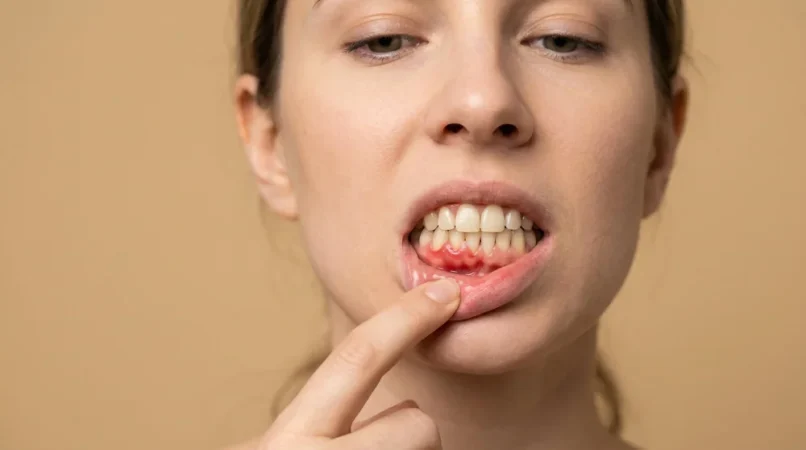
- Some bleeding during and just after. Gums bleed where they were already inflamed, not because the cleaning caused it. It settles as the inflammation resolves over the following days.
- Short-term sensitivity to cold. Root surface that was covered by the deposit is now exposed to the mouth. It typically settles within a couple of weeks, and a desensitising toothpaste helps in the meantime.
Does removing tartar loosen your teeth?
No — tartar plays no part in holding a tooth in. Teeth are held by the periodontal ligament and the bone around the root, and calculus is a deposit sitting on the surface.
Where the belief comes from is real, though. In a case with long-standing gum disease, heavy deposits can bridge the gaps between teeth and mask bone loss that had already happened. Take them away and those gaps become visible and the teeth feel different — but the change was there beforehand; the cleaning revealed it. And removing the deposit is what allows the gum to reattach and the inflammation to stop, which is what actually protects what is left.
How to Stop It Coming Back
Because tartar has to be professionally removed once it forms, everything useful you can do is on the prevention side — and there it works well.
- Clean between your teeth every day, with floss or interdental brushes. The NHS lists this alongside brushing, not as an optional extra1 — and between the teeth is precisely where tartar starts.
- Brush twice daily with fluoride toothpaste, angled into the gum line rather than straight at the tooth. Spit, don’t rinse.
- Pay attention to the inside of the lower front teeth, the single most common site and the one most often missed.
- Address a dry mouth. Reduced saliva changes how quickly deposits build. If a medication is the cause, it is worth raising rather than living with.
- Stop smoking, which increases build-up and is the strongest modifiable factor in gum health generally — the same one that shows up in our guide to why implants fail.
- Keep the recall interval you were given. Not everyone needs the same one; it is set from how fast you personally build deposits.
Tartar Removal at DentSpa
Very few people fly abroad for a scale and polish alone, and it would be odd to suggest otherwise. Where this matters for international patients is different: a hygiene appointment is the step that comes before cosmetic or implant work, not after it.
Veneers, crowns and implants all depend on healthy gum tissue. Ceramic margins sit at the gum line, and inflamed, bleeding gums make an accurate impression and a clean bond harder to achieve. So when a treatment plan is built at DentSpa, the gum condition is assessed at the examination and cleaning is scheduled first if it is needed — which is why you may see it in your plan when you came for something else entirely.
The examination establishes how much deposit there is, where it sits relative to the gum, whether pockets have formed, and whether anything needs treating before the cosmetic work starts. Where the gum margin itself is uneven once the tissue is healthy, that is a separate conversation — see gum contouring. And if decay has been sitting under a heavy deposit, our guide to fixing tooth decay covers what happens next.
What you can check before you commit
- Independent recognition. DentSpa was named best dental clinic in Europe in the odontology category at the European Awards in Medicine.4
- Accreditation covering the whole journey. DentSpa holds the Certification for Excellence in Medical Travel Patient Experience from Global Healthcare Accreditation,5 which assesses the information you get before travelling, care coordination, and aftercare once you are home.
- Regulatory basics. Licensed by the Turkish Ministry of Health, certified to ISO 9001 and ISO 10002, and a member of the Turkish Dental Association. The clinic is in the Şişli district of Istanbul.
- Real patient voices. Read the verified Trustpilot and Google reviews and see results on Instagram.
If you are weighing up treatment in Turkey more generally, the planning is set out in our guide to dental tourism in Turkey, and the questions worth asking any clinic are in how to find a dentist in Turkey.
Not sure whether yours needs a routine clean or something more? Send DentSpa a few clear photos for a free, no-obligation assessment from our specialists. Book a free consultation or message us on WhatsApp.
Frequently asked questions
How do you remove tartar from teeth?
Can I scrape tartar off my own teeth?
Can I remove tartar naturally?
Can tartar break off naturally?
Does brushing remove tartar?
Does removing tartar loosen your teeth?
Is scaling painful?
Why do my gums bleed after a cleaning?
How often should I have my teeth cleaned?
Does laser treatment remove tartar instead of scaling?
Sources
- NHS — Gum disease
- American Dental Association — Oral Health Topics: Whitening (anecdotal claims and do-it-yourself whitening)
- American Dental Association — Nonsurgical Treatment of Chronic Periodontitis Clinical Practice Guideline (2015)
- The European Awards in Medicine — DentSpa Clinic — European Award in Medicine in Odontology
- Global Healthcare Accreditation — DentSpa Strengthens Global Trust in Turkey’s Dental Services with GHA Certification














 70%
70%