Table of content
Table of content
You lose a tooth or two, you decide on implants, and then you hear the line nobody expects: “There isn’t enough jawbone to support them.” It’s a common moment, and it stops a lot of people in their tracks.
The good news is that it’s rarely the end of the road. Lost jawbone can usually be rebuilt, and the techniques for doing it are well established and predictable. This guide covers what causes jaw bone loss, the proven ways to restore it, where stem cell therapy honestly sits today, and how the whole thing fits together before an implant goes in.
Why the Jaw Loses Bone in the First Place
Jawbone doesn’t disappear for one reason — a few processes drive it, and they often overlap. Tooth loss is the big one. Jawbone behaves a bit like muscle: it needs to be used to stay strong. Every time you chew, the tooth root transmits force into the surrounding bone, and that stimulation tells the bone to maintain itself. Remove the tooth and the stimulation stops.
How quickly that happens surprises most people. A systematic review of 20 human studies measured what an untreated extraction site does on its own: 29–63% horizontal (width) loss and 11–22% vertical (height) loss by six months — with 32% of the width already gone at three months.1 In millimetres, the ridge narrowed by an average of 3.79 mm while dropping only 1.24 mm in height, which is why width is usually the problem an implant runs into first.1
Gum disease is the other major driver. Chronic periodontitis provokes long-running inflammation that steadily breaks down the gum and the bone anchoring the teeth — slow, quiet, and often advanced by the time it’s obvious. Age and health play a part too: bone heals more slowly with age, and conditions like poorly controlled diabetes, osteoporosis and rheumatoid arthritis accelerate loss. The practical takeaway: the longer a gap is left, the more bone is lost — timing matters.
The Proven Ways to Rebuild Jawbone
These techniques have been used for decades and remain the backbone of pre-implant treatment. They work, they’re predictable, and for the vast majority of cases they’re all that’s needed.
Bone Grafting
Bone grafting is the core procedure. Graft material is placed where bone has been lost and acts as a scaffold that triggers the body’s own repair response — new, healthy bone grows in over the following months. The graft can come from several sources; here’s a full guide to a bone graft for dental implants:
| Graft type | Source |
|---|---|
| Autograft | The patient’s own body |
| Allograft | A human tissue bank |
| Xenograft | Animal-derived material |
| Alloplast | Synthetic material |
None is automatically “best” — the right one depends on how much bone is missing, where, and the surgeon’s plan for the eventual implant.
Sinus Lift
A sinus lift addresses a specific problem in the upper jaw near the back teeth, where the sinus cavity often leaves too little bone for an implant. The sinus membrane is gently lifted to create space, and graft material is placed underneath it. Over the following months, blood vessels and bone cells grow into that material and form new, stable bone. It’s a standard step for upper-molar implants and is frequently done alongside grafting — the procedure is broken down step by step in our guide to a sinus lift for dental implants.
Ridge Augmentation
Ridge augmentation is a focused form of grafting that rebuilds a jaw ridge that has narrowed after tooth loss. The gum is opened to expose the deficient area, graft material is packed in, a barrier membrane is placed over it, and the gum is closed to heal. It’s the go-to when the problem is ridge width rather than height — which, going back to the numbers above, is the more common shortfall. For most patients, one or a combination of these — planned around 3D imaging — is exactly what restores a solid foundation for implants.
Where Stem Cell Therapy Actually Stands
Stem cell regeneration gets described as the future of dentistry, and there’s real science behind the excitement — but it’s also widely oversold, so it’s worth being precise. The approach centres on mesenchymal stem cells (MSCs), usually taken from bone marrow, fat, or the pulp of extracted teeth. Under the right conditions these can turn into bone-building cells and support healing around a graft site, which makes them appealing for harder cases: severe bone loss, failed grafts, or compromised healing.
Here’s the honest state of the evidence. A systematic review of 16 human controlled trials did find a clinical benefit from cell therapy — improved outcomes in ridge preservation, lateral ridge augmentation and periodontal regeneration — but concluded there was insufficient evidence to identify which cell-based technique performs best.2 A 2024 review in the Journal of Dental Research goes further, listing the practical obstacles (standardising preparations, cost, regulatory compliance) and concluding that there is currently insufficient evidence to support translating dental stem cell therapy into clinical practice.3 Two limitations matter most for a patient reading this:
- It’s not a standalone treatment. Stem-cell approaches are used with bone grafting to enhance regeneration, not instead of it.
- It’s not routine. Many countries haven’t approved these therapies for dental use, and where offered it’s through specialised, heavily regulated clinics, with results that vary.
The fair summary: promising, genuinely researched, and not yet a standard option you should expect at most clinics. If a clinic presents it to you as a replacement for grafting, that’s a claim ahead of the evidence. For the foreseeable future, the reliable path to rebuilding jawbone runs through the proven techniques above.
Who Needs Bone Rebuilt Before Implants — and Who Doesn’t
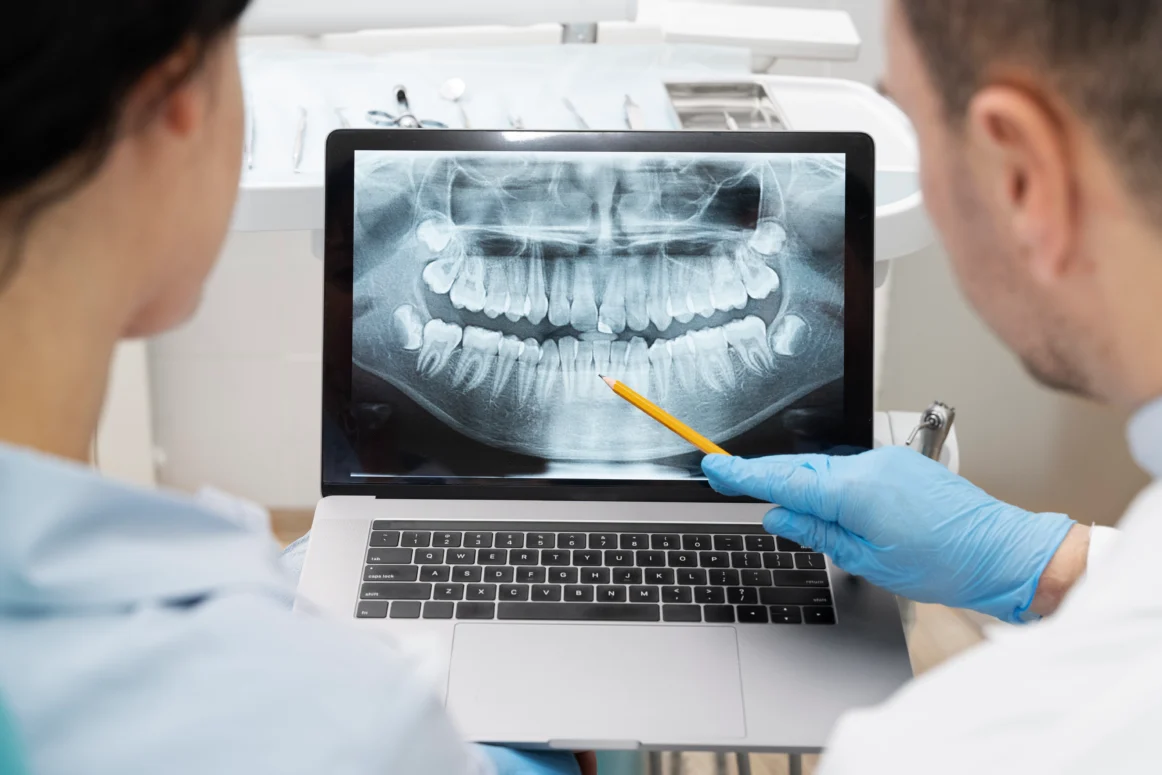
Not everyone with missing teeth needs grafting. The deciding factor is how much healthy bone is left to anchor an implant. As a rough guide, the bone needs to be around 10 mm tall and 6 mm wide to hold a standard implant securely — here’s exactly how much bone an implant needs and how it’s assessed — and a 3D scan is what confirms whether you’re there. It isn’t something you or your dentist can judge by eye.
If there’s enough bone, implants can often go straight in — a single tooth, several teeth, or a full-arch solution like All-on-4 or All-on-6. If there isn’t, grafting or a sinus lift comes first to build the foundation, and the implant follows once it’s healed — and if you’ve been told you’re short on bone, here are all your options when there isn’t enough bone for implants. That sequencing isn’t a delay tactic: an implant placed into insufficient bone is an implant set up to fail, which is covered in more detail in our guide to why implants fail and how it’s prevented.
How Long the Waiting Really Takes
Healing time is the part patients most want pinned down, and it depends entirely on what was done:
| Procedure | Typical healing before implants |
|---|---|
| Simple ridge augmentation | 3–4 months |
| Moderate sinus lift | 4–6 months |
| Large grafts or autografts from distant sites | 6–9 months |
These are typical ranges, not promises — your healing rate, overall health and the size of the graft all shift the timeline, and your own is confirmed once your scan has been read. The point of waiting is simple: the new bone has to fully integrate before it can carry an implant. Rushing that step is how early implant failures happen.
Frequently asked questions
Can jaw bone loss be reversed?
What causes bone loss in the jaw?
How fast do you lose jaw bone after a tooth is extracted?
How long does it take to rebuild jaw bone before an implant?
Can you rebuild jaw bone without surgery?
Does stem cell therapy work for jaw bone regeneration?
Why Patients Choose DentSpa for Bone Grafting and Implants
DentSpa is built around exactly this kind of work — the foundation-first cases where planning makes or breaks the outcome. Every case is mapped from a 3D CBCT scan before any surgery, so bone volume, sinus anatomy and nerve position are known rather than estimated, and grafting and implant placement are planned as one sequence instead of improvised in stages. The surgical team handles the full range of bone-rebuilding and implant procedures, including the more demanding reconstructions where bone loss is severe.
Experience is the part patients can’t easily judge from a website — so here’s one number that doesn’t come from us. Straumann publishes a certificate-verification page recording the implants DentSpa placed over a full year, which you can check in seconds: see the Straumann Achievement Award and how to verify it yourself.
The rest is equally checkable. DentSpa holds the Certification for Excellence in Medical Travel Patient Experience from Global Healthcare Accreditation, which assesses the parts of treatment abroad a clinical inspection doesn’t reach — information before you travel, care coordination and the handover of aftercare.4 The clinic was named best dental clinic in Europe in the odontology category at the European Awards in Medicine, is licensed by the Turkish Ministry of Health, certified to ISO 9001 and ISO 10002, and a member of the Turkish Dental Association. Over 50,000 international patients have been treated at the Şişli clinic; how those cases went is in the verified Trustpilot and Google reviews, each one linked back to where it was posted.
For international patients the logistics are handled end to end, and aftercare continues remotely once you’re home. You get a clear read on your bone and a realistic plan — timeline and all — before you decide anything. Book a free consultation and send recent X-rays or a scan to get started.
Sources
- 1. Tan WL, Wong TLT, Wong MCM, Lang NP. A systematic review of post-extractional alveolar hard and soft tissue dimensional changes in humans. Clin Oral Implants Res. 2012;23(Suppl 5):1–21. pubmed.ncbi.nlm.nih.gov/22211303
- 2. Cell-Based Therapies for Alveolar Bone and Periodontal Regeneration: Concise Review. Stem Cells Transl Med. 2019;8:1286–1295. pmc.ncbi.nlm.nih.gov/articles/PMC6877771
- 3. Ivanovski S, Han P, Peters OA, Sanz M, Bartold PM. The Therapeutic Use of Dental Mesenchymal Stem Cells in Human Clinical Trials. J Dent Res. 2024;103(12):1173–1184. pubmed.ncbi.nlm.nih.gov/39370700
- 4. Global Healthcare Accreditation — DentSpa Strengthens Global Trust in Turkey’s Dental Services with GHA Certification, 16 July 2026.















 70%
70%