Table of content
Table of content
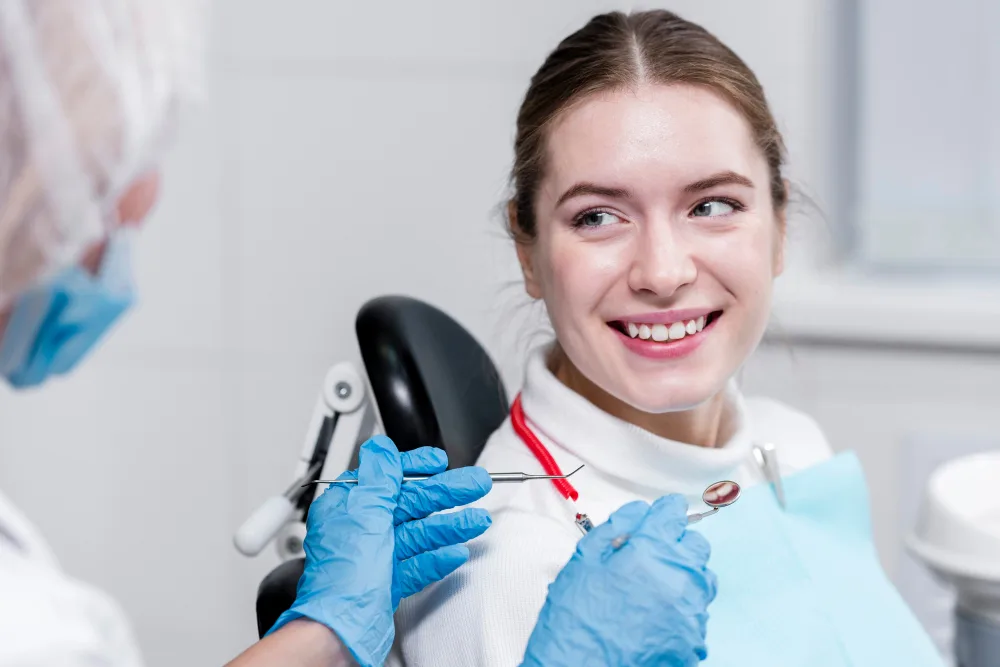
You don’t have to be a detective to notice the change. Someone you know suddenly has a brighter, more even smile, and you can’t quite work out what’s different. Often, the answer is dental veneers — thin custom-made shells bonded to the front of the teeth, covering chips, stains and irregularities in one step.
Veneers change a smile substantially, and the before-and-after pictures below show why they are one of the most requested cosmetic treatments in the world.
One thing belongs at the top rather than buried in the procedure section: for most veneers, a thin layer of enamel is removed from the front of the tooth — and enamel does not grow back. That is not a reason to avoid veneers. It is the reason to be certain veneers are the right treatment for your case before starting, and it is covered honestly further down.
This guide covers what veneers are, the situations they suit, what the procedure involves, the types available, and how the results actually hold up.
What Are Dental Veneers?
A dental veneer is a custom-made layer that covers the front surface of a tooth. It is very thin, and it is made to reshape and lighten the visible part of the tooth.
Veneers are made from porcelain or composite — more on the differences below — and they are used for chipped, cracked, stained, worn and slightly irregular teeth. Well made, they mimic the colour, translucency and surface texture of natural enamel closely enough that they read as teeth rather than as dental work.
Worth being precise about one thing: veneers change how teeth look. They do not move teeth. For mild crowding or a slight rotation, reshaping the visible surface can make the arch read as straight — but the teeth stay where they are, and the bite underneath is unchanged. Where the crowding is more than mild, that is an orthodontic question rather than a veneer one.
The “Before” Stage — When to Consider Veneers
Most people underestimate how many situations veneers can help with. Here are the common “before” scenarios — each one a reason to have the conversation with a cosmetic dentist.
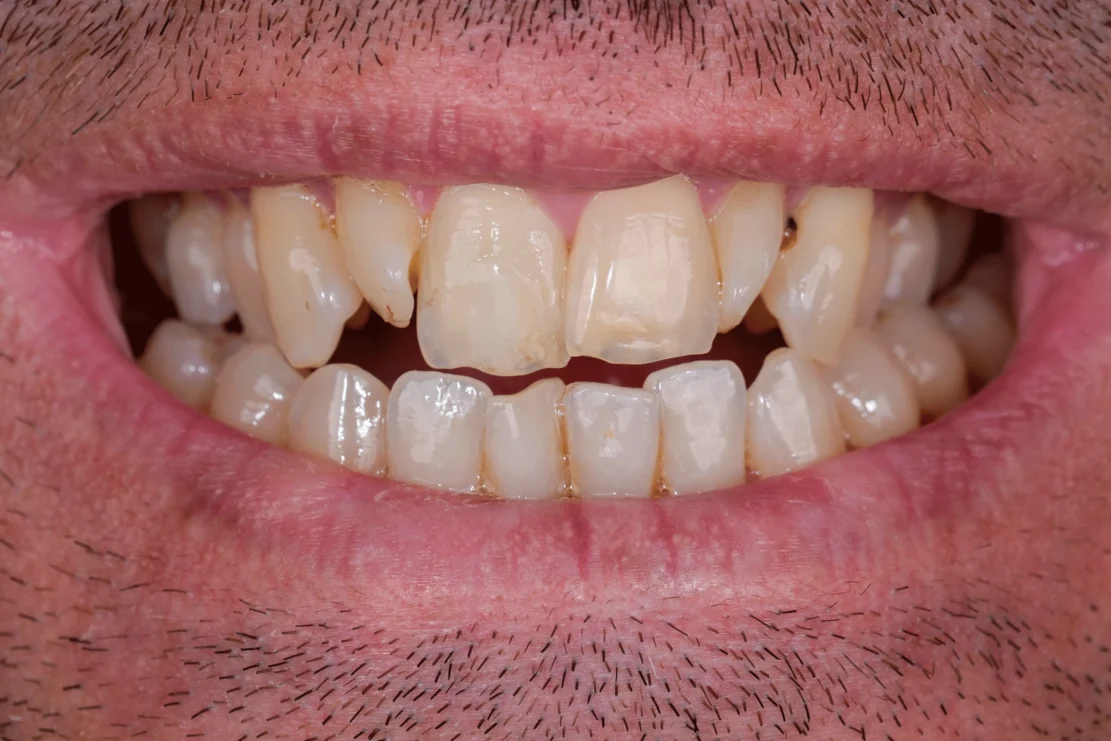
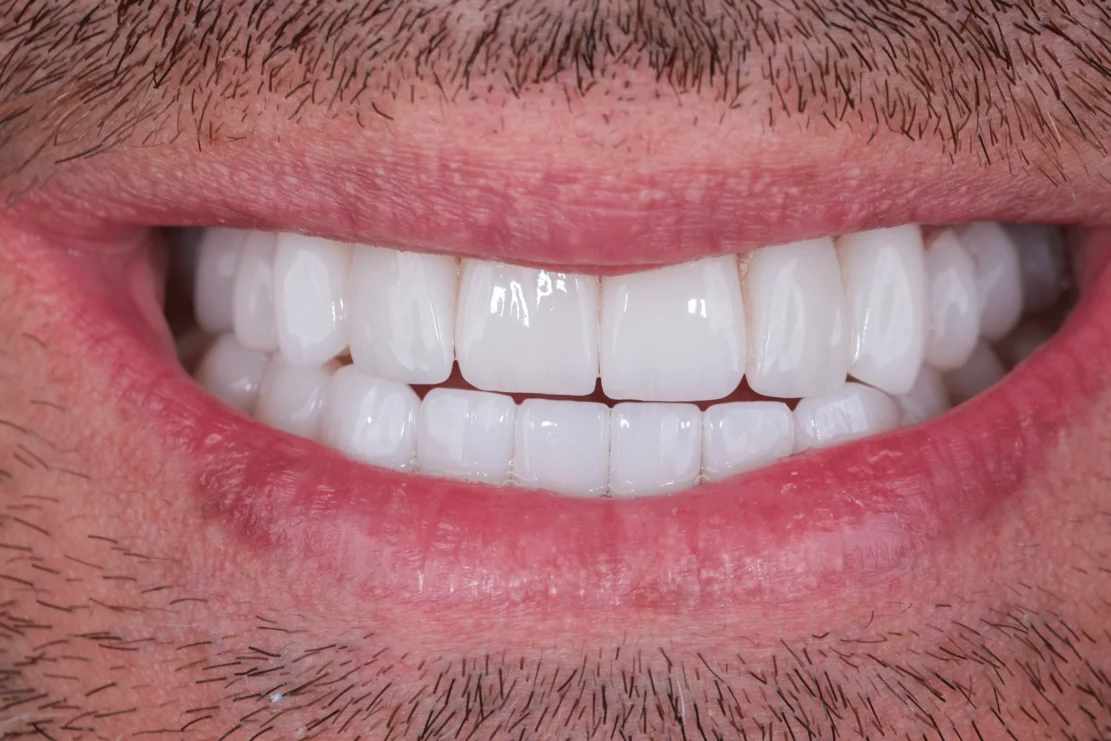
Chipped or Cracked Teeth
Even a small chip can make you self-conscious, because it breaks the line your eye follows across the smile. A veneer covers the damaged surface and restores the shape of the tooth.
Where the chip is small and the rest of the tooth is sound, bonding may achieve the same thing more conservatively — the comparison is in our guide to fixing a chipped front tooth.
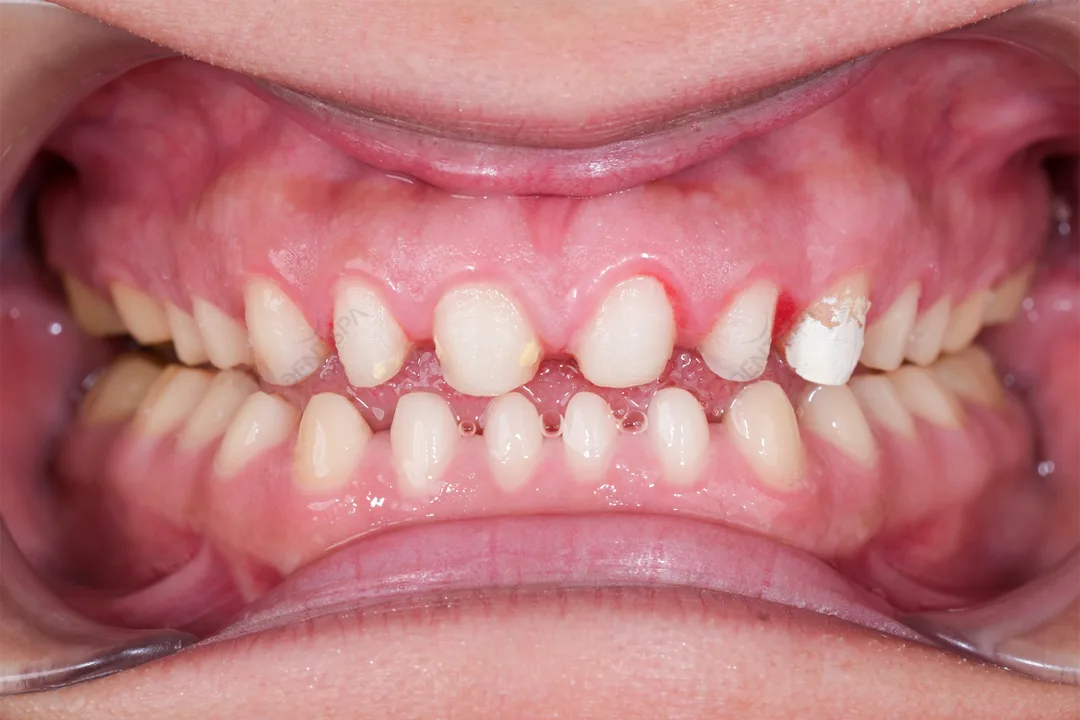
Before & After
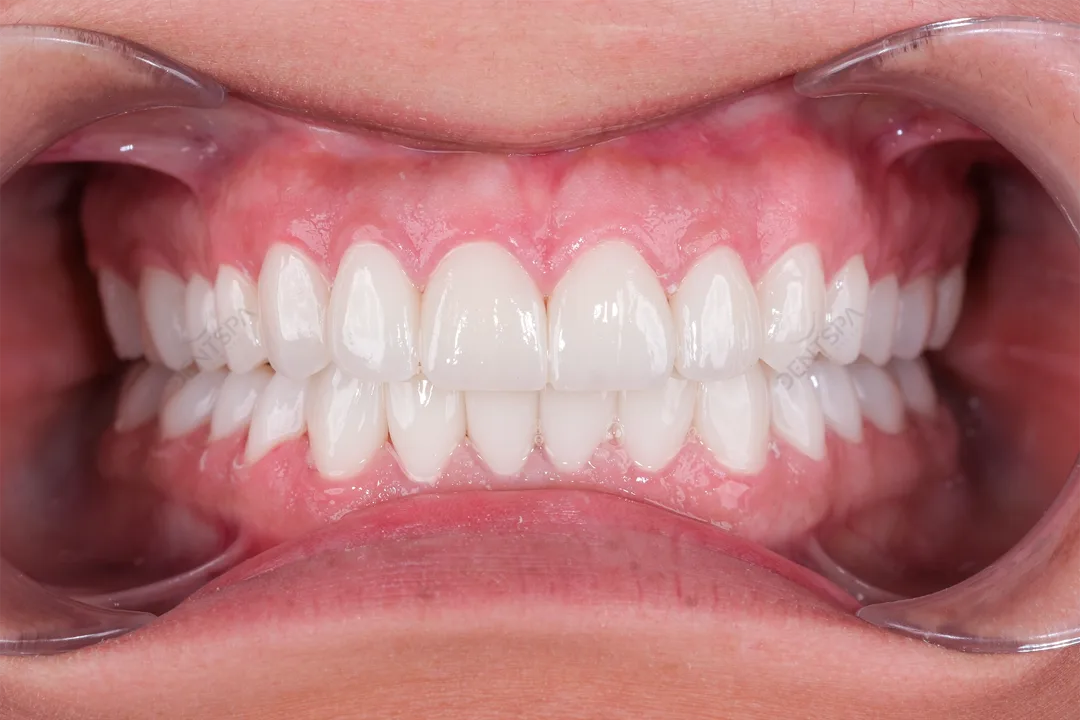
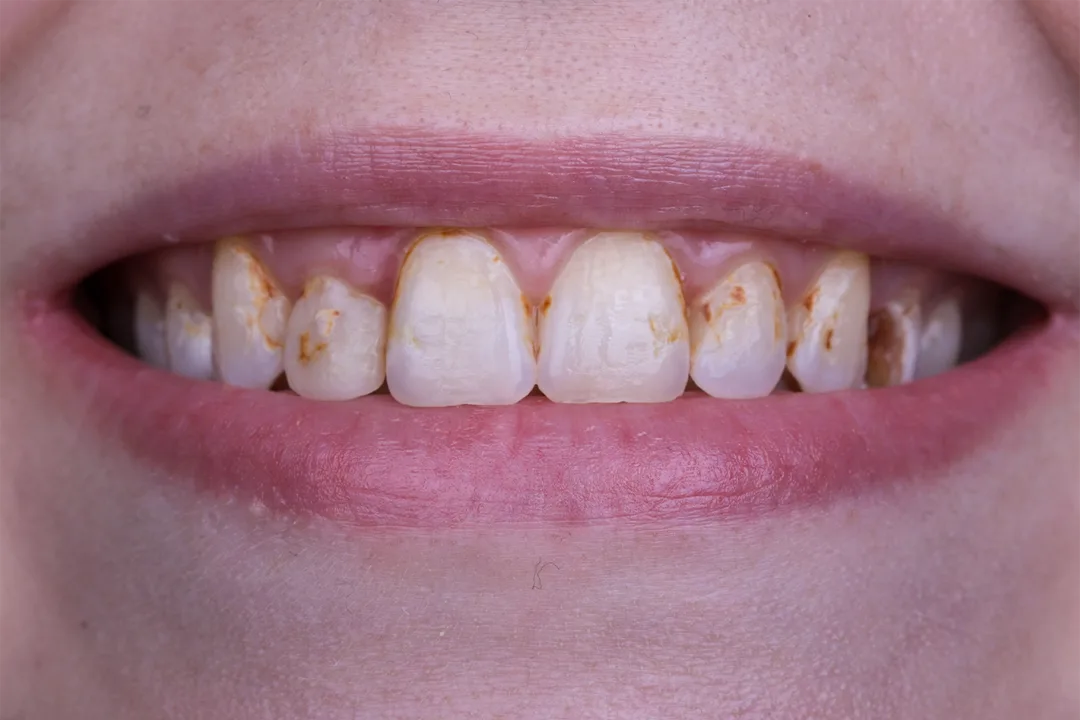
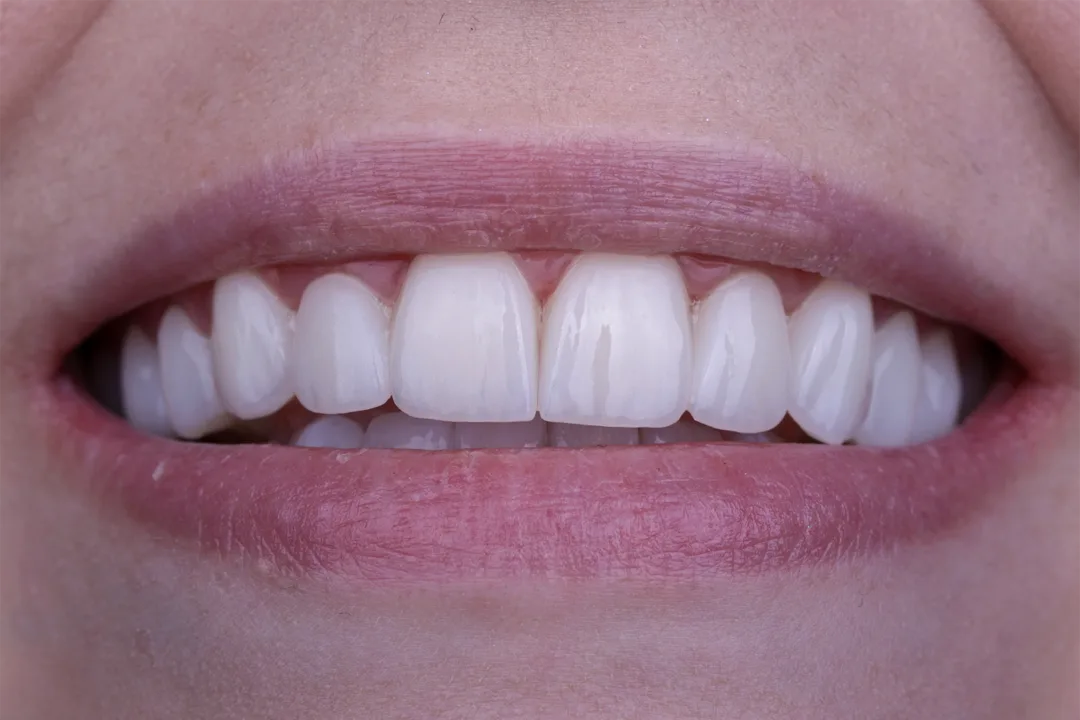
Stubborn Stains or Discoloured Teeth
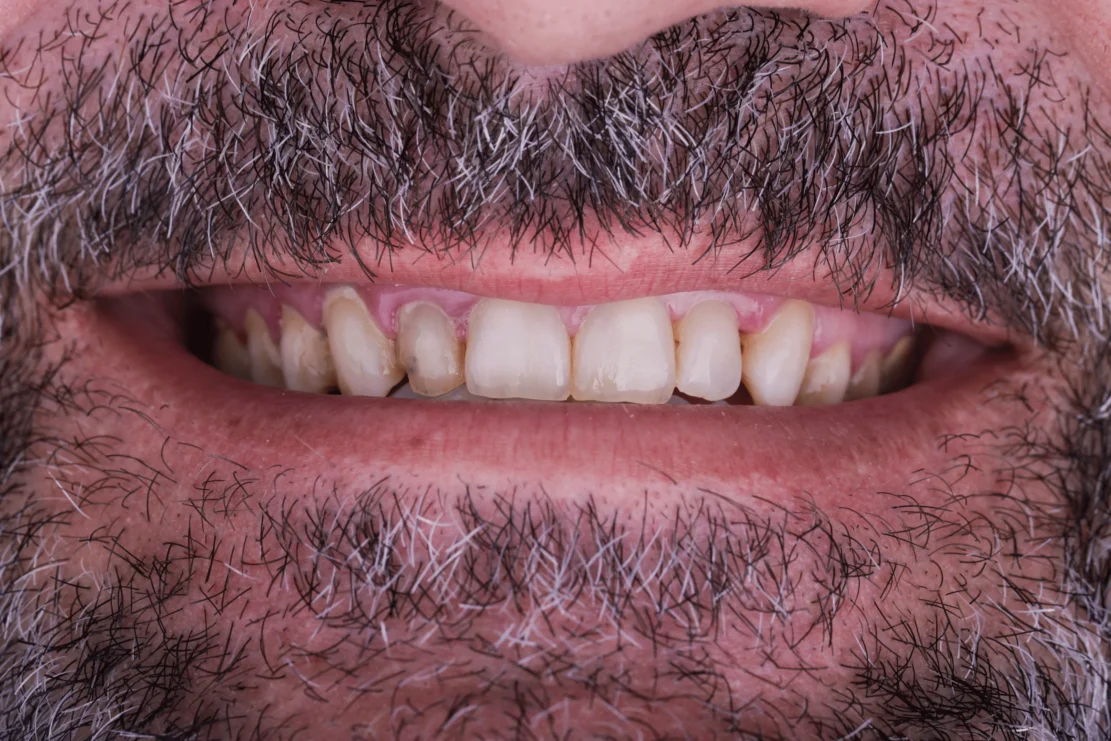
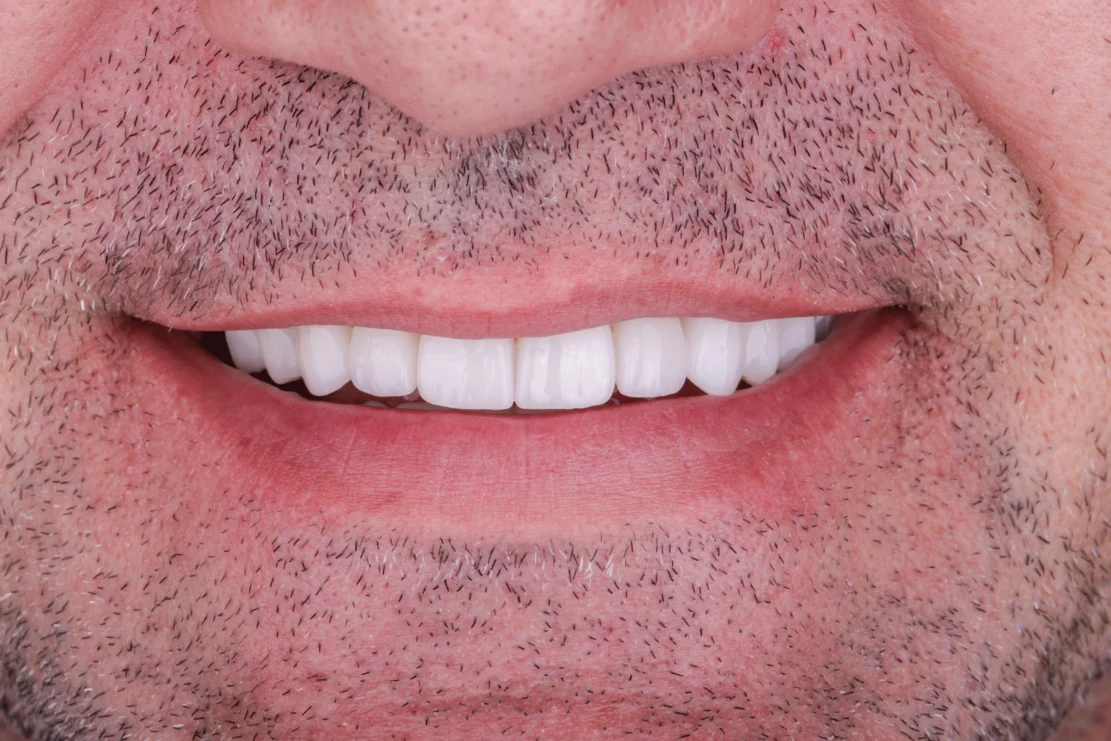
Coffee, wine and years of tea leave marks that whitening does not always shift — and discolouration coming from inside the tooth, after an old injury or root canal, responds less predictably still.
Veneers cover the surface rather than bleaching it, which is why they work where whitening has not. Where the cause of the colour matters — and it often does — see what causes stains on teeth and our guide to whitening strips before deciding.
Before & After
Gaps Between the Teeth
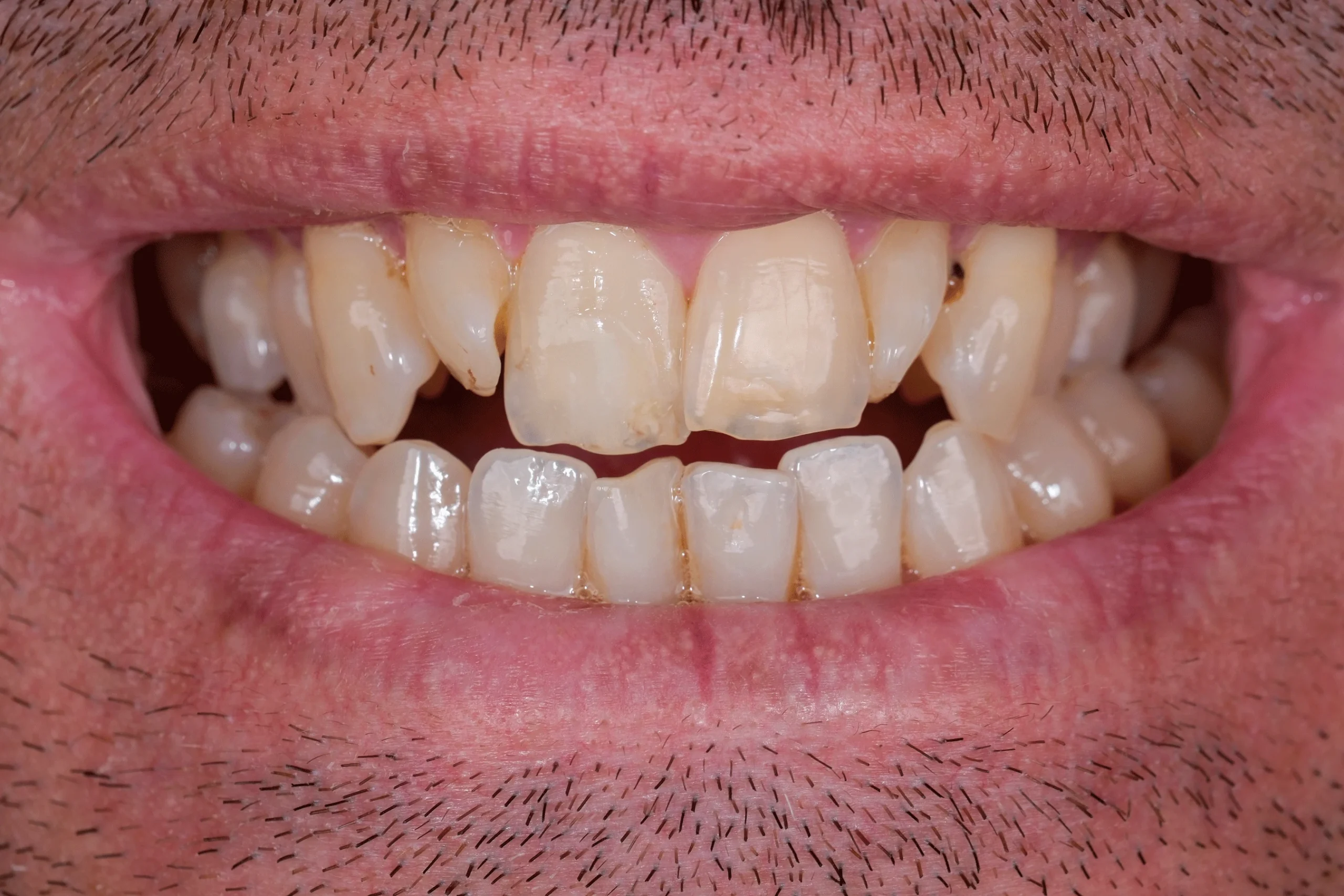
A gap between the front teeth can be closed by widening the teeth on either side of it, so the space disappears without moving anything. For a single modest gap this is often the quickest route to the result people want.
There is a limit worth knowing: the wider the gap, the wider the veneers have to be made to close it, and at some point that stops looking natural. Where the space is large, or where there are several, closing it orthodontically first gives better proportions — the options are set out in our guide to gaps between teeth.
Before & After
When Teeth Look Worn Down
Teeth shorten over the years through grinding and acid erosion, and short teeth make a smile read as older even when the colour is fine. Veneers rebuild the length and shape.
One condition attached: if grinding caused the wear, that needs managing alongside — otherwise the same forces work on the new restorations. Where enamel has thinned generally, that is worth assessing before any cosmetic plan.
Before & After
The Veneer Procedure
Porcelain veneers are made in a laboratory, so the treatment runs across appointments rather than in a single sitting. Here is the sequence.
Step 1: Consultation and planning
The first step is a conversation about what you want to change. Your dentist examines the teeth and gums, takes photographs, radiographs and digital scans, and establishes whether veneers are the right treatment — including whether the gums are healthy enough and whether there is sound enamel to bond to.
Digital design lets you see the proposed shape and shade before anything is prepared. That preview is the moment to change your mind about length, width or brightness — not afterwards. The full planning process is in our guide to veneers in Istanbul.
Step 2: Preparing the teeth
Under local anaesthetic, a thin layer of enamel is removed from the front of each tooth receiving a veneer. This creates room so the veneer sits flush rather than bulky, and gives it a surface to bond to.
How thin is thin? Published preparation guidance for porcelain laminate veneers puts it at roughly 0.3 to 0.7 mm depending on the part of the tooth — and as little as 0.3 to 0.4 mm near the gum line, because the enamel there is only that thick to begin with.1 Preparing beyond the enamel and into dentine weakens the bond, which is why conservative preparation is a clinical priority and not just a marketing line.
And the part that deserves saying plainly: enamel does not grow back. Once a tooth has been prepared it will always need a veneer or crown on it. That is a reasonable trade for a result you want — but it is a decision to make once, with the design agreed, rather than something to discover afterwards.
Step 3: Making the veneers
Impressions or digital scans go to the laboratory, where each veneer is made to your teeth. In the meantime you wear temporary veneers — these protect the prepared teeth and let you try the shape, so tell your dentist if anything about them does not feel or look right. Adjustments made at this stage carry through to the final ones.
Step 4: Bonding the veneers
The finished veneers are tried in first, so fit, shade and the way they sit against the lip and gum line can all be checked before anything is fixed. Once you and your dentist agree, the tooth surface is cleaned and conditioned, adhesive cement is applied, and each veneer is set in place and cured with a light. The bite is checked and adjusted last.
How Long Veneers Actually Last
Rather than a round number, here is what the published research reports.
A systematic review covering roughly 6,500 porcelain laminate veneers estimated survival at 95.5% at ten years.2 And a study of minimally invasive veneers — where preparation stayed within enamel — followed 186 veneers for a mean of around nine years with 100% survival.3
Two things follow from that. First, well-made porcelain veneers are a long-term restoration rather than a short-term fix. Second, how conservatively the tooth is prepared is part of how long the result lasts — which is the argument for choosing a plan on the dentistry rather than on the turnaround time. What determines the outcome in an individual case is set out in veneer longevity.
Dental Veneer Before and After Stories
You can see real results in our Smile Gallery, alongside verified patient reviews. A few typical cases:
Case 1: Gaps between healthy teeth
The patient came in with several spaces between otherwise healthy teeth. Nothing was wrong clinically — the spacing simply bothered them enough to affect how they smiled in photographs.
After digital planning, porcelain veneers were made slightly wider to close the spaces. The result looked natural because the widths were designed to stay in proportion — the point at which gap closure with veneers stops working is when they have to be made too wide for the face.
Case 2: Chipped and worn front teeth after an accident
This patient travelled to Turkey after chipping several front teeth in a bicycle accident, with further wear on the edges.
Once the teeth were confirmed sound underneath, veneers restored the length and edge shape. How many visits a case like this needs depends on what the examination finds — that is settled in the treatment plan before travel, not on arrival.
Case 3: Long-standing discolouration
Years of smoking and coffee had left this patient’s teeth discoloured in a way whitening had not resolved. After hiding their teeth in photographs for a long time, they decided to look at veneers.
Porcelain veneers on the upper and lower front teeth produced an even, bright result. Worth noting for anyone in the same position: veneers themselves cannot be whitened later, so the shade is chosen once — which is why whitening any remaining natural teeth is done before the ceramic is made, not after.
Types of Veneers
The names overlap in marketing more than they do in dentistry. Here is what they actually mean.
Porcelain (laminate) veneers
The most common type, and the one the survival figures above refer to. “Porcelain laminate veneer” and “laminate veneer” are the same thing — laminate describes the thin layered form, not a different material. Porcelain resists staining well and holds its colour, and it is made in the laboratory to your design. It costs more than composite and takes more than one visit. More detail in our guide to laminate veneers.
Composite veneers
Built up from tooth-coloured resin, often directly onto the tooth in a single visit, and usually less expensive. They are more repairable — a chip can be patched rather than the whole veneer replaced — but the material is softer than porcelain, so it picks up stain and surface wear sooner and needs polishing and occasional touch-ups. The trade-offs are compared in bonding versus veneers.
No-prep and minimal-prep veneers
Ultra-thin porcelain veneers bonded with little or no enamel removal. Where they are appropriate, they are the most conservative option available, and the evidence on preparation staying within enamel is encouraging.3
They are not suitable for everyone, and the reason is straightforward: adding material without removing any makes the tooth slightly thicker, so they work where teeth are small, worn or slightly set back — and not where teeth already sit forward. Whether they suit you is an examination question, not a preference.
Palatal veneers
These sit on the palatal surface — the inner, tongue side of the upper front teeth — rather than the front. They are a restorative rather than cosmetic solution, used where that inner surface has been eroded away by acid or worn by grinding, which is common in reflux and in some dietary patterns and often invisible from the front.
They restore lost tooth structure and the biting surface, and are frequently combined with veneers on the front of the same teeth where the wear has gone through both sides. Related reading: enamel erosion and what can be done.
Who Is a Good Candidate for Veneers?
Veneers are likely to suit you if you have:
- Chipped or cracked front teeth with sound structure underneath
- Staining that whitening has not resolved, including discolouration after trauma
- Modest gaps between the front teeth
- Mildly irregular or slightly rotated teeth
- Worn or uneven edges
- Healthy gums and enough sound enamel to bond to
The plan usually changes first if there is untreated decay or gum disease (treated before any cosmetic work), heavy grinding (managed alongside, or the same forces damage the new veneers), moderate or severe crowding (an alignment problem, not a surface one), or very little remaining enamel — in which case a crown may hold better than a veneer.
Aftercare for Your New Smile
- Brush with a soft brush and clean between the teeth daily. The veneer cannot decay, but the tooth underneath and the margin where they meet can — that margin is where problems start.
- Don’t bite hard objects. Ceramic is strong in compression and brittle at the edges; ice, pens and packaging are what chip veneers.
- Wear a nightguard if you grind. This is the single most useful protective habit for anyone with veneers and a grinding history.
- Moderate coffee, red wine and tobacco. Porcelain resists staining, but the natural teeth around it do not — and that mismatch is what people notice.
- Keep regular check-ups and professional cleaning, mentioning your veneers so an appropriate polishing paste is used.
Dental Veneers in Turkey
Turkey has become a common destination for veneer treatment: experienced cosmetic dentists with high case volume, laboratories working to short turnarounds, the same CE-marked ceramics used in UK and European practices, and clinics that coordinate transport and accommodation alongside the clinical appointments.
On cost, treat any figure you read as an approximate range rather than a quote. What a case costs depends on how many teeth are involved, the ceramic chosen and whether any preparatory treatment is needed, and it is confirmed in writing after an assessment. Comparisons are in our guides to veneer costs in the UK and dental treatment prices in Turkey.
The gap comes from the local cost base — laboratory work, staffing and premises — not from fewer appointments, thinner planning or different materials. That distinction matters when you compare: the number of teeth, the ceramic, the number of visits and what happens if something needs adjusting later should all be in the plan before you book flights. How the journey is organised is covered in dental tourism in Turkey, and the questions worth asking any clinic are in how to find a dentist in Turkey.
Why Choose DentSpa
- PhD-level specialist dentists, with professors and associate professors involved in complex cosmetic cases.
- Conservative preparation as a clinical priority — because how much enamel is kept is part of how long the result lasts, not a detail.
- The shade and shape agreed with you before anything is made, so you approve a result rather than describe one.
- Digital design and CAD/CAM fabrication, with high-quality ceramics selected for natural translucency and colour stability.
- Full A–Z care from the online consultation through to aftercare.
DentSpa was named best dental clinic in Europe in the odontology category at the European Awards in Medicine,4 is licensed by the Turkish Ministry of Health, certified to ISO 9001 and ISO 10002, and a member of the Turkish Dental Association. For treatment planned from abroad it also holds the Certification for Excellence in Medical Travel Patient Experience from Global Healthcare Accreditation.5 Since the clinic was founded in Istanbul in 2018, more than 50,000 international patients have been treated.
Book a free consultation or message us on WhatsApp. Send photographs of your smile and you will get an assessment of whether veneers are the right treatment for your case — including where something more conservative would achieve what you want.
Frequently asked questions
Do veneers ruin your teeth?
How long do veneers last?
Can veneers straighten crooked teeth?
Are veneers done in one visit?
Can veneers be whitened later?
What is the difference between porcelain, laminate and no-prep veneers?
What are palatal veneers?
Will veneers look obvious?
Sources
- Porcelain laminate veneer preparation design and enamel thickness. International Journal of Oral Science, 2019.
- Alenezi A, Alsweed M, Alsidrani S, Chrcanovic BR. Long-term survival and complication rates of porcelain laminate veneers in clinical studies: a systematic review. Journal of Clinical Medicine, 2021;10(5):1074.
- Śmielak B, et al. Retrospective evaluation of minimally invasive porcelain laminate veneers. 2022 — 186 veneers, mean follow-up approximately nine years.
- The European Awards in Medicine — DentSpa Clinic — European Award in Medicine in Odontology
- Global Healthcare Accreditation — DentSpa Strengthens Global Trust in Turkey’s Dental Services with GHA Certification














 70%
70%