Table of content
Table of content
No — veneers cannot be whitened. The American Dental Association states plainly that only natural teeth can be whitened, not tooth-coloured restorations.1 Bleaching gel works by penetrating tooth structure, and ceramic has nothing for it to penetrate. But that is not the end of the story: in most cases the veneers have not changed at all — the teeth around them have. And that is fixable.
Understanding Veneer Whitening: What’s Possible and What Isn’t
People begin to consider veneer whitening after noticing something is off in the mirror or in photographs. The veneers that used to look right now seem less vibrant, because their colour no longer matches the surrounding natural teeth. The difference becomes more noticeable when coffee, tea or red wine have darkened the natural teeth around them. It is completely normal at that point to wonder whether a whitening treatment could “fix” everything.
Veneers don’t respond to whitening the way natural teeth do. Once you understand how the materials behave, it becomes much easier to see what a polish will achieve, when whitening the natural teeth is the answer, and when replacement is the honest recommendation.
Can Veneers Be Whitened? The Truth
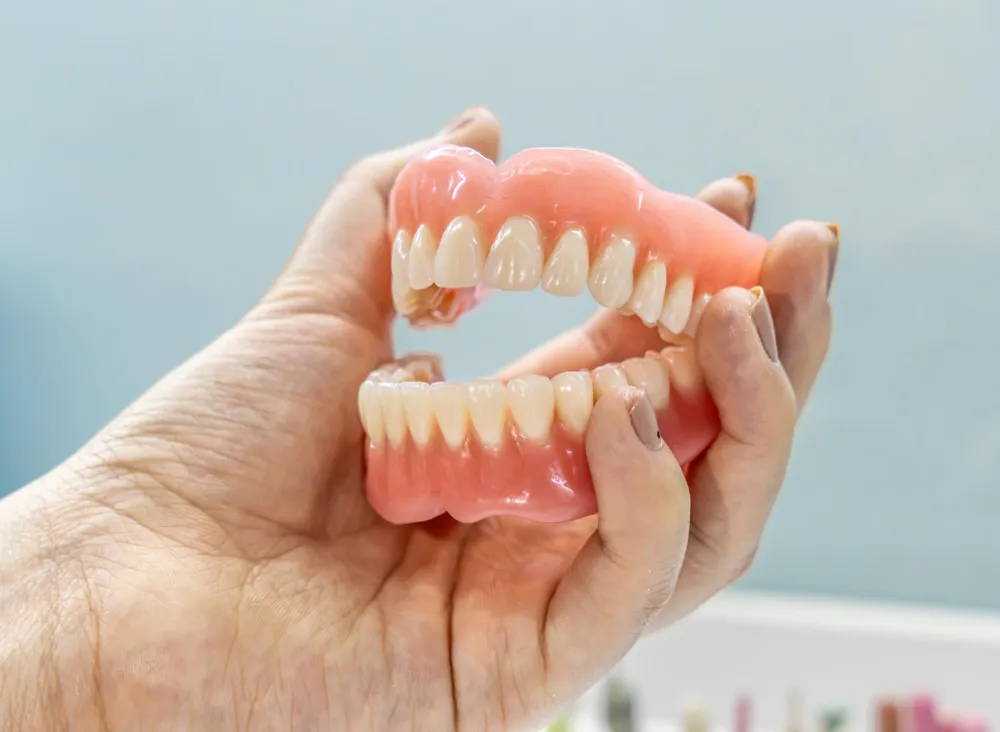
Hydrogen peroxide and at-home whitening kits will not whiten porcelain veneers. Natural tooth structure is porous, so whitening gel is absorbed and alters the colour from within. Porcelain is not — the gel simply sits on the surface and rinses away. The same applies to whitening strips, which the ADA notes work only on natural teeth.1
Composite veneers respond marginally more, because composite is slightly more absorbent — but the result is unpredictable and tends to produce short-lived, uneven colour rather than a genuine change.
Nonetheless, veneers that have gone dull do not mean you are stuck with them. Even though the ceramic itself cannot be chemically whitened, there are several safe ways to make the whole smile look brighter — and often the veneers are not the problem at all.
Book a free online assessment if you are unsure whether your veneers need polishing, whether your natural teeth need whitening, or whether replacement is the right move — rather than guessing what to do next.
Why Veneers Look Darker Over Time (Even If They Don’t Actually Stain)
Porcelain veneers are highly resistant to staining and hold their colour well — a systematic review covering roughly 6,500 porcelain laminate veneers estimated 95.5% survival at ten years.2 What changes first is usually the area around them, not the ceramic:
- The tooth underneath the veneer darkens
- Natural teeth next to the veneers stain from food and drink
- The bonding cement at the margin can discolour over many years
- Surface wear makes the veneer less reflective, so it reads as duller rather than darker
Discolouration of the surrounding teeth accelerates with red wine, coffee, smoking and strongly coloured foods — the same culprits covered in our guide to brown stains on teeth. Tartar building up at the margins also dulls the edge of a veneer, which is one reason a professional clean often does more than people expect.
How to Brighten Veneers Safely
Here is what you can do if you are unhappy with the colour, in order of how conservative it is.
1. Professional cleaning and veneer polishing
A gentle polish removes:
- surface stains
- plaque and tartar buildup
- dullness around the edges
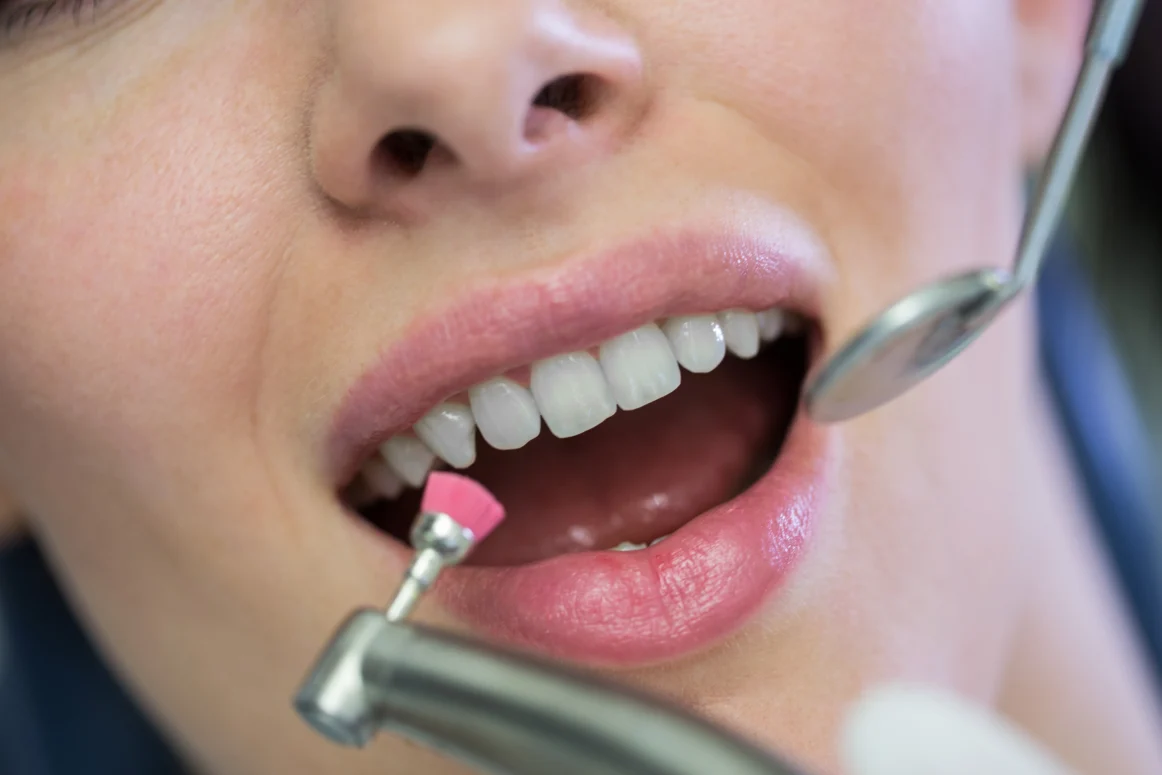
This alone restores a surprising amount of shine, and it is always the first thing to try — it costs the least and risks nothing. It should be done with polishing paste appropriate for ceramic rather than an abrasive prophy paste, which is why it is worth mentioning your veneers at the appointment.
2. Whitening your natural teeth
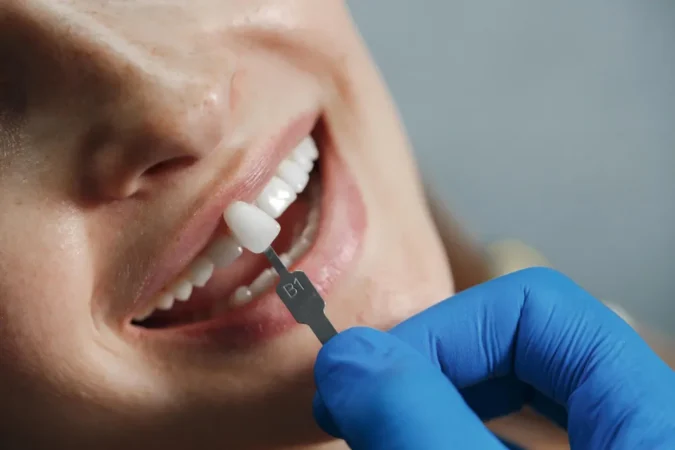
When the natural teeth darken, the veneers start to look conspicuously light — or, more often, the veneers stay put and everything else drifts away from them. Whitening the adjacent teeth brings the two back into balance.
This is especially helpful if:
- Your natural teeth stain easily
- You drink tea or coffee regularly
- You smoke
- Your veneers were originally matched to a brighter shade
One limit to be honest about: whitening can only take the natural teeth up to the veneer shade, not past it. If the veneers themselves are darker than you now want the whole smile to be, whitening around them will not get you there — that is a replacement conversation.
3. Internal whitening of the tooth underneath (selected cases)
Where the tooth beneath the veneer has darkened — often after root canal treatment or an old injury — your dentist may be able to perform gentle internal whitening of that tooth. This is only appropriate in specific clinical situations, and it is assessed rather than assumed.
4. Replacing veneers that are past restoring
Some veneers eventually lose their surface or discolour at the margin, and replacement becomes the only route to a lighter shade. Because the tooth was already prepared the first time, replacement usually needs little or no further preparation — one of the reasons conservative initial preparation matters so much, as explained in our guide to veneer longevity.
If you have had veneers for some years, an annual cosmetic check-up is worth keeping. It lets your dentist spot early staining at the margins, gum recession, or small chips before you would notice them yourself — protective maintenance on work you have already invested in.
The Sequencing Rule Worth Knowing Before You Ever Get Veneers
Everything on this page traces back to one thing: whitening happens before veneers are made, not after.
Because only natural teeth respond to bleaching, the shade is settled first and the ceramic is then matched to it. Whitening later changes the teeth around the veneers but not the veneers themselves, which is precisely how mismatches happen. If veneers are in your plan, raise any whitening you want at the consultation — the process is set out in our guide to veneers in Istanbul.
Am I a Candidate for Veneer Brightening or Replacement?
Polishing or whitening the natural teeth is likely to help if:
- You have surface stains on your veneers
- The natural teeth around your veneers have darkened
- Your veneers are losing shine rather than changing colour
- You are unhappy with uneven colour in photographs
- You want a brighter, fresher smile without touching the veneers
Whitening is not the answer if:
- The veneer shade itself is simply not what you now want
- The bonding cement has darkened beneath the veneer
- The veneer has internal discolouration
- The veneer is chipped or worn — see fixing a chipped tooth
- The underlying tooth is heavily stained
In these situations replacement is usually the honest recommendation, and whether the right replacement is another veneer or a crown depends on how much tooth structure remains — set out in veneers vs crowns.
Make your appointment online today if you recognise any of these in your own smile — you don’t have to work it out alone.
What to Expect Afterwards
Depending on which route you take, you may notice:
- immediate improvement in veneer shine
- brighter natural teeth around the veneers
- improved uniformity in photographs
- smoother veneer margins
Where veneers are replaced, the published survival for porcelain laminate veneers is around 95.5% at ten years2 — a population figure rather than a promise, with daily cleaning and regular check-ups doing most of the work in an individual case.
And one thing worth repeating: having veneers does not replace normal tooth care. You still brush and clean between them exactly as you would natural teeth, to protect both the veneers and the teeth underneath.
Why Many Patients Choose Turkey
Turkey has become a common destination for veneer upgrades and replacements because of:
- experienced aesthetic dentists with high case volume in veneer work
- the same CE-marked ceramics used in UK and US practices
- appointment availability without long waits
- travel support — airport pickup, hotel coordination, translation
- a lower cost base rather than a lower standard
On price, please read this as an approximate market range rather than a quote. A single porcelain veneer in the US is typically quoted around $1,000–$2,500 per tooth, against roughly €130–€300 in Turkey. Your own cost depends on the number of teeth, the ceramic and any preparatory treatment, and is confirmed in writing after a consultation. The full picture is in our guides to veneer costs in the US and dental treatment prices in Turkey.
The gap comes from the local cost base — laboratory work, staffing and premises — not from different materials or fewer appointments. How the whole journey is organised is set out in our guide to dental tourism in Turkey.
Why Choose DentSpa
Veneers are detailed restorations, and small differences in colour, shape or fit are immediately visible. That is why the planning matters more than the marketing.
- PhD-level specialist dentists, professors and associate professors experienced in veneer design and smile aesthetics.
- High-quality porcelain and composite materials selected for natural translucency and long-term colour stability.
- The shade and shape agreed with you before anything is made, so you approve a result rather than describe one.
- Clear explanations of the options — polish, whiten the natural teeth, or replace — and what each will and will not achieve.
- Complete A–Z care with follow-up for long-term veneer maintenance.
You don’t have to take our word for the standard. DentSpa was named best dental clinic in Europe in the odontology category at the European Awards in Medicine,3 is licensed by the Turkish Ministry of Health, certified to ISO 9001 and ISO 10002, and a member of the Turkish Dental Association. For treatment planned from abroad it also holds the Certification for Excellence in Medical Travel Patient Experience from Global Healthcare Accreditation.4 More than 50,000 international patients have been treated since the clinic was founded in Istanbul in 2018 — see real cases in the smile gallery and read the verified reviews.
Next Steps for a Brighter Smile
To summarise: a whitening treatment will not change the colour of your veneers — but you can still brighten your smile. Which route is right depends on the state of the veneers: polish them, whiten the surrounding natural teeth, or replace them for a larger change.
DentSpa specialists can tell you which of the three applies to your case, including a shade assessment to establish where the mismatch actually sits.
Book a free consultation or message us on WhatsApp. If you are still comparing clinics, the questions worth asking any of them are in how to find a dentist in Turkey.
Frequently asked questions
Can veneers be whitened?
My veneers look darker — what actually changed?
Can I whiten my natural teeth if I have veneers?
Should I whiten before or after getting veneers?
Will polishing make my veneers look better?
When is replacement the only option?
How do I stop my veneers dulling again?
Sources
- American Dental Association — Oral Health Topics: Whitening
- Alenezi A, Alsweed M, Alsidrani S, Chrcanovic BR — Long-term survival and complication rates of porcelain laminate veneers in clinical studies: a systematic review. Journal of Clinical Medicine 2021;10(5):1074.
- The European Awards in Medicine — DentSpa Clinic — European Award in Medicine in Odontology
- Global Healthcare Accreditation — DentSpa Strengthens Global Trust in Turkey’s Dental Services with GHA Certification












 70%
70%