
Table of content
Table of content
Most people choose veneers because they want to feel better about their smile.
But what they usually worry about after that is much simpler:
Will this actually last?
Some patients keep their veneers for many years. Others need changes much sooner.
The difference usually isn’t just the material — it’s how the bite works, how healthy the gums are, and how much pressure the teeth take every day.
That’s what really decides how long veneers stay in good shape.
The published figure is a good starting point: a systematic review covering roughly 6,500 porcelain laminate veneers estimated 95.5% survival at ten years.1 That is the population number — the rest of this page is about what moves an individual case above or below it.
What Are Dental Veneers — and What Are They Meant to Fix?
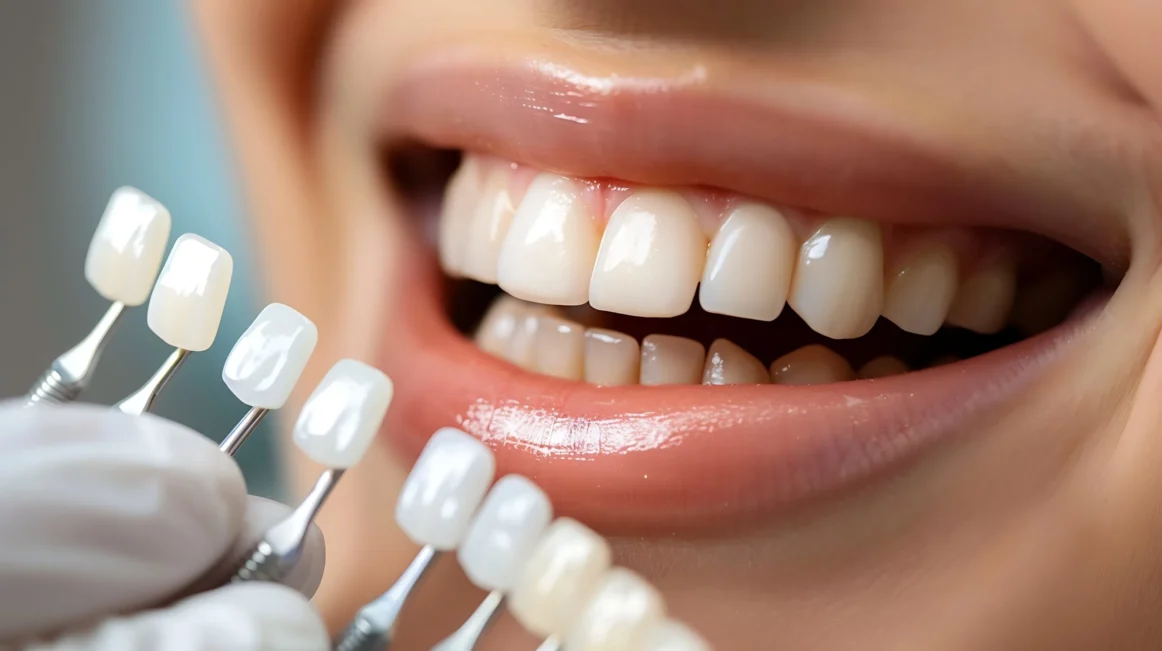
Dental veneers are thin shells bonded to the front surface of teeth to improve appearance and overall balance. They’re commonly used to correct:
- deep or uneven discoloration
- chipped or worn edges
- small gaps between teeth
- mild crowding
- irregular tooth shapes
When veneers are designed properly, they don’t just improve individual teeth. They improve how the whole smile fits the lips and face. That’s why good veneer treatment starts with facial and bite evaluation — not just shade selection. What that looks like appointment by appointment is set out in our guide to veneers in Istanbul.
In modern dentistry, two main types of veneers are used:
- Porcelain (ceramic) veneers
- Composite resin veneers
Both can look very good at first. Over time, though, they behave quite differently.
Porcelain veneers are made in a dental laboratory using high-strength ceramics that closely mimic natural enamel. They resist staining, stay smooth, and hold their color for many years. The thinnest of them, and how they are bonded, are covered in our guide to laminate veneers.
Composite veneers are built directly on the teeth using tooth-colored resin. They’re quicker and more affordable, but they tend to stain more easily and lose polish faster with daily use.
That difference matters when you’re thinking beyond year one. You can learn more about the differences between the two types — and which one might suit your case — in our comparison of composite bonding vs veneers.
Do Veneers Damage Natural Teeth?
This is one of the most common concerns, and it deserves a straight answer.
Veneers do not damage teeth when they are planned conservatively and placed correctly.
That said, porcelain veneers are usually not fully reversible. A very thin layer of enamel is often removed to allow proper bonding and natural proportions. This preparation is shallow and does not affect the tooth nerve or overall strength, but it does mean that once veneers are placed, the teeth will always need some form of coverage in the future.
Problems don’t happen because veneers exist. They happen when veneers are used in the wrong situations or placed with poor technique.
How thin is “a thin layer”?
It has a published definition, and it is worth knowing. A specialist consensus states that veneer preparation is not a fixed single value but ranges from 0.3 to 0.7 mm, with limits of under 0.7 mm at the incisal third, under 0.5 mm at the middle third and under 0.3 mm at the cervical third — because enamel at the gum margin averages only 0.3 to 0.4 mm thick.2 Staying inside those limits keeps the preparation within enamel, which is where the bond is strongest.
Teeth are at risk when there is:
- excessive tooth reduction
- weak bonding technique
- untreated gum disease
- bite problems that are ignored
Professional treatment planning focuses on preserving as much natural enamel as possible and placing veneers only when they are medically appropriate. In some patients, veneers can even help protect enamel that is already weakened by erosion or wear.
And conservative preparation is not just a principle — it shows in the outcomes. A prospective study followed 186 veneers in 35 patients over a mean of nine years and compared conventional preparation against no-prep and minimally invasive preparation: the minimally invasive group showed 100% survival, with a mean success time of 10.28 years against 9.32 years.3 Removing less is not a compromise on durability.
Veneers aren’t shortcuts. They’re restorations — and they should fit into a long-term oral health plan.
How Long Do Porcelain Veneers Usually Last?
In everyday practice, porcelain veneers tend to last a long time. Ten years is common, and many patients go much longer than that without any problems.
They hold up because porcelain doesn’t pick up stains easily and it keeps a smooth surface. It also stays strong in very thin layers, which is why it’s often used on front teeth where you want something that looks natural but can still handle daily use.
The clinical evidence supports that. The systematic review mentioned above, covering roughly 6,500 porcelain laminate veneers, put estimated survival at 95.5% at ten years.1 Planning and bonding quality matter as much as the ceramic itself — which is the point of everything below.
Composite veneers, by comparison, usually need repair or refreshing sooner. A systematic review of 17 studies covering 1,821 anterior composite restorations followed for at least three years found annual failure rates between 0% and 4.1% — and where restorations had been placed for aesthetic reasons, the failures were more often about colour, shape or surface staining than about anything breaking.4 That doesn’t make composite a bad option — it can be very useful in certain cases — but expectations should match how it behaves.
So when patients ask, “How long do veneers last?” the real answer is:
we look at which type of veneer, and then at how that veneer will be used.
What Actually Determines How Long Veneers Last?
In practice, veneers almost never fail “for no reason.” When something goes wrong early, there is usually a clear explanation behind it.
- Veneer material
Porcelain lasts longer than composite, both structurally and visually. It resists staining, surface roughness, and shape changes much better over time. Composite is more flexible and easier to repair, but it breaks down faster under daily chewing and temperature changes. If durability is the main priority, porcelain is usually the safer choice. - Bite and jaw function
This is one of the most underestimated causes of veneer problems. Grinding, clenching, and misaligned bites place higher pressure on front teeth. Over time, that pressure increases the risk of chipping or cracking — even with strong ceramics. That’s why professional veneer planning often includes bite analysis, jaw movement assessment, and sometimes protective night guards after treatment. Veneers should work with your bite, not against it — the detail is in our guide to how bruxism affects veneers and implants. - Gum health and oral hygiene
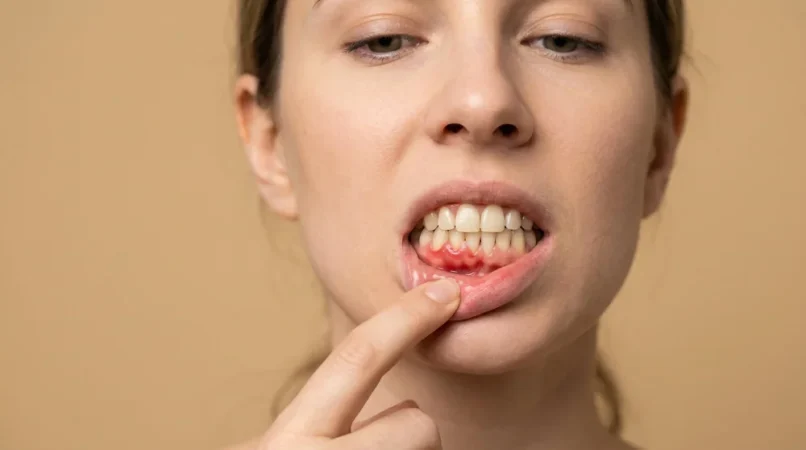
Veneers themselves do not decay, but the teeth underneath still can. If plaque builds up at the edges, it can lead to gum inflammation, decay near the margins, and weakening of the bonding over time.
Good daily care makes a big difference: gentle brushing, careful flossing around veneers, non-abrasive toothpaste, and regular professional cleaning. - Everyday habits
Many patients damage veneers without realizing it. Opening packaging with your teeth, chewing ice, biting nails, or holding objects between your teeth creates repeated micro-stress that weakens the veneer and the bonding layer. Veneers are strong — but they’re not designed for impact or tool-like use. - Clinical skill and laboratory quality
Even excellent materials can fail if they’re poorly designed, incorrectly bonded, or placed on unstable foundations. Preparation technique, scan/impression accuracy, shade matching, and cementation protocols all matter. The quality of the dental laboratory also affects fit and margin strength — which directly impacts longevity.
This is why choosing an experienced cosmetic team matters as much as choosing porcelain.
One more thing worth knowing before you decide: where a tooth has lost structure rather than just colour or shape, a crown may be the right restoration instead — that is a question of what is left of the tooth, not of quality, and it is set out in our comparison of veneers vs crowns.
Cost vs Long-Term Value
Many patients naturally focus on the initial cost of veneers. What matters more is how often they’ll need repairs or replacement over time.
Porcelain veneers usually mean fewer replacements, better long-term aesthetics, and less maintenance. Composite costs less at first, but repeated polishing, repairs, or replacement can increase overall cost across several years.
This is why treatment choice should be based on lifestyle, bite function, and long-term expectations — not price alone. The figures themselves are in our guides to veneer costs in the UK and dental treatment prices in Turkey.
Why Many Patients Consider Dental Tourism
Once patients understand how much planning and precision veneers require, many start asking where they can receive this level of care without extremely high local costs.
Patients who travel for dental treatment usually aren’t looking for shortcuts.
They’re looking for clinics that can organize the whole process properly, from diagnosis to final checks, within a limited time.
When the planning is careful and the team is used to treating international patients, dental travel becomes less about price and more about access to experienced cosmetic care that’s delivered safely and responsibly. How that is organised end to end is set out in our guide to dental tourism in Turkey.
Why Choose DentSpa for Veneers
Over the years, DentSpa has treated more than 50,000 patients, many of whom traveled specifically for cosmetic and restorative dental care. That volume of real clinical cases has shaped how veneers are planned — with strong emphasis on long-term function, not just day-one aesthetics.
Patients choose DentSpa because:
- Care is planned by a multidisciplinary team
Cosmetic dentists work alongside periodontal and prosthodontic specialists when needed, so gum health, bite forces, and long-term stability are considered from the start. - Smile design is personalized
Veneers are designed around facial proportions, lip movement, and bite — not copied from standard templates. - Tooth structure is preserved whenever possible
Preparation is kept conservative to protect natural enamel and support strong, stable bonding. - High-quality ceramic systems are used
Materials are selected for strength, natural translucency, and long-term color stability — not just brightness. - Full diagnostics happen before cosmetic work begins
Bite alignment, gum condition, and jaw movement are assessed to reduce the risk of future chipping or discomfort. - International patients receive structured care
Treatment schedules, healing time, and post-treatment guidance are coordinated for patients traveling from abroad. That side of care is independently assessed: DentSpa holds the Certification for Excellence in Medical Travel Patient Experience from Global Healthcare Accreditation.5 - Clear communication in your own language
Multilingual medical teams and patient coordinators ensure treatment options, risks, and aftercare instructions are fully understood — not lost in translation, especially for complex cosmetic and restorative cases. - Expectations are discussed honestly
Patients are informed about maintenance, lifespan, and future replacement needs — no shortcuts and no unrealistic promises.
You don’t have to take our word for any of it. DentSpa was named best dental clinic in Europe in the odontology category at the European Awards in Medicine,6 and you can read what patients say in the verified Trustpilot and Google reviews.
Placing veneers is not the hardest part.
Making them last is where real clinical experience matters.
That’s what DentSpa focuses on.
Veneer Longevity Starts Before Placement
How long veneers last is largely determined before they are ever bonded to your teeth.
Diagnosis, bite analysis, material choice, and preparation design often matter more than daily brushing alone. For most patients, what they want isn’t just a nicer smile — it’s the peace of mind of knowing it won’t turn into another problem to fix a few years later.
If you’re considering veneers, the most important question is not only which veneer, but how your case will be planned. The questions worth asking any clinic are in our guide to how to find a dentist in Turkey.
A smile should look beautiful — and feel comfortable — for many years, not just for the first few photos.
If you want answers before you commit, start with a conversation — not a contract.
Our dental team will walk you through your options and help you understand what will truly last for your bite, your teeth, and your lifestyle. Schedule your free consultation with DentSpa today, or message us on WhatsApp.
Frequently asked questions
How long do porcelain veneers last?
How long do composite veneers last?
How much enamel is removed for veneers?
Do veneers damage your teeth?
Does removing less enamel make veneers last longer?
What is the most common reason veneers fail early?
Can veneers be replaced when they wear out?
Do veneers stain over time?
Sources
- Alenezi A, Alsweed M, Alsidrani S, Chrcanovic BR — Long-term survival and complication rates of porcelain laminate veneers in clinical studies: a systematic review. Journal of Clinical Medicine 2021;10(5):1074.
- Yu H, Zhao Y, Li J, et al. — Minimal invasive microscopic tooth preparation in esthetic restoration: a specialist consensus. International Journal of Oral Science 2019;11:31.
- Smielak B, Armata O, Bojar W — A prospective comparative analysis of the survival rates of conventional vs no-prep/minimally invasive veneers over a mean period of 9 years. Clinical Oral Investigations 2022;26:3049–3059.
- Demarco FF, Collares K, Coelho-de-Souza FH, et al. — Anterior composite restorations: A systematic review on long-term survival and reasons for failure. Dental Materials 2015.
- Global Healthcare Accreditation — DentSpa Strengthens Global Trust in Turkey’s Dental Services with GHA Certification
- The European Awards in Medicine — DentSpa Clinic — European Award in Medicine in Odontology














 70%
70%