Table of content
Table of content
Choosing to get veneers should feel like an exciting step toward the smile you’ve always wanted, but for most people the experience starts with confusion rather than confidence. They scroll through dozens of clinic pages, save screenshots of smiles they admire, and compare materials they don’t fully understand, all while trying to figure out whether the result will actually suit their face.
That’s why most people searching for veneers in Istanbul aren’t only looking for a cosmetic procedure — they’re looking for clarity. They want to understand what veneers can realistically fix, what the full process looks like before they travel, what to expect from the clinical team, and how to make sure the final result looks beautiful without looking obvious or overdone.
This guide is designed to give you exactly that. It walks through the types of veneers available, the step-by-step process from consultation to final fitting, the realistic outcomes you can expect, and how DentSpa structures the journey for international patients travelling to Istanbul.
What dental veneers actually are
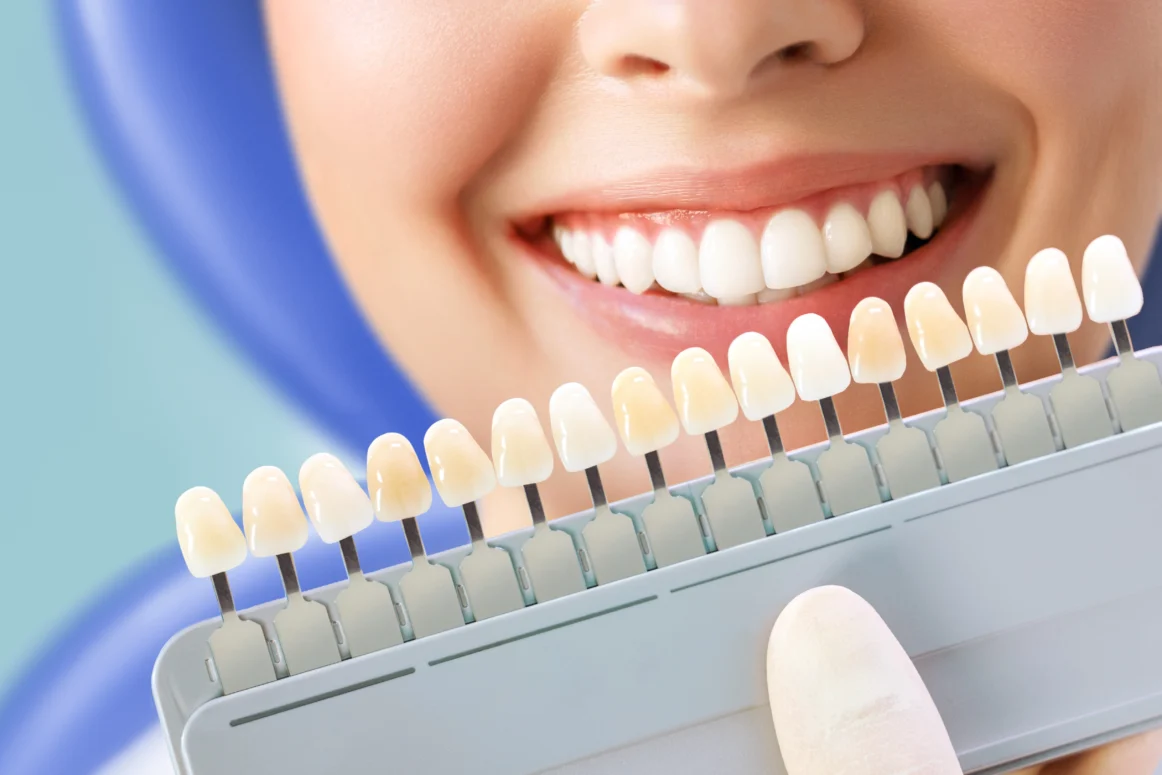
Dental veneers are a minimally invasive solution that sits at the intersection of cosmetic dentistry and restorative dentistry. They are thin, custom-made shells of advanced dental material bonded to the front surface of the teeth to refine shape, colour, and balance.
Unlike crowns, veneers focus on conservative tooth preparation — meaning only a small layer of enamel is gently adjusted when needed. The goal is not to replace the tooth, but to refine what is already there.
Today, dental veneers at DentSpa are planned using digital technology, which allows the clinical team to match the final result to your facial proportions rather than applying a one-size-fits-all “perfect smile” template. That service page carries the full treatment overview, the materials used and documented patient cases.
What veneers can correct — and what they cannot
Veneers are highly effective for improving the visible surface of teeth, but they are not a universal solution. They are commonly used to address deep discolouration that doesn’t respond to whitening, minor misalignment or uneven edges, gaps between teeth, and chips, cracks or worn enamel.
The table below shows how the common “before” concerns translate into expected outcomes:
| Before veneers | What patients usually want | How veneers help |
|---|---|---|
| Stained teeth that whitening can’t fix | A brighter, more even smile | Veneers cover discolouration completely |
| Chipped or cracked front teeth | A smoother, more polished smile line | Veneers rebuild shape and improve symmetry |
| Minor gaps or shape differences | Better balance without looking overdone | Veneers can refine width, length, and contour |
| Worn-down or short edges | A fresher, more youthful smile | Veneers restore length and visual harmony |
However, veneers do not reposition teeth or correct underlying bite issues. Where misalignment is significant, orthodontic treatment may be needed before veneers are considered. And where the discolouration is on otherwise healthy teeth, whitening may be all that’s required — it’s also usually done first, since the natural shade is what the veneer shade gets matched against.
This distinction matters. Veneers reshape what is visible — they do not change underlying structure. The best results come from selecting the right treatment for the right indication, not from applying veneers to every case.
Understanding veneer types before choosing
When patients begin researching veneers, the first real question is usually: “Which type is right for my case?”
Different materials are used depending on the balance between aesthetics, strength, and how much natural tooth structure should be preserved. This is why two patients can receive completely different treatment plans, even when both are aiming for a similar outcome.
| Treatment type | Material | Best for | Strength |
|---|---|---|---|
| E.max veneers | Lithium disilicate | High-end, natural smile design | High |
| Porcelain laminate veneers | Ceramic | Conservative aesthetic refinement | High |
| Composite veneers | Resin | Quick, minor corrections | Moderate |
| Zirconium veneers | Zirconia | Heavy biting forces, structural reinforcement | Very high |
One finding from the research is worth knowing before you choose. In a systematic review of 25 studies covering 6,500 porcelain laminate veneers, non-feldspathic veneers outperformed feldspathic ones, and veneers made without incisal coverage failed more often than those with it.1 Both are decisions made by your dentist, not by you — but they’re fair questions to ask.
Where teeth are heavily restored, structurally compromised, or significantly worn, dental crowns may be the more durable choice, because they cover the whole tooth rather than refining its front surface. If you’re weighing the two, our guide to veneers vs crowns sets out where each one belongs. For a lighter, reversible option on small corrections, there’s also composite bonding.
What a smooth veneer process actually looks like
A well-planned veneer journey follows a clear clinical sequence — moving from planning to final placement with structure and control.
1. Smile evaluation
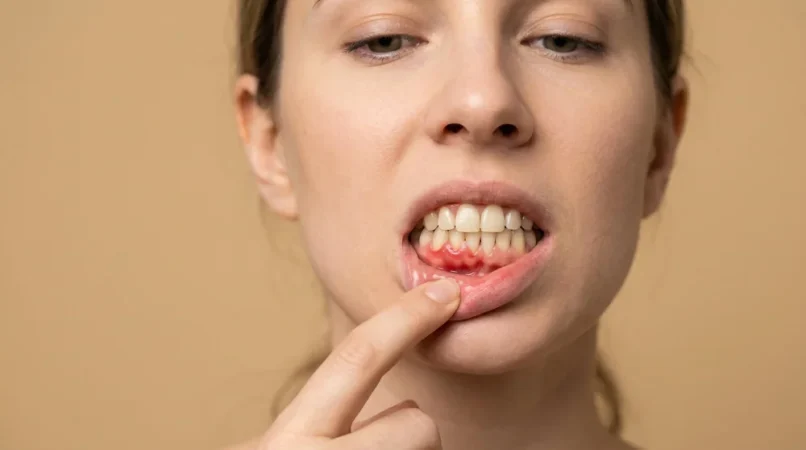
Your goals, teeth, gums, and overall oral condition are reviewed to confirm that veneers are the right fit — and to catch anything, such as gum inflammation or an uneven gum line, that should be handled first. Where the gum line is what’s making the teeth look short or uneven, gum contouring is planned into the same sequence.
2. Smile design and digital preview
This is where planning really begins. At DentSpa the team uses 3D imaging and Digital Smile Design (DSD) powered by Dental GPS to plan and preview your new smile before any treatment begins. You see what your result will look like before a single tooth is touched — which is also the moment to say if it isn’t what you pictured, while changing it costs nothing.
3. Conservative preparation
A thin layer of enamel is gently adjusted only where needed, and digital impressions or scans are taken. Temporary restorations may be placed while the final veneers are crafted.
4. Fitting and bonding
The veneers are placed, reviewed, and bonded — with refinements to bite and comfort before you leave the clinic.
When veneers are part of a wider transformation involving several teeth, gum reshaping, and whitening, the treatment usually falls under a Hollywood Smile makeover — a fully customised plan covering the teeth visible when you smile. If you’re not sure whether you need a few veneers or a full makeover, that page explains where the line falls.
What patients usually worry about — and how it’s handled
Understanding the steps is one thing. Feeling comfortable with them is another. Most patients arrive with the same set of concerns:
“I’m not sure veneers are right for me.”
This is exactly what the consultation is for. Photos, scans, and your specific goals are reviewed before any decision is made — including the possibility that a smaller treatment gets you where you want to be.
“I’m worried the result will look artificial.”
Smile design is guided by your facial proportions and reviewed with you in advance. Nothing is bonded until the preview matches your expectations.
“I’m travelling from abroad.”
Scheduling, coordination, and on-the-ground support are organised in advance. You can see exactly how this works on the international patient services page.
“What if my case is more complicated than it looks?”
When needed, a broader clinical team — including periodontists and prosthodontists — gets involved to address gum, bite, or restorative concerns before any cosmetic work begins.
How long do veneers actually last
With proper care, veneers are a long-term solution rather than a temporary fix. The strongest evidence comes from a systematic review of 25 clinical studies covering 6,500 porcelain laminate veneers, which put the 10-year cumulative survival rate at 95.5%.1
The same review breaks down what actually goes wrong, and it’s reassuring reading: taken as isolated causes of failure over ten years, survival was 96.3% against fracture, 99.2% against debonding, 99.3% against secondary decay and 99.0% against the need for root canal treatment.1 In other words, the main thing that ends a veneer’s life is a fracture — which is why bite protection matters if you grind at night.
Rather than a quick cosmetic shortcut, veneers are a durable, well-established treatment when both the clinical execution and the aftercare are done properly. There’s more on what shortens and extends that lifespan in our guide to how long veneers last.
What determines the cost of veneers
The cost of veneers depends on several factors:
- Material type — porcelain and lithium disilicate (E.max) typically fall into a higher range because of durability and laboratory fabrication.
- Clinical complexity — more involved cases require more planning time.
- Level of customisation — fully bespoke smile design versus standard shade-matching.
- Where the work is done — operating and laboratory costs in Istanbul are considerably lower than in the UK, US or Western Europe, and that difference shows up in the price rather than in the materials.
Any figure you read online is an approximate market range, not a quote — your own depends on the number of teeth and the material, and is confirmed in writing after a free consultation. For a sense of what the same work costs at home, our UK veneers cost guide lays out the comparison. What matters most, though, isn’t the opening price — it’s the balance between longevity, aesthetics, and what maintenance will be needed later.
Real stories, real transformations
Numbers give context — but patient journeys tell the real story. DentSpa has supported more than 50,000 international guests, with real before-and-after veneer cases documented in the Smile Gallery, filtered by treatment so you can look specifically at veneer results rather than generic stock photography. What patients said about the experience itself is in the verified Trustpilot and Google reviews, each linked back to where it was posted.
Start before you travel: your treatment plan from home
One of the smartest parts of a modern veneer journey is that it starts before you book your flight.
DentSpa offers a free online consultation where photos and X-rays are reviewed remotely, a treatment outline is prepared, and an approximate cost and timeline are shared with you in advance.
That early clarity matters because you don’t want to land in Istanbul still working out the basics. You want to arrive with a clear picture of what’s planned, what your smile design will look like, and how long you’ll be staying.
Why patients choose DentSpa for veneers in Istanbul
Patients searching for the best veneers in Istanbul are usually looking for a clinic that feels established, not improvised — and that’s something you can check rather than take on trust.
DentSpa was named best dental clinic in Europe in the odontology category at the European Awards in Medicine, an assessment based on digital technology, complex case outcomes and international patient experience. For treatment abroad, what happens before and after the appointment matters as much as the appointment itself — which is precisely what the Certification for Excellence in Medical Travel Patient Experience from Global Healthcare Accreditation assesses, and which DentSpa holds.2 The clinic is licensed by the Turkish Ministry of Health, certified to ISO 9001 and ISO 10002, and a member of the Turkish Dental Association.
But credentials aren’t what makes the experience. What does is how structured the journey feels — from consultation and planning through to travel coordination and aftercare. Supporting that is a multidisciplinary team including multilingual medical advisors (Turkish, English, Arabic, French, Spanish, Russian, German and Italian), specialist doctors with academic backgrounds, and a dedicated aftercare team that follows up before, during and after treatment.
Plan your smile journey with confidence
A well-planned veneer treatment is not about making a dramatic change — it’s about making the right one.
When you understand what veneers can realistically improve, how the process is structured, and how outcomes are designed in advance, the decision becomes clearer. With the right planning, the right materials, and the right clinical approach, veneers move from an intimidating idea into a well-defined, achievable solution.
For most patients, that clarity begins with a free consultation where assessments, expectations, and treatment paths are discussed before any travel is planned.
Frequently asked questions
Do veneers in Istanbul look natural?
How long do veneers last?
Will veneers affect my trip or require recovery time?
How many visits are needed?
Are veneers or crowns better for my teeth?
What should I look at before choosing a veneer clinic?
How do I know if veneers are the right choice for me?
Sources
- 1. Alenezi A, Alsweed M, Alsidrani S, Chrcanovic BR. Long-Term Survival and Complication Rates of Porcelain Laminate Veneers in Clinical Studies: A Systematic Review. Journal of Clinical Medicine. 2021;10(5):1074. pubmed.ncbi.nlm.nih.gov/33807504
- 2. Global Healthcare Accreditation — DentSpa Strengthens Global Trust in Turkey’s Dental Services with GHA Certification, 16 July 2026.
- 3. American Dental Association — MouthHealthy: Veneers. Supports the indications for veneers, the material types and the standard placement procedure.














 70%
70%