Table of content
Table of content
Quick answer: Laminate veneers are ultra-thin porcelain shells — roughly 0.3–0.7 mm thick — bonded to the front of your teeth to improve their colour, shape and alignment. Because they remove far less tooth structure than a crown, they’re one of the most conservative ways to redesign a smile, and clinical studies show around 95% are still in place after ten years.
This guide covers what laminate veneers are, how they differ from ordinary veneers and Lumineers, who they suit, how long they realistically last, and what they cost in the UK compared with having them in Turkey.
What are laminate veneers?
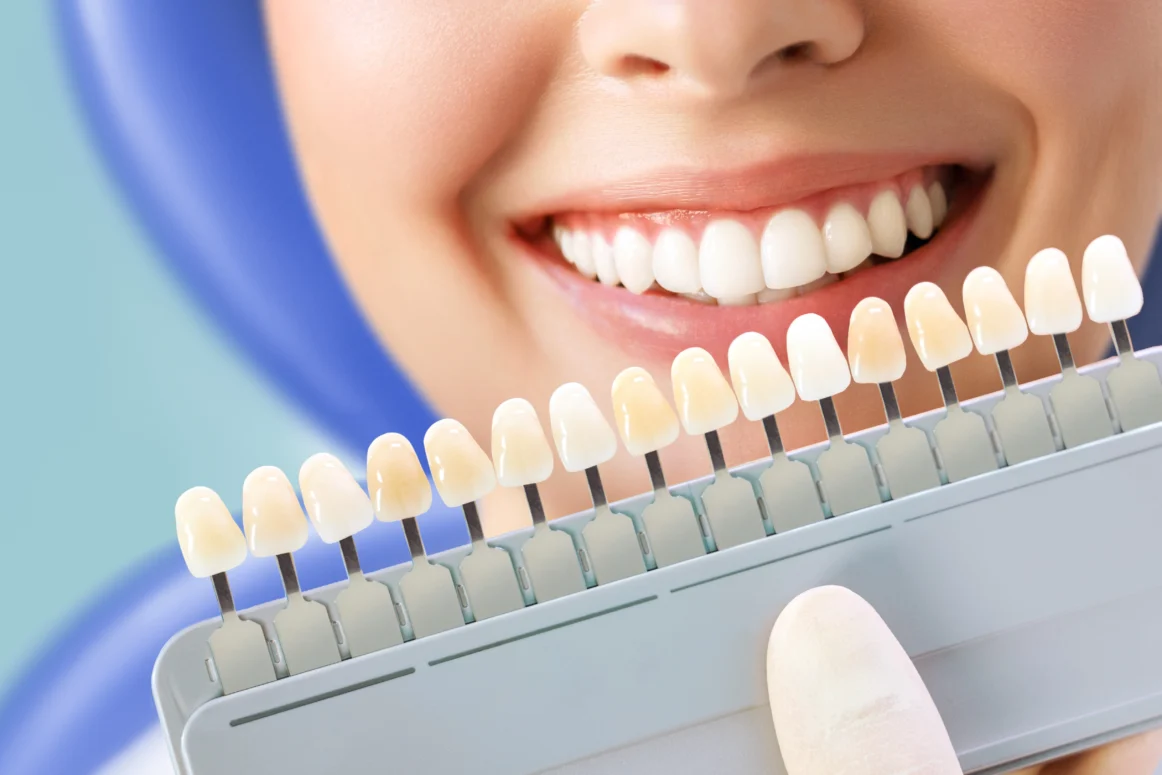
A veneer is a thin layer of porcelain made to fit over the front surface of a tooth, used to change its colour, shape or position.¹ “Laminate” describes how thin that layer is — about as fine as a contact lens. Because the shell is so thin, the dentist usually removes only a small amount of enamel, and in some cases none at all, which is why laminate veneers are also called minimal-prep veneers.
Most laminate veneers are made from one of two materials:
- Feldspathic porcelain — built up by hand in thin layers by a ceramist, prized for very natural translucency.
- Lithium disilicate (E.max) — a pressed ceramic that’s strong and highly aesthetic. It’s the most common choice for laminates today.
The material matters for longevity, not just looks: in the largest review of the evidence, non-feldspathic veneers (such as lithium disilicate) outperformed feldspathic ones over time.² At DentSpa we work with premium materials only — porcelain, zirconia and E.max — milled and finished in our own on-site laboratory, so the shade and shape are matched to your face rather than a stock guide.
One honest point up front: once any enamel is removed, veneers are considered an irreversible treatment.¹ That isn’t a reason to avoid them — it’s a reason to plan the design carefully with a dentist who shows you the result before any work begins.
Laminate veneers vs traditional veneers vs Lumineers
These terms get mixed up, so here’s the plain version:
- Traditional porcelain veneers are slightly thicker and may need a little more enamel removed. They’re useful for darker teeth or larger shape changes.
- Laminate (minimal-prep) veneers are thinner and preserve more of your own tooth — ideal when teeth are reasonably aligned and you want a natural, conservative result.
- Lumineers are a specific brand of ultra-thin, no-prep veneer. They’re a type of laminate veneer, not a separate treatment.
If your concern is a single chip or a small gap rather than a full smile makeover, it’s worth comparing veneers with a more reversible option first — our guide to composite bonding versus veneers explains when each makes sense.
Pros and cons of laminate veneers
Advantages
- Conservative — less enamel removed than crowns or thicker veneers
- Natural appearance; porcelain resists staining better than composite
- Strong long-term track record (see survival data below)
- Fixes colour, shape, minor gaps and worn edges in one treatment plan
Things to weigh
- Best results depend on the skill of both the dentist and the lab
- Usually irreversible once enamel is adjusted¹
- Not suitable if there’s untreated decay, gum disease or heavy grinding
- A cosmetic treatment — not normally available on the NHS
Who is a good candidate?
Laminate veneers work best when the teeth underneath are healthy. You’re likely to be a strong candidate if you have:
- Mild discolouration that whitening alone won’t fix
- Small chips, worn edges, or minor gaps
- Reasonably straight teeth that don’t need orthodontics first
They’re less suitable if you have untreated gum disease, significant decay, or heavy night-time grinding (bruxism), which can shorten the lifespan of any veneer. These are assessed and managed first. A proper examination decides suitability; an online photo assessment can give you a preliminary view, but it isn’t a diagnosis.
Before & After
How long do laminate veneers last?
This is the question patients ask most, and the evidence is reassuring. A systematic review of 25 studies covering around 6,500 porcelain laminate veneers found a 10-year cumulative survival rate of about 95.5%.² When researchers looked at single causes of failure, survival was even higher — for example, around 99% when only debonding was considered.²
Two design details influenced results: veneers that covered the biting edge of the tooth (incisal coverage) survived better than those that didn’t, and non-feldspathic materials such as E.max performed better than feldspathic porcelain.²
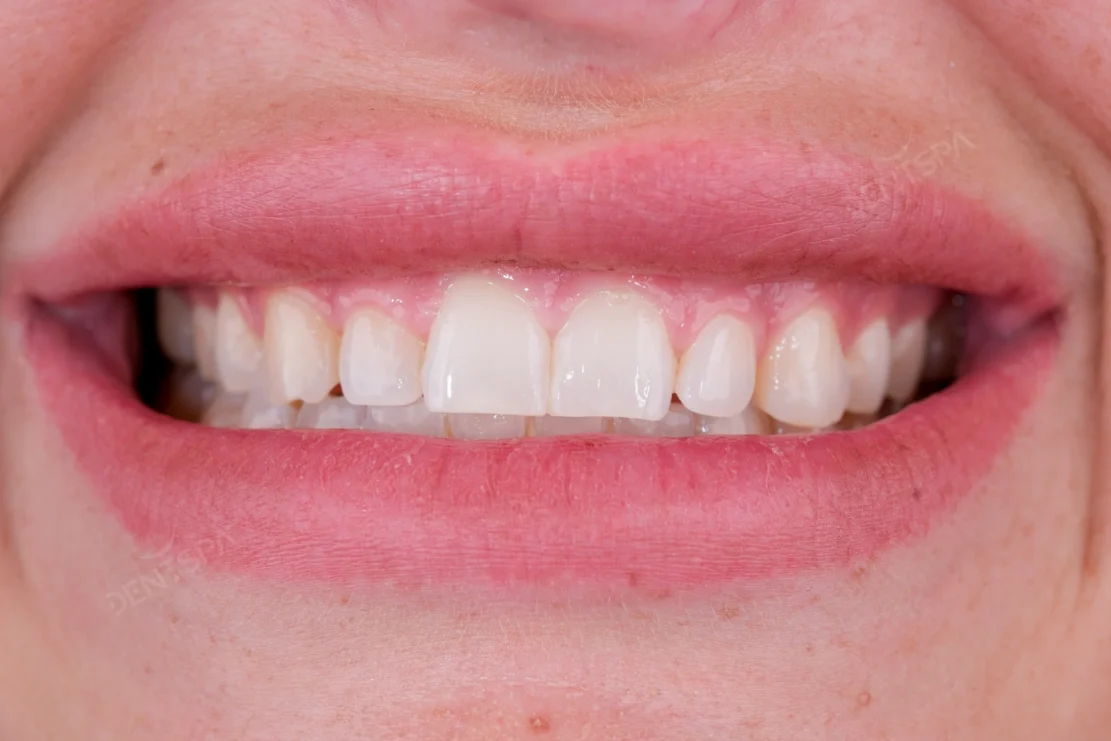
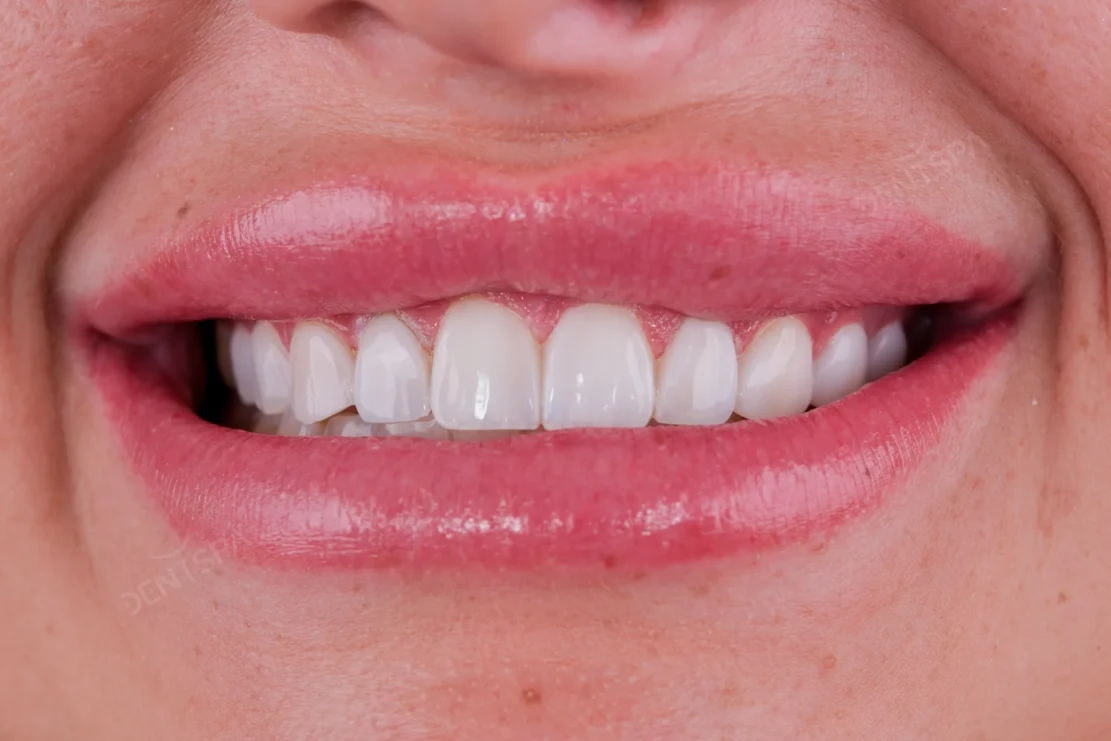
In plain terms: with good oral hygiene, regular check-ups, and a night guard if you grind, well-made laminate veneers commonly last well over a decade — though, as with any restoration, no dentist can promise a fixed lifespan. You can see real DentSpa cases in our dental veneers before and after gallery.
How to make your veneers last
- Brush twice daily and clean between your teeth — veneers don’t decay, but the tooth and gum underneath still can.
- Wear a night guard if you grind or clench.
- Don’t use your teeth as tools (opening packaging, biting nails).
- Keep your regular dental check-ups and hygiene visits.
- Limit habits that stain the surrounding natural teeth, so your smile stays even.
The laminate veneers process: what to expect
For UK patients treated in Istanbul, laminate veneers are usually completed in two visits across about five to seven days:
- Consultation and digital scan — your teeth are scanned with an iTero scanner and the new smile is designed with digital smile design, then shown to you before any work starts.
- Minimal preparation and temporaries — a small amount of enamel is adjusted only where needed; temporary veneers protect the teeth while the permanent ones are made in our in-house lab.
- Fitting — the final laminates are bonded, the bite is checked, and the edges are polished.
Travel, airport pickup and hotels are arranged by our planning team, and follow-up continues through a dedicated after-care department once you fly home.
Laminate veneers cost: Turkey vs the UK
Private veneers are expensive in the UK, which is why many patients look abroad. At DentSpa, laminate veneers are offered at up to around 70% less than typical UK private prices — positioned as affordable premium care, not the cheapest option. The exact cost depends on the number of teeth, the material (E.max or layered porcelain) and the complexity of your case, so a personalised quote follows an assessment. You can compare materials and timelines on our veneers in Turkey page.
Lower price doesn’t have to mean lower quality. DentSpa was named Best Clinic in Dentistry in Europe at the European Awards in Medicine 2024 (Odontology), has treated more than 50,000 international patients, and is TDB- and ISO-certified. Restorations are produced in our in-house lab using premium E.max and porcelain, and every plan is backed by aftercare support once you’re home. For most UK patients, that combination — accreditation, qualified specialists, premium materials and follow-up — matters more than price alone.
See what your smile could look like
If you’re considering laminate veneers, the simplest first step is a free consultation: upload a few photos for a preliminary assessment, or message our team on WhatsApp with any questions about the process. No pressure — just clear, honest advice from a dentist before you decide.
Frequently asked questions
What is the difference between laminate veneers and ordinary veneers?
Are laminate veneers the same as Lumineers?
Do laminate veneers ruin your natural teeth?
How long do laminate veneers last?
Do laminate veneers stain?
How many teeth need veneers?
Are laminate veneers worth getting in Turkey?
Sources
- Oral Health Foundation — Veneers — https://www.dentalhealth.org/veneers
- Journal of Prosthodontics / NCBI — “Long-Term Survival and Complication Rates of Porcelain Laminate Veneers in Clinical Studies: A Systematic Review” (2021) — https://www.ncbi.nlm.nih.gov/pmc/articles/PMC7961608/














 70%
70%