
Table of content
Table of content
At an NHS dentist in England, wisdom tooth removal is a Band 2 treatment costing £76.60.1 2 If you are referred and treated by a hospital dentist in an NHS hospital, it is free.3 Private wisdom tooth removal costs are set by each practice, so the price depends on where you have treatment and the work involved.
How much does wisdom tooth removal cost in the UK?
The wisdom teeth removal cost depends on whether you have treatment through an NHS dental practice, an NHS hospital or a private practice.
Here is how the main options compare in England:
| Where you have treatment | What you pay |
| NHS dentist in England | £76.60, Band 2 |
| NHS hospital, hospital dentist | Free |
| Eligible free-treatment groups | Free |
| Private dental practice | Set by the practice |
The £76.60 Band 2 charge covers NHS treatment that includes tooth extractions and other oral surgery. If your dentist recommends wisdom tooth removal as part of a course of NHS treatment, you pay the applicable band charge rather than a separate fee for each procedure.2
There are also circumstances in which you do not have to pay NHS dental charges. These include certain age groups, pregnancy and qualifying benefits. Treatment by a hospital dentist in an NHS hospital is also free, although some separate treatments, such as dentures or bridges, may still involve charges.3
The figures above apply to England. NHS dental charges and arrangements differ in Wales and Scotland. If you live elsewhere in the UK, read our guide to NHS dental bands and charges to understand how the system works in the different nations.
For private treatment, there is no single national fee. Each practice determines its own charges.
Will the NHS remove my wisdom teeth?
Yes. The NHS can remove wisdom teeth when there is a clinical reason to do so.2 However, having a wisdom tooth that has not come through properly does not automatically mean you need an extraction.
Wisdom teeth that are not causing problems are usually left in place and monitored during routine dental appointments.1
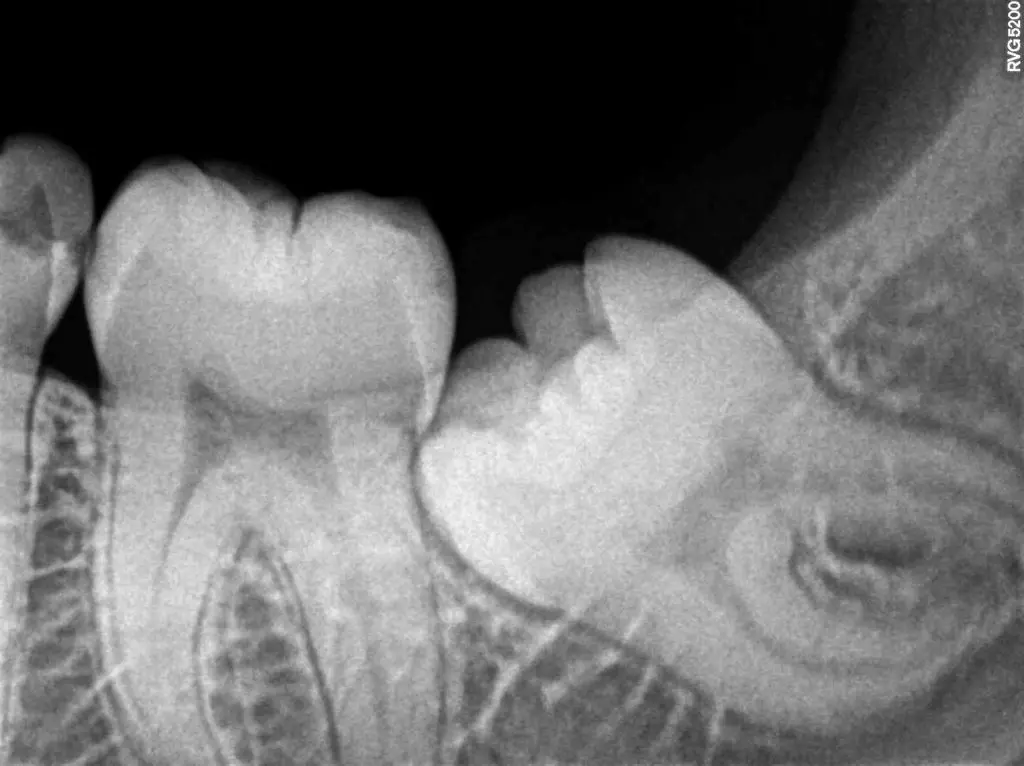
This is particularly important with impacted wisdom teeth. An impacted tooth is one that cannot come through fully because it is blocked by another tooth, bone or gum tissue.
According to NICE guidance, healthy impacted wisdom teeth should not be removed as a precaution. Extraction is recommended when there is evidence of disease or damage. Examples include:
- Tooth decay that cannot be repaired.
- Repeated infection or an abscess.
- A cyst around the tooth.
- Damage to the neighbouring tooth.
Pericoronitis is an infection of the gum around a partially erupted wisdom tooth. NICE guidance states that one episode, unless particularly severe, is not by itself a reason for extraction. A second episode is an appropriate reason to consider removal.4
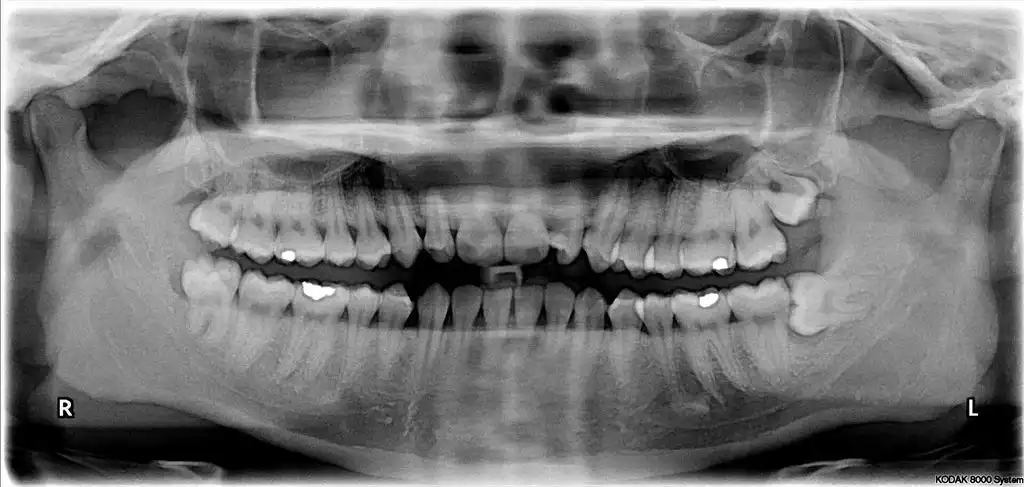
The decision should be based on what the examination and X-rays show, not simply the position of the tooth.
Sometimes a tooth can be treated and kept. In other cases, removal is the more appropriate option. If you are unsure why your dentist recommends extraction, our explanation of root canal treatment versus tooth extraction can help you understand how dentists approach that decision.
Why might I be referred to a hospital or specialist?
Not every wisdom tooth needs a specialist to remove it. Your dentist may be able to carry out the extraction at the practice, but some teeth are more difficult to reach or remove.
For example, a wisdom tooth may be deeply impacted, positioned at an unusual angle or close to important nerves. Your dentist will consider its position and the complexity of the procedure before deciding where it should be treated.
The NHS explains that a dentist can either remove the tooth themselves or refer you to a specialist at a hospital, clinic or another dental surgery.1 You can also choose a private referral if you prefer private treatment.2
If your dentist recommends a referral, ask:
- Why is this tooth difficult to remove?
- Can the extraction be carried out at the dental practice?
- Would a hospital or specialist referral be more appropriate?
- Will I need sedation or a general anaesthetic?
- Will the referral be through the NHS or privately?
It is also reasonable to ask whether the treatment will be free. If you are treated by a hospital dentist in an NHS hospital, the treatment is free under the relevant NHS exemption.3
Understanding the reason for a referral helps you make an informed decision about your next step.
What happens during wisdom tooth removal?
Wisdom tooth removal is usually carried out under local anaesthetic. The dentist or oral surgeon injects anaesthetic into the gum around the tooth, making the area numb during the procedure.1
For more difficult extractions, or if you are particularly anxious, sedation or a general anaesthetic may be considered.
The exact procedure depends on how much of the tooth has come through and its position in the jaw.
If the wisdom tooth is fully visible, the dentist may be able to remove it without making an incision. An impacted tooth can require a more involved surgical approach.
The procedure may include:
- Preparing the area: The dentist or surgeon administers the chosen anaesthetic.
- Accessing the tooth: If gum tissue covers the tooth, a small incision may be made.
- Removing the tooth: The surgeon removes it whole or divides it into two or three smaller pieces.
- Closing the area: The gum may be stitched using dissolvable stitches.
The NHS states that wisdom tooth removal should take no more than 40 minutes.1
You will usually go home on the same day. If you have a general anaesthetic, an overnight hospital stay may occasionally be necessary.
Before treatment, your dentist or surgeon should explain what they plan to do and what type of anaesthetic is appropriate for your particular case.
How long does recovery take, and what should you expect?
Recovery after wisdom tooth removal varies. A straightforward extraction may involve relatively little disruption, while surgical removal of an impacted tooth can take longer to settle.
The NHS advises that pain, swelling and jaw stiffness can continue for up to two weeks. These symptoms should generally start improving after the first one or two days.1
You may also notice bruising around your cheek, and chewing or swallowing can feel uncomfortable for a short time.
If the extraction is straightforward, you can usually return to normal activities the following day. After a more difficult removal or a general anaesthetic, you may need one to three days off work.1
Your dentist will give you instructions for looking after the extraction site.
What to do after removal:
- Take paracetamol or ibuprofen to help manage pain, if suitable for you.
- Eat soft or liquid foods until chewing becomes more comfortable.
- Rinse gently with mouthwash or warm salt water to keep the wound clean.
- Brush your other teeth carefully, avoiding the affected area.
- If bleeding occurs, press the area with a clean cloth or cotton wool for at least 10 minutes.
What not to do:
- Do not drive for 48 hours after a general anaesthetic or 24 hours after a sedative injection.
- Do not eat hard or crunchy foods.
- Don’t smoke.
- Don’t drink alcohol or very hot drinks.
These precautions help protect the blood clot that forms over the extraction site while the gum heals.1
Recovery is not always the same for everyone. The position of the tooth and the difficulty of the extraction both influence how the area feels afterwards.
For more detail about the healing process, including what to expect during the first few days, read our guide to wisdom teeth recovery.
What are the risks of wisdom tooth removal?
Wisdom tooth extraction is a common dental procedure, but complications can sometimes occur. Your dentist or surgeon should explain the relevant risks before treatment.
The NHS identifies three possible complications.1
Dry socket: This happens when the blood clot that should protect the extraction site does not form properly or becomes dislodged before the gum has healed. It can cause significant pain.
Infection: Bacteria can enter the extraction site, sometimes requiring treatment with antibiotics.
Nerve irritation or damage: Wisdom teeth can be close to nerves supplying the tongue, lips and chin. Extraction can sometimes cause numbness or tingling in these areas. This usually improves, although it can last for weeks or months.
These risks do not mean that complications will happen. Your dentist will assess the position of the tooth and explain any particular concerns before proceeding.
When should you get urgent help?
Contact an urgent dental service or NHS 111 if you experience:
- Bleeding that will not stop.
- Severe pain or swelling, or symptoms that are getting worse despite pain relief.
- Pain accompanied by a bad taste in your mouth, a high temperature or feeling unwell.
Do not ignore symptoms that are worsening rather than improving.1
If you are waiting for a dental appointment and need advice about managing discomfort, our guide to toothache relief in the UK explains the options available.
What if you cannot afford wisdom tooth removal?
If the NHS Band 2 charge is difficult to manage, you may be entitled to free treatment or financial assistance.
In England, several groups qualify for free NHS dental treatment. These include:
- People under 18, or under 19 and in full-time education.
- People who are pregnant or have had a baby in the previous 12 months.
- People receiving certain qualifying benefits.
- People receiving treatment from a hospital dentist in an NHS hospital.
The eligibility rules depend on your circumstances and the type of treatment.3
If you do not qualify for completely free treatment, the NHS Low Income Scheme may help with some or all of the cost.
Depending on your financial circumstances, you may receive one of two certificates:
HC2 certificate: Provides full help with eligible NHS health costs, including NHS dental charges.
HC3 certificate: Provides partial help. It explains how much you are expected to contribute towards treatment.
The NHS Business Services Authority assesses applications using your income, savings and essential living costs.5
You can find eligibility information and application guidance through the NHS Low Income Scheme.
Remember that an NHS exemption or certificate applies to eligible NHS treatment. It does not cover private dental treatment.3
Private wisdom tooth removal: what affects the price?
Private wisdom tooth removal cost in the UK varies between dental practices. There is no standard private fee, and the amount depends on the treatment required. The type of anaesthetic and how difficult the tooth is to remove affect the work involved. A straightforward extraction and surgical removal of a deeply impacted wisdom tooth are different procedures, so their costs may differ.
Before agreeing to treatment, ask the practice to explain what the proposed procedure includes and whether additional treatment may be necessary.
Wisdom tooth removal at DentSpa
If you have a painful or impacted wisdom tooth, you may be considering treatment outside the UK. It is important to understand when travelling makes sense and when it does not.
Wisdom tooth removal on its own is often best arranged close to home. You may not need to travel internationally for a single extraction, particularly if your local dentist can manage the problem.
DentSpa, based in Şişli, Istanbul, is relevant when wisdom tooth surgery forms part of a wider dental treatment plan or when you have independently decided to receive your treatment in Istanbul.
The first step is a free consultation. It starts with the clinical findings, including the X-ray and position of the wisdom tooth, alongside what you want to achieve.
A dentist explains the findings in your own language. They will discuss why removal is recommended or, just as importantly, why it may not be necessary.
The recommendation should follow the clinical situation. Treatment is not adapted by reducing its quality to reach a particular price.
Who carries out oral surgery at DentSpa?
Wisdom tooth removal and other oral surgery procedures at DentSpa are carried out by oral and maxillofacial surgeons.
The team includes:
- Dr Şükran Baycan Tüfekçioğlu, who has 10 years of experience, including work involving impacted tooth extraction. You can read more about her background and work on her DentSpa surgeon profile.
- Dr Serdar Yılmaz, who has 15 years of experience. Further information is available on his DentSpa surgeon profile.
If you have persistent lower wisdom tooth pain, understanding the position of the tooth and the available treatment options is particularly important. Our article on lower wisdom tooth pain and treatment in Turkey provides further context.
You can also read about oral surgery in Turkey to understand the wider treatment setting.
What standards and certifications does DentSpa hold?
DentSpa is licensed by the Turkish Ministry of Health and certified to ISO 9001, ISO 10002 and ISO 7101. The clinic is also a member of the Turkish Dental Association (TDB).
You can check the details of these credentials on the DentSpa accreditations and certifications page.
DentSpa also holds Global Healthcare Accreditation, Certification for Excellence in Medical Travel Patient Experience (GHA).
This certification relates to the patient journey, including communication before treatment, coordination during treatment and follow-up afterwards.
What happens after you return to the UK?
Follow-up does not end when you leave Istanbul. DentSpa continues follow-up from Istanbul after you return home.
This is an important consideration when planning dental treatment abroad. You should understand how communication and follow-up will work before making a decision.
For more information about this aspect of treatment, read our article about a GHA-certified dental clinic in Turkey.
You don’t have to take our word for it. You can read patient feedback on the DentSpa reviews page and see more about the clinic on Instagram.
Frequently asked questions
Is 30 too old to have wisdom teeth removed?
How long is the NHS waiting list for wisdom tooth removal?
How do I get my wisdom teeth removed if I can't afford it?
Will A&E remove a wisdom tooth?
Is wisdom tooth removal free on the NHS?
How long does wisdom tooth removal take?
Can I go to work after wisdom tooth removal?
Talk to DentSpa about your wisdom tooth
A painful wisdom tooth does not automatically need to be removed. The right decision starts with an examination, an X-ray and a clear explanation of your options. If wisdom tooth surgery is part of a wider treatment plan, or you are considering having treatment in Istanbul, DentSpa can discuss your case during a free consultation. Contact DentSpa to arrange your consultation and understand the clinical recommendations for your situation.
Sources
- NHS, Wisdom tooth removal. https://www.nhs.uk/tests-and-treatments/wisdom-tooth-removal/
- NHS, How much NHS dental treatment costs. https://www.nhs.uk/nhs-services/dentists/how-much-nhs-dental-treatment-costs/
- NHS, Who can get free NHS dental treatment or help with dental costs. https://www.nhs.uk/nhs-services/dentists/who-can-get-free-nhs-dental-treatment/
- NICE, Guidance on the extraction of wisdom teeth (TA1), Recommendations. https://www.nice.org.uk/guidance/ta1/chapter/1-Recommendations
- NHS Business Services Authority, NHS Low Income Scheme. https://www.nhsbsa.nhs.uk/nhs-low-income-scheme














 70%


