Quick answer: The main difference is how much tooth they cover. A veneer is a thin layer of porcelain bonded to only the front of a tooth, while a crown is a cap that gives the tooth full coverage. Veneers are the more conservative, cosmetic choice for healthy front teeth; crowns are the stronger, more protective choice for damaged or heavily filled teeth. Neither is “better” — the right one depends on how much healthy tooth you have left.
This guide breaks down the real differences, the pros and cons of each, how long they last, who each suits, and what they cost in the UK compared with Turkey.
Veneers vs crowns: the key difference
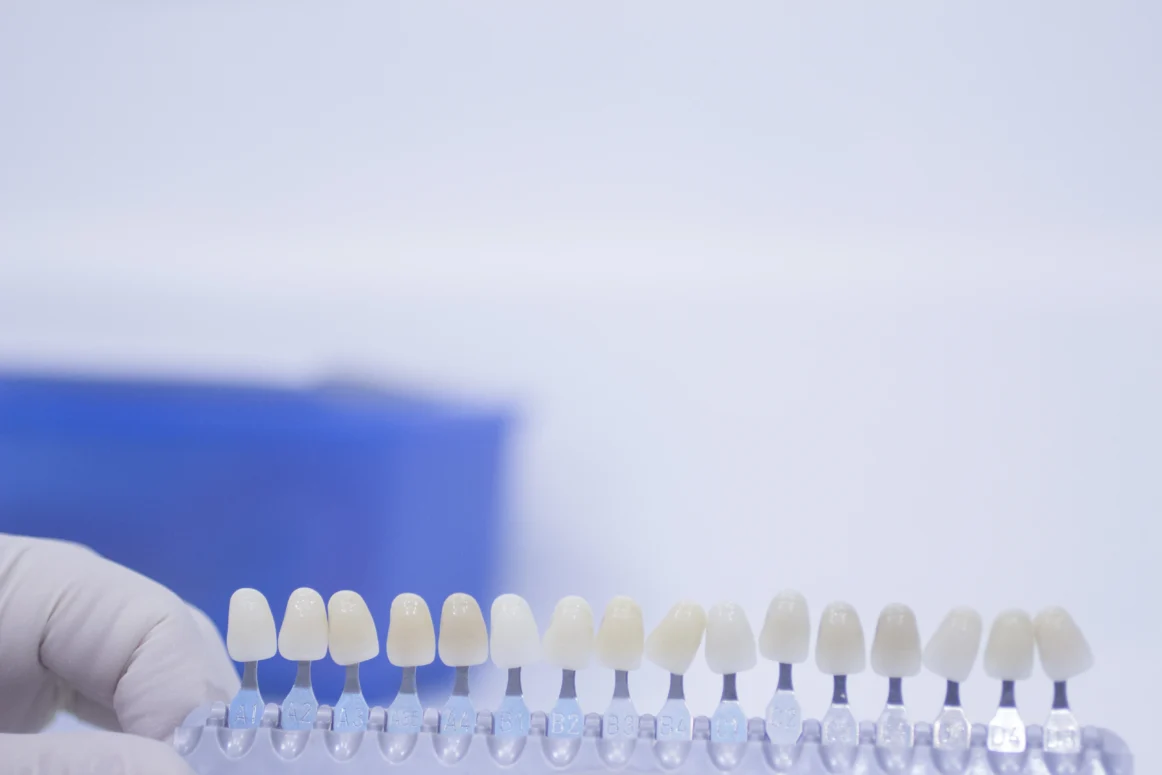
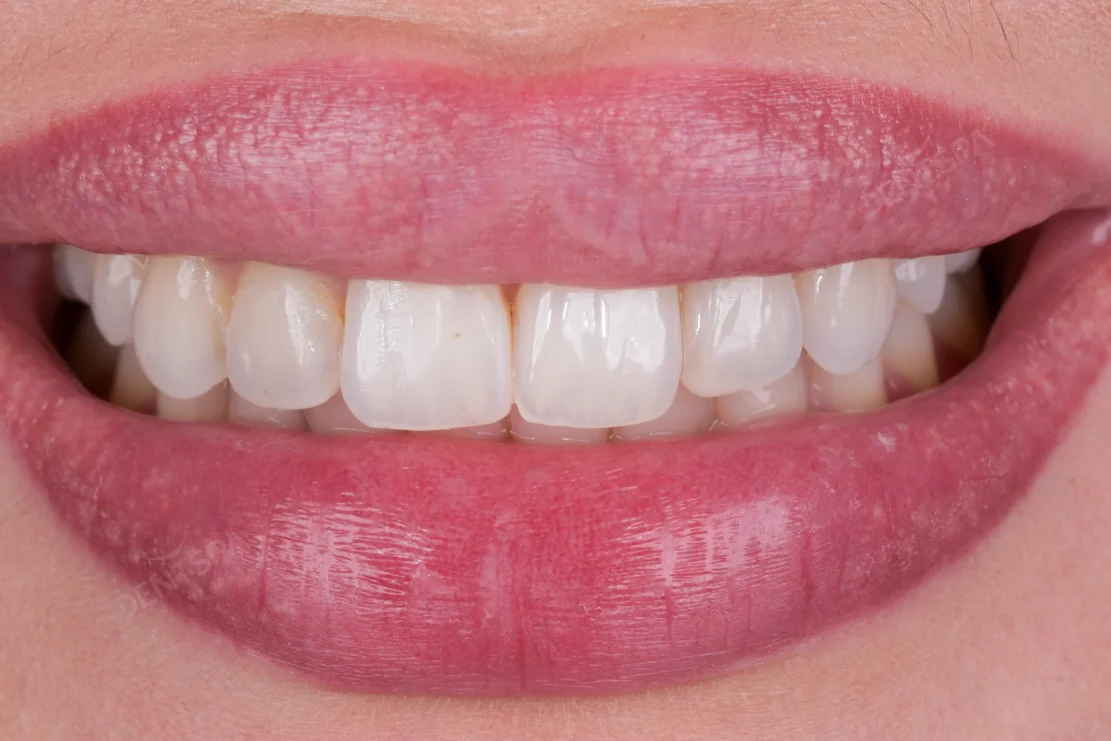
A veneer is a thin layer of porcelain made to fit over the front surface of a tooth, used to change its colour, shape or position.¹ Because it only resurfaces the visible front, the dentist removes very little tooth structure.
A crown covers the entire tooth — the front, back and biting surface — like a helmet. To make room for it, more of the natural tooth is reshaped. Crowns can be all-ceramic, zirconia, or older porcelain-fused-to-metal designs (the type that can show a dark line at the gum over time).
So the simplest way to decide: if the tooth is healthy and the issue is cosmetic, a veneer usually does the job. If the tooth is broken, heavily filled, or root-treated, it needs the full protection of a crown.
Side-by-side comparison
| Veneers | Crowns | |
|---|---|---|
| Coverage | Front surface only (thin layer) | The whole tooth (full coverage) |
| Tooth removed | Minimal | More — the tooth is reshaped |
| Best for | Cosmetic fixes on healthy teeth | Damaged, weak, or root-canal teeth |
| Materials | Porcelain, E.max, composite veneers | Zirconia, E.max, porcelain-fused-to-metal |
| Strength | Good for front teeth | Higher — handles back-teeth chewing |
| Reversibility | Irreversible once enamel is removed¹ | Irreversible |
| Typical use | Colour, shape, small gaps | After a large filling or root canal |
Pros and cons
Veneers — pros: conservative (little tooth removed), very natural appearance, excellent for front teeth, porcelain resists staining. Cons: not suitable for badly damaged teeth, can chip under heavy grinding, cosmetic so rarely available on the NHS.
Crowns — pros: protect and rebuild a weak or cracked tooth, restore full chewing function, work on back teeth, often needed after a root canal or large filling. Cons: more of the natural tooth is removed, and older metal crowns can look less natural than all-ceramic ones.
How long do veneers and crowns last?
Both are long-lasting when they’re well made and well looked after. For veneers, a systematic review of 25 studies and around 6,500 porcelain laminate veneers found a 10-year survival rate of roughly 95.5%.² Crowns are also designed to last many years; longevity for either depends far more on oral hygiene, your bite, and whether you grind than on the restoration type alone.
With good brushing, regular check-ups and a night guard if you grind, it’s reasonable to expect well over a decade from either — though no dentist can promise an exact lifespan.
Which one suits you?
- Choose veneers if your front teeth are healthy and you mainly want to improve colour, shape, worn edges or small gaps. If you’re only fixing one chip, also weigh the more reversible option in our guide to composite bonding versus veneers.
- Choose a crown if the tooth is cracked, has a large filling, or has had a root canal and needs full protection. You can read how these are made and priced on our dental crowns in Turkey guide.
- Sometimes it’s a mix — a smile makeover may use veneers on the healthy front teeth and crowns where a tooth is weak.
A word of caution that matters for anyone researching treatment abroad: some “Turkey teeth” cases fit far more crowns than the patient needed, because crowns are quicker to place and create a dramatic change. If a tooth is healthy, a veneer that preserves it is usually the better dentistry — so always ask why a crown is being recommended over a veneer. We cover this honestly in everything you need to know about Turkey teeth.
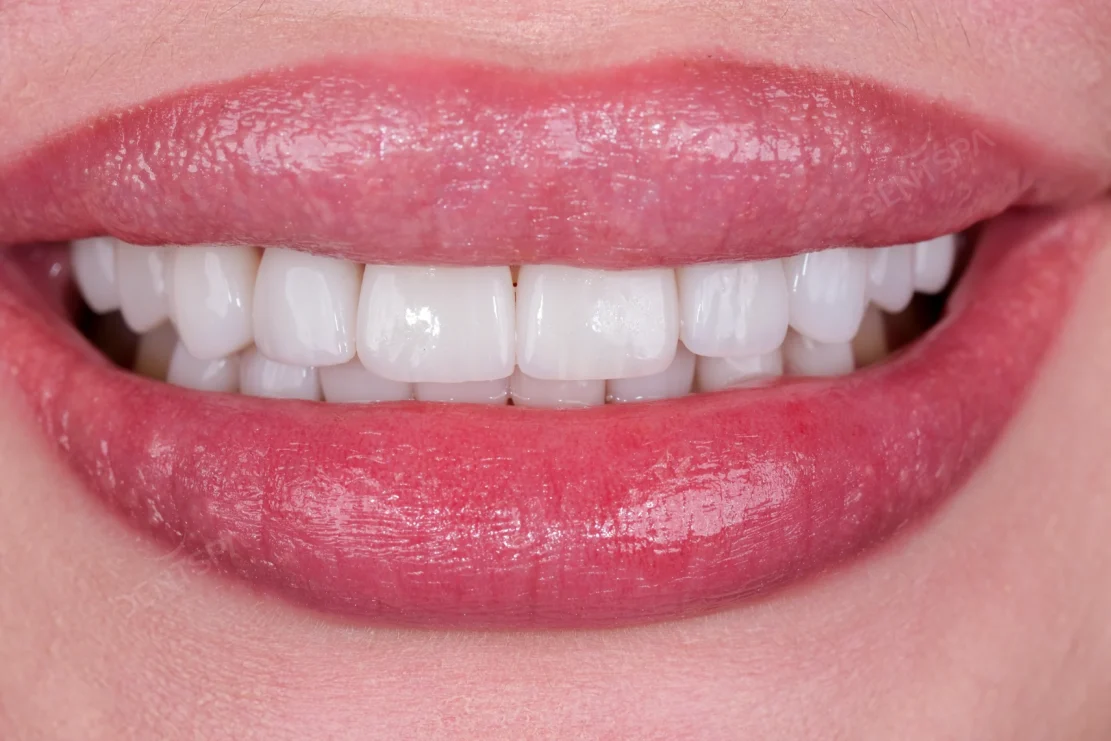
Before & After
Veneers vs crowns cost: Turkey vs the UK
Both treatments are expensive privately in the UK, which is why many patients compare prices abroad. At DentSpa in Istanbul, veneers and crowns are offered at up to around 70% less than typical UK private prices, framed as affordable premium care rather than the cheapest option. The exact figure depends on the number of teeth, the material (E.max, zirconia or porcelain) and the complexity of your case, so a personalised quote follows an assessment. You can compare options on our veneers in Turkey page.
Lower price doesn’t have to mean lower quality. DentSpa was named Best Clinic in Dentistry in Europe at the European Awards in Medicine 2024 (Odontology), has treated more than 50,000 international patients, and is TDB- and ISO-certified. Crowns and veneers are designed with digital smile design and produced in an in-house lab using premium materials, with aftercare support once you’re home.
Not sure which is right for you?
The honest answer usually needs an examination. The simplest first step is a free consultation: upload a few photos for a preliminary view, or message our team on WhatsApp to ask whether a veneer or a crown fits your case. No pressure — just clear advice from a dentist before you decide.
Frequently asked questions
What is the difference between a veneer and a crown?
Are veneers or crowns better for front teeth?
Do you need a crown after a root canal?
Which lasts longer, veneers or crowns?
Are veneers cheaper than crowns?
Sources
- Oral Health Foundation — Veneers — https://www.dentalhealth.org/veneers
- Journal of Prosthodontics / NCBI — “Long-Term Survival and Complication Rates of Porcelain Laminate Veneers in Clinical Studies: A Systematic Review” (2021) — https://www.ncbi.nlm.nih.gov/pmc/articles/PMC7961608/














 70%
70%