
Table of content
Used as directed, whitening strips are generally safe for healthy teeth — the American Dental Association notes that temporary tooth sensitivity and gum irritation are the most common adverse effects of whitening vital teeth.1 The problems come from overuse, a poor fit, or expecting them to do something they cannot. Here is what they can and cannot change, the side effects worth knowing, and when a professional assessment is the better first step.
What Are Teeth Whitening Strips?
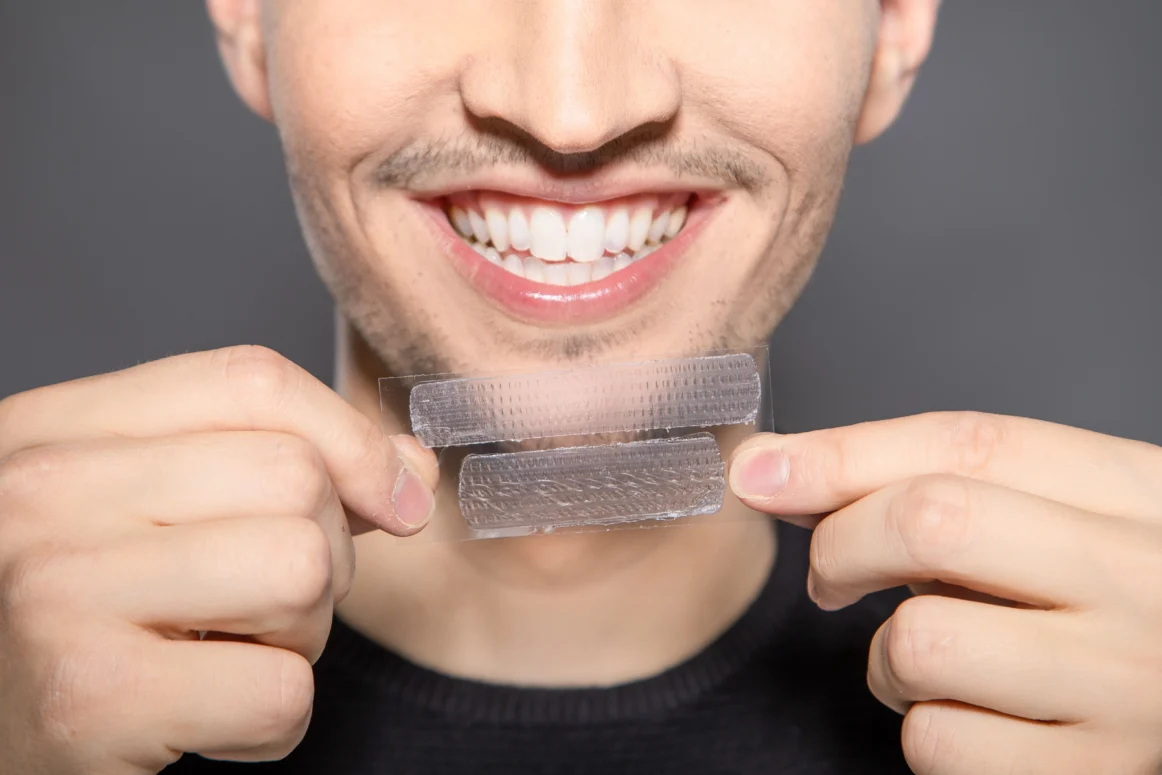
Whitening strips are essentially slim, pliable strips of plastic with a layer of bleaching gel, hydrogen peroxide in particular, that you peel off, paste on your teeth, leave on for roughly thirty minutes, and peel off later. Doing this daily, twice a day for two weeks, begins to erase the stains resting on your teeth’s surface, the same ones that coffee, tea, smoking, or heavily coloured foods leave behind.
It’s common for a lot of people to want to use whitening strips because, of course, they are everywhere, and they seem easy enough to use on your own. You don’t need an appointment, and you don’t have to speak with anyone; you can just go to the pharmacy and get a box to use from home. It seems simpler than booking an appointment — which is fair enough, as long as you know what you are buying.
Do Whitening Strips Really Work?
One of the most frequently asked questions is whether whitening strips really clear out the stains on one’s teeth.
They do lift the mild yellow hue that food and drink leave on the surface. On deeper, internal discolouration the picture is more nuanced than most pages admit: the ADA states that whitening treatments can be effective on both extrinsic and intrinsic staining.1 What varies is predictability — deep internal discolouration responds less reliably, and a strip delivers a fixed dose through a one-size sheet rather than a concentration chosen for your teeth. That distinction, and where brown stains actually come from, decides whether whitening is the right tool at all.
They also have physical limits:
- Whitening strips don’t cover all teeth if your smile is wide or your teeth are not perfectly aligned. This is why people sometimes feel that whitening strips make teeth patchy — some areas get more gel than others.
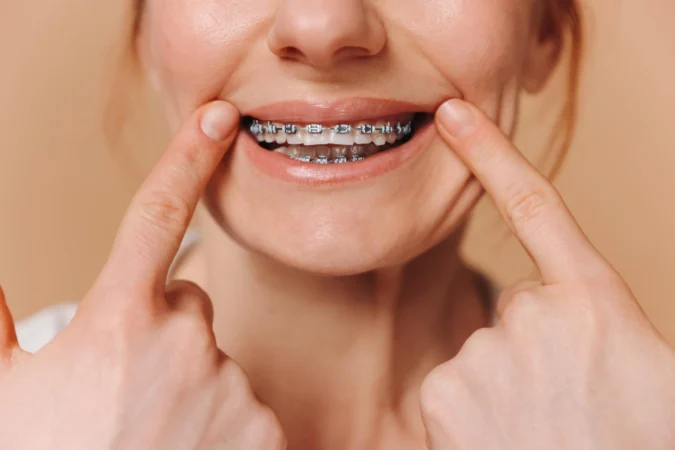
- If you have crowded or rotated teeth, you might notice that strips don’t adapt perfectly to crooked teeth, so the gel may not contact every surface.
They don’t work on veneers, crowns or dentures
Whitening strips don’t change the colour of dental restorations. The ADA puts it plainly: only natural teeth can be whitened, not tooth-coloured restorations.1
- With veneers, the strips do not affect the ceramic itself — only the natural enamel around and beneath it.
- The same applies to crowns and dentures. These materials do not react to bleaching gels, so only the adjacent enamel lightens — which can make the restoration stand out more, not less.
That is the practical reason sequence matters: whitening is done before ceramic work, so the restoration can be matched to the lighter shade. If you already have or are considering veneers, read about professional planning first: Dental Veneers in Türkiye, and what determines how long they hold their colour in veneer longevity.
Are Teeth Whitening Strips Safe for Your Teeth?
Online, you’ll see the same question repeated in different ways. The evidence is fairly consistent:
- When used as directed and for short periods, many products are considered generally safe for healthy teeth. The ADA lists temporary tooth sensitivity and gingival inflammation as the most common adverse effects — temporary being the operative word.1
- Problems begin with overuse, poor fit, or products of unknown quality. One thing worth checking before buying: whether the product carries the ADA Seal of Acceptance,2 which is awarded only to products whose safety and effectiveness claims have been independently evaluated.
Common Side Effects of Teeth Whitening Strips
Many people notice some discomfort the first time they use whitening strips, even when everything is done correctly. The most common effects are:
- Tooth sensitivity. The bleaching agent passes through enamel and can irritate the dentine, producing a short, sharp response to hot, cold or sweet. This is especially noticeable if you already have sensitive teeth, and it is the single most reported effect.1
- Enamel stress with overuse. Using strips more often or for longer than the instructions allow is where the risk sits — not in a single correct course. If your enamel is already thin, whitening also tends to disappoint, because the greyness of translucent enamel comes from light passing through rather than from stain.
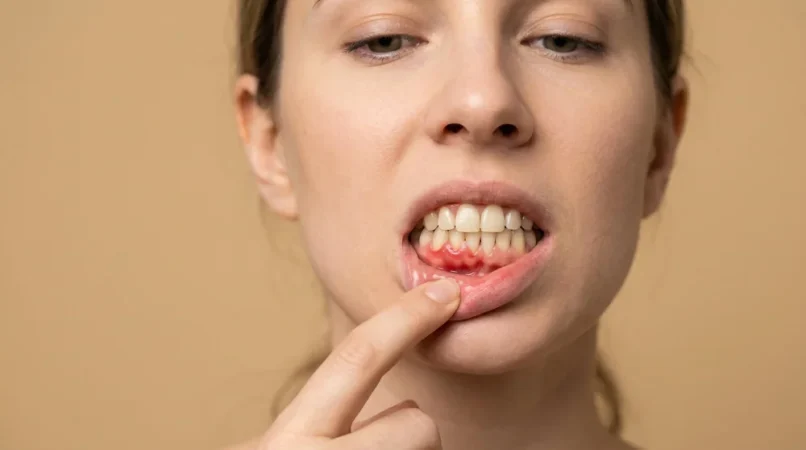
- Gum irritation. Gel sitting on soft tissue can cause the gum to blanch white or develop white patches — chemical irritation that normally settles within a day or two once contact stops. If you already have delicate or receding gums, it is worth taking advice before experimenting.
- Uneven whitening. Because strips don’t always sit evenly, patchy results are common. This is cosmetic rather than harmful, but frustrating if you expected a uniform result.
- Expired or unknown product. Old gel can be unstable, less effective and more irritating, so expired strips are not worth using. Buy from a pharmacy, check the date, and prefer a product whose claims have been independently assessed.
DIY whitening is a different category entirely
This is worth separating from everything above. The ADA reviewed the popular home remedies and found a strawberry and baking-soda mixture produced no measurable whitening, while a charcoal-and-salt mixture was abrasive and ineffective, leaving teeth with a yellow cast the authors attributed to enamel removed during brushing.1 A regulated strip used correctly is not the same thing as a kitchen recipe.
When Whitening Strips Are a Bad Idea
There are several situations where a strip is the wrong first move:
- You have sensitive teeth or had pain from whitening before
- You have receding gums or exposed root surfaces
- You wear veneers, crowns, or dentures in a visible position
- Your teeth are severely crooked, so the gel cannot contact every surface evenly
- The discolouration is heavy or uneven, and you are not sure what is causing it
- There is visible tartar — no gel reaches the tooth through it, so a professional clean comes first
In these cases a professional assessment is more useful than a box from the pharmacy — and often cheaper in the end, because it establishes what the discolouration actually is. The difference between cleaning and whitening, and which one your case needs, is set out in teeth cleaning vs teeth whitening.
Safer Alternatives & The Path to Your Hollywood Smile
If a strip is not the right answer for your case, the alternatives are straightforward. In-clinic professional whitening uses a concentration and contact time chosen for your enamel and your gums, with the soft tissue protected — how that runs appointment by appointment is in our guide to Zoom teeth whitening. Custom-fit trays hold the gel against the teeth and away from the gum, which is exactly what a one-size strip cannot do. And where the discolouration is deep or the shape also needs changing, veneers address both at once — the line between facing a tooth and covering it is drawn in veneers vs crowns.
A “Hollywood Smile” is no longer reserved for celebrities. DentSpa plans it as a clinical case rather than a shade change — book a free consultation to find out which route suits your teeth. But why DentSpa?
Why Choose DentSpa in Turkey
At DentSpa, we assess more than the colour of your teeth — we look at your whole oral health first. More than 50,000 international patients have been treated here since the clinic was founded in Istanbul in 2018.
DentSpa was named best dental clinic in Europe in the odontology category at the European Awards in Medicine,3 is licensed by the Turkish Ministry of Health, certified to ISO 9001 and ISO 10002, and a member of the Turkish Dental Association. The team includes PhD-level specialists, professors and associate professors who plan for long-term oral health rather than a quick shade change.
Choosing DentSpa means:
- Medical-grade whitening gels with controlled concentration and exposure time, and the gums protected during treatment.
- A to Z care and aftercare — from the online consultation, to your visit in Turkey, to follow-up once you’re home. That side of care is independently assessed: DentSpa holds the Certification for Excellence in Medical Travel Patient Experience from Global Healthcare Accreditation.4
- Tailored plans — if you have sensitive teeth, receding gums, or are considering veneers or correcting crooked teeth, whitening is integrated into a broader plan rather than done in isolation.
- Clear communication — our multilingual team makes sure you understand the options in your own language.
- Real results you can check — read the verified Trustpilot and Google reviews, rather than taking our word for it.
Most cosmetic treatment runs over a short stay, and how that is organised end to end is set out in our guide to dental tourism in Turkey. Rather than repeating at-home whitening attempts that keep falling short, many people choose to have the cause identified properly and treated once.
Protect Your Smile With Professional Guidance
A confident smile starts with healthy teeth and gums.
Whitening strips can improve the surface shade, and used correctly they are a reasonable product. What they cannot do is tell you why your teeth changed colour in the first place — and that is the part worth knowing before you spend two weeks on a result that may not hold. A short assessment settles it, and often points to something simpler than you expected.
Book your free consultation with one of our experts to find out whether whitening strips are the right choice for you, or whether something else would serve you better. Use our contact form or message us on WhatsApp. If you are still comparing clinics, the questions worth asking any of them are in how to find a dentist in Turkey.
Frequently asked questions
Are teeth whitening strips safe?
Do whitening strips work on veneers or crowns?
Why did whitening strips make my teeth patchy?
Can whitening strips damage enamel?
Why do whitening strips burn or whiten my gums?
Can I use expired whitening strips?
Do baking soda or charcoal whiten teeth?
Should I whiten before or after veneers?
Sources
- American Dental Association — Oral Health Topics: Whitening
- American Dental Association — ADA Seal of Acceptance
- The European Awards in Medicine — DentSpa Clinic — European Award in Medicine in Odontology
- Global Healthcare Accreditation — DentSpa Strengthens Global Trust in Turkey’s Dental Services with GHA Certification














 70%
70%