

Table of content
Table of content
Tooth pain under a crown that comes and goes usually has a cause beneath the crown that needs a dentist’s attention. It may be a crack, inflammation or infection of the nerve, decay or grinding. If the pain lasts more than two days, see a dentist to find the cause and discuss treatment.1
Why does pain under a crown come and go?
A dental crown covers the visible outside of a tooth. It protects the remaining tooth structure, but it does not remove the living tissue inside. The pulp, which contains the nerve and blood supply, remains beneath the crown unless the tooth has had root canal treatment.
This distinction matters. A crown can look perfectly intact while something underneath it is causing discomfort. The pain may appear during chewing, after eating something hot or cold, or without an obvious trigger.
The most common possibilities include:
| Possible cause | What it often feels like |
| Cracked tooth | Erratic pain when chewing, particularly when releasing the bite. Hot or cold sensitivity may also occur. Pain can come and go and be difficult to locate. 2 |
| Nerve inflammation or a dying nerve | Sensitivity to hot or cold food and drink, or toothache.3 4 |
| Dental abscess | Intense toothache, a bad taste, swelling and sometimes a high temperature.4 |
| Grinding | Tooth discomfort associated with grinding or clenching. 1 |
| Sensitive teeth | Discomfort triggered by hot, cold or sweet foods and drinks. 1 |
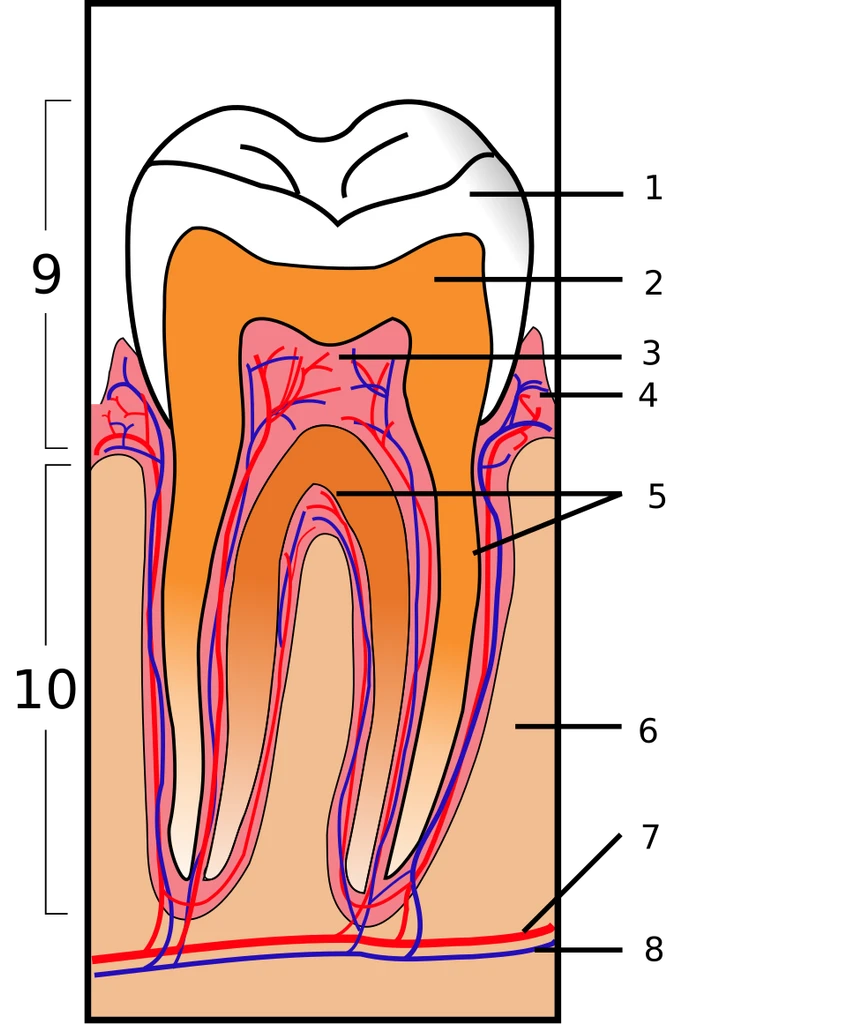
The diagram shows why this matters. Enamel forms the hard outer layer, dentine lies beneath it, and the pulp sits at the centre. The nerve is inside this pulp. Problems affecting these inner structures can cause pain even when the crown itself appears undamaged.
A crown therefore cannot rule out a dental problem. The dentist needs to examine the tooth and establish what is happening underneath it.
Why does my crown hurt when I put pressure on it?
Pain when biting down on a crowned tooth is a reason to arrange a dental examination. The discomfort may be intermittent, particularly if the tooth is affected by a crack.1
One important sign is pain when you release your bite rather than when you first press down.
The American Association of Endodontists describes this as a characteristic symptom of a cracked tooth. The pain can be unpredictable. You might feel it while chewing one day, then experience little discomfort the next. It can also be difficult to identify exactly which tooth is responsible.2
Do not assume that the crown simply needs time to settle, particularly if the pain keeps returning.
Your dentist can examine the tooth and assess whether a crack or another underlying problem is responsible.
Can the nerve die under a crown, even years later?
Yes. A tooth can lose its living pulp after a crown has been fitted, even if it was alive when the treatment was completed.
A systematic review and meta-analysis published in BMC Oral Health in 2023 examined 37 studies involving teeth that had received crowns or similar indirect restorations. It estimated that approximately 5 in every 100 teeth with living pulp subsequently developed pulp necrosis, meaning the pulp lost its vitality. Around 3.6 in every 100 developed infection around the root tip.3
The researchers also identified factors associated with a greater likelihood of these complications:
- The tooth had decay or fillings before the restoration.
- The restored tooth was a front tooth.
- The tooth spent a prolonged period with a temporary restoration.
- The follow-up period was longer, particularly beyond 10 years.
It is important to interpret these figures carefully. The certainty of the evidence was rated low, so they should not be treated as precise predictions for an individual patient.
Most crowned teeth do not develop pulp necrosis. If the nerve does become damaged or dies, a dentist can assess the tooth and discuss treatment options.
The important point is that a crown does not guarantee that the nerve underneath will remain healthy indefinitely.
Can a tooth rot under a crown?
Yes. Decay can still develop in a tooth that has a crown.
The crown covers the tooth, but the underlying tooth structure remains susceptible to dental problems. Toothache is one of the symptoms associated with tooth decay, according to the NHS.1
If you notice pain, sensitivity or discomfort around a crowned tooth, the dentist will need to check the crown and the tooth beneath it.
They may examine the edge of the crown to look for signs of decay and take an X-ray to assess the tooth.
Do not rely on the appearance of the crown alone. A crown that looks unchanged does not necessarily mean the tooth underneath is healthy.
What does an infection under a crown feel like?
An infection beneath a crown can cause an intense toothache. However, the symptoms are not always limited to the tooth itself.
According to the NHS, signs of a dental abscess can include:
- Intense toothache.
- A bad taste in your mouth.
- Swelling around the affected area.
- A high temperature.4
A dental abscess needs urgent treatment.
Contact a dentist or NHS 111 if you suspect an abscess. Do not wait for the symptoms to become more severe.
There are also situations that require emergency medical attention. Call 999 or go to A&E if you have difficulty breathing, speaking or swallowing, or if you have significant swelling or a swollen eye.4
These symptoms need to be taken seriously, but not every painful crowned tooth means you have an abscess. An examination is needed to establish the cause.
Does getting a crown hurt, and is pain after a new or temporary crown normal?
Getting a dental crown involves preparing the tooth and fitting the restoration. If the tooth needs root canal treatment, the NHS explains that this procedure is carried out under local anaesthetic.5
A temporary crown may be fitted while the permanent crown is being made. It protects the prepared tooth during this stage of treatment.6
Some patients notice discomfort around the time of crown treatment. However, there is no single pain duration that can be described as normal for every patient. The important thing is to pay attention to the pattern and severity of the symptoms.
Go back to your dentist if:
- The pain lasts longer than two days.
- The pain keeps returning.
- You cannot bite comfortably on the crowned tooth.
The NHS recommends seeing a dentist when toothache lasts more than two days. Pain when biting is also a reason to seek dental attention.1
A new crown should not be assumed to be the cause of every symptom. The dentist needs to check the tooth itself.
There are different types of dental crowns, and the choice depends on the clinical situation. If you want to understand the available options, DentSpa’s guide to different types and uses of dental crowns explains the subject further.
How is pain under a crown treated?
Treatment depends on what the dentist finds. There is no single solution for every painful crowned tooth.
Root canal treatment
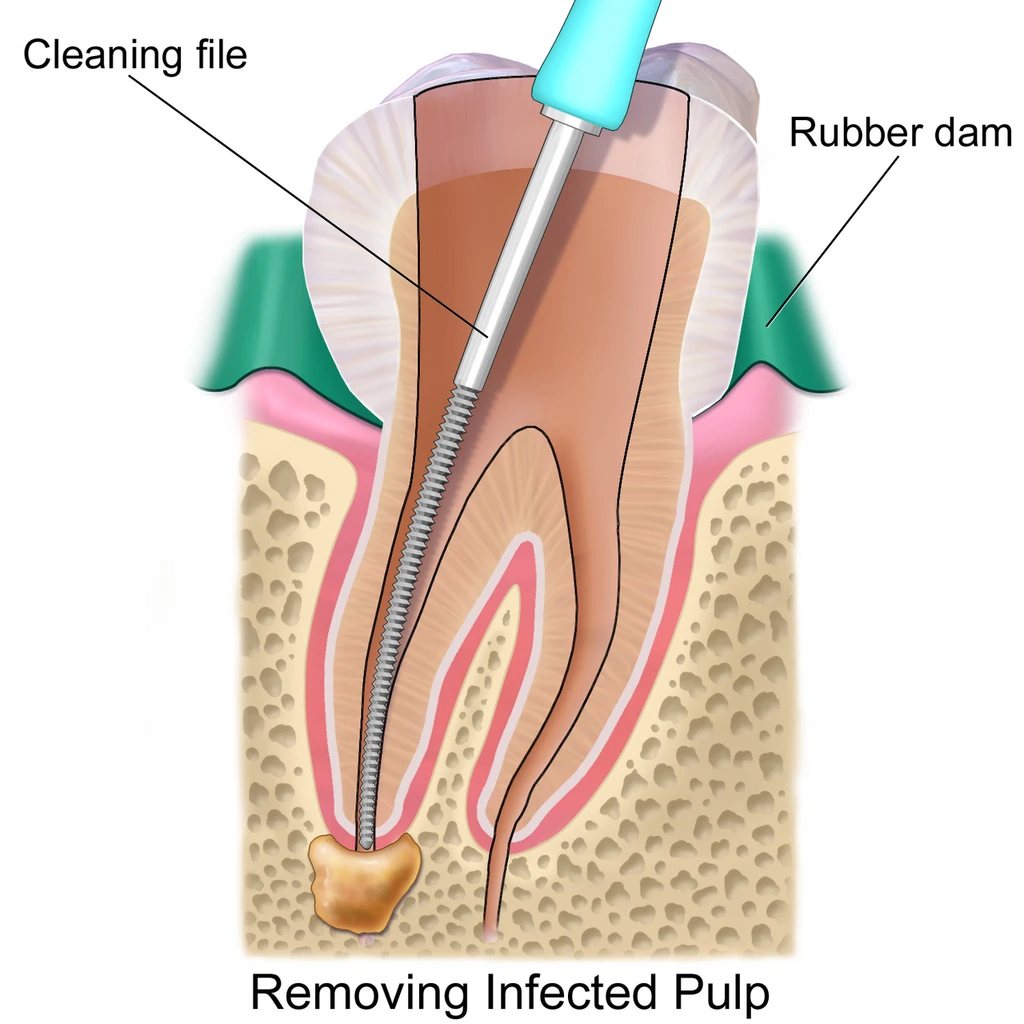
If the pulp inside the tooth is inflamed or infected, root canal treatment may be recommended. It involves treating the affected tissue inside the tooth.
In some cases, root canal treatment can be carried out through an existing crown. In others, a new crown may be needed.
The treatment involves cleaning and treating the inside of the tooth. If you want to understand the stages and expected appointment time, read DentSpa’s explanation of how long root canal treatment takes.
A new crown
If the existing crown needs replacing, your dentist will assess the tooth and discuss an appropriate restoration.
The decision depends on the condition of the underlying tooth and the findings of the examination. A new crown may be recommended when the existing restoration is no longer suitable.
For a clearer explanation of the factors involved in crown treatment, you can read about dental crown costs in the UK.
Treatment for a cracked tooth
A cracked tooth may require root canal treatment followed by a crown. However, a crown does not guarantee that treatment will succeed. The outcome depends on the nature and extent of the crack.2
Treatment for an abscess
A dental abscess needs to be drained. Depending on the condition of the tooth, treatment may also involve root canal treatment or extraction.4
The dentist’s first task is to identify the cause. Treating the symptoms without addressing the underlying problem may not resolve the pain.
What can I do until I see a dentist?
If your crowned tooth is hurting, arrange a dental appointment rather than relying on home treatment. There are, however, a few things you can do to manage the discomfort while waiting.
The NHS recommends the following measures for toothache:1
- Take painkillers such as ibuprofen or paracetamol, if suitable for you, following the packet instructions.
- Consider a pain-relieving gel designed for use in the mouth.
- Rinse your mouth with warm salt water. This is suitable for adults.
- Choose soft foods that require less chewing.
- Avoid chewing on the side with the painful crown.
- Avoid very hot, cold or sweet foods and drinks if they trigger discomfort.
These measures may help you feel more comfortable, but they do not establish or treat the underlying cause.
If you want more practical advice while arranging an appointment, read DentSpa’s guide to toothache relief in the UK.
If you have swelling, a high temperature or symptoms suggesting an abscess, seek urgent dental advice rather than relying on self-care.
Crowns and root canal treatment at DentSpa
If your crowned tooth is hurting now, the first step is to have it examined by your own dentist or an urgent dental service. You should not delay an assessment to travel abroad.
DentSpa is relevant if you are planning a new crown or considering root canal treatment after receiving a diagnosis.
Located in Şişli, Istanbul, DentSpa provides crown and root canal treatment for international patients. Root canal procedures are carried out by endodontic specialists, including Dr Ahmet Çetinkaya, who has 10 years of experience.
You can read about Dr Ahmet Çetinkaya and his professional background.
How treatment is planned
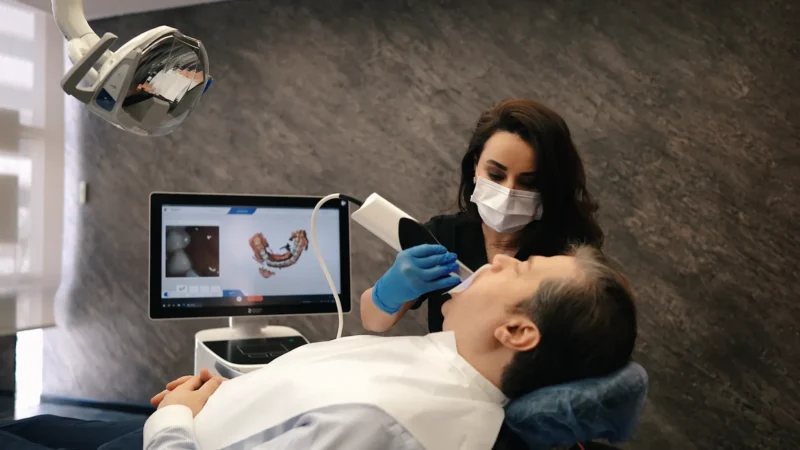
Planning begins with understanding the condition of the tooth. DentSpa uses digital imaging, including X-rays or 3D scans, to assess the tooth and see the root canals before treatment.
The appropriate approach depends on the clinical findings. A dentist explains why one treatment is recommended and why another may not be suitable.
You can explore the clinical information about root canal treatment at DentSpa and dental crown treatment before making a decision.
For further background on receiving root canal treatment in Turkey, DentSpa also explains the considerations in its article about navigating tooth pain with root canal treatment in Turkey.
Quality, standards and patient experience
DentSpa is licensed by the Turkish Ministry of Health and certified to ISO 9001, ISO 10002 and ISO 7101, the healthcare quality standard explained in our article. It is also a member of the Turkish Dental Association (TDB).
The clinic holds Global Healthcare Accreditation, Certification for Excellence in Medical Travel Patient Experience. This accreditation relates to the patient journey, including communication before treatment, coordination during treatment and follow-up afterwards. You can read more about the GHA certification.
For international patients, follow-up continues from Istanbul after they return home. The process is not limited to the time spent at the clinic.
A free consultation begins with the patient’s findings and what they want to achieve. The dentist explains the clinical reasoning in the patient’s own language, including why a particular approach is recommended and why another may not be appropriate.
Treatment quality is not reduced to reach a particular price. Any price difference comes from Turkey’s local cost base, not from using less work or cheaper materials.
You do not have to take our word for it. You can read patient reviews of DentSpa and follow the clinic on Instagram to learn more about the patient experience.
Frequently asked questions
Why does my crown pain come and go?
Can a tooth be rotting under a crown?
What does a tooth infection under a crown feel like?
What are the early symptoms of a leaking crown?
Why does my crowned tooth hurt years later?
Is it normal for a temporary crown to hurt?
Can you have a root canal through a crown?
What should you do next?
Sources
- NHS, Toothache. https://www.nhs.uk/symptoms/toothache/
- American Association of Endodontists, Cracked Teeth. https://www.aae.org/patients/dental-symptoms/cracked-teeth/
- Al-Manei KK, Alzaidi S, Almalki G, et al. (2023), Incidence and influential factors in pulp necrosis and periapical pathosis following indirect restorations: a systematic review and meta-analysis. BMC Oral Health. https://doi.org/10.1186/s12903-023-02826-1
- NHS, Dental Abscess. https://www.nhs.uk/conditions/dental-abscess/
- NHS, Root Canal Treatment. https://www.nhs.uk/tests-and-treatments/root-canal-treatment/
- Oral Health Foundation, Crowns. https://www.dentalhealth.org/crowns














 70%


