Table of content
Table of content
If you’re an adult and your smile feels tight, uneven or busy at the front, you probably have crowded teeth. Most people notice it as difficulty flossing, plaque that builds up in the same spots, or bottom teeth that seem to twist a little more each year.
If it has appeared or worsened in adulthood, that is not your imagination. Research over three decades has established that people over twenty mostly show late crowding — crowding that develops after the teeth have long since come through.1 It is one of the most common reasons adults seek orthodontic treatment.
The useful part is that crowding is measurable. There is a millimetre scale for it, and the measurement — not the photograph, and not how bad it looks to you — is what decides which treatment is appropriate. This guide covers the causes, how severity is actually graded, what each treatment can and cannot do, and how much each one tends to relapse.
What Are Crowded Teeth?
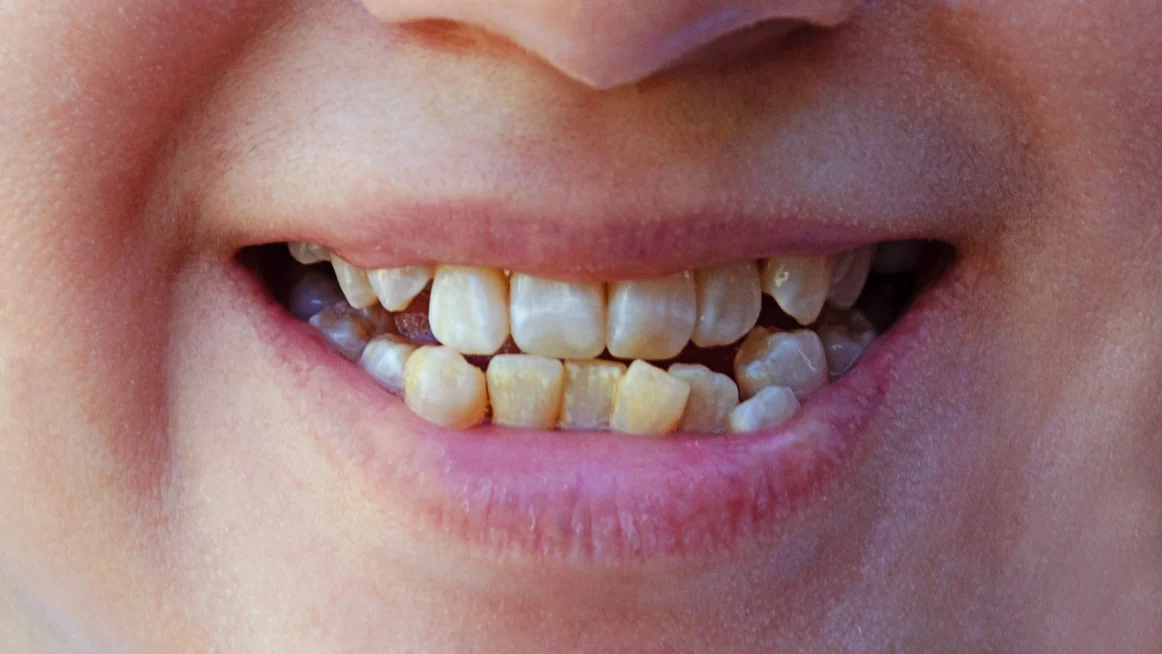
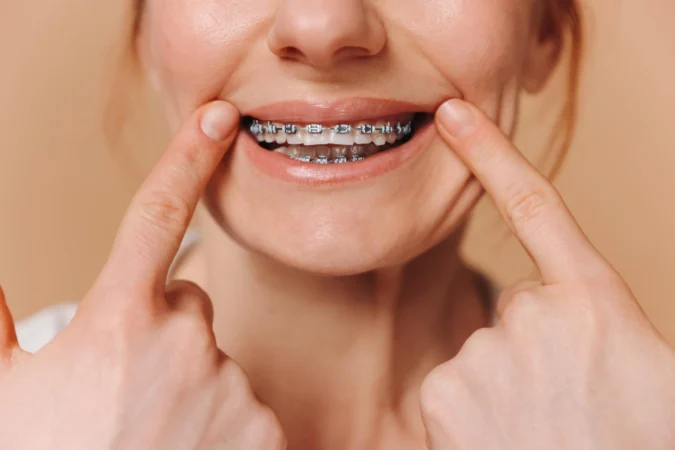
Crowded teeth, or dental crowding, means the teeth do not have enough room in the jaw to sit in a neat row — so they overlap, rotate, or tip inwards and outwards to fit. The technical term for that shortfall is a dentoalveolar discrepancy: the gap between how much space the teeth need and how much the arch provides.
Crowded bottom teeth are more common, and the lower front six are where it shows first.
What it looks like:
- The front teeth overlap one another
- One or more teeth are rotated or tilted sideways
- A tooth sits pushed forward of the arch, or tucked behind it
- The smile reads as tight or uneven
- Floss is hard to get through the contact points — often the first thing people notice
Causes of Crowded Teeth
Some causes are set long before adulthood:
- A naturally small jaw, or teeth that are large relative to it
- Genetics influencing both tooth size and arch size
- Baby teeth lost too early or retained too long
- Permanent teeth erupting at an angle, or blocked out of the arch
- Tongue and cheek posture, or thumb sucking in early childhood
But the reason crowding turns up in adults who never had it — or returns years after braces — is different, and the article you are reading is one of the few places that will name the mechanism rather than call it “ageing”.
Why Crowding Appears or Worsens in Adulthood
The main explanation in the literature is not that the jaw shrinks. It is close to the opposite: the lower jaw keeps growing after puberty, slowly, in both men and women. As mandibular length increases, the overjet reduces and the space available to the lower incisors is squeezed — which is exactly where late crowding shows up.1
Other mechanisms have been proposed and argued over for decades: reduced interproximal wear compared with prehistoric diets, cheek pressure from a lowered tongue posture tipping the teeth inward, and gradual reduction of craniofacial dimensions. Pressure from erupting third molars is the most contested of all — some studies find an effect, others find none.1
And the most preventable cause: stopping retainers after teenage orthodontics. Teeth that were moved will drift back toward where they came from unless something holds them, and the relapse figures further down this page show how much difference that makes.
How Crowding Severity Is Actually Measured
“Mild, moderate, severe” is not a matter of opinion. Orthodontists grade lower-front crowding with Little’s Irregularity Index, introduced in 1975 and still in routine use: the displacement at each contact point between the six lower front teeth is measured and added up, giving one figure in millimetres.1
| Irregularity Index | Grade | What it usually looks like |
|---|---|---|
| 0 mm | Perfect alignment | Contact points meet exactly |
| 1–3 mm | Minimal | Small overlaps, slight rotation; mostly an aesthetic concern |
| 4–6 mm | Moderate | Noticeable overlapping across several teeth; cleaning becomes harder |
| 7–9 mm | Severe | Teeth clearly displaced out of the arch line |
| 10 mm or more | Very severe | Marked jaw-to-tooth size imbalance |
The number matters because it maps onto treatment rather than onto adjectives — which is what the next section is about.
The Millimetre Rule: How the Measurement Chooses the Treatment
A study of 302 adults aged 21 to 39 with late lower crowding tested whether the measured discrepancy reliably predicts which treatment works. It does, and the thresholds are specific:1
- Up to 3 mm — the arch can usually be expanded to create the space.
- 3 to 5 mm — interproximal enamel reduction: a very small amount of enamel is taken from between the teeth to release space.
- Above 5 mm — extraction, because the space simply is not there to find.
The relapse findings are the part worth reading twice. One year after treatment, the group treated by expansion had relapsed most — an increase of 0.48 mm. The enamel-reduction group relapsed less than half as much, 0.18 mm. The extraction group did not relapse at all; it improved very slightly.1
None of those relapse figures is large — all stayed under half a millimetre — and the authors’ conclusion is the useful one: results stay stable when the treatment matches the measurement. Treating a 6 mm discrepancy by expansion because it sounds less invasive is how relapse happens. So if a plan is proposed without anyone measuring your arch, that is a fair question to ask.
How To Fix Crowded Teeth: All Treatment Options
Treatment has to match the severity, your bite, your oral health and what you actually want to change. The options below are grouped by which of those they address.
Cosmetic options for mild cases
These change how the teeth look without moving them. For minimal irregularity in someone with a sound bite, that can be exactly the right answer.
Veneers reshape the visible surfaces so the smile reads as even. They give a predictable cosmetic result in porcelain or composite, and they work quickly — full planning is set out in our guide to veneers in Istanbul. What they will not do:
- They do not move teeth or correct a bite — an uneven bite stays uneven underneath.
- They are not appropriate for moderate or severe crowding.
- They need healthy enamel and stable gums to bond to.
- The trade-off nobody mentions: to make an overlapping tooth line up with its neighbour, more of the prominent tooth has to be prepared than in a straight arch. The more crowded the tooth, the more tooth structure the aesthetic result costs — which is precisely why this route belongs to mild cases.
Bonding and recontouring add or remove very small amounts of material to harmonise tooth shape — good for minor overlapping, small chips that exaggerate crowding, and uneven edges. Not appropriate where several teeth are rotated, where there are spacing problems, or where biting and chewing are affected. Our guide to composite bonding covers what it holds up to.
Orthodontics for moderate cases and anything involving the bite
Orthodontics is the only approach that moves the actual teeth, roots included, so it is what changes the underlying problem rather than its appearance. Three routes:
- Fixed braces — brackets and wires, with the most control over difficult root movements.
- Clear aligners — a series of custom removable trays; discreet, and dependent on being worn as instructed. See also straightening teeth without braces.
- Hybrid — fixed appliances for the major corrections, aligners for the finishing.
Orthodontics is usually the recommendation where teeth overlap at the root, where the bite is uneven, where cleaning is genuinely difficult, or where you want the result to hold long term rather than look right from the front. It corrects root position, makes hygiene easier, and creates proper alignment for any cosmetic work that follows.
One thing to plan for from the start: retention is not the end of treatment, it is part of it. The relapse data above was measured in people who were retained — teeth that are moved and then left unheld drift further than that.
Extraction with orthodontics for severe crowding
Some arches simply do not contain enough space — the jaw is small, the teeth are large, or the discrepancy is beyond what expansion and enamel reduction can release. Above roughly 5 mm, extraction is what creates room for the rest to align.1
It is also considered where there is heavy overlapping in the dentition, strong rotations, limited bone support, a tooth blocked out of the arch, or a clear jaw-to-tooth size mismatch.
Patients often resist this option, understandably. Worth knowing: in that study of adults, the extraction group was the only one with no relapse at one year — because the space was genuinely created rather than borrowed from the arch width.1 Which teeth are removed, and whether extraction is needed at all, is a judgement from the measurement and the records, not a default.
Additional procedures for complex cases
Crowding rarely arrives alone. Depending on what the examination finds:
- Gum treatment first. Tight contacts hold plaque, so professional cleaning and gum therapy often come before or alongside alignment. Teeth are not moved through inflamed tissue.
- Bite balancing. Where crowding has changed how the teeth meet, adjustments prevent uneven wear on the teeth doing too much of the work.
- Replacing a missing tooth. Where a tooth is already absent or unrestorable, the space is planned into the alignment rather than treated separately.
Related patterns are covered in our guides to crooked teeth, buck teeth and gaps between teeth — crowding and spacing are the same problem measured in opposite directions.
Am I a Candidate for Treatment?
Cosmetic correction may suit you if the crowding is minimal, your bite is sound, your gums are healthy, and you want an aesthetic improvement without moving teeth.
Orthodontics is likely the better route if the crowding is moderate or more, cleaning between the teeth is genuinely difficult, the bite is uneven, or you want the correction to be structural rather than surface-level.
Extraction with orthodontics comes into it if the measured discrepancy is beyond what the arch can absorb, the teeth overlap heavily, or a tooth has no room to move into.
And treatment is not compulsory. Minimal crowding that does not bother you, in a mouth you can clean properly, is a reasonable thing to leave alone and keep an eye on. What is worth knowing either way is the measurement — because that tells you whether you are watching something stable or something that has been moving.
Aftercare, Maintenance and Oral Hygiene
Crowded teeth are harder to clean because plaque sits in tight contacts that a brush cannot reach and floss struggles to enter. Straightening the arch makes that easier, and cosmetic correction alone does not — which is one practical argument for orthodontics where cleaning is the problem.
- Wear your retainers. This is the one that decides whether the result lasts.
- Brush gently twice daily — pressure damages gums without cleaning better.
- Clean between the teeth daily with floss, interdental brushes or a water flosser.
- Keep regular professional cleaning appointments.
- Have any shifting looked at early rather than after another few years of drift.
Why Choose DentSpa
- The crowding is measured before anything is proposed — because the millimetres decide the treatment, and a plan built without them is a guess.
- PhD-level specialist dentists, with professors and associate professors involved in complex cosmetic and orthodontic cases.
- Cosmetic and orthodontic routes explained side by side, including where a cosmetic result would cost more tooth structure than it is worth.
- Retention planned as part of the treatment, not mentioned at the end of it.
- Full A–Z care from the online consultation through to aftercare.
You don’t have to take our word for the standard. DentSpa was named best dental clinic in Europe in the odontology category at the European Awards in Medicine,2 is licensed by the Turkish Ministry of Health, certified to ISO 9001 and ISO 10002, and a member of the Turkish Dental Association. For treatment planned from abroad it also holds the Certification for Excellence in Medical Travel Patient Experience from Global Healthcare Accreditation.3 More than 50,000 international patients have been treated since the clinic was founded in Istanbul in 2018 — see real cases in the smile gallery and read the verified reviews.
Cost, and planning orthodontics around travel
Costs are lower in Turkey than in the UK, US and much of Europe, and the reason is the local cost base — staffing, premises and laboratory work — not a shorter treatment or lesser materials. Treat any figure online as an approximate range rather than a quote; orthodontic cost depends on the severity and the appliance, and yours is confirmed in writing after an assessment. See dental treatment prices in Turkey and our guide to dental tourism.
Book a free consultation or message us on WhatsApp. If you are comparing clinics, the questions worth asking any of them are in how to find a dentist in Turkey.
One note specific to orthodontics and travel: aligner and brace treatment runs over months, so it is planned as a sequence of remote reviews and scheduled visits rather than a single trip. That schedule should be agreed before you book anything.
Frequently asked questions
How is crowding severity measured?
Why have my teeth become crowded as an adult?
Can veneers fix crowded teeth?
Will I need teeth extracted?
Will crowding come back after treatment?
Do I have to wear retainers forever?
Do crowded teeth cause gum problems?
Do I have to treat it at all?
Sources
- Antoszewska-Smith J, Bohater M, Kawala M, Sarul M, Rzepecka-Skupień M. Treatment of Adults with Anterior Mandibular Teeth Crowding: Reliability of Little’s Irregularity Index. 2017. doi:10.1155/2017/5057941 — Wroclaw Medical University.
- The European Awards in Medicine — DentSpa Clinic — European Award in Medicine in Odontology
- Global Healthcare Accreditation — DentSpa Strengthens Global Trust in Turkey’s Dental Services with GHA Certification










 70%
70%