
Table of content
Table of content
Dental implants vs veneers isn’t really a contest, because they fix different problems. An implant replaces a tooth that’s missing, root and all. A veneer is a thin shell bonded to the front of a tooth you still have, to change its color, shape or size. Which one you need depends on what’s going on with that tooth.
Dental implants vs veneers: the short answer
Most people trying to decide between dental implants or veneers are really asking one thing: is the tooth still there? If it’s gone, a veneer has nothing to bond to, and an implant is the option that puts a tooth back [1]. If the tooth is there and healthy but you don’t love how it looks (chipped, stained, a bit crooked, or with a gap next to it), that’s exactly what veneers are for [2].
There’s a third case people don’t expect. When the tooth is there but badly broken down, the answer is often neither. That’s usually a job for a crown [3].
What is a dental implant?
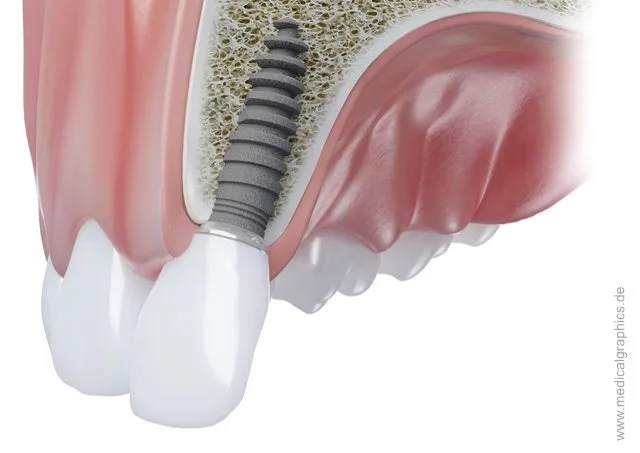
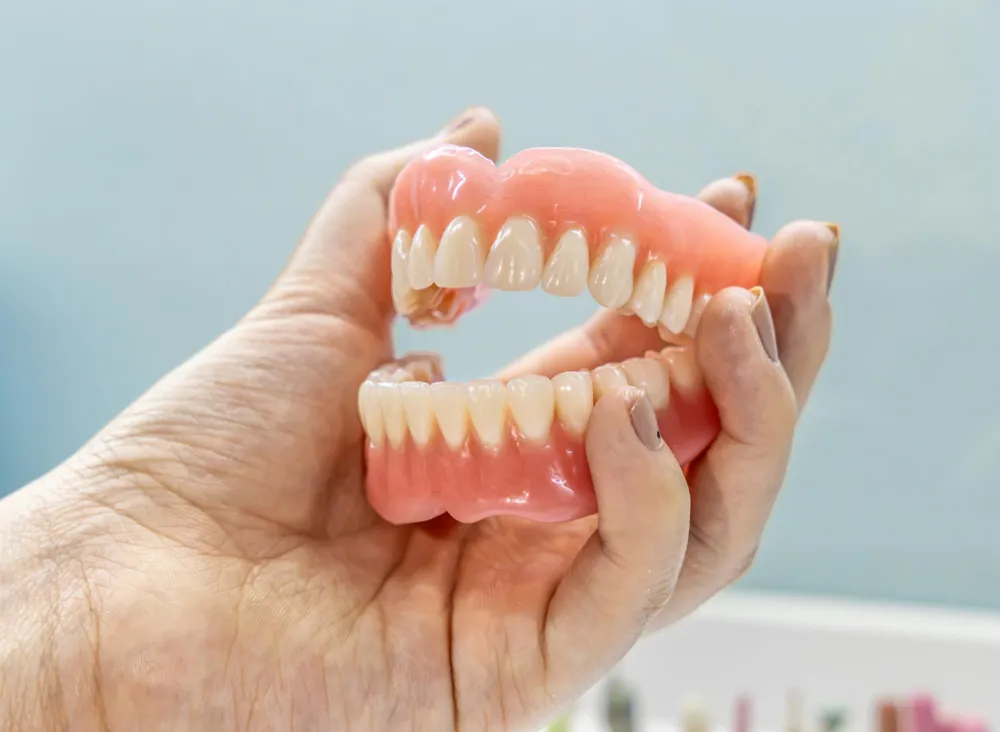
An implant is a small post placed in the jawbone where a tooth root used to be. A connector called an abutment comes up through the gum, and the visible tooth sits on top. That’s usually a crown, though implants can also hold a bridge or a denture [1]. So it rebuilds the whole tooth, not just the part you see.
It’s surgery, and it takes some patience. According to the FDA, the implant can take several months or longer to heal into the bone, and a temporary abutment is often fitted in the meantime [1]. Your general health plays a part as well. Uncontrolled diabetes can raise the risk of infection, and smoking may slow healing and lower long-term success [1]. If you’d like to know what each appointment involves, our guide to the dental implant procedure goes through it step by step.
Why go to all that trouble for one tooth? Losing a tooth isn’t only about looks. The FDA notes it can lead to rapid bone loss, along with changes in how you speak and chew [1].
What is a veneer?
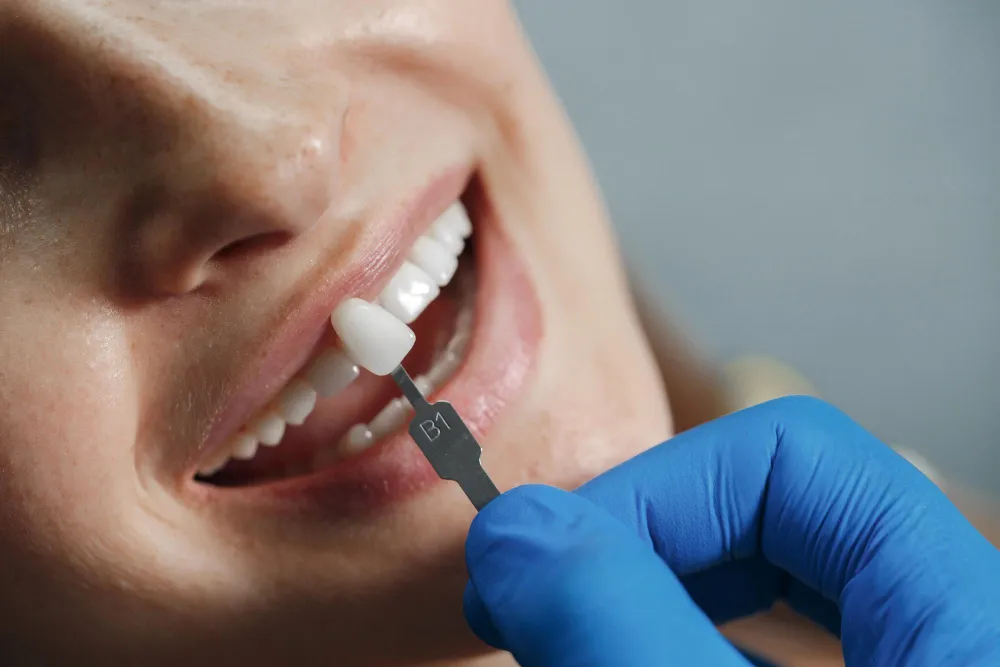
A veneer is a thin, custom-made covering bonded to the front of a natural tooth [2]. It can cover teeth that are chipped, broken, stained, crooked or misshapen, and it can close small gaps [2]. If you’re mostly here for the cosmetic side, our page on dental veneers shows the kind of results they can give.
There are two main types. Porcelain veneers are thin shells made to fit your teeth. They’re strong and natural-looking, and they tend to be the pricier option. Composite veneers are made from tooth-colored filling material bonded straight onto the tooth. They don’t resist staining and wear quite as well as porcelain, but they’re easier to repair if they chip [2].
Worth knowing before you go ahead: for porcelain veneers, the dentist removes a small amount of enamel from the front and sides of each tooth, and the ADA describes the treatment as irreversible for that reason [2]. Composite may need less enamel taken off [2]. Since it’s a long-term choice, it’s worth being sure about the shade and shape you want before anything is bonded.
Veneers vs dental implants at a glance
| Dental implant | Veneer | |
| What it treats | A missing tooth [1] | A tooth that’s still there but chipped, stained, misshapen or gapped [2] |
| What happens to the tooth | It’s replaced: a post goes into the jawbone, with an abutment and crown on top [1] | It stays: a thin layer of enamel is removed and the veneer is bonded on [2] |
| Number of visits | Several, spread over months while the implant heals [1] | A few; composite veneers may need fewer [2] |
| How long it lasts | 96.4% of implants still in place after 10 years in a large review [4] | 95.5% estimated 10-year survival for porcelain veneers [5] |
Those two survival figures come from separate reviews, so read them as “both last a long time” rather than a head-to-head score. The implant review also ran a more cautious analysis that allowed for patients lost to follow-up, and that estimate came out at about 93% [4]. We’ve gone into more detail on how long dental implants last and how long veneers last in separate articles.
Which one do you need?
Before anyone talks about implants or veneers, a good dentist looks at your gums. Gum disease is far more common than people think: a CDC-led national survey found periodontitis in over 47% of US adults aged 30 and older [6]. Both treatments rely on healthy gums around them, so gum treatment usually comes first. Our article on veneers or implants with gum disease explains how that’s handled.
After that, it helps to work through it by situation.
If a tooth is missing
Here the real choice is between an implant and the other ways of filling a gap, such as a bridge or a denture [1][3]. A veneer can’t help, because there’s nothing to bond it to. An implant stands on its own in the bone, while a traditional bridge is anchored by crowns on the teeth either side [3]. If you’re weighing those two, our comparison of dental bridge vs implant sets them side by side.
If a tooth is damaged
A tooth that’s cracked, heavily filled or badly broken usually needs more than a veneer, since a veneer only covers the front. A crown covers the whole tooth and can strengthen one with a large filling when there isn’t enough tooth left to hold it [3]. If the tooth can’t be saved, you’re back in missing-tooth territory, and an implant becomes the option.
If the tooth is healthy and you’d like it to look better
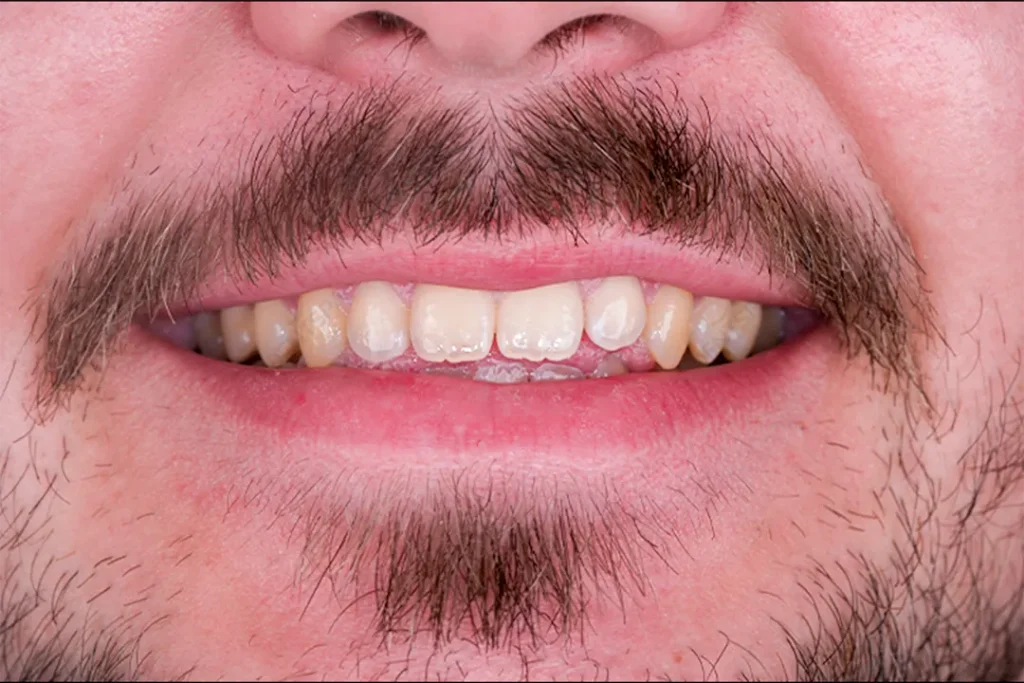
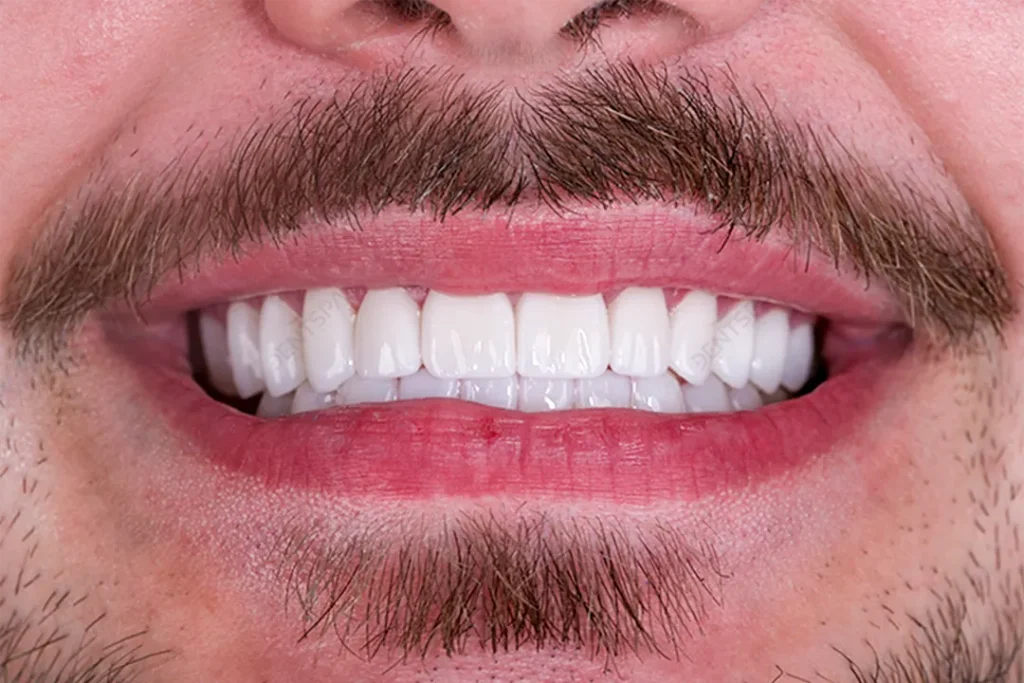
This is what veneers were made for: chips, stains, uneven edges and small gaps [2]. Nobody would swap a healthy tooth for an implant just to change its shape. So for the same tooth, implants vs veneers is rarely a real either-or.
Can you have both?
Yes, and plenty of treatment plans do. An implant fills the gap, and veneers on the neighboring teeth bring the shade and shape into line. The implant’s crown and the veneers are both tooth-colored, so they can be matched to each other.
Order matters, though. Usually the implant goes in and heals first, and the cosmetic work is planned around the final crown, so everything is made to match the same finished smile.
Dental implants vs veneers cost
No US public health body publishes a standard price for either treatment, so be careful with any single number you see quoted online. What drives the difference is how much is involved. A veneer is one restoration bonded to one tooth. An implant means surgery, months of healing, an abutment and a crown [1]. Tooth for tooth, then, the veneers vs implants cost comparison usually ends with the veneer as the smaller bill.
Per tooth isn’t how most people pay, though. A smile makeover might mean eight or ten veneers, while a single gap needs one implant, so the total can go either way.
Insurance rarely settles it. Original Medicare doesn’t cover most dental care, and that includes dentures and implants [7]. Private dental plans vary a lot, so check what yours covers before you plan. For a closer look at the numbers, our guide to how much veneers cost in the US breaks it down.
Veneers vs implants vs crowns
Crowns come up in this conversation a lot, partly because most implants wear one. The difference is how much of the tooth each one covers. A veneer covers only the front. A crown caps the whole tooth, restoring its shape and size and making it stronger [3]. An implant replaces the tooth completely, with a crown on top [3].
Because a veneer covers less, it keeps more of your natural tooth. A full crown can mean removing a considerable amount of healthy tooth structure [5]. When a crown is the better choice and when a veneer is enough is covered in our article on veneers vs crowns.
Implants and veneers at DentSpa in Istanbul
At DentSpa, planning starts with the clinical findings: whether a tooth is missing or present, the health of your gums and bone, and how much natural tooth is left. Then it’s about what you want. For some people that’s replacing one lost tooth so they can chew properly again. For others it’s a whole new smile line, or both at once.
Your dentist then explains why one approach suits you and why another doesn’t. That might be why an implant makes more sense than a bridge for your gap, or why a crown will protect a weak tooth better than a veneer. Quality is never reduced to reach a price.
Implants and veneers at DentSpa cost up to 70% less than private prices in the US. The difference comes from local staff and laboratory costs in Istanbul. It doesn’t come from doing less work or using different materials.
Not sure which one fits your teeth?
The question to start with is whether the tooth is still there. If it isn’t, you’re looking at an implant. If it is and you’d like it to look different, veneers are usually the answer. If it’s badly damaged, a crown may beat both. If you’re still unsure, book a free consultation with the DentSpa team. A dentist will go through your findings with you, ask what matters to you and explain which treatment fits your teeth.
Frequently asked questions
Are veneers or implants better?
Which is better, veneers or implants, for a front tooth?
What is cheaper, veneers or implants?
Which is more expensive over time, veneers or implants?
What is the best option for replacing all your teeth?
What is the 4-8-10 rule for veneers?
Do most celebrities have dental implants or veneers?
Sources
- U.S. Food and Drug Administration. Dental Implants: What You Should Know. https://www.fda.gov/medical-devices/dental-devices/dental-implants-what-you-should-know
- American Dental Association, MouthHealthy. Veneers. https://www.mouthhealthy.org/en/az-topics/v/veneers
- American Dental Association, MouthHealthy. Crowns. https://www.mouthhealthy.org/all-topics-a-z/crowns
- Howe MS, Keys W, Richards D. Long-term (10-year) dental implant survival: A systematic review and sensitivity meta-analysis. J Dent. 2019;84:9–21. https://livrepository.liverpool.ac.uk/3041376/
- Alenezi A, Alsweed M, Alsidrani S, Chrcanovic BR. Long-Term Survival and Complication Rates of Porcelain Laminate Veneers in Clinical Studies: A Systematic Review. J Clin Med. 2021;10(5):1074. https://pmc.ncbi.nlm.nih.gov/articles/PMC7961608/
- Eke PI, Dye BA, Wei L, Thornton-Evans GO, Genco RJ. Prevalence of Periodontitis in Adults in the United States: 2009 and 2010. J Dent Res. 2012;91(10):914–920. https://journals.sagepub.com/doi/10.1177/0022034512457373
- Medicare.gov. Dental services. https://www.medicare.gov/coverage/dental-services















 70%


