
Table of content
Table of content
On the NHS in England, dentures cost £332.10. That’s the Band 3 charge, and it’s the same whether you need a full set or a partial denture [1][2]. Privately, there’s no standard price. Each practice sets its own, and it shifts with the type of denture and the material used [2]. Some people pay nothing at all [3].
How much do dentures cost in the UK?
Here’s the quick version before we get into the detail. The NHS figures are for England; Scotland, Wales and Northern Ireland run their own charging systems, so check locally if you live there.
| Treatment | NHS in England | Private |
| Full (complete) dentures | £332.10, Band 3 [1] | Set by the practice |
| Partial dentures, including a single tooth | £332.10, Band 3 [1] | Set by the practice |
| Minor adjustment (smoothing a rough area, tightening a clasp) | £27.90, Band 1 [1] | Set by the practice |
| Reline or rebase | £76.60, Band 2 [1] | Set by the practice |
| Repair | Free, if it can be repaired [1] | Set by the practice |
| Dentures on implants | Rarely available on the NHS [4] | Set by the practice |
Dentures cost on the NHS
NHS dental care in England is charged in three bands. Band 1 covers check-ups and small fixes, Band 2 adds fillings, extractions and bigger work, and Band 3 covers anything made in a lab, which includes crowns, bridges and dentures made from plastic or metal [1].
That’s why the cost of NHS dentures doesn’t change with the size of the denture. One false tooth on a small plate and a full upper set are both Band 3. And because you pay once per course of treatment at the highest band involved, the £332.10 also covers the check-up, X-rays and any extractions done as part of the same course [1]. If something needs another look within two months and it falls in the same band or a lower one, there’s no extra charge [1].
Who gets dentures free on the NHS?
You won’t pay anything in England if you’re under 18 (or under 19 and in full-time education), pregnant, or have had a baby in the last 12 months [3]. The same applies if you or your partner get certain benefits, such as income-related Employment and Support Allowance, Pension Credit Guarantee Credit, or Universal Credit below a set income level [3].
There’s also partial help. If your income is low but you don’t qualify for free treatment, the NHS Low Income Scheme can reduce what you pay, and you’ll get an HC3 certificate showing your share [3]. One catch: if you’re treated by a hospital dentist, the treatment itself is free, but you may still have to pay for dentures [3].
How much do dentures cost privately?
This is where honest answers get vague, and for good reason. No UK public body publishes private denture prices, and when Which? surveyed private practice prices in May 2026, it didn’t list a figure for dentures either [5]. The NHS says only that private dentures vary in cost depending on the type and the material [2].
What we can say is what moves the price. Which? found that private costs vary considerably from one practice to the next, with London and the South East tending to charge more because rents and wages are higher there [5]. Materials matter too. Private dentures can be made from more expensive flexible acrylic or from chrome [5]. Then there’s the work itself: how many teeth are being replaced, whether you need extractions first, and how many fittings it takes to get the bite right.
So the real cost of dentures privately in the UK is whatever your practice quotes after an examination. Ask for that quote in writing, itemised, before you agree to anything.
Types of dentures and cost
Here’s how the types of dentures and cost in the UK line up, type by type.
Full dentures
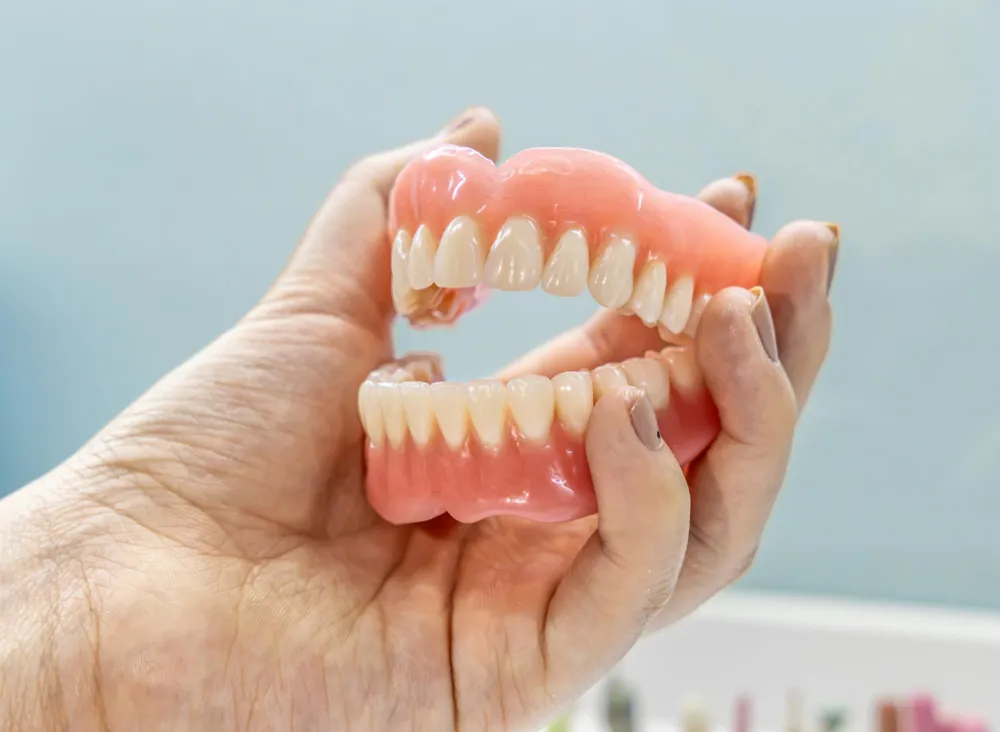
A complete denture replaces every tooth in the upper or lower jaw and rests on the gums [2]. On the NHS, full dentures cost £332.10 in England, the Band 3 charge [1]. Privately, the price depends on the practice and the material.
Partial dentures
Partial dentures replace one or more missing teeth and often clip onto the teeth you still have [2]. Partial dentures cost the same Band 3 charge on the NHS as a full set [1]. Privately, a chrome framework is one of the more expensive material choices [5].
Flexible dentures
These are made from a bendier acrylic and are usually a private option [5]. Because no public source publishes a price, the figure is set by the practice.
Single tooth dentures
A denture for one tooth is simply a small partial denture, so the single tooth denture cost in the UK on the NHS is the full Band 3 charge [1]. That surprises a lot of people. If you’re missing just one tooth, it’s worth comparing this with the other single tooth replacement options before you decide.
Immediate and permanent dentures
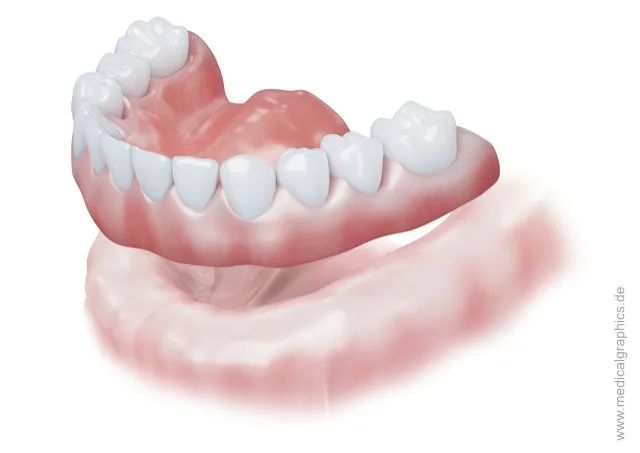
Immediate dentures are fitted straight after teeth are taken out and can usually be made within a few days [2]. Your gums and bone change shape as they heal, so immediate dentures often need adjusting or replacing up to a year later [2]. That second, longer-term set is what most people mean when they ask what permanent dentures cost in the UK. On the NHS it’s another Band 3 course [1]. The differences are covered in more detail in this guide to immediate vs permanent dentures.
Other costs: relines, repairs, replacement
Dentures aren’t a one-off purchase. Gums and jawbone keep changing, so a denture that fitted well can become loose over time [2].
On the NHS, small adjustments such as smoothing a rough edge or tightening a clasp are Band 1 (£27.90). A reline or rebase, where the fitting surface is rebuilt so it sits snugly again, is Band 2 (£76.60). Repairs are free, as long as the denture can actually be repaired [1]. If it can’t, a new one is Band 3 again [1].
Looked after properly, dentures can last for years [2]. If yours start slipping, see a dentist rather than living with it. For day-to-day tips, this article on how to keep dentures in place is a good place to start.
Fixed dentures cost: dentures on implants
Some people want teeth that don’t come out at all. That usually means implants: titanium posts placed in the jawbone that can support a crown, a bridge or a denture [4]. The NHS rarely offers them. It’s mainly for people who can’t wear dentures because of something like mouth cancer or an accident, and otherwise implants are usually private and expensive [4].
There’s no public UK price list for implant work, so again the cost depends on the practice and on how many implants you need. The options range from a clip-on denture held by a few implants to a full fixed arch. This guide to implant-supported dentures explains how each type works.
If all your teeth in one jaw are missing or failing, All-on-4 implants support a full fixed arch on four implants. If you still have some healthy teeth, implants for several teeth can fill the gaps without a removable plate.
Dentures and implants at DentSpa in Istanbul
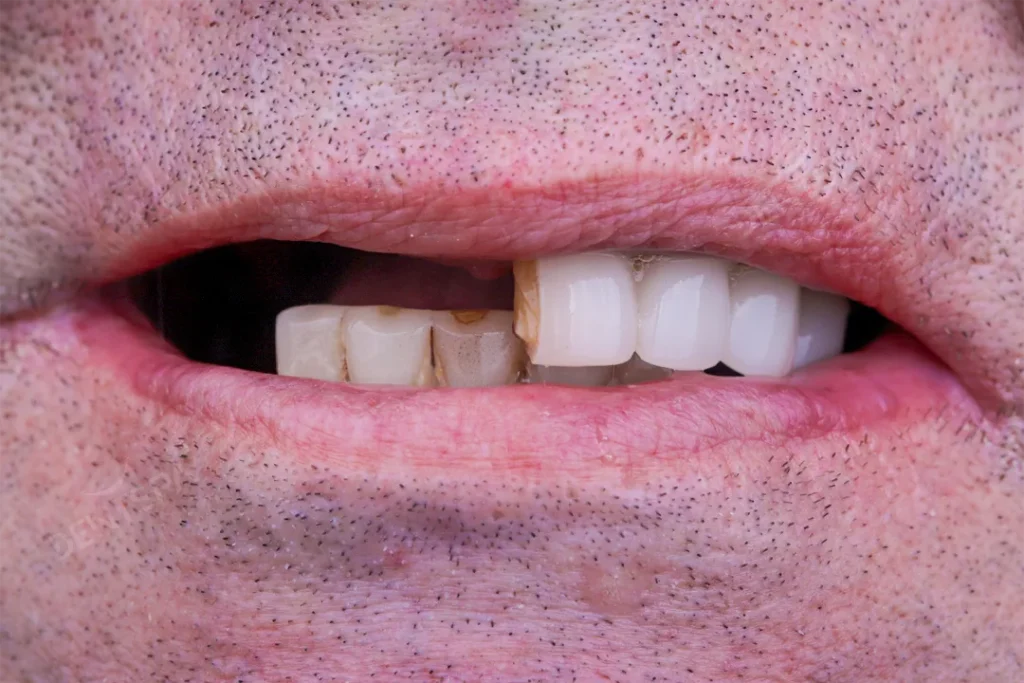
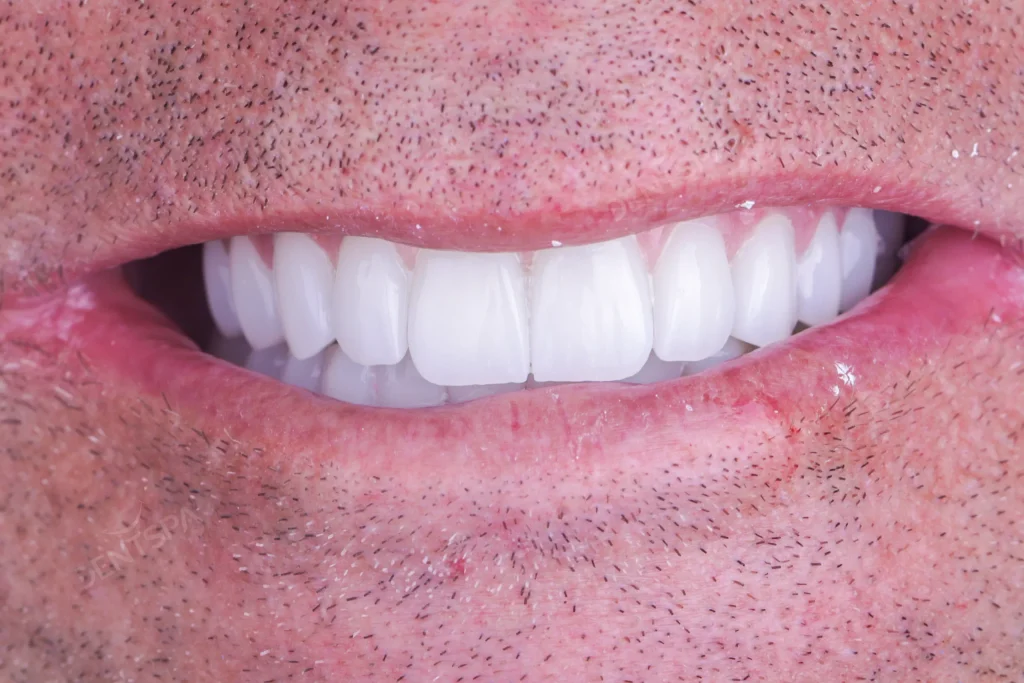
At DentSpa, we start with the clinical findings: how many teeth you have left and their condition, the health of your gums, and how much bone there is to work with. Then we ask what you want. Some patients are happy with a well-made removable denture. Others are tired of dentures moving and want something fixed.
Your dentist explains why one approach is recommended for you and why another isn’t. That might be why an implant-supported denture would hold better than a conventional one, or why keeping a few healthy teeth makes more sense than replacing them all. Quality is never reduced to reach a price.
Treatment at DentSpa costs up to 70% less than private prices in the UK. The difference comes from local staff and laboratory costs in Istanbul. It doesn’t come from doing less work or using different materials. For a closer look at the options, see this comparison of dentures in Turkey and implants.
Get a clear picture of your options
If you’re eligible for NHS care, £332.10 buys a full or partial denture in England, and some people pay nothing. Privately, the price depends on the practice, the material and how much work is involved, so a written, itemised quote is the only number that counts. If you’re also weighing up fixed teeth, book a free consultation with the DentSpa team. A dentist will go through your findings with you, ask what you want and explain which option suits your mouth.
Frequently asked questions
How much do dentures cost in the UK?
How much do dentures cost privately?
How much does a full set of dentures cost?
How much do suction dentures cost?
How much does a denture reline cost?
Can I get dentures without a dentist?
Sources
- NHS. How much will I pay for NHS dental treatment? https://www.nhs.uk/nhs-services/dentists/how-much-will-i-pay-for-nhs-dental-treatment/
- NHS. Dentures (false teeth). https://www.nhs.uk/tests-and-treatments/dentures/
- NHS. Who can get free NHS dental treatment. https://www.nhs.uk/nhs-services/dentists/who-can-get-free-nhs-dental-treatment/
- NHS. Dental treatments. https://www.nhs.uk/live-well/healthy-teeth-and-gums/dental-treatments/
- Which?. Private and NHS dental charges. https://www.which.co.uk/reviews/dentists/article/private-and-nhs-dental-charges-al0jA6J1Swyl
- Skills England. Clinical dental technician (GDC 2023) occupational standard. https://www.skillsengland.education.gov.uk/apprenticeships/st1433-v1-0










 70%


