

That sharp jolt when you bite into something cold — most people have felt it at least once. For a lot of patients, it’s become background noise. Something they’ve learned to work around rather than fix.
That’s a mistake. Usually an unnecessary one.
Tooth sensitivity is treatable in the vast majority of cases. The right treatment, though, depends entirely on what’s causing it — and there’s more than one thing that can. Getting the wrong treatment, or treating the symptom without finding the source, is why so many people manage this for years rather than resolving it.
Why do teeth become sensitive?
Tooth sensitivity occurs when dentin — the softer layer beneath your enamel — becomes exposed, allowing temperature, pressure, or acidic food to reach the tooth’s nerve through microscopic tubules. The clinical term is dentin hypersensitivity.
What exposes the dentin varies quite a bit:
Enamel erosion. Acidic foods and drinks — citrus, carbonated beverages, vinegar-based dressings — gradually dissolve enamel over time. The damage accumulates and it’s irreversible. Once enamel is gone, it doesn’t grow back.
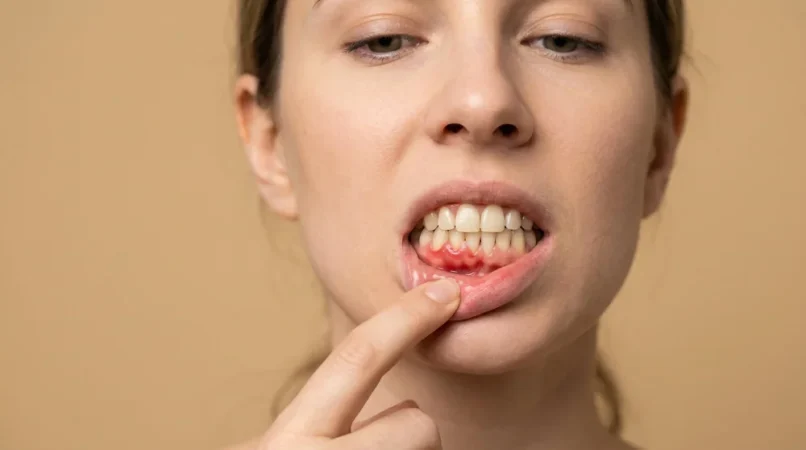
Gum recession. When gums pull back from the tooth, the root surface becomes exposed. Root surfaces aren’t protected by enamel — they’re covered by cementum, which is softer and wears down faster.
Teeth grinding (bruxism). Persistent grinding wears enamel systematically, usually across multiple teeth at once. Worth knowing: many patients have no idea they grind because it happens during sleep. If pain is affecting several teeth without an obvious cause, bruxism may be the reason — and it’s treatable.
Brushing too hard. Aggressive brushing with a stiff-bristled brush can remove enamel and cause gum recession — two of the main pathways to tooth pain. This one surprises people because it feels like thorough cleaning, not self-inflicted damage.
Acid reflux and eating disorders. Gastric acid reaching the mouth — through GERD or conditions like bulimia — erodes enamel from the inside surface of teeth. A different wear pattern from dietary erosion, and often missed in self-diagnosis.
Decay and cracked teeth. A cavity reaching the dentin, or a fracture exposing inner tooth structure, causes localised pain rather than generalised sensitivity — and usually points to one specific tooth that needs attention.
When is tooth sensitivity a warning sign?
Tooth sensitivity is a warning sign — not just a nuisance — when the pain lingers more than a few seconds after the trigger is gone, or occurs without any trigger at all.
That pattern often means the nerve is involved. Decay or damage has reached the pulp — the inner chamber containing the tooth’s nerves and blood vessels. At that point it’s not really sensitivity anymore. Understanding what a root canal involves, and why most patients say it wasn’t as bad as they expected, is worth reading before assuming extraction is the only option.
Other signs that need clinical assessment rather than home treatment:
- Pain localised to one specific tooth
- Visible darkening, swelling near the gum, or a crack you can feel with your tongue
- Pain that wakes you up at night
What treatments are available for sensitive teeth?
The right treatment for sensitive teeth depends on the cause. Options range from desensitising toothpaste for mild cases to bonding or fillings for structural exposure.
Desensitising toothpaste. The first thing most people try — and for mild cases, genuinely useful. These toothpastes either block the dentinal tubules (calcium-based compounds) or interrupt the nerve signal (potassium nitrate). Results build over weeks, not days. They manage the symptom; they don’t fix what’s causing it.
Composite bonding. For exposed root surfaces or areas where enamel has worn away, composite bonding seals the exposed dentin permanently — here’s how the procedure works with a tooth-coloured resin applied directly to the affected surface. More durable than toothpaste, works well for localised pain from gum recession or erosion. If you’re weighing bonding against other cosmetic options, this comparison of composite bonding vs veneers covers the key differences.
Composite fillings. Where pain is caused by a cavity or early decay, a composite filling restores tooth structure and closes off what’s triggering the nerve. The material bonds directly to the natural tooth.
Night guards. A custom-fitted mouthguard worn during sleep stops the enamel wear from bruxism. Doesn’t reverse existing damage — but stops it progressing. Over-the-counter versions exist; custom-fitted ones are more effective and considerably more comfortable for regular use.
Treating the actual source. If pain is driven by acid reflux or dietary habits, no dental procedure will fully resolve it without addressing the underlying cause. Gum recession from aggressive brushing requires changing technique — soft-bristled brush, gentle circular motion — alongside any surface treatment.
Does tooth sensitivity go away on its own?
Tooth sensitivity sometimes resolves without treatment, but only in specific circumstances.
Pain following a new filling or after teeth whitening is common and usually settles within a few weeks as the tooth adjusts. No treatment needed beyond avoiding very hot or cold food during recovery.
Pain from enamel loss or gum recession won’t resolve on its own. The exposed tissue doesn’t re-cover itself. It may fluctuate — better some weeks, worse after acidic food — but the underlying exposure remains until it’s treated.
How do I know if my tooth sensitivity needs a dentist?
You need a dentist if desensitising toothpaste hasn’t helped after four to six weeks of consistent use, if pain is localised to one tooth, if it occurs without a trigger, or if there are visible changes like swelling, darkening, or a crack.
A clinical examination — with X-rays where indicated — is the only reliable way to distinguish surface-level hypersensitivity from something deeper. The treatment looks very different depending on the answer, and catching it early almost always means a simpler fix.
Speak with our team
Our patient coordinators speak English, French, Arabic, Spanish, Russian, Italian, and German. A consultation is free, takes about 30 minutes, and gives you a clear picture of what’s causing the pain — and what it would take to fix it.
Sources
- West NX, et al. Prevalence of dentin hypersensitivity: systematic review and meta-analysis. Journal of Clinical Periodontology. 2019. PubMed 30639724
- Miglani S, et al. Dentin hypersensitivity: Recent trends in management. Journal of Conservative Dentistry. 2010;13(4):218–224. PMC7409672
- Cekici A, et al. Evidence-based recommendations for diagnosing and managing dentine hypersensitivity. Frontiers in Oral Health. 2025. doi:10.3389/froh.2025.1663984
- Canadian Advisory Board on Dentin Hypersensitivity. Consensus-based recommendations for diagnosis and management. Journal of the Canadian Dental Association. 2003;69(4):221–226.
- NHS. Sensitive teeth. National Health Service, UK.














 70%
70%