Table of content
Table of content
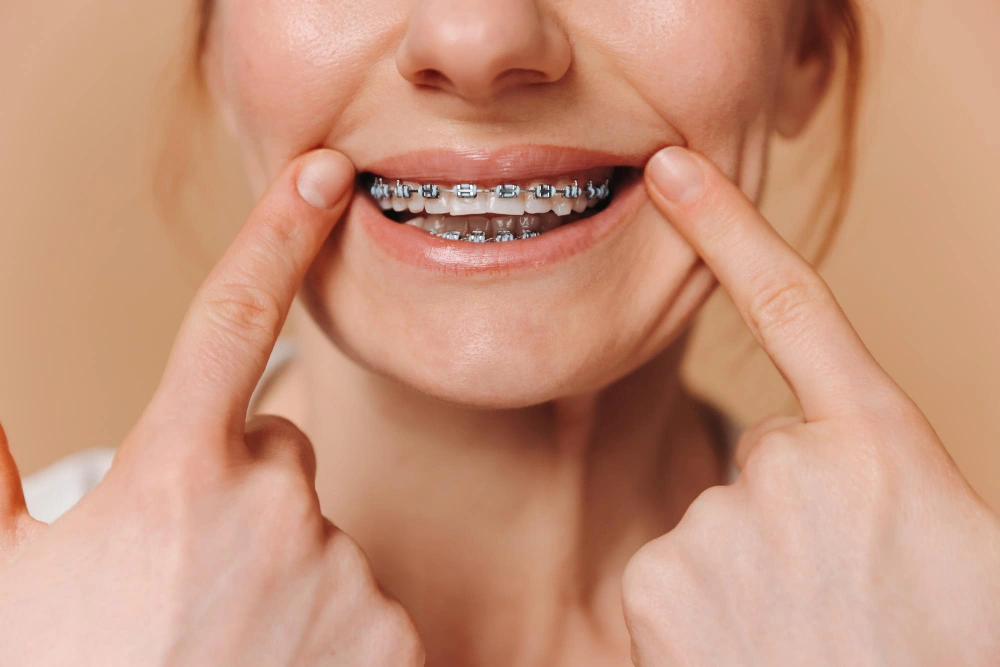
Private braces in the UK cost between £1,500 and £4,500, depending on the type. Metal braces sit at the lower end, ceramic and lingual options in the middle, and clear aligners like Invisalign toward the top. If your child is under 18 and meets the NHS clinical criteria, treatment is free. If you’re an adult, or your case doesn’t meet that threshold, you’re looking at private pricing, or a lower bill by having the same treatment done in Turkey.
Here’s how the three routes actually compare, cost by cost.
How Much Are Braces in the UK?
| NHS | Private (UK) | Turkey | |
|---|---|---|---|
| Metal braces | Free if eligible* | £1,500–£3,000 | From £900** |
| Ceramic braces | Not available | £2,000–£4,000 | From £1,200** |
| Clear aligners / Invisalign | Not available | £2,500–£4,500 | From £1,400** |
| Lingual braces | Not available | £4,500–£10,000 | On request |
*Free for under-18s who meet IOTN clinical eligibility (see below). Adult NHS orthodontics is rare and reserved for significant medical need.¹
**Turkey figures are indicative and should be confirmed with a written quote. Final price depends on case complexity, number of aligners or brackets required, and treatment length.
The private UK figures above are consistent with published 2026 pricing across UK orthodontic practices, and the NHS charges reflect the Band 3 rate that applies to orthodontic appliances under the national fee scale.2
Are Braces Free on the NHS?
Yes, but only for patients under 18 who meet a clinical threshold; not for cosmetic preference alone. The NHS uses the Index of Orthodontic Treatment Need (IOTN) to assess eligibility. A score of 3.6 or above typically qualifies; anything lower is assessed as cosmetic rather than medically necessary and doesn’t qualify for NHS funding.3
If your child does qualify, treatment is genuinely free; no band charge applies, since under-18s are exempt from all NHS dental charges. If they don’t qualify, or you’re an adult wanting straighter teeth for appearance rather than a functional problem, private treatment is the only route, and adult NHS orthodontics is granted only in rare cases involving significant medical need, such as jaw surgery requirements.
How Much Do Braces Cost UK Private Patients?
Private braces cost £1,500–£3,000 for standard metal brackets, the most affordable option and clinically identical to what’s offered free on the NHS. Ceramic braces, which use tooth-coloured brackets that blend in more, run £2,000–£4,000. Clear aligners such as Invisalign typically cost £2,500–£4,500 for a full course of treatment, and lingual braces; fitted behind the teeth so they’re invisible from the front; are the most expensive option at £4,500–£10,000.
These figures cover the full course of treatment, including the initial assessment, brackets or aligners, adjustment visits, and usually a set of retainers at the end. Ask for a written, itemised quote before starting; a headline number that excludes retainers or review appointments isn’t the real cost of treatment.
What Determines the Cost of Braces?
Three things move the number more than anything else: the type of appliance (metal is cheapest, lingual is most expensive), the complexity of your case (mild crowding costs less to correct than a significant bite problem), and the length of treatment, since more adjustment visits mean a higher total. Where you live in the UK also plays a role; Central London and the South East typically run 20–30% above the national average, while prices in Wales, Scotland, and Northern England tend to sit somewhat lower.
How Much Is Dental Braces for Adults Specifically?
Broadly the same private pricing as above; the NHS almost never funds adult orthodontics, so adults are looking at the £1,500–£4,500 private range regardless of age. The one meaningful difference is treatment time: adult jaws have stopped growing, so movement tends to be slower than in a teenager, which occasionally pushes total cost up if additional adjustment visits are needed partway through.
Braces vs Clear Aligners: Does the Price DifferenceMatter?
Often, yes. Clear aligners sit above metal braces in cost partly because of the technology (custom-manufactured trays rather than standard brackets and wire) and partly because they suit milder cases better than complex ones; a case severe enough to need traditional braces sometimes isn’t a good candidate for aligners at all. For a full breakdown of which suits which case, our Invisalign vs braces comparison goes through the practical differences in more depth.
If cost is the main barrier rather than the technology itself, it’s worth reading about affordable clear aligner options before ruling aligners out entirely.
How Long Does Treatment Take, and Does That AffectCost?
Most courses run 12 to 24 months, though mild cases can finish in six months and complex ones can run past two years. Longer treatment generally means more adjustment visits, which can add to the total private cost if your original quote didn’t account for a longer-than-expected case. For the specific factors that determine your own timeline, our guide on how long braces take to straighten teeth breaks down what typically speeds up or slows down a course of treatment.
Why Is the Same Treatment Cheaper in Turkey?
The gap isn’t about lower-quality materials or less qualified orthodontists; it’s the underlying cost of running a clinic. Staff wages, rent, and overheads are all structurally lower in Turkey than in the UK, and that difference passes through to the price without touching the standard of care. At DentSpa, the same branded materials and digital planning technology used in UK practices are standard, not an upgrade.
For patients weighing up whether travelling for treatment makes sense, our guide to braces in Turkey covers what a typical patient journey looks like, from the first consultation through to your final retainer fitting. If Invisalign specifically is what you’re after, Invisalign in Turkey goes into the clear aligner process in more detail.
Clear aligners are one of DentSpa’s core orthodontic treatments, planned using the same 3D digital scanning used across our restorative and cosmetic departments; not a separate, lower-tier service.
Is There a Way to Straighten Teeth Without Braces atAll?
For genuinely mild cases, sometimes. Options like short-term cosmetic aligners or, in very limited circumstances, retainers alone can shift minor crowding or small gaps. It’s a narrower set of cases than most people assume, though, and it’s worth an honest assessment rather than assuming it applies to your situation. Our guide on straightening teeth without braces covers which cases genuinely qualify and which don’t.
DentSpa’s Orthodontic Team
DentSpa was named Best Dental Odontology Clinic in Europe 2024, received the 2025 Straumann Achievement Award recognising clinical excellence and innovation in dentistry, and earned GHA (Global Healthcare Accreditation) certification for its international patient experience; making it one of a small number of dental clinics worldwide to hold this standard. Our orthodontic team plans every case using 3D digital scanning rather than traditional moulds, and cases are assessed by orthodontic specialists rather than a general dentist working across every treatment type. A dedicated medical advisor talks you through your treatment plan and full cost breakdown before you commit to anything, and our after-care team stays in touch through your retainer phase once treatment is complete.
If you’re weighing up your options, send a recent photo of your teeth or any existing X-rays to our team on WhatsApp, and we’ll give you a realistic price range for your specific case; not a generic starting figure.
Frequently asked questions
How much are braces?
How much do braces cost UK for adults?
Is Invisalign more expensive than braces?
How much does it cost for braces in Turkey?
Do braces prices include retainers?
Sources
- NHS. Orthodontics. https://www.nhs.uk/conditions/orthodontics/
- NHS. How Much NHS Dental Treatment Costs.
https://www.nhs.uk/nhs-services/dentists/how-much-nhs-dental-treatment-costs/ - NHS England. Clinical Standard for Dental Specialties — Orthodontics. June 2023.
https://www.england.nhs.uk/wp-content/uploads/2023/06/B2015-Clinical-standard-for-dentalspecialties-orthodontics-version-2-21-June-2023.pdf







 70%
70%