Table of content
Usually, yes. A tooth whose nerve has died can normally be kept — root canal treatment removes the dead tissue, disinfects the inside of the tooth and seals it, and a crown restores the strength. Extraction is the last option, not the first. What decides it is how much sound tooth structure remains, not the fact that the nerve has died.
If someone tells you you have a “dead tooth,” it might sound like a joke to you. But that is a thing some people have to live with.
Actually, a tooth dies when it no longer gets the blood and nerve signals it needs to stay alive. This condition can happen suddenly or grow to become a major discomfort.
Knowing this, how can you confirm you don’t have a dead tooth? What could cause you to lose your tooth? And what treatments can you undergo to save it? This article covers all that and more, so you know exactly when to call your dentist.
What Does a Dead Tooth Mean?
A dead tooth is a nonvital or necrotic tooth. It is a tooth that has had the soft tissues inside, also known as the pulp, destroyed. A dead or dying tooth starts when the pulp loses its access to blood supply and nerve function from the body. This leads to a condition dentists call pulp necrosis.
Worth saying plainly at this point: a dead nerve is not the same as a lost tooth. The pulp is what the tooth needed while it was developing; once it has formed, a tooth can function for decades after the nerve is gone, provided the inside is properly cleaned and sealed and the outside is protected.
How Does Tooth Death Happen?
Pulp death can happen because there is a deep decay that has allowed bacteria to reach the pulp. A blow to the mouth could also sever the tooth’s blood vessels and nerves. Sometimes, a tooth can go into necrosis slowly after a childhood injury and only show signs years later.
The tooth’s pulp contains important nerves and blood vessels that keep it healthy and alive. If those systems fail, your tooth essentially “dies.”
So what causes tooth death?
A tooth can die because of a number of reasons. Here are the more common ones.
- Ignored tooth decay. When a tooth decays, bacteria can invade through the cavity it creates and reach the pulp, inflaming and then infecting it. Pressure builds inside the pulp chamber, and the tissue dies. Caught earlier, this is a far simpler problem — see our guide to fixing tooth decay, and to decay on the root surface, which is easy to miss.
- Trauma. A sports accident or blunt force to the mouth years ago could rupture blood vessels inside the tooth, making it die slowly. The nerve death can be immediate or delayed. A knock that also chipped the tooth is covered in how to fix a chipped front tooth.
- Advanced gum disease. The gum tissue and bone supporting the tooth deteriorate in periodontitis, the advanced stage of gum disease, and the pulp can lose its blood supply over time.
- Contributing factors. Poor oral hygiene, uncontrolled diabetes, smoking and teeth grinding all raise the risk, mostly by weakening the gums and the bone around the tooth.
How Do I Know My Tooth Is Dying?
Sometimes it is a sharp tell, other times a vague feeling in your mouth. These are the signs worth acting on:
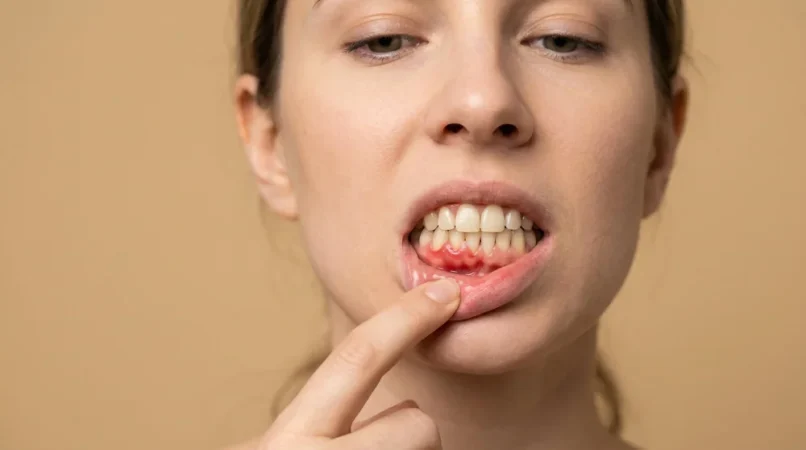
- Discolouration. As the pulp dies, the tooth changes colour — light brown, yellow, grey or even black. Unlike surface staining, this comes from within, so it cannot be brushed off and it does not respond to whitening. If you are not sure which you are looking at, our guide to brown stains on teeth sets out the difference.
- Sensitivity, then silence. A sharp or aching response to hot and cold often comes first, as the nerve is inflamed. The pain then stopping does not mean the problem has gone — it usually means the nerve has died completely. This is the single most misread sign in dentistry.
- Persistent bad breath or a bad taste. Infected pulp can leak, producing a foul taste and breath that brushing does not fix.
- Pain on biting. A tooth that feels numb by itself but hurts sharply under pressure is another classic sign — the inflammation has reached the tissue around the root tip.
Facial swelling, a bad taste with a high temperature, or pain that is keeping you awake are different — those point to a spreading infection and need same-day attention, as set out in our guide to dental infection treatment.
If you notice any of the signs above, have a dentist examine and image the tooth. Early, and you can often keep it comfortably. Later, you can still stop the infection from affecting the bone and the teeth around it.
Can a Dead Tooth Be Saved?
Yes, in most cases — provided enough sound tooth structure remains to restore.
The evidence is more encouraging than most people expect, even where the infection has been there a long time. A clinical review followed 42 teeth with large cyst-like lesions at the root tip, measuring 7 to 18 mm, treated with root canal treatment alone and followed for two to ten years. Complete healing was seen in 73.8% of cases, with partial healing in a further 9.5% — and the authors concluded that the size of the lesion “is not a major determining factor” in choosing between root canal treatment and surgery.1
In other words, a large dark area on your X-ray does not automatically mean losing the tooth. Here is how the decision is actually made.
1. Diagnosis and Initial Assessment
Your dentist has to perform a detailed examination first, checking for colour changes, swelling, drainage, and whether the gum around the tooth is tender. They also test vitality with temperature or electric tests and take at least one radiograph, to look for bone changes or an abscess at the root tip. Where the picture is unclear, a 3D scan shows the root anatomy and the extent of any lesion.
The results tell them whether the tooth can be kept, and how. Then the options are discussed with you.
2. Root Canal Therapy
Root canal therapy is the main treatment for a dead tooth. If the tooth is restorable, it is the way to keep it.
It involves:
- Your dentist numbs the area with local anaesthetic.
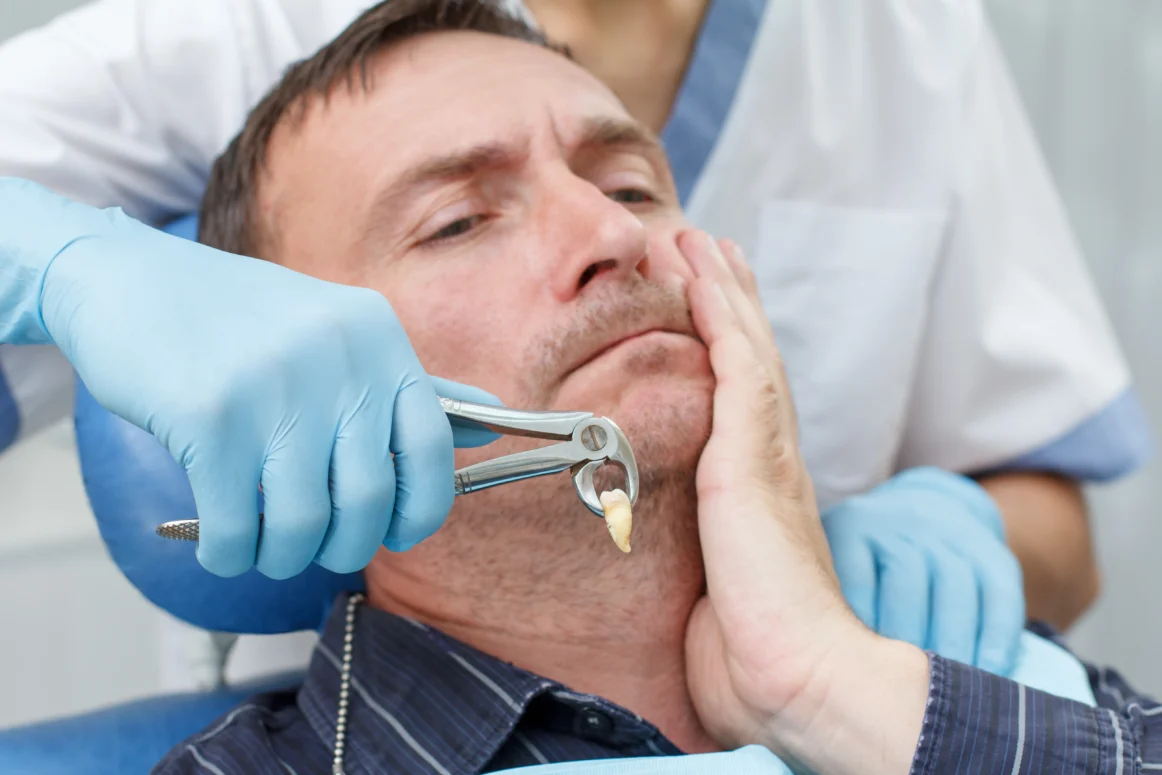
- A small opening is made through the crown and the infected or dead pulp tissue is removed.
- The hollow canal system is cleaned and disinfected thoroughly with irrigants.
- It is then sealed with an inert filling material to stop bacteria returning.
- Afterwards a crown — or in some front-tooth cases a veneer — restores the tooth’s strength, function and appearance.
The last step matters more than it sounds: a root-treated tooth is more brittle than a vital one, and protecting it properly is a large part of why the result holds. If the tooth had discoloured, restoring it also settles the appearance — the alternative routes are compared in veneers vs crowns.
Modern root canal treatment is carried out under anaesthetic and is usually completed in one or two visits. Dr Mehmet Kalcay adds: “If someone already had a root canal and symptoms or radiographs show persistent infection, I may recommend retreatment.” Where the problem sits at the very tip of the root and retreatment through the crown is not enough, an apicoectomy removes the root tip and seals the canal from the end — another step that keeps the tooth rather than losing it.
3. Extraction and Replacement
Extraction is recommended only when the tooth is too damaged to restore, or when infection has destroyed a significant amount of the surrounding bone. The full comparison is in our guide to root canal vs tooth extraction.
Where a tooth does have to go, it is replaced with a dental implant, a fixed bridge, or a removable appliance. Replacing it keeps you chewing normally and stops the neighbouring teeth drifting into the space — and it also protects the bone, which begins to shrink once a socket is left empty.
4. After Treatment
Your dentist will arrange follow-up appointments and further radiographs to confirm that the bone around the root is healing. This is not a formality — healing at the root tip is only visible on an X-ray, and it is checked over months rather than days.
Dr Mehmet Kalcay also advises patients on protecting the treated tooth from further trauma, including a mouthguard for sport. Good oral hygiene and regular check-ups are what keep a treated tooth serving you for many years. What helps in the first days afterwards is in our guide to healing after dental surgery.
Get the Right Care to Save Your Tooth
So — can a dying tooth be saved? Usually yes, and the earlier it is seen, the more straightforward the treatment.
DentSpa was founded in Istanbul in 2018 and has treated more than 50,000 international patients since. Endodontic cases are managed by our endodontist, Dr Mehmet Kalcay.
You don’t have to take our word for the standard. DentSpa was named best dental clinic in Europe in the odontology category at the European Awards in Medicine,2 is licensed by the Turkish Ministry of Health, certified to ISO 9001 and ISO 10002, and a member of the Turkish Dental Association. For treatment planned from abroad it also holds the Certification for Excellence in Medical Travel Patient Experience from Global Healthcare Accreditation3 — which matters here, because a root-treated tooth is followed up months after you fly home. Read what patients say in the verified Trustpilot and Google reviews.
No dentist can promise a tooth will never need attention again — what we can do is tell you honestly whether yours can be kept, and what it will take. If extraction is the right answer, we will say so and talk through the replacements with you.
Book a free consultation and send your radiographs, or message us on WhatsApp — and let’s find out the best way to save your tooth. If you are still comparing clinics, the questions worth asking any of them are in how to find a dentist in Turkey.
Frequently asked questions
Can a dead tooth be saved?
My tooth stopped hurting — does that mean it healed?
Is a large dark area on my X-ray bad news?
Why does a dead tooth go dark?
Does a root-treated tooth always need a crown?
What if a root canal was already done and the tooth still hurts?
Does treating a dead tooth hurt?
How long can a dead tooth be left untreated?
Sources
- Calışkan MK — Prognosis of large cyst-like periapical lesions following nonsurgical root canal treatment: a clinical review. International Endodontic Journal 2004;37(6):408–416.
- The European Awards in Medicine — DentSpa Clinic — European Award in Medicine in Odontology
- Global Healthcare Accreditation — DentSpa Strengthens Global Trust in Turkey’s Dental Services with GHA Certification
- DentSpa — About DentSpa (founded 2018; 50,000+ international patients; Ministry of Health, ISO and Turkish Dental Association)













 70%
70%