Table of content
Table of content
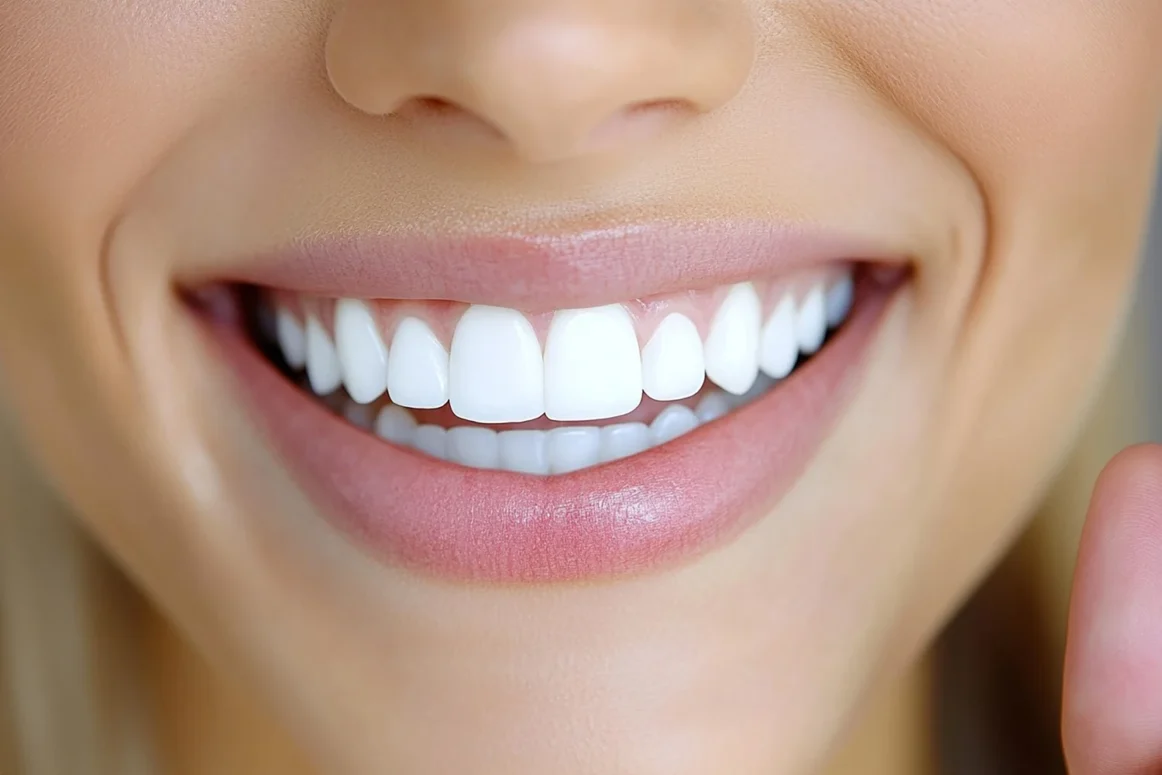
“Turkey teeth” is social-media shorthand for a cosmetic smile makeover carried out in Turkey — usually a set of 16 to 20 veneers or crowns across the front teeth, completed over one trip. It isn’t a single procedure or a single material, which is exactly why the term causes so much confusion.
This guide covers what the term actually describes, what the restorations are made of, how much tooth preparation the evidence supports, what a package includes, and what the treatment costs — with the clinical figures cited to their sources so you can check them yourself.
What Does “Turkey Teeth” Actually Mean?
It isn’t a clinical term, and no dentist uses it in a treatment plan. It came out of TikTok and Instagram around 2021 to describe a very visible look: a full set of bright, evenly shaped front teeth, done abroad, in a short space of time.
Behind the hashtag are three quite different things, and the distinction is the single most useful thing to understand before you read anything else about the trend:
- Veneers — thin ceramic shells bonded to the front surface of a tooth that is otherwise healthy. The tooth stays largely intact.
- Crowns — a restoration that covers the whole tooth, used when the tooth is broken down, heavily filled, root-treated or badly out of position.
- A combination of the two, which is what most real full-arch cases turn out to be, because most people’s front teeth aren’t all in the same condition.
Clinically, all of this sits under Hollywood Smile or full-mouth restoration. If you want the same subject written as a treatment rather than as a trend, our guide to the Hollywood Smile for UK patients covers it in that frame — and veneers vs crowns explains where the line between the two actually falls.
What Are Turkey Teeth Made Of?
Almost always one of three ceramics. None of them is exclusive to Turkey — they are the same CE-marked materials used in London, Munich and New York, from the same international manufacturers.
| Material | What it is | What it’s used for |
|---|---|---|
| Lithium disilicate (E.max) | A pressed or milled glass ceramic, strong and highly translucent | Front teeth where light behaviour matters most — the standard choice for veneers |
| Zirconia | A dense, high-strength ceramic; monolithic or layered with porcelain | Crowns, longer spans, back teeth, and cases where no metal substructure is wanted |
| Feldspathic porcelain | Hand-layered by a ceramist, the thinnest of the three | Ultra-thin veneers on well-aligned teeth, where maximum enamel is preserved |
Which one suits a given tooth depends on how much of the tooth is left, how much light needs to pass through it, and what the bite is doing — not on a price tier. The laminate veneers guide goes into how the thinnest of these are made and bonded.
How Much Tooth Is Actually Removed?
This is the question behind almost every search on the topic, and it has a precise, published answer.
A specialist consensus published in International Journal of Oral Science states that veneer preparation “is not a fixed single value, but the value ranged from 0.3 to 0.7 mm,” and sets explicit limits by region of the tooth: under 0.7 mm at the incisal third, under 0.5 mm at the middle third, and under 0.3 mm at the cervical third, near the gum.1
The reason for those three different numbers is anatomical rather than stylistic. The same paper reports enamel measurements across 114 anterior teeth showing average enamel thickness at the cervical third of only 0.3 to 0.4 mm.1 Stay inside those limits and the preparation stays within enamel — which is where the bond is strongest and where sensitivity is least likely.
There is clinical outcome data behind the principle, not just theory. A prospective study followed 186 veneers in 35 patients over a mean of nine years. It compared conventional preparation against no-prep and minimally invasive preparation. The minimally invasive group showed 100% survival, with a mean success time of 10.28 years against 9.32 years.2 Less removal isn’t a compromise on durability. On this evidence it favours it.
And for a crown?
A crown is a different measurement, because it covers the tooth on every surface rather than facing one of them. The reduction is therefore larger — but not unlimited, and the materials have moved. A review of zirconia crown practice notes that monolithic zirconia shows adequate fracture resistance at a minimum thickness of 0.5 mm.3 Modern ceramics need less room than the ones they replaced.
The one question to ask
You can use this in any consultation, anywhere: ask which restoration is planned for each individual tooth, and why that one rather than the other. A tooth that only needs its front surface changed is a veneer case. A tooth that has lost structure is a crown case. Both answers are legitimate. What matters is that there is an answer, tooth by tooth.
Our guide on how to find a dentist in Turkey sets out the rest of the questions worth asking before you book.
Veneer or Crown? It’s About Indication, Not Ranking
It’s tempting to read veneers as the “good” option and crowns as the “bad” one. That isn’t what they are. They’re two different solutions to two different problems, and a crown on a tooth that needs a crown is the conservative choice, not the aggressive one.
- A veneer works when there is sound enamel across the front of the tooth for the ceramic to bond to, and the tooth’s structure underneath is intact.
- A crown is what a tooth needs when large old fillings, a fracture, root canal treatment or heavy wear mean the remaining structure has to be held together rather than merely covered.
Both are made from the same premium ceramics, and both are planned to the same standard. The design question — how white, how translucent, what shape — is settled with you before anything is prepared, and agreed in a digital preview so you’re approving a result rather than describing one. What that looks like step by step is set out in our guide to veneers in Istanbul.
Worth adding: whitening is sometimes the whole answer, and sometimes it’s the step that comes first so the ceramics can be matched to a lighter natural shade. If discolouration is your main concern, teeth whitening is the conversation to have before a full set of restorations is discussed at all.
How Long Do They Last?
The published evidence is good, and it’s worth quoting rather than paraphrasing.
- Veneers: a systematic review and meta-analysis covering roughly 6,500 porcelain laminate veneers put estimated survival at 95.5% at ten years.4
- Crowns: a systematic review of single crowns on natural teeth put estimated five-year survival at 96.6% for lithium-disilicate glass ceramic, 94.7% for metal-ceramic and 92.1% for zirconia.5
Those are population figures rather than a promise about your teeth, and no honest clinic will give you a guaranteed number of years. What moves an individual case is well documented and largely within your control: how well the margins are cleaned, whether you grind at night, and whether a nightguard is made if you do. If grinding is part of your picture, read how bruxism affects veneers and implants before you plan anything cosmetic.
What a Turkey Teeth Package Includes
“Package” simply means the treatment plus the logistics around it, quoted together because you’re travelling. A complete one names the following in writing, before you book a flight:
- The number of teeth — and which teeth, individually.
- The restoration planned for each tooth — veneer or crown, tooth by tooth, not as a single blanket figure.
- The named material — the brand and type of ceramic, so any dentist anywhere can read your case afterwards.
- Diagnostics — X-rays or a CBCT scan and digital impressions taken at the clinic, and a digital design you approve before preparation.
- Temporaries — what you wear while the permanent restorations are made in the lab.
- Any preparatory treatment — a filling, a root canal or gum treatment that has to happen first, and whether it’s inside the quoted figure.
- Travel and stay — airport transfers, hotel nights, and how the clinic visits sit across the days. How that works in practice is set out in our guide to transport for dental tourists in Turkey.
- Aftercare — who you contact once you’re home, and how.
Reading a package this way isn’t about suspicion. It’s about being able to compare two plans that both say “20 teeth” and understand why they differ — which is information you have every right to have before you decide anything.
Turkey Teeth Cost in 2026
Please read this before the table. Every figure below is an approximate market range drawn from published price information for each country — not a DentSpa quote, and not a price list. Ranges move with the material, the number of teeth, whether any preparatory treatment is needed, and the exchange rate on the day. Your own cost is confirmed in writing after a consultation, once someone has actually looked at your teeth.
| Treatment | UK | US | Turkey |
|---|---|---|---|
| Porcelain veneer, per tooth | £700–£1,200 | $1,000–$2,500 | €130–€300 |
| Ceramic crown, per tooth | £600–£1,100 | $800–$3,000 | €100–€300 |
| Full set, 16–20 restorations | £12,000–£25,000 | $20,000–$40,000 | €2,500–€7,000 |
Approximate market ranges for 2026, not quotes. Currencies are shown as each market prices them; converted figures will differ with the exchange rate.
A word on how to read a comparison like this, because it is easy to compare the wrong things. A number on its own means very little. Two quotes that both say “20 teeth” can differ by thousands and both be honest — one may be twenty veneers on sound teeth, the other twelve veneers and eight crowns on teeth that need rebuilding. That is a different amount of work, not a different price for the same work.
So compare on four things, in this order: which restoration is planned for each tooth; the named ceramic; what preparatory treatment is included; and what happens after you go home. Only once those four match are you comparing two prices at all.
Why the Turkish figure is lower
The gap is real, and the reason is not complicated: the cost base in Turkey is lower. Laboratory work, clinical staffing and premises cost a fraction of what they cost in London or New York.
What does not change is everything clinical. The ceramics are the same CE-marked products from the same international manufacturers. The number of appointments does not shrink. The planning, the try-in and the adjustments are the same steps in the same order. Nothing about the price is achieved by doing less — and quality is never reduced to reach a number.
Two comparisons on our own site set the home-market side out in more detail: veneer costs in the UK and what a full smile makeover costs.
The Procedure, Step by Step
- Before you travel. You send photographs and any recent X-rays you have. A dentist reviews them and you talk through what you want changed — and whether the treatment you have in mind is the right one for what’s actually there.
- Examination on arrival. Clinical examination, radiographs and digital impressions at the clinic. This is the point at which the plan becomes definite, because it’s the first time anyone has seen the teeth properly.
- Digital design. The proposed shape, length and shade are modelled and shown to you. Changes are made here — on the screen, before anything is touched.
- Preparation. Under local anaesthetic, the teeth are prepared to the depth the plan calls for — within the limits set out above for veneers, and to the appropriate reduction where a crown is planned.
- Temporaries. Provisional restorations are fitted while the laboratory produces the definitive ones. You leave the chair with teeth, not stumps.
- Try-in and fitting. The finished restorations are tried in, checked against your bite and your face, adjusted, and then bonded. Anything that isn’t right is corrected before bonding, not after.
How many days that takes depends on the case, and it’s a question for your consultation rather than something any article can tell you honestly.
What Happens When You Go Home
This is the part of dental tourism that gets the least attention and deserves the most, and it’s the reason DentSpa pursued an accreditation that assesses it directly.
DentSpa holds the Certification for Excellence in Medical Travel Patient Experience from Global Healthcare Accreditation.6 What it assesses is precisely what a clinical inspection doesn’t reach: the information you’re given before you travel, how care is coordinated while you’re here, financial transparency, and the handover of aftercare once you’ve flown home.
In practical terms, that means you leave with your treatment documented — the material named, the work recorded tooth by tooth — so that any dentist, in any country, can read your case and work with it. Follow-up continues from Istanbul rather than ending at the airport.
The Things You Can Check Before You Commit
You shouldn’t have to take any clinic’s word for anything. These are all verifiable from your own laptop:
- Regulatory basics. A Turkish Ministry of Health licence, and an International Health Tourism Authorisation Certificate — required by Turkish law for any clinic treating foreign patients. DentSpa is also certified to ISO 9001 and ISO 10002 and is a member of the Turkish Dental Association.
- Independent recognition. DentSpa was named best dental clinic in Europe in the odontology category at the European Awards in Medicine.7
- Verifiable clinical volume. Straumann publishes and verifies the number of its implants placed here on its own certificate-verification page — over a thousand in a single year. It’s a manufacturer’s record rather than a claim of ours: see the Straumann Achievement Award and the verification page itself.8
- A written plan before you fly, naming the material, the teeth and what is and isn’t included.
- Real patient voices. Read the verified Trustpilot and Google reviews and see results on Instagram, where patients describe their treatment in their own words.
Your Consultation at DentSpa
The free consultation starts with what’s actually there — the condition of each tooth, your bite, your gums — and then with what you want from your smile. Which problem are you trying to solve? Are veneers the right instrument for it, or would a different restoration give a better and longer-lasting result on that particular tooth?
You’ll be told why something is recommended, and why something else is not. What doesn’t happen is quality being reduced to reach a number: material, planning and execution follow the same standard whatever the size of the case. The price advantage over the UK or the US comes from the cost base in Istanbul — not from doing less.
Most cosmetic cases run over two visits with days in between, and those days are spent in a city people travel to anyway — two continents, the Bosphorus, Hagia Sophia and the Grand Bazaar, all minutes from the clinic in Şişli.
Wondering what your own case would involve? Send DentSpa a few photos for a free, no-obligation assessment and a personalised plan from our specialists. Book a free consultation or message us on WhatsApp.
Frequently asked questions
What does the term "Turkey teeth" mean?
What are Turkey teeth made of?
How much tooth is filed down for veneers?
Is it better to have veneers or crowns?
How long do Turkey teeth last?
Does the procedure hurt?
Will a dentist at home look after Turkey teeth?
What is included in a Turkey teeth package?
Why is dental treatment cheaper in Turkey?
How white should I go?
Sources
- Yu H, Zhao Y, Li J, et al. — Minimal invasive microscopic tooth preparation in esthetic restoration: a specialist consensus. International Journal of Oral Science 2019;11:31.
- Smielak B, Armata O, Bojar W — A prospective comparative analysis of the survival rates of conventional vs no-prep/minimally invasive veneers over a mean period of 9 years. Clinical Oral Investigations 2022;26:3049–3059.
- Vijan K — Emerging trends and clinical recommendations for zirconia ceramic crowns: a concise review. British Dental Journal 2024;237:28–32.
- Alenezi A, Alsweed M, Alsidrani S, Chrcanovic BR — Long-term survival and complication rates of porcelain laminate veneers in clinical studies: a systematic review. Journal of Clinical Medicine 2021;10(5):1074.
- Sailer I, Makarov NA, Thoma DS, Zwahlen M, Pjetursson BE — All-ceramic or metal-ceramic tooth-supported fixed dental prostheses? A systematic review of the survival and complication rates. Part I: Single crowns. Dental Materials 2015;31(6):603–623.
- Global Healthcare Accreditation — DentSpa Strengthens Global Trust in Turkey’s Dental Services with GHA Certification
- The European Awards in Medicine — DentSpa Clinic — European Award in Medicine in Odontology
- Straumann — Certificate verification: DentSpa














 70%
70%