Table of content
Sometimes it may help — but it’s supportive, not essential. Most implant success still comes down to bone quality, accurate placement and a well-planned bite. Exosomes are tiny signalling particles being studied as a way to support the bone healing that locks an implant in place (osseointegration), and early laboratory research looks promising.2 But there are currently no FDA-approved exosome products for any use, and the human evidence in implant dentistry is still limited.1 In practice they’re only worth considering as extra healing support in selected, harder cases — never as a shortcut or a guarantee.
Losing a tooth usually doesn’t start as a big medical story. For most people it’s small, annoying changes — chewing feels different, some foods are harder, your bite doesn’t feel quite right.
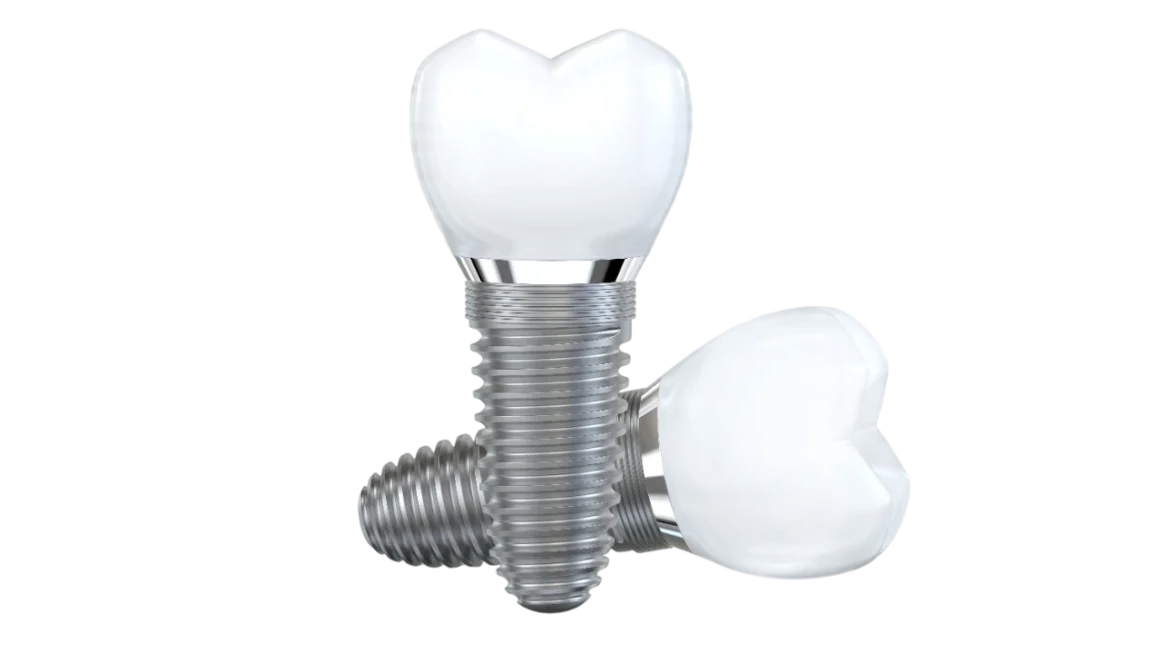
That’s why dental implants are such a common solution: they don’t just fill a gap, they replace the missing root. But placing the implant is only part of the job. What matters is how well the bone bonds to it — osseointegration — because that’s what makes an implant last.
In real life, implant problems are rarely about the implant material. They track back to things like low bone density, inflammation, smoking, diabetes or slow healing, as covered in our guide to why implants fail. Which is why there’s growing interest in supporting the body’s own healing response — and where most of the current curiosity, and the hype, sits.
What Are Exosomes, in Simple Terms?
Think of exosomes as tiny messengers your cells send each other. When something needs to heal, cells don’t work in silence — they signal, and exosomes are one of the ways those signals travel. They don’t build tissue themselves; they tell other cells what to do, such as when to calm inflammation or start repairing.
People often confuse them with stem cells. They’re not the same: stem cells are living cells that can become different tissues, while exosomes aren’t cells at all — closer to instruction notes. That distinction is explained further in our guide to regenerative dentistry, stem cells and exosomes.
For implants, that’s exactly why they’re interesting: success depends on how well bone heals and bonds to the surface, and exosomes appear to help guide that process.2
Is Exosome Therapy Approved — and Is It Safe?
This is where honesty matters more than marketing.
Most of the encouraging evidence comes from laboratory and animal studies, where exosome-treated implant surfaces showed better new-bone formation and osseointegration.2 Human clinical evidence is still early and limited.
On the regulatory side the position is unambiguous. The FDA states plainly that there are currently no FDA-approved exosome products, and issued a public safety notification after multiple reports of serious adverse events in patients treated with unapproved products marketed as containing exosomes. It named clinics offering them with “unsubstantiated claims” and noted that exosomes used to treat conditions in humans are regulated as drugs and biological products, subject to premarket review.1
That same notification includes advice for anyone considering an exosome product outside the United States, and since we’re a clinic outside the United States, it’s worth repeating rather than burying: learn what regulations cover the product in that country, know that the FDA has no oversight of treatments performed abroad, and be cautious where a country may not require regulatory review of clinical studies.1
So: an area of genuine research, not a finished off-the-shelf treatment. Any clinic presenting it as a miracle cure is overstating it — and that alone tells you something useful about the clinic.
Who Actually Needs Extra Healing Support?
Honestly? A lot of people don’t. Plenty of patients get implants, heal normally, and that’s the end of the story. Good bone, healthy gums, decent general health — the body does what it’s supposed to.
But some mouths are harder to work with. If you smoke, have diabetes, have weaker bone, or you’re older, healing can be slower and less predictable. That doesn’t mean implants won’t work — it means the margin for error is smaller. The numbers bear it out: pooled across 292 publications and more than 150,000 implants, failure risk in smokers came out at roughly 2.4 times that of non-smokers.3
And here’s the part worth being blunt about: when bone is genuinely thin, the first move isn’t a biological add-on at all. It’s rebuilding the support with a bone graft or a sinus lift, or choosing a design that works around the weak areas. For someone missing most or all of the teeth in one jaw, a full-arch approach like All-on-6 spreads the bite across six implants and is planned to avoid relying on the poorest-quality bone.
These are the cases where clinicians think harder about protecting osseointegration from the start — not because it’s fashionable, but because the risk is higher. There’s also plenty you can do yourself, covered in how to speed up healing after dental surgery.
What there isn’t is an “extra treatment for everyone.” Whether you’d benefit from any additional biological support depends on your scans, your medical history and how your body heals. Case by case, always.
Why Planning Still Matters Most
Anything labelled “biological” needs handling carefully. This isn’t skincare or a wellness therapy — it’s your bone, your healing, and a procedure meant to last years.
Exosomes are a developing area. Researchers are testing where they help and defining their limits. Which means, in responsible practice: decisions follow what the research actually supports, clinicians are open about what’s still being studied, and no add-on ever replaces diagnosis and surgical planning.
Because no amount of biological support compensates for poor planning or an implant in the wrong position. Long-term success still rests on the fundamentals: precise 3D imaging, correct positioning in the bone, careful handling of the soft tissue, and a prosthetic design that distributes biting forces safely. That’s why implant centres lean on digital imaging, guided surgery and close work between surgeon and prosthodontist. Biology and technique are meant to work together; neither substitutes for the other.
If exosomes are used at all, they’re supportive. Not a promise, not a shortcut, and never a replacement for clinical judgement.
Why Many Patients Choose Turkey for Implants
Once people realise implants aren’t something to rush or gamble with, the next question is usually practical: where can I get this done properly without paying a fortune? That’s often when Turkey comes up.
Patients from Europe, the UK and the US see the same technology and experienced teams at noticeably lower prices — and the difference is mostly lower running costs, not lesser materials. What that looks like in actual numbers, from a single tooth to a full arch, is in our breakdown of dental implant costs in Turkey, and how the trip itself works is in dental tourism in Turkey.
For many people it isn’t only money, either. Rather than treatment feeling rushed and squeezed between other appointments, it becomes one planned trip: you get your care, you rest, and the whole thing feels less like being stuck in a clinic.
How DentSpa Plans Implant Treatment
Getting an implant right isn’t putting a screw in the bone and calling it a day. It’s planning it properly, placing it safely and making sure it lasts.
Every case starts with a 3D CBCT scan and a full assessment of bone, gums, bite and neighbouring teeth. From there the implant is planned digitally — a stable position that avoids nerves and sinuses and spreads the bite correctly — before anything is touched. Restorations are produced in the clinic’s own laboratory in materials such as zirconia and E.max, and full-arch or complex cases are planned jointly by surgical and prosthetic specialists rather than by one person working alone. You can read each clinician’s background on the doctors page.
The credentials are all checkable. DentSpa is licensed by the Turkish Ministry of Health, certified to ISO 9001 and ISO 10002, a member of the Turkish Dental Association, and holds the Certification for Excellence in Medical Travel Patient Experience from Global Healthcare Accreditation.5 It was named best dental clinic in Europe in the odontology category at the European Awards in Medicine. And for implants specifically there’s a number that doesn’t come from us at all: Straumann publishes the implants placed here over a full year on its own verification page — see the Straumann Achievement Award and how to check it.
Over 50,000 international patients have been treated at the Şişli clinic, with scheduling, multilingual support and step-by-step aftercare arranged around your travel and recovery — see international guests and after treatment, and the verified Trustpilot and Google reviews.
So, Is Exosome Therapy Right for You?
Sometimes it can help — but it isn’t the thing that makes an implant work.
Most implant success comes down to fairly basic things: checking the bone properly, placing the implant in the right position, and planning the bite so it isn’t under the wrong pressure later. If those aren’t done well, no add-on fixes it.
Where something like exosome therapy might come in is when healing is expected to be slower — poor bone quality, or a body that simply doesn’t heal as it once did. In those cases it can be considered as support, with the regulatory position above understood clearly first.
The goal was never to use the newest technique. It’s to give you a tooth that feels solid, lets you eat normally, and doesn’t become a problem a few years from now — the same standard that decides how long implants last.
If you’re considering an implant and want to know what makes sense for your mouth, the next step is an assessment. Book a free consultation, go through your scans with the doctor, and get a plan based on your situation.
Frequently asked questions
Is exosome therapy FDA approved?
Is exosome therapy safe for dental implants?
Does exosome therapy help dental implants heal faster?
What's the difference between exosomes and stem cells?
How long does a dental implant take to heal?
Can I have implants if I smoke or have diabetes?
Sources
- 1. U.S. Food and Drug Administration — Public Safety Notification on Exosome Products, 6 December 2019.
- 2. Osteoimmunomodulation role of exosomes derived from immune cells on osseointegration. Frontiers in Bioengineering and Biotechnology. pmc.ncbi.nlm.nih.gov/articles/PMC9437288
- 3. Smoking and Dental Implants: A Systematic Review and Meta-Analysis (292 publications; OR 2.402). pmc.ncbi.nlm.nih.gov/articles/PMC8780868
- 4. A 10-year retrospective study of prevalence and risk factors of dental implant failures. Journal of Family Medicine and Primary Care. doi.org/10.4103/jfmpc.jfmpc_1171_19
- 5. Global Healthcare Accreditation — DentSpa Strengthens Global Trust in Turkey’s Dental Services with GHA Certification, 16 July 2026.






 70%
70%