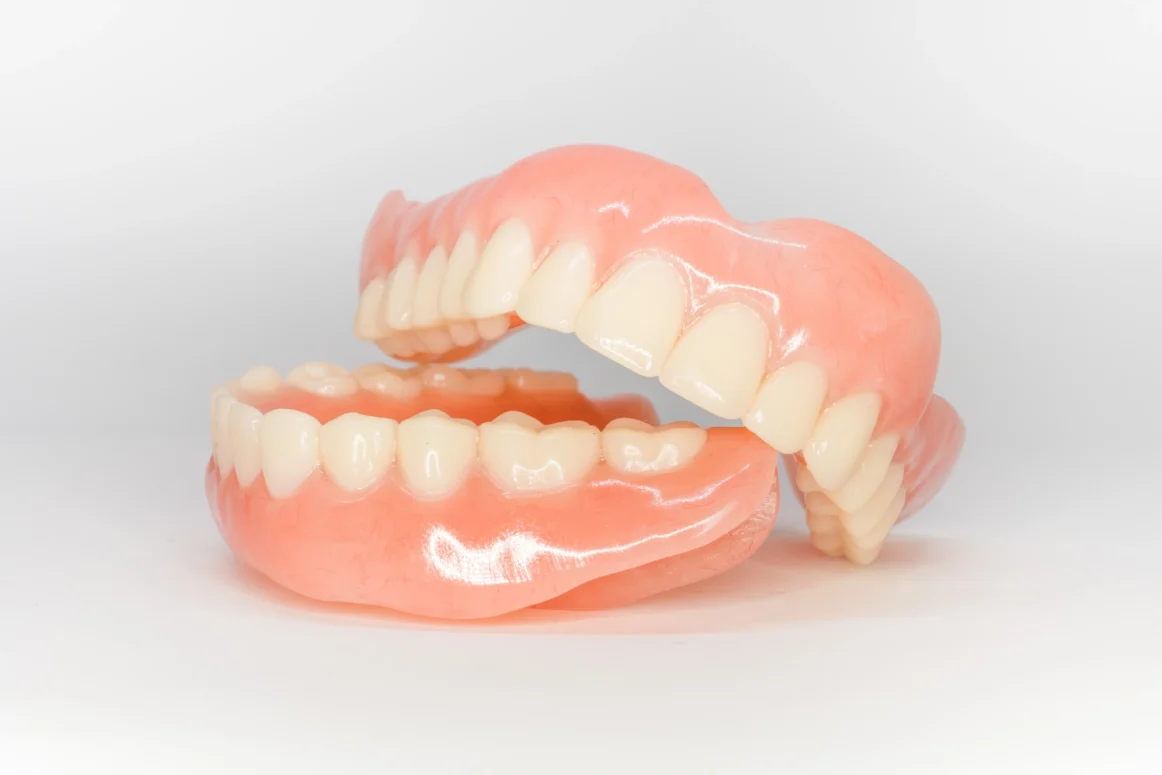
Implant-supported dentures — also called snap-in or snap-on dentures — are dentures that clip firmly onto a few dental implants, so they don’t slip or need adhesive. They’re the popular upgrade for anyone tired of a loose removable denture: far more stable, better for eating, and they help slow the bone loss that plain dentures allow. This guide covers what they are, snap-in vs fixed options, cost versus a removable denture, and how switching from dentures to implants works.
What Are Implant-Supported (Snap-In) Dentures?
An implant-supported denture is a full denture that attaches to two to four implants placed in the jaw, instead of resting on the gum. Small connectors let the denture “snap” onto the implants, holding it securely — you still take it out to clean, but it stays put while you eat and talk. It sits between a plain removable denture and a fully fixed bridge: much more stable than the first, and less costly than the second.
Removable vs Snap-In vs Fixed: Your Options
If you’re moving on from a plain denture, there’s a ladder from cheapest to most stable:
| Removable denture | Snap-in (implant-supported) | Fixed (All-on-4/6) | |
|---|---|---|---|
| Implants needed | None | 2–4 per jaw | 4–6 per jaw |
| Stays in? | Removable, uses adhesive | Clips on; out to clean | Fixed — never comes out |
| Stability | Can move | Much more secure | Like natural teeth |
| Bone loss | Continues | Slowed | Slowed |
| Cost | Lowest | Mid | Highest |
A snap-in denture is the sweet spot for most denture wearers — a big jump in stability for only a few implants. If you want teeth that never come out, a fixed All-on-4 arch is the goal. For the wider first-time comparison, see dentures vs implants.
Why Denture Wearers Switch to Implants
- They move or slip when eating or talking, and rely on adhesive.
- Sore gums from a denture pressing on the ridge.
- Limited diet and taste — hard foods become difficult, and an upper plate can cover the palate.
- Ongoing bone loss — a denture doesn’t replace the tooth root, so the jaw keeps shrinking and the denture gets looser over time.¹
Implant-supported dentures fix the root problem — literally — which is why they feel closer to natural teeth and help preserve bone.
Can You Get Implants After Years of Dentures?
Usually yes — but there’s an honest catch. Long-term denture wearers often have reduced jawbone, because it’s been shrinking for years.¹ That doesn’t rule out implants; it just means you may need one of the following, confirmed from a 3D scan:
- A bone graft to rebuild enough bone for implants.
- An All-on-4 design, which uses angled implants to make the most of the bone you have.
- For severe upper-jaw loss, zygomatic implants anchored in the cheekbone.
Age itself isn’t a barrier — healthy older adults switch successfully all the time. What matters is bone, gum health and general health.
How the Switch Works, Step by Step
- Assessment: a 3D scan checks your bone and plans the implants.
- Implant placement: the implants go in (with a graft first if needed). Your existing denture can often be adjusted to wear meanwhile, so you’re not without teeth.
- Healing: the implants fuse with the bone over about 3–6 months.²
- Your new teeth: the snap-in denture or fixed bridge is attached and adjusted.
For international patients this is usually staged over two visits — what the healing feels like is covered in our implant recovery timeline.
Implant-Supported Dentures Cost
A snap-in denture costs more upfront than a plain denture, but it lasts far longer and doesn’t need remaking every few years — so over time it often works out better value. As a guide:
| Option (per jaw) | UK / US private (guide) | Turkey (guide) |
|---|---|---|
| Snap-in (implant-supported) denture | £4,000–£8,000 / $6,000–$15,000 | from ~£2,000 |
| Fixed full arch (All-on-4) | £11,000–£15,000 / $20,000–$30,000 | from ~£3,000 |
In Turkey the treatment is typically up to around 70% less than UK or US private prices, using premium implant brands. See our full dental implant cost guide, and send your details for an exact quote.
Prices are guide ranges only and vary by case; ask for a written, itemised quote before you travel.
Are They Worth It?
For most people frustrated with a loose denture, yes. Even the middle option — a snap-in denture on two to four implants — transforms day-to-day comfort for a fraction of a full fixed arch: a stable bite, a normal range of foods, no adhesive, and slower bone loss. The honest exception is if cost is the deciding factor and your current denture is comfortable — then keeping it, well-maintained, is perfectly reasonable.
Tired of a denture that moves? Send DentSpa a photo and we’ll tell you honestly which option suits your bone and budget — snap-in or fixed — and give you an exact quote, at a European award-winning clinic in Istanbul that has treated 50,000+ international patients. Book a free consultation or message us on WhatsApp.
Frequently asked questions
What are implant-supported (snap-in) dentures?
Can you switch from dentures to implants? What should I expect?
How long does it take to go from dentures to implants?
Will my smile look better after switching to implants?
How much do implant-supported dentures cost?
Am I too old to switch from dentures to implants?
Sources
- Residual ridge resorption after tooth loss / under dentures (ongoing bone loss) — PubMed — https://pubmed.ncbi.nlm.nih.gov/23697296/
- Dental implant survival in studies with ≥10-year follow-up (~90–95%) — PubMed — https://pubmed.ncbi.nlm.nih.gov/25467739/
- American Dental Association — MouthHealthy: Dentures (including overdentures) — https://www.mouthhealthy.org/all-topics-a-z/dentures















 70%
70%