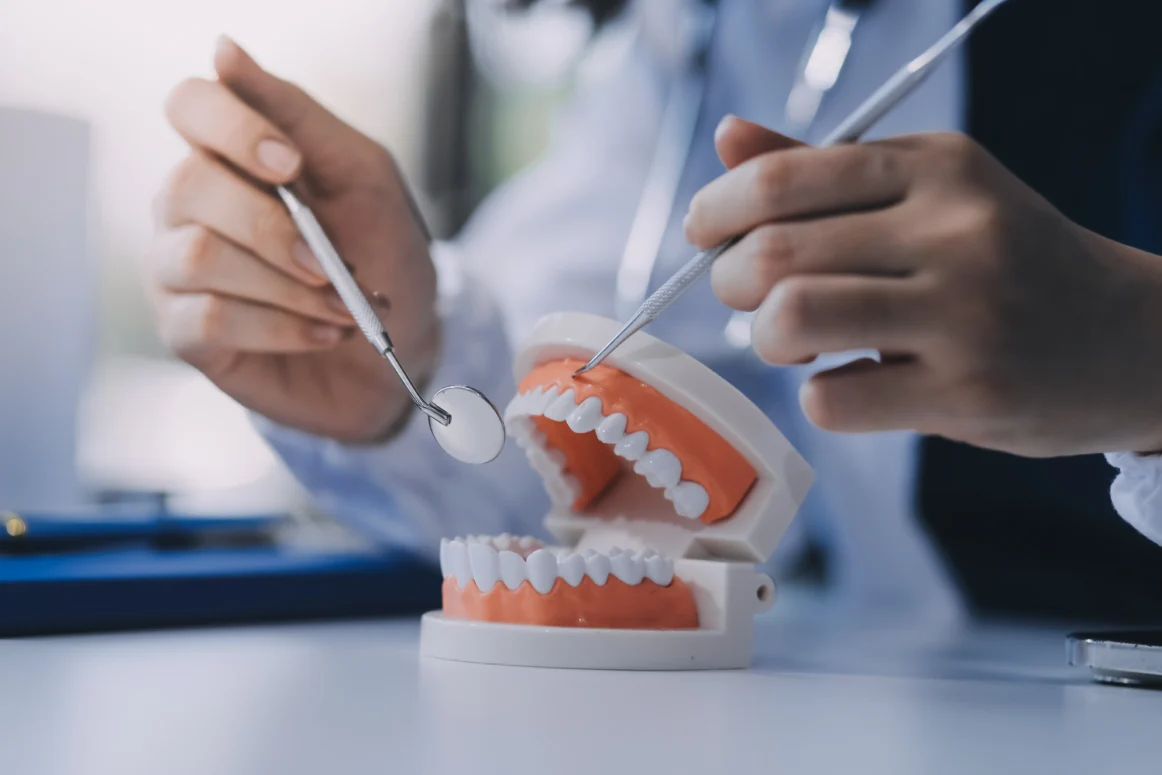
The difference is simple: immediate dentures (also called temporary dentures) are fitted on the same day your teeth are removed, so you’re never without teeth while your gums heal. Permanent dentures (conventional dentures) are made after the gums have healed — usually about 3–6 months later — for a much more precise, comfortable fit. Immediate dentures are a temporary bridge to that final set. Here’s how they compare, how long each lasts, and whether immediate dentures can become permanent.
Immediate vs Permanent Dentures Compared
| Aspect | Immediate (temporary) dentures | Permanent (conventional) dentures |
|---|---|---|
| When fitted | Same day as extraction | After gums heal (~3–6 months) |
| Fit & comfort | Less precise — gums shrink as they heal | Custom-fitted to healed gums; more comfortable |
| Adjustments | Frequent relines during healing | Few adjustments needed |
| Appearance | Restores your smile immediately | More natural, refined result |
| Lifespan | Temporary — usually 6–12 months | Long-term (years), then relined/remade |
In short: immediate dentures solve the “I can’t be seen without teeth” problem straight after extraction, and permanent dentures are the well-fitting set you settle into once everything has healed.
What Are Immediate (Temporary) Dentures?
Immediate dentures are prosthetic teeth placed right after your natural teeth are removed. Made in advance from impressions taken before extraction, they go straight in on the day of surgery. Their job is to carry you through healing:
- No gap: you leave with teeth the same day, so appearance and speaking are maintained.
- Protect the gums: they act like a bandage over the healing area.
- Support the face: they hold up the cheeks and lips.
Because the gums shrink as they heal, immediate dentures need periodic relining and feel less precise than the final set — which is exactly why a permanent denture follows.
What Are Permanent (Conventional) Dentures?
Permanent dentures are custom-made for long-term use and fitted once your gums have fully healed after extractions. Because the gum shape has settled, they can be built for a precise fit, better comfort and a more natural look, and they need far fewer adjustments than immediate dentures. “Permanent” doesn’t mean forever without care — like all dentures they’re relined or remade over the years — but they are the stable, everyday set.
Are Temporary and Immediate Dentures the Same Thing?
Mostly, yes. “Temporary denture” is the everyday name for the same appliance: a denture worn short-term while you heal, before the permanent one. An immediate denture is the most common type of temporary denture — the one fitted on extraction day. So when people compare temporary vs permanent dentures, it’s the same comparison as immediate vs permanent: a healing-phase set versus the long-term set.
Common Questions About the Difference
- Can immediate dentures be permanent? Not really — they’re designed for the healing phase and become loose as the gums shrink. They can be relined to extend use, but a permanent denture (or implants) is meant to replace them.
- Are permanent dentures thinner than temporary ones? Often yes. Because they’re made to healed, stable gums with more refined materials, permanent dentures can be made thinner and more comfortable than the bulkier immediate set.
- How long do you wear immediate dentures? Usually about 6–12 months, until healing is complete and the permanent denture is fitted.
Alternatives to Removable Dentures
Dentures aren’t the only way to replace missing teeth. Depending on your case:
- Dental implants — fixed replacement teeth anchored in the jaw; the most stable, longest-lasting option and the only one that preserves bone.
- Implant-supported dentures — a denture clipped onto a few implants so it doesn’t move; the “best of both”.
- Partial dentures — for replacing a few teeth around remaining natural ones.
If you’re deciding between removable and fixed teeth, our guide to dentures vs implants compares cost, comfort and longevity, or see how a fixed full arch works with All-on-4 implants.
Not sure whether to choose dentures or implants — or want a more affordable, well-fitting permanent set? DentSpa in Istanbul plans every case from a scan, with a dedicated after-care team, at a European award-winning clinic that has treated 50,000+ international patients. Book a free consultation or message us on WhatsApp for honest advice and an exact quote.
Frequently asked questions
What is the difference between immediate and permanent dentures?
Are immediate dentures the same as permanent dentures?
Are temporary and permanent dentures the same as immediate and permanent?
Can immediate dentures be made permanent?
Are permanent dentures thinner than temporary dentures?
How long do immediate dentures last?
Do I have to be toothless while getting dentures?
How long after tooth extraction can I get dentures?
Which is better, immediate or permanent dentures?
Why do immediate dentures become loose?
Can you eat normally with immediate dentures?
Do immediate dentures need to be relined?
Sources
- American Dental Association — MouthHealthy: Dentures (immediate, conventional & overdentures) — https://www.mouthhealthy.org/all-topics-a-z/dentures
- NHS — Dentures (false teeth): types, fitting and care — https://www.nhs.uk/conditions/dentures/














 70%
70%