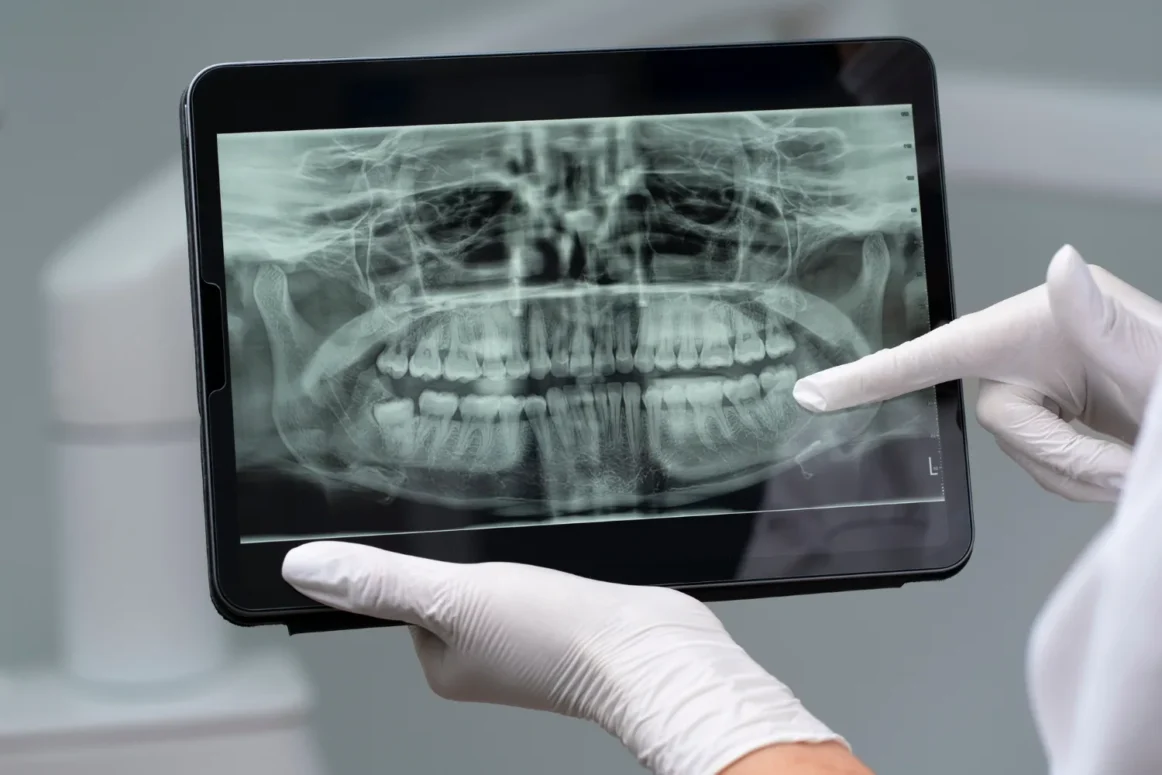
Zygomatic dental implants are longer implants anchored in the dense cheekbone (the zygomatic bone) instead of the upper jaw. They’re designed for people who have too little upper-jaw bone for standard implants — and they usually avoid the need for bone grafting or a sinus lift, so a fixed set of teeth can often be fitted in a single procedure. This guide covers who qualifies, the procedure, safety and success rates, and what they cost.
If you’ve been told you “don’t have enough bone” for implants in the upper jaw, this is often the solution — see also what to do when there isn’t enough jawbone for implants.
Zygomatic vs Traditional Dental Implants
| Zygomatic implants | Traditional implants | |
|---|---|---|
| Anchored in | The cheekbone (zygoma) | The jawbone |
| Bone needed | Works with severe upper-jaw bone loss | Needs enough jawbone |
| Grafting / sinus lift | Usually avoided | Often needed if bone is low |
| Teeth in place | Often same-day (immediate loading) | Usually after 3–6 months healing |
| Surgery | More advanced; needs a specialist surgeon | Routine implant surgery |
| Best for | Severely atrophic upper jaw, failed implants | Most patients with adequate bone |
In short: a standard implant is right for most people; a zygomatic implant is the specialist solution when the upper jaw has lost too much bone to hold one — without the long detour of grafting.
Who Qualifies for Zygomatic Implants?
Zygomatic implants are for people whose upper jaw can’t support standard implants. You may be a candidate if you have:
- Severe upper-jaw bone loss from long-term denture wear, gum disease or trauma.
- Failed conventional implants due to insufficient bone density.
- A wish to avoid extensive grafting or a sinus lift and the months of healing they add.
- Good enough general health for the surgery, confirmed at assessment.
If you have some bone but not a lot, a bone graft plus standard implants may still be possible — a 3D scan decides which route is best for you.
Benefits of Zygomatic Implants
- No bone graft in most cases — shorter, less complex treatment.
- Same-day teeth — a fixed temporary bridge can often be fitted the same day (immediate loading).
- High success rates — even in severely resorbed jaws, survival is around 96% over the long term.¹
- Strong, stable anchorage — the dense cheekbone holds the implant firmly for lasting function.
For patients facing a full upper arch, zygomatic implants are often combined into a fixed full-mouth restoration.
The Zygomatic Implant Procedure
- Planning: a 3D (CT) scan maps the cheekbone and sinuses so placement is planned precisely.
- Placement: the surgeon anchors the implants into the zygomatic bone — usually under general anaesthetic or sedation.
- Same-day teeth: a fixed temporary bridge is often fitted the same day.
- Final restoration: after healing, the permanent bridge is fitted.
The surgery itself typically takes a few hours. Because it’s an advanced technique, it should only be done by a surgeon experienced specifically in zygomatic implants.
Are Zygomatic Implants Safe?
Yes — in experienced hands they are a safe, well-established technique. A systematic review and meta-analysis reported a zygomatic implant survival of about 96.2% over a mean follow-up of more than six years, comparable to standard implants.¹ As with any surgery there are possible complications (such as sinus inflammation or soft-tissue issues), which is exactly why the surgeon’s experience and careful 3D planning matter most. You can read more about how safe dental implants are in general.
How Much Do Zygomatic Implants Cost?
Zygomatic implants cost more than standard implants because they’re a specialist, more complex surgery — but they can work out cost-effective by avoiding grafting and multiple stages. In the UK and US a full zygomatic rehabilitation runs to many thousands; in Turkey the same treatment is typically a fraction of that price, using the same techniques and premium implant brands. Because every case differs, the honest answer is an exact quote from your scan — see our guide to dental implant costs in Turkey.
Prices vary widely with the case; ask for a written, itemised quote before you travel.
Been told you don’t have enough bone for implants? Send DentSpa your CT scan and our specialists will tell you honestly whether zygomatic implants (or grafting) are right for you, and give you an exact quote — at a European award-winning clinic in Istanbul that has treated 50,000+ international patients. Book a free consultation or message us on WhatsApp.
Frequently asked questions
What are zygomatic dental implants?
Who is a candidate for zygomatic implants?
Are zygomatic implants safe?
How long does the zygomatic implant procedure take?
Do zygomatic implants avoid bone grafting?
How much do zygomatic implants cost?
Sources
- Long-term treatment outcomes with zygomatic implants: a systematic review and meta-analysis (~96.2% survival, mean follow-up >6 years) — PMC — https://pmc.ncbi.nlm.nih.gov/articles/PMC10322814/
- ITI consensus report on zygomatic implants: indications, surgical techniques and long-term outcomes — PMC — https://pmc.ncbi.nlm.nih.gov/articles/PMC10497463/
- American Dental Association — MouthHealthy: Implants — https://www.mouthhealthy.org/all-topics-a-z/implants














 70%
70%