Yes — dental implants are one of the safest and most predictable procedures in modern dentistry, with long-term studies showing around 95–96% of implants still working well after ten years.¹ ² They have been used and regulated for decades, and the titanium and zirconia they are made from are biocompatible, meaning the body accepts them readily. That said, “safe” is never absolute: an implant is a minor surgical procedure, so it carries some risks, and how safe it is for you depends on your health and the skill of the dentist placing it. This guide gives you an honest picture — the success rates, the real risks and side effects, who implants suit, MRI safety, and how to keep your treatment as safe as possible.
How Safe Are Dental Implants?
Implants have one of the strongest safety records in dentistry. A large systematic review and meta-analysis found a 10-year implant survival rate of about 96.4%, with very little bone loss around the implant over that time.¹ A separate 20-year analysis reported a cumulative survival of roughly 94.6%, confirming that a well-placed, well-maintained implant can last for decades.² The U.S. Food and Drug Administration regulates dental implants as medical devices and recognises them as a safe, effective way to replace missing teeth.³
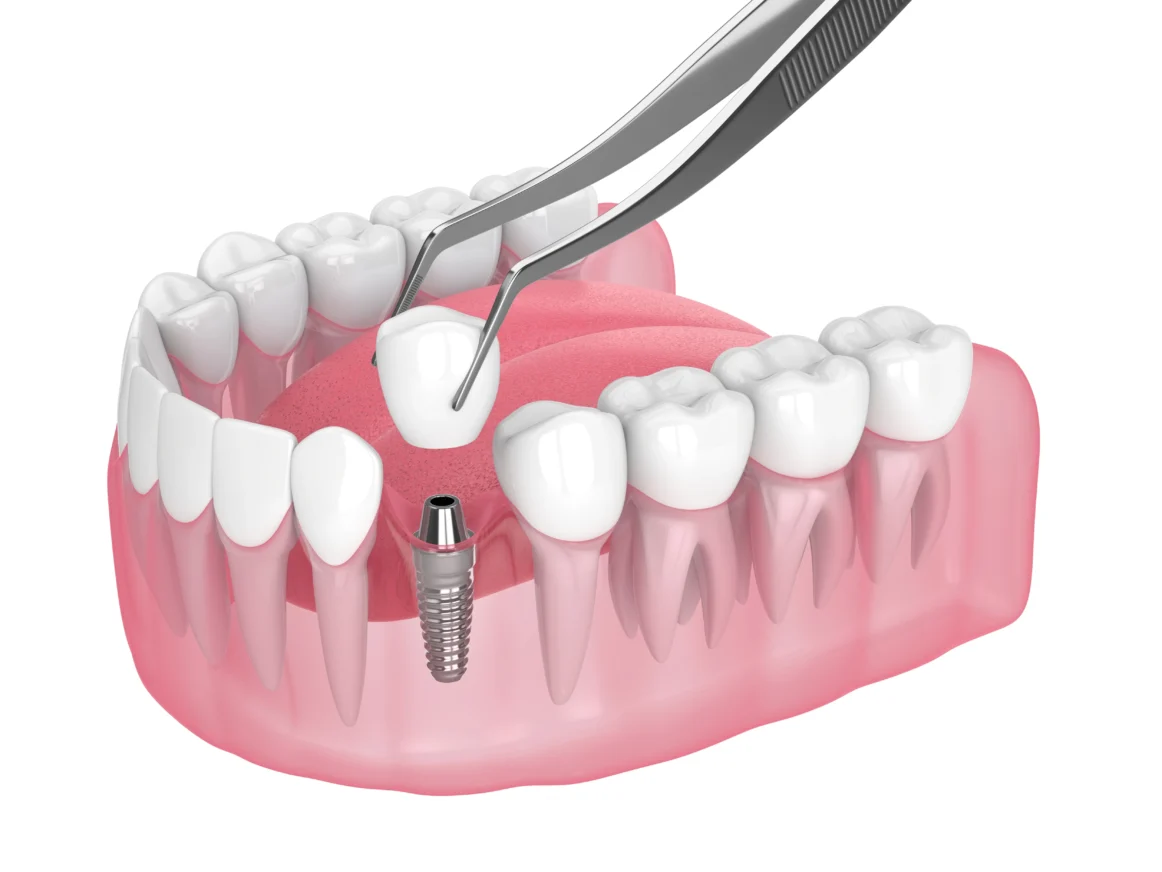
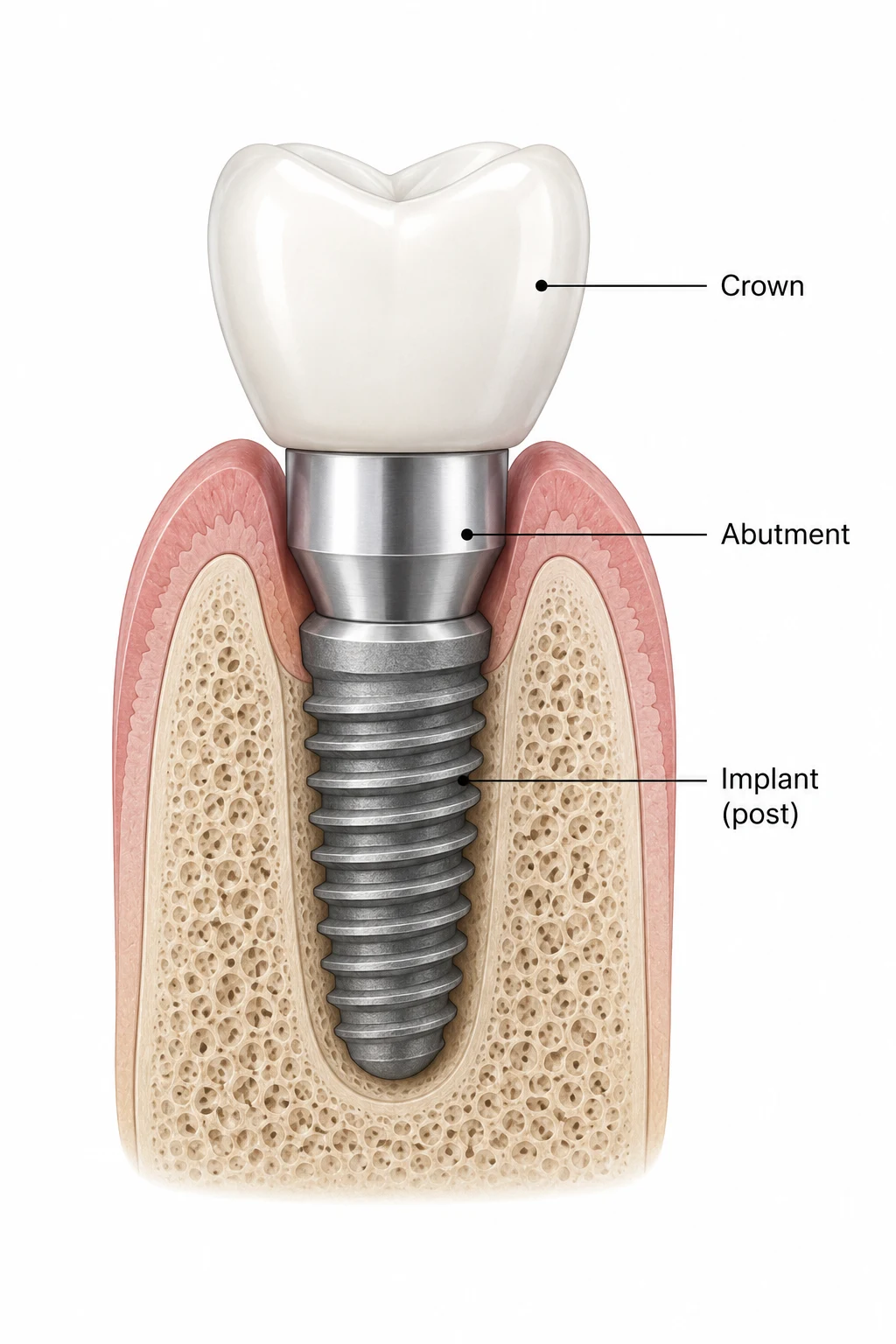
The reason they are so safe is osseointegration — the natural process where the titanium tooth root fuses with your jawbone to form a stable, permanent foundation. Because the implant replaces the root, it also protects the jawbone and behaves like a natural tooth, which is why implants are considered the gold standard for replacing missing teeth.
Possible Risks and Side Effects of Dental Implants
Like any surgical procedure, implants carry some side effects. It helps to separate the normal, temporary ones — which almost everyone has and which settle within a few days — from the rarer complications.
Normal, short-term side effects after surgery include mild swelling, bruising, minor bleeding and soreness around the area. These are expected, manageable with simple painkillers, and fade within a few days.
- Infection at the implant site, which can develop into gum inflammation around the implant (peri-implantitis) if oral hygiene is poor.
- Nerve irritation in the lower jaw, which can cause temporary numbness or tingling in the lip, chin or gum. In reviews of lower-jaw implants, transient sensory changes were reported in roughly 13% of cases shortly after surgery, dropping to about 3% remaining at one year — and careful 3D planning makes this far less likely.⁴
- Sinus issues with upper-jaw implants placed close to the sinus cavities, which proper imaging is designed to avoid.
- Implant failure, where the implant does not integrate or loosens later. This is uncommon, but if you want the warning signs and causes, see our full guide to dental implant failure.
The key point: serious complications are uncommon, most are avoidable with proper diagnosis and an experienced surgeon, and the great majority of patients heal without any problem.
Are Titanium and Zirconia Implants Safe?
Both materials used for implants are biocompatible and have long safety records. Titanium has been the standard for decades; it resists corrosion and integrates strongly with bone, and true titanium allergy is extremely rare. Zirconia is a metal-free, tooth-coloured ceramic alternative that suits patients who prefer no metal or have thin gums where aesthetics matter. Both are safe — the right choice depends on your case, which a dentist confirms from a scan. You can read more about the types of dental implants and the materials used, or the implant procedure at DentSpa.
Are Dental Implants Safe for You?
Most healthy adults are good candidates, but a few factors affect how safe and successful implants will be — which is exactly why a proper medical assessment matters:
- Smoking is the biggest controllable risk. Smokers are around 2.6 times more likely to experience early implant failure, with success rates falling to roughly 85–90% versus about 95% in non-smokers, because smoking reduces blood flow and slows healing.⁵ Cutting down or stopping around surgery greatly improves the odds.
- Uncontrolled diabetes can slow healing, but well-controlled diabetes is generally not a barrier.
- Low jawbone volume may need a graft first — though this rarely rules implants out. See your options when there isn’t enough jawbone for implants.
- Pregnancy — elective implant surgery is usually postponed until after pregnancy as a precaution.
- Older age is not a problem in itself; healthy older adults do very well with implants.
Are Dental Implants Safe During an MRI?
Yes. The titanium and zirconia used in dental implants are not ferromagnetic, so they are not pulled or heated by the magnetic field, and a properly integrated implant cannot move. Titanium dental implants are considered MRI-safe at the field strengths used in standard medical scanners.⁶ The only minor caveat is that the metal can create a small “artifact” (a shadow) on images of the head and neck, so it is worth telling your radiographer you have implants — but it does not stop you having an MRI.
How to Make Sure Your Implant Treatment Is Safe
Most of an implant’s safety comes down to diagnosis and the dentist’s skill. To keep your treatment safe, choose a clinic that takes a 3D (CBCT) scan to map your bone and nerves before surgery, plans the placement digitally, screens your medical history honestly, and gives you clear aftercare. If you are travelling for treatment, the same rules apply — here is how to make sure dental implants abroad are safe and which questions to ask.
Safe Dental Implants at DentSpa
At DentSpa in Istanbul, every implant case starts with a 3D scan and is planned by experienced implantologists using biocompatible titanium and zirconia, with full aftercare and follow-up. As the Best Clinic in Dentistry in Europe 2024, trusted by 50,000+ international patients, we focus on doing implants safely and predictably — not rushing them. Book a free consultation to find out, honestly, whether implants are right and safe for you.
Frequently asked questions
Are dental implants safe?
What are the side effects of dental implants?
Are titanium dental implants safe?
Are dental implants safe for diabetics and older adults?
Can you have an MRI with dental implants?
Are dental implants safer than dentures or a bridge?
Sources
- Howe M-S, et al. Long-term (10-year) dental implant survival: a systematic review and sensitivity meta-analysis (96.4% survival). Journal of Dentistry, 2019. https://www.sciencedirect.com/science/article/abs/pii/S0300571219300491
- How far can we go? A 20-year meta-analysis of dental implant survival rates (~94.6%). Clinical Oral Investigations, 2024. https://link.springer.com/article/10.1007/s00784-024-05929-3
- U.S. Food & Drug Administration — Dental Implants: What You Should Know. https://www.fda.gov/medical-devices/dental-devices/dental-implants-what-you-should-know
- Sensory Changes Related to Dental Implant Placement: A Scoping Review (transient ~13%; ~3% persistent at 1 year). PMC, 2023. https://pmc.ncbi.nlm.nih.gov/articles/PMC10586583/
- The Effects of Smoking on Dental Implant Failure: A Current Literature Update (smokers ~2.6× early failure). PMC, 2024. https://pmc.ncbi.nlm.nih.gov/articles/PMC11506801/
- Are titanium implants actually safe for magnetic resonance imaging examinations? PMC, 2019. https://pmc.ncbi.nlm.nih.gov/articles/PMC6369045/















 70%
70%