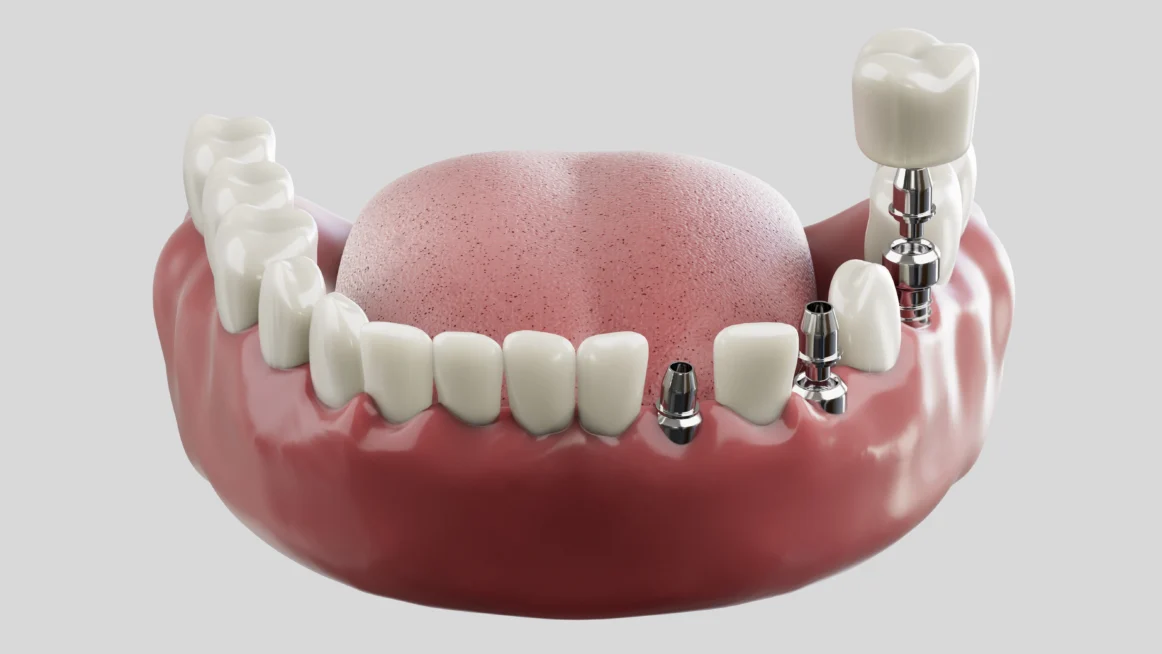
If you’ve been told you don’t have enough bone for dental implants, don’t worry — in the large majority of cases you can still have them. Thin or lost jawbone is a common and solvable problem: bone grafting, a sinus lift, or bone-saving options like zygomatic, mini and All-on-4 implants make treatment possible even when bone is limited. Here’s what “not enough bone” really means and every route back to a fixed, natural smile.
It’s an understandable worry, because implants do need a solid foundation. The good news is that modern implant dentistry has a clear answer for almost every degree of bone loss. Let’s go through why bone matters, why yours may be thin, and the options available to you.
Why Does the Jawbone Matter for Implants?
The jawbone is the anchor for an implant. After placement, a process called osseointegration takes place — the bone cells grow and fuse to the implant surface over several weeks to months, creating a stable base for the crown.¹ If the bone is too thin or soft, that fusion is harder to achieve, which is why your dentist checks it carefully before going ahead. To see exactly how it’s measured, here’s how much bone an implant actually needs and how it’s assessed.
Why Do Some People Have Thin Jawbones?
Usually it comes down to lost stimulation. When a tooth is missing, the bone beneath it no longer gets the pressure of chewing, so it gradually shrinks — studies show a notable share of ridge width is lost in the first months after a tooth comes out.² Common reasons include:
- Missing teeth left unreplaced — the most common cause of progressive bone loss.
- Gum disease that damages the supporting bone.
- Trauma to the jaw.
- Natural anatomy — some people simply have a thinner ridge.
If you want the full picture of how lost bone is rebuilt, see our guide to bone loss in the jaw and how to rebuild it.
Can You Still Get Implants Without Enough Bone?
Yes — almost always. The right route depends on how much bone you have and where, and a 3D scan decides it. Your options include:
- Bone grafting — adding bone material to rebuild the deficient area; preserving and grafting the ridge is well shown to restore lost volume.³ See our full guide to a bone graft for dental implants.
- Sinus lift — for thin bone in the upper back jaw, raising the sinus floor to create room for the implant.
- Zygomatic implants — anchored in the cheekbone, so very little jawbone is needed; here’s when zygomatic implants are used.
- Short / mini implants — smaller posts that need less bone, good for minor loss.
- All-on-4 — four angled implants carry a full arch using the bone you already have, often without grafting;⁴ see how All-on-4 works for limited bone.
In other words, “not enough bone” almost never means “no implants” — it means choosing the right technique for your jaw.
Your Options If You Don’t Have Enough Bone for Dental Implants
Not having enough bone rarely means you can’t have implants — it usually just changes the plan. Here are the main routes, decided from a 3D scan:
| Option | What it does | Best for |
|---|---|---|
| Bone graft | Rebuilds bone so a standard implant can be placed | Moderate bone loss; adds healing time |
| Sinus lift | Raises the sinus floor to add bone in the upper back jaw | Low bone under the sinuses |
| All-on-4 | Angled implants make the most of existing bone — often no graft | A full arch with limited bone |
| Zygomatic implants | Anchor in the cheekbone instead of the jaw | Severe upper-jaw bone loss |
| Short / narrow implants | Smaller implants that need less bone height or width | Limited bone where grafting isn’t wanted |
The right choice depends on how much bone you have and where — which a scan confirms before any treatment is planned.
Frequently asked questions
Can I get dental implants if I don't have enough bone?
Can I get implants without a bone graft?
How long does it take if I need bone built first?
Why does missing a tooth thin the bone?
Why Have Your Implants at DentSpa, Turkey?
Thin bone is exactly the kind of case where experience matters. DentSpa plans every implant from a 3D scan and offers the full range of bone-building and bone-saving techniques under one roof — so your treatment is matched to your jaw, not the other way round. Recognised as the Best Clinic in Dentistry in Europe at the European Awards in Medicine 2024 and trusted by 50,000+ international patients, DentSpa pairs world-class care with transparent pricing and full aftercare. Book a free consultation to find out which option is right for you.
Sources
- Dental implant osseointegration & healing timeline. NCBI / PMC. https://www.ncbi.nlm.nih.gov/pmc/articles/PMC11794915/
- Post-extraction dimensional changes of the alveolar ridge: a systematic review and meta-analysis. PubMed. 2021. https://pubmed.ncbi.nlm.nih.gov/33067890/
- Effect of alveolar ridge preservation after tooth extraction: a systematic review and meta-analysis. PMC. https://pmc.ncbi.nlm.nih.gov/articles/PMC4293706/
- Soto-Penaloza D, et al. The all-on-four treatment concept: systematic review. PMC. 2017. https://pmc.ncbi.nlm.nih.gov/articles/PMC5347302/















 70%
70%