Table of content
Table of content
The three main types of dental implants are endosteal (placed in the jawbone — by far the most common), zygomatic (anchored in the cheekbone for severe upper-jaw bone loss), and subperiosteal (resting on the bone — now rarely used). Implants are also grouped by material (titanium or zirconia) and by how many teeth they replace (single, All-on-4/6/8, or mini implants for stabilising dentures). This guide explains each type used in Turkey and which suits you.
The Main Types of Dental Implants Compared
| Type | Where it sits | Best for |
|---|---|---|
| Endosteal | In the jawbone (a titanium/zirconia screw) | Almost everyone with enough bone — the standard implant |
| Zygomatic | In the cheekbone (zygoma) | Severe upper-jaw bone loss, to avoid major grafting |
| Subperiosteal | On top of the bone, under the gum | Rarely used today — largely replaced by grafting + endosteal or zygomatic |
| Mini implants | In the jawbone (narrow diameter) | Limited bone, or stabilising a loose denture |
In practice, the vast majority of patients receive endosteal implants. The others solve specific problems — mainly a lack of bone.
Endosteal Implants (the Standard)
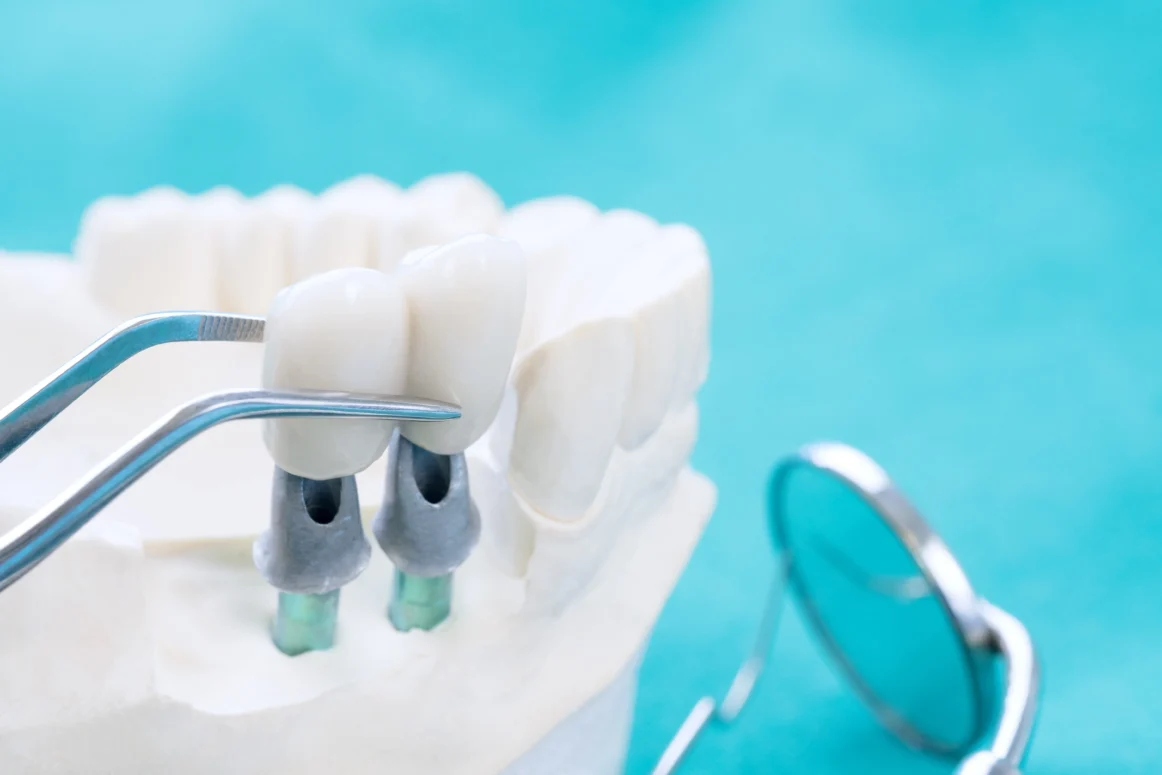
An endosteal implant is a small screw placed into the jawbone that acts as an artificial tooth root. Over 3–6 months it fuses with the bone (osseointegration), then a crown, bridge or full arch is fitted on top.¹ It’s the most common type because it’s the most durable and natural-feeling, with strong long-term survival.² This is the implant behind a single front tooth, a bridge, or a fixed full arch.
Zygomatic Implants (for Severe Bone Loss)
When the upper jaw has lost too much bone to hold standard implants, zygomatic implants anchor into the dense cheekbone instead. They can often avoid major grafting and allow quicker restoration, but they’re a complex surgery that needs an experienced specialist. This is a type most patients never need — it’s reserved for significant upper-jaw bone loss.
Subperiosteal & Mini Implants
Subperiosteal implants rest on the bone under the gum rather than inside it. They were designed for patients with too little bone for a standard implant, but they’re rarely used today — modern grafting and zygomatic implants give more reliable results.
Mini implants are narrower than standard implants. Because they need less bone and are less invasive, they’re often used to stabilise a loose denture (denture stabilisation) — a fixed, more comfortable alternative to a denture that moves. If you’re weighing removable vs fixed teeth, see dentures vs implants.
Titanium vs Zirconia Implants
Implants also differ by material, and both are used in Turkey:
- Titanium — the proven standard: strong, biocompatible, decades of research, very high success. The default for most cases.
- Zirconia — a tooth-coloured, metal-free ceramic. Chosen mainly for aesthetics at the front (no grey line through thin gums) or for patients who prefer metal-free.
Types by How Many Teeth You’re Replacing
- Single implant — one implant and crown for one missing tooth.
- Implant bridge — a few implants carry a bridge for several missing teeth.
- All-on-4 / All-on-6 / All-on-8 — a fixed full arch on 4–8 implants. See All-on-4 and full mouth implants.
- Immediate-load (“same-day”) — a temporary tooth fitted the day the implant is placed, when the bone is stable enough.
If your scan shows thin bone, a bone graft or sinus lift may be added first so any implant type has a stable base.
Which Implant Type & Brand Should You Choose?
For most people the answer is a titanium endosteal implant — it has the longest track record and highest success rate.² The other types exist to solve a specific problem, usually a lack of bone. Brand matters too: reputable clinics in Turkey use premium systems such as Straumann and Nobel Biocare, which come with long-term research and warranties. At DentSpa, the implant type and brand are chosen from your 3D scan — not sold as a one-size-fits-all package.
What Do Dental Implants Cost in Turkey?
Whichever type you need, Turkey is popular because the cost is typically up to around 70% less than US or UK private prices, using the same premium brands. As a guide, a single implant with crown starts from around £400–£700 in Turkey versus roughly £2,000–£3,000 privately in the UK. For a full breakdown, see our guide to dental implant costs in Turkey.
Prices are guide ranges only and vary by case; ask for a written, itemised quote before you travel.
Not sure which implant type is right for you? Send DentSpa your X-ray and our specialists will tell you exactly which type suits your bone and give you an exact quote — at a European award-winning clinic in Istanbul that has treated 50,000+ international patients. Book a free consultation or message us on WhatsApp.
Frequently asked questions
What are the three main types of dental implants?
Which type of dental implant is best?
Titanium or zirconia – what do clinics in Turkey use?
What is the newest type of dental implant?
Can a single tooth be implanted, or only full arches?
What implant brands are used in Turkey?
How long do dental implants in Turkey last?
How much do dental implants cost in Turkey vs the US?
Can I really save 90% on dental implants in Turkey?
Sources
- NHS — Guy’s and St Thomas’ NHS Foundation Trust: Dental implants (procedure, healing 3–6 months) — https://www.guysandstthomas.nhs.uk/health-information/dental-implants
- Dental implant survival in studies with ≥10-year follow-up (~90–95%) — PubMed — https://pubmed.ncbi.nlm.nih.gov/25467739/
- American Dental Association — MouthHealthy: Implants — https://www.mouthhealthy.org/all-topics-a-z/implants













 70%
70%