Table of content
Table of content
If you’ve been told you need a bone graft before getting dental implants, you’re not alone. It’s one of the most common steps in the implant process — and one of the most misunderstood. This guide explains exactly what a dental bone graft involves, why it’s needed, where the bone comes from, and what it means for your treatment timeline.
The reassuring headline first: a systematic review comparing implants placed in grafted sites against implants placed in untouched bone, followed for at least ten years, found similar survival between the two, with reported rates ranging from 91.6% to 100%.1 A grafted site, properly healed, behaves like a normal one.
What Is a Dental Bone Graft?
A dental bone graft is a surgical procedure that rebuilds or increases the volume of bone in your jaw. When a tooth is lost or extracted, the surrounding bone gradually shrinks — a process called resorption. Without enough bone, there is no stable foundation for a dental implant to fuse with.
A bone graft replenishes that lost volume using material which integrates with your existing jaw over several months. Once the graft has matured and the bone is dense enough, implant placement can proceed.
The procedure sounds more complex than it usually is. For most patients it’s performed under local anaesthetic in a single appointment, and the discomfort afterwards is manageable with standard pain relief.
Why a Bone Graft Is Needed Before Implants
A dental implant is a titanium post placed directly into the jawbone. For it to stay stable long term there must be enough bone width, height and density at the site. Where those conditions aren’t met, the implant has no solid anchor — and placing one anyway is one of the recognised routes to early failure, as covered in our guide to why implants fail.
Bone loss happens for several reasons:
- Tooth loss or extraction — bone in the socket begins to shrink within weeks once there’s no tooth root stimulating it.
- Gum (periodontal) disease — chronic infection erodes the bone supporting the teeth.
- Prolonged denture wear — dentures rest on the gum surface and give the bone beneath no stimulation.
- Trauma or injury — accidents can damage bone structure directly.
- Naturally thin ridges — some people simply have less bone to work with.
How fast that first cause acts surprises most people: measured across human studies, an untreated extraction site loses a substantial share of its ridge width within the first six months. The detail is in our guide to bone loss in the jaw and how it’s rebuilt. Grafting is a standard, well-established part of modern implant dentistry — not an exception, and not a sign that something has gone wrong.
Where Does the Bone Come From?
This is the question patients ask most. There are four main sources of graft material:
- Autograft — your own bone. Harvested from another site in your own body, typically the chin, the back of the lower jaw, or, for larger reconstructions, the hip (iliac crest). Because it comes from you, it integrates with the highest predictability.
- Allograft — donor human bone. Sourced from a licensed tissue bank, then processed, sterilised and tested to rigorous standards. It avoids the need for a second surgical site on your own body.
- Xenograft — animal-derived bone. Most commonly bovine, processed to remove all organic material and leave a mineral scaffold your own bone grows into. Used safely in dentistry for decades, and particularly common in socket preservation and sinus lifts.
- Alloplast — synthetic substitute. Laboratory-made materials such as hydroxyapatite that mimic the structure of natural bone. Fully synthetic, suitable for patients who’d rather avoid biological material, and best for smaller defects — often combined with another graft type.
In practice surgeons often combine them — mixing a patient’s own bone with a xenograft, then covering the site with a collagen membrane. The right choice depends on the size of the defect, your anatomy, and the plan for the eventual implant.
Types of Bone Graft Procedures
Not all grafts are the same. Which one you need depends on where in the jaw the bone is missing, how much is required, and whether an implant can go in at the same time.
Socket preservation. Performed immediately after an extraction to stop the socket collapsing. Graft material goes straight into the empty socket and is covered with a membrane. This preserves bone volume for a future implant and substantially reduces the grafting needed later — which is why the timing of an extraction matters more than most people realise.
Guided bone regeneration (GBR). A barrier membrane is placed alongside graft material to stop soft tissue growing into the space before bone can form. Often done at the same time as implant placement for minor defects, or as a staged procedure in more complex cases.
Block bone graft. A solid block of bone, taken from the patient’s own jaw or chin, is secured to the deficient area with small titanium screws. Used where the loss is significant enough to need real volume. The block integrates over several months before the implant goes in.
Sinus lift (sinus augmentation). For the upper back jaw. The sinus membrane is gently lifted and graft material placed beneath it to create enough vertical height for an implant. The step-by-step is in our guide to a sinus lift for dental implants.
When grafting isn’t the answer. In cases of severe upper-jaw bone loss, the plan sometimes moves away from rebuilding bone altogether and anchors into the cheekbone instead — see zygomatic implants. And if you’ve been told there simply isn’t enough bone, here are all the options in that situation.
Can a Bone Graft and Implant Be Placed on the Same Day?
Sometimes. Whether simultaneous placement is appropriate depends on the size and nature of the defect.
For minor deficiencies, graft material can go in at the same time as the implant — one surgical visit instead of two, and a shorter overall timeline.
For larger defects, where there isn’t enough bone to stabilise an implant at all, a staged approach is required: the graft is placed first and left to mature before implant surgery is scheduled. Placing an implant into insufficiently grafted bone risks failure and, in the end, extends the treatment considerably. The waiting isn’t caution for its own sake — it’s what makes the second stage work.
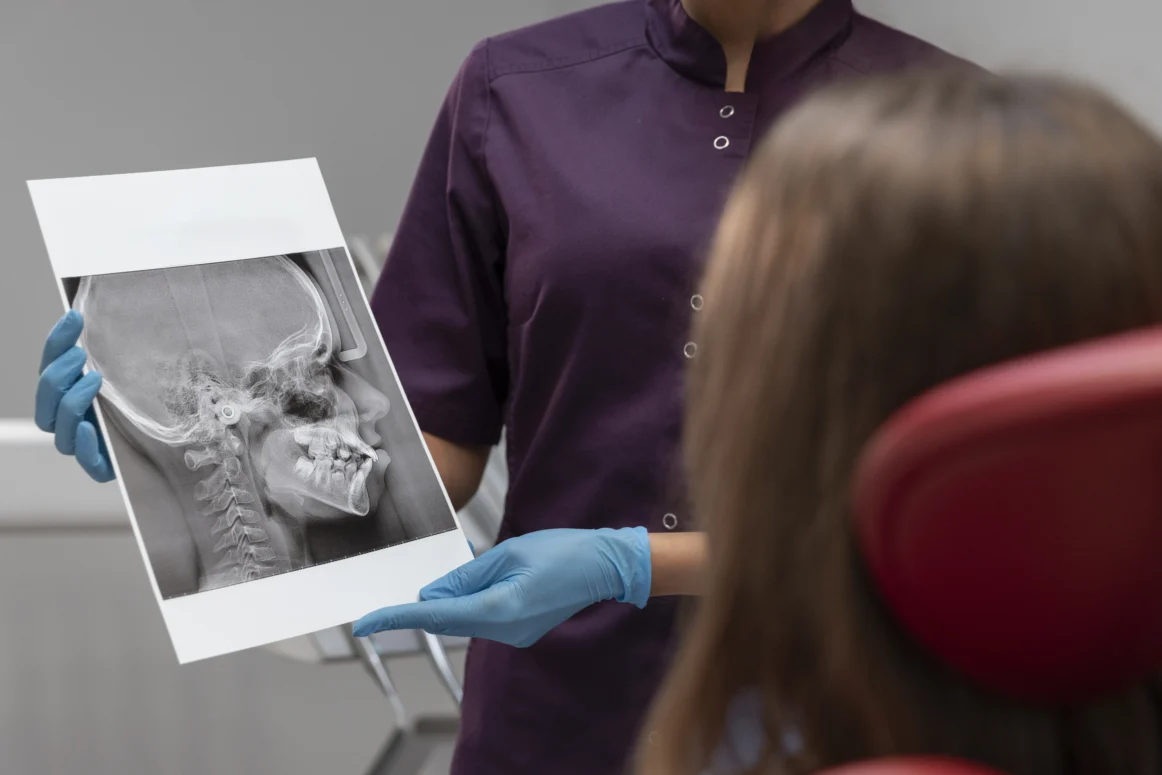
Your surgeon decides this from 3D CBCT imaging, which shows bone volume, density, nerve position and sinus boundaries precisely. It isn’t a judgement anyone can make from a photograph. How much bone an implant actually needs, and how it’s measured, is covered in bone deficiencies before an implant.
Healing and Recovery
Healing time depends on the type and size of the graft. Minor grafts and guided bone regeneration generally need a few months; block grafts and sinus lifts take longer. Your surgeon confirms readiness with follow-up imaging rather than by the calendar, and schedules implant surgery from that.
In the first week expect mild to moderate discomfort, some swelling and occasionally bruising — all manageable with standard over-the-counter pain relief. How much you feel depends on the type of graft and whether bone was harvested from a second site. What to do and avoid afterwards is set out in post-bone-graft care, and the wider implant timeline is in our recovery guide.
One thing worth knowing before you start: smoking is the single biggest modifiable risk to a graft integrating. If you’re going to stop for any period in your life, this is the one where it changes the outcome.
Bone Graft Cost: Turkey Compared with the UK and US
Cost is one of the main reasons patients from the UK, US and Europe look at Istanbul for grafting and implant treatment. The difference comes from local operating and laboratory costs rather than from the materials, which are sourced from the same international manufacturers supplying practices in London and New York.
As an approximate guide to the private market — not quotes:
| Treatment | UK (private) | US |
|---|---|---|
| Minor bone graft | £800 – £2,000 | $800 – $3,000 |
| Block bone graft | £1,500 – £3,000 | $2,000 – $5,000 |
| Sinus lift | £1,800 – £5,000 | $1,500 – $5,000 |
| Single implant | £1,800 – £3,000 | $3,000 – $6,000 |
| Full arch (All-on-4 / All-on-6) | £12,000 – £30,000+ | $20,000 – $50,000+ |
Istanbul sits substantially below both. We don’t publish a per-item price list here, because a graft is quoted from your scan rather than from a menu: the figure depends on the size of the defect, the material and whether an implant goes in at the same time, and it’s confirmed in writing after a free consultation.
Two things worth checking on any quote you receive, wherever it’s from: whether it includes the graft material itself and the membrane, and whether follow-up imaging is included. Those are the items that most often turn out to be extra. If you’re comparing implant costs more broadly, our restoration cost guide and dental tourism packages page cover how the pieces add up.
How DentSpa Plans and Performs Bone Grafting
DentSpa is a dental clinic in Şişli-Fulya, Istanbul, opened in 2018 and built around international patients. More than 50,000 guests from over 50 countries have been treated since.
Every case starts with 3D imaging. A CBCT scan gives a detailed picture of bone volume, nerve positions, sinus boundaries and surrounding anatomy before anything is decided — so the plan is built on what’s actually there rather than on an estimate.
The surgery sits with specialists. Grafting and implant placement are handled by the oral and maxillofacial surgeons on the clinical team, whose profiles list their education, specialisation and published research — so you can read the background of the person operating on you before you commit.
Materials are CE-marked and come from the same international manufacturers supplying UK and US practices. The specific product used is named in your treatment plan, so any dentist can read your case afterwards.
The credentials are checkable. DentSpa is licensed by the Turkish Ministry of Health, certified to ISO 9001 and ISO 10002, and a member of the Turkish Dental Association. It was named best dental clinic in Europe in the odontology category at the European Awards in Medicine, and holds the Certification for Excellence in Medical Travel Patient Experience from Global Healthcare Accreditation.2 For implants specifically, Straumann publishes the number placed here over a full year on its own certificate-verification page — see the Straumann Achievement Award and how to check it.
Aftercare continues once you’re home. International patients get a dedicated coordinator from the first consultation, and after a graft the clinical team stays reachable on WhatsApp. Your records can go straight to your local dentist, and a remote follow-up is scheduled before the implant visit is confirmed. What that looks like in practice is on the international guests and after-treatment pages, and what other patients made of it is in the verified Trustpilot and Google reviews.
Find out whether you need a graft
DentSpa offers free online consultations for international patients. Share your X-rays or CBCT scan and you’ll get a personalised treatment plan back — including whether grafting is needed at all, and what the full journey would look like if it is.
Frequently asked questions
Does everyone need a bone graft before dental implants?
Do implants in grafted bone last as long as implants in natural bone?
How long does a bone graft take to heal before implant placement?
Is a bone graft painful?
Can a bone graft fail?
Where does the bone come from for a dental bone graft?
Can I fly home after a bone graft in Turkey?
How much does a bone graft cost in Turkey compared with the UK?
Sources
- 1. Gurbanov S, Plugmann P. Dental Implants Placed in Grafted and Non-Grafted Sites: A Systematic Review. Oral Health & Preventive Dentistry. 2024. pubmed.ncbi.nlm.nih.gov/39555856
- 2. Global Healthcare Accreditation — DentSpa Strengthens Global Trust in Turkey’s Dental Services with GHA Certification, 16 July 2026.
- 3. Cleveland Clinic — Dental Bone Graft.
- 4. Guy’s and St Thomas’ NHS Foundation Trust — Bone grafting for dental implants.














 70%
70%