Zirconia dental implants are made from a tooth-coloured ceramic instead of metal, so they’re the main metal-free option for replacing missing teeth. They fuse with bone much like titanium and can look more natural at the gumline — but titanium still has the longer clinical track record. For most patients either works well; zirconia is the better fit in specific situations rather than a blanket upgrade. Here’s the honest comparison.
If you’ve been told you need an implant and you’d rather avoid metal — for cosmetic reasons, thin gums, or a personal preference — zirconia is worth understanding properly. It belongs to the wider family of implant materials; our guide to the different types of dental implants and which suits each case sets the scene, and below we focus on what makes ceramic implants different.
What Are Zirconia Dental Implants?
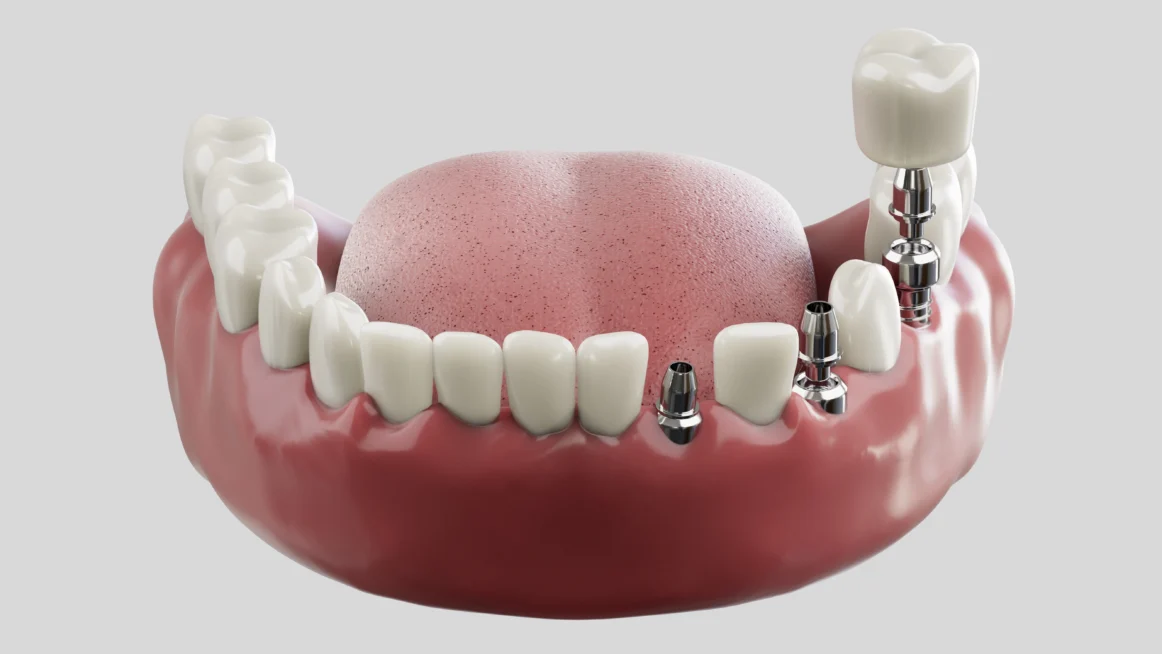
Zirconia (zirconium dioxide) is a strong, white ceramic already used widely in dental crowns and bridges. A zirconia implant is a root made from this ceramic rather than titanium, placed into the jaw to hold a crown, bridge or full arch — exactly the same job as a standard dental implant. The difference is the material and, often, the design: many zirconia implants are one-piece (the post and abutment are a single unit), which affects how and when the final tooth is fitted.
Because they contain no metal, they’re sometimes called ceramic implants or metal-free implants — the same thing.
Zirconia vs Titanium Dental Implants
This is the comparison that matters, so here it is straight.
Success and survival. Titanium remains the most-documented implant material with decades of data. Systematic reviews comparing the two find zirconia performs comparably to titanium in the short-to-medium term, with no statistically significant survival difference at 12 months in several studies.¹ Reported zirconia survival is roughly 93% at one year and ~98% at two years, easing somewhat over five years as the longer-term evidence is still maturing.² Some reviews still give titanium a slight edge on long-term survival and marginal bone stability.³ In short: zirconia is a valid, well-performing alternative, while titanium keeps the longest proven record.
Looks. This is zirconia’s real advantage. Because it’s white, it can’t show as a grey shadow through thin gums the way a metal post sometimes can — useful in the front of the mouth or for patients with a thin gum biotype.⁴
Gum health. Zirconia’s smooth ceramic surface attracts less bacterial plaque, which may support healthier gums around the implant.⁴
Design flexibility. Titanium’s two-piece systems give the surgeon more flexibility in angled or complex cases; one-piece zirconia is less forgiving and isn’t ideal for every situation.
Metal sensitivity. True titanium allergy is rare, but for patients who specifically want a metal-free mouth, zirconia is the answer.
Are Zirconia Implants Safe?
Yes — zirconia is highly biocompatible and the body tolerates it well, with osseointegration (bonding to bone) comparable to titanium in the studies above.¹ ⁴ As with any implant, success depends far more on planning, bone quality and aftercare than on the brand name. The honest caveat is simply that titanium has a longer track record, so zirconia is best chosen for a clear reason rather than by default.
Zirconia Dental Implants Cost
Zirconia implants typically cost more than titanium because the material and manufacturing are more demanding. As with all implant treatment, the bigger lever on price is where you have it done: for international patients, ceramic implants placed in Turkey can cost far less than private prices at home, using the same premium systems. Our breakdown of what dental implants cost in Turkey and what changes the price explains the figures — and your exact quote depends on the material, number of implants and any bone work, confirmed from a scan first.
Who Should Consider Zirconia Implants?
Zirconia is most worth considering if you:
- Want a metal-free restoration on principle.
- Have thin gums or a high smile line where a grey shadow would show.
- Are replacing a visible front tooth where the gumline aesthetic is critical.
- Prefer a ceramic surface for gum-health reasons.
Titanium remains an excellent, often more flexible choice — especially for angled placements or full-arch work like All-on-4, where its two-piece systems and long track record shine. The right material is a clinical decision, not a marketing one.
Recovery and Aftercare
Healing after a zirconia implant is much like any implant: mild swelling and soreness for a few days, a soft diet at first, then integration over the following months before the final tooth. The realistic week-by-week implant recovery timeline applies directly. As always, keeping the area clean and attending check-ups is what protects the result long term.
Frequently asked questions
Are zirconia implants better than titanium?
Do zirconia implants last as long as titanium?
Are zirconia implants safe / hypoallergenic?
Why do zirconia implants cost more?
Can zirconia be used for All-on-4 or full arches?
Not sure whether titanium or zirconia is right for you? DentSpa plans every implant case from a 3D scan and recommends the material that genuinely suits your bone, gums and goals — honestly, not by default. Book a free consultation with our implant specialists at the European award-winning clinic that has treated 50,000+ international patients.
Sources
- Survival and success of zirconia compared with titanium implants: a systematic review and meta-analysis. PMC. 2023. https://pmc.ncbi.nlm.nih.gov/articles/PMC10630218/
- Clinical performance of zirconium implants compared to titanium implants: systematic review and meta-analysis of randomized controlled trials. PMC. 2024. https://pmc.ncbi.nlm.nih.gov/articles/PMC10026713/
- Comparative clinical behavior of zirconia versus titanium dental implants: systematic review and meta-analysis of RCTs. PubMed. 2024. https://pubmed.ncbi.nlm.nih.gov/39124755/
- A clinical and radiographic evaluation of zirconia dental implants: 10-year follow-up. PMC. 2022. https://pmc.ncbi.nlm.nih.gov/articles/PMC8739170/
- Zirconia implants: a promising alternative to titanium? (review). PubMed. 2021. https://pubmed.ncbi.nlm.nih.gov/34561660/















 70%
70%