You only need a sinus lift when there isn’t enough bone height in your upper back jaw to hold a dental implant safely. It’s not required for everyone — it’s specific to the upper molar and premolar area, where the air-filled sinus sits close to the jaw and bone tends to thin after tooth loss.¹ If a scan shows you have enough bone, you won’t need one. Here’s exactly when it’s necessary, who’s a candidate, and what to expect.
It’s a common step on the way to dental implants in the upper jaw, and a routine, predictable one — so if you’ve been told you might need it, there’s no reason to worry. Let’s break it down.
What Is a Sinus Lift?
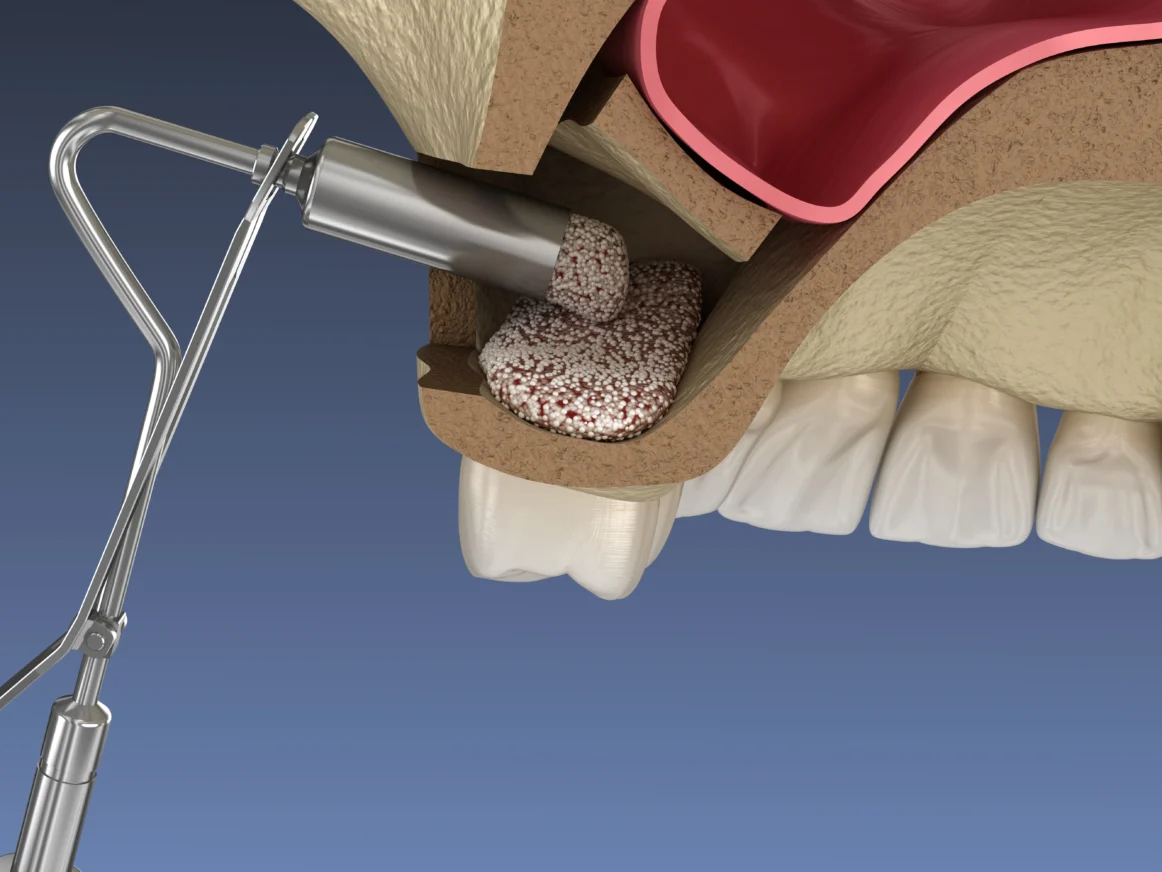
Your maxillary sinuses are air-filled cavities above your upper teeth. When you lose upper teeth, the bone beneath them gradually thins.¹ A sinus lift (also called sinus augmentation) gently raises the sinus membrane and adds graft material in the space, so your body grows new bone — creating enough height to anchor an implant. It’s the standard fix when the upper back jaw is short on bone.
Do You Need a Sinus Lift Before Dental Implants?
Only a scan can confirm it, but you’re likely to need one if:
- The sinus sits too close to the jaw surface — placing an implant without a lift could push it into the sinus cavity.
- You’ve lost upper back teeth — the bone there often shrinks after the tooth is gone.¹
- There isn’t enough bone height to hold the implant securely.
If the shortfall is about width or general jaw bone rather than the sinus, a different approach may suit you better — see your options when there isn’t enough bone for implants.
Who Is a Candidate for a Sinus Lift?
A sinus lift is typically right for people who:
- Have lost one or more teeth in the upper jaw.
- Have lost bone there to gum disease or trauma.
- Have a naturally thin upper jawbone or a low-hanging sinus.
It comes down to one question — is there enough solid bone between the ridge and the sinus? — which is exactly what your 3D scan answers.
What Happens During the Procedure (in Brief)?
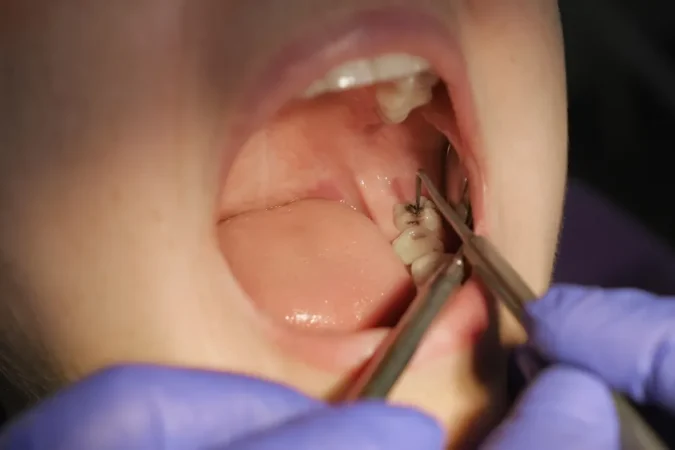
In short: under local anaesthesia, the surgeon accesses the bone, gently lifts the sinus membrane, places graft material in the space, and closes the site. New bone forms over the following months before the implant goes in. For the full step-by-step and the month-by-month healing, see our detailed guide to how a sinus lift is done and how it heals.
Is a Sinus Lift Safe?
Yes — it’s a well-established, predictable procedure. Implants placed in combination with sinus floor elevation show survival rates well above 90%, with low complication rates across the main techniques.²³ As with any surgery, success depends on careful planning and an experienced surgeon, which is why the assessment beforehand matters as much as the operation itself.
Frequently asked questions
Does everyone need a sinus lift for implants?
Can you get implants without a sinus lift?
How long does healing take after a sinus lift?
Is a sinus lift safe and successful?
Why Have Your Sinus Lift and Implants at DentSpa?
A sinus lift is exactly the kind of step where planning and experience decide the outcome. DentSpa assesses your sinus and bone from a 3D scan, performs the lift and the implant under one roof, and handles travel and aftercare for international patients end to end. Recognised as the Best Clinic in Dentistry in Europe at the European Awards in Medicine 2024 and trusted by 50,000+ international patients, the team will tell you honestly whether you need a sinus lift at all. Book a free consultation and send a recent scan to find out.
Sources
- Post-extraction dimensional changes of the alveolar ridge: a systematic review and meta-analysis. PubMed. 2021. https://pubmed.ncbi.nlm.nih.gov/33067890/
- Survival rate of dental implants placed using various maxillary sinus floor elevation techniques: a systematic review and meta-analysis. PMC. 2022. https://pmc.ncbi.nlm.nih.gov/articles/PMC9416960/
- Maxillary sinus floor augmentation: a review of selected treatment modalities. PMC. 2017. https://pmc.ncbi.nlm.nih.gov/articles/PMC5676313/











 70%
70%