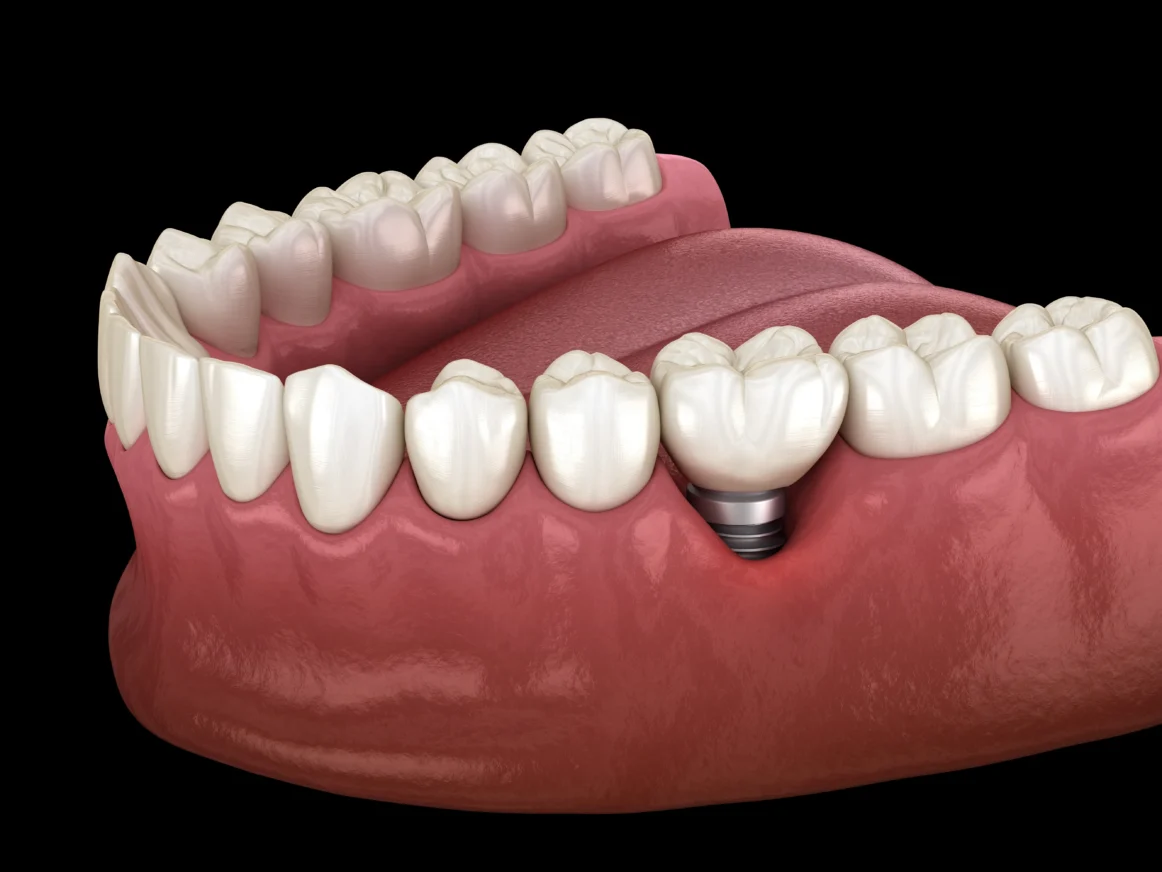
Peri-implantitis is an infection and inflammation of the gum and bone around a dental implant that, untreated, leads to bone loss and can cause the implant to fail.¹ The good news: it is treatable, and caught early it can usually be stopped without losing the implant. This guide explains the warning signs, the non-surgical and surgical treatment options (including laser), what treatment costs, and what to do if you had implants abroad and something now feels wrong.
Warning Signs of Peri-Implantitis
Peri-implantitis often develops quietly, so knowing the signs matters. See a dentist promptly if you notice:
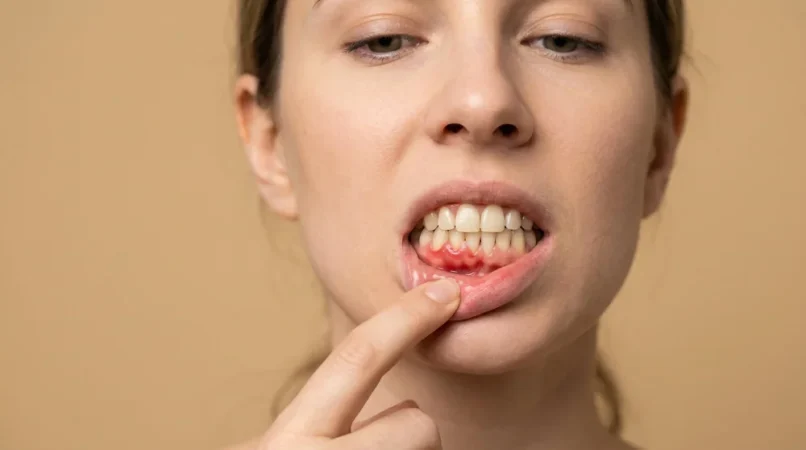
- Red, swollen or tender gum around the implant.
- Bleeding or pus when brushing or pressing the area.
- Gum recession, or the implant/crown starting to look longer.
- A bad taste or bad breath that won’t clear.
- The implant feeling loose — a late, serious sign.
Caught early these are very manageable; left alone they progress to bone loss. If you’re unsure whether what you feel is normal, our guide to the warning signs of dental implant failure explains what to watch for.
Mucositis vs Peri-Implantitis: Why Early Matters
There are two stages, and the difference decides how easy treatment is:
- Peri-implant mucositis — inflammation of the gum only, with no bone loss yet. This early stage is usually reversible with a professional clean and better hygiene.
- Peri-implantitis — the inflammation has reached the bone and started to destroy it. This needs active treatment to stop it and save the implant.¹
Peri-implantitis is common — reviews estimate it affects roughly one in five implant patients² — which is exactly why regular check-ups and acting early matter so much.
How Is Peri-Implantitis Treated?
Treatment is stepped — the dentist starts with the least invasive option that will control it, based on severity:¹ ³
- Non-surgical (first line): thorough professional cleaning to remove bacteria and deposits from the implant surface, using special titanium or plastic instruments, ultrasonic scalers or air-polishing — sometimes with antibiotics or antiseptic rinses.
- Laser therapy: a laser can be used to decontaminate the implant surface and reduce bacteria as part of treatment.
- Surgical (for moderate–severe cases): the gum is lifted to clean the implant thoroughly, the surface is decontaminated (sometimes smoothed — “implantoplasty”), and where bone has been lost a bone graft may rebuild support.¹
The earlier it’s treated, the more likely the implant is saved. In advanced cases where too much bone is lost, the implant may need removing and replacing after healing.
What Causes Peri-Implantitis?
It’s driven by bacterial plaque building up around the implant, but some things raise the risk: poor oral hygiene, smoking, uncontrolled diabetes, a history of gum disease, and poorly positioned implants or ill-fitting crowns that trap plaque. Skipped maintenance visits are a common thread — which is why aftercare isn’t optional. See how ongoing after-treatment care keeps implants healthy.
Peri-Implantitis Treatment Cost in Turkey
Cost depends entirely on the stage: an early non-surgical clean is relatively inexpensive, while surgical treatment with grafting costs more. In Turkey, both are typically well below UK or US private prices, which is one reason patients who developed problems after treatment elsewhere come here to have it sorted. Because it’s case-by-case, the honest answer is an assessment first — send photos and any X-rays for a plan and a quote.
Prices vary with severity; ask for an itemised quote after assessment.
Had Implants Abroad and Something Feels Wrong?
If you had implants elsewhere and now have swelling, bleeding, pus, a bad taste or a loose implant, don’t wait — peri-implantitis is far easier to treat early. DentSpa offers a free remote assessment from your photos, wherever you were originally treated, and will tell you honestly whether it needs attention and what treatment involves. You can also read whether dental implants are safe and how risks are managed.
Worried about an implant? Send DentSpa a photo and our specialists will assess it and give you an honest plan and quote — at a European award-winning clinic in Istanbul that has treated 50,000+ international patients, with a dedicated after-care team. Book a free consultation or message us on WhatsApp.
Frequently asked questions
What is peri-implantitis?
Can peri-implantitis be cured or reversed?
How is an infection around a dental implant treated?
Is laser treatment used for peri-implantitis?
How much does peri-implantitis treatment cost?
I had implants abroad and my gum is swollen – what should I do?
Sources
- Definition, etiology, prevention and treatment of peri-implantitis — a review — PMC — https://pmc.ncbi.nlm.nih.gov/articles/PMC4164121/
- Peri-Implantitis: A Clinical Update on Prevalence and Surgical Treatment Outcomes (mean prevalence ~22%) — PMC — https://pmc.ncbi.nlm.nih.gov/articles/PMC7962026/
- Non-Surgical Therapy for Peri-Implant Diseases: a Systematic Review — PMC — https://pmc.ncbi.nlm.nih.gov/articles/PMC5100638/













 70%
70%