Table of content
Table of content
Most people choose veneers because they want to feel better about their smile.
But what they usually worry about after that is much simpler:
Will this actually last?
Some patients keep their veneers for many years. Others need changes much sooner.
The difference usually isn’t just the material — it’s how the bite works, how healthy the gums are, and how much pressure the teeth take every day.
That’s what really decides how long veneers stay in good shape.
What Are Dental Veneers — and What Are They Meant to Fix?
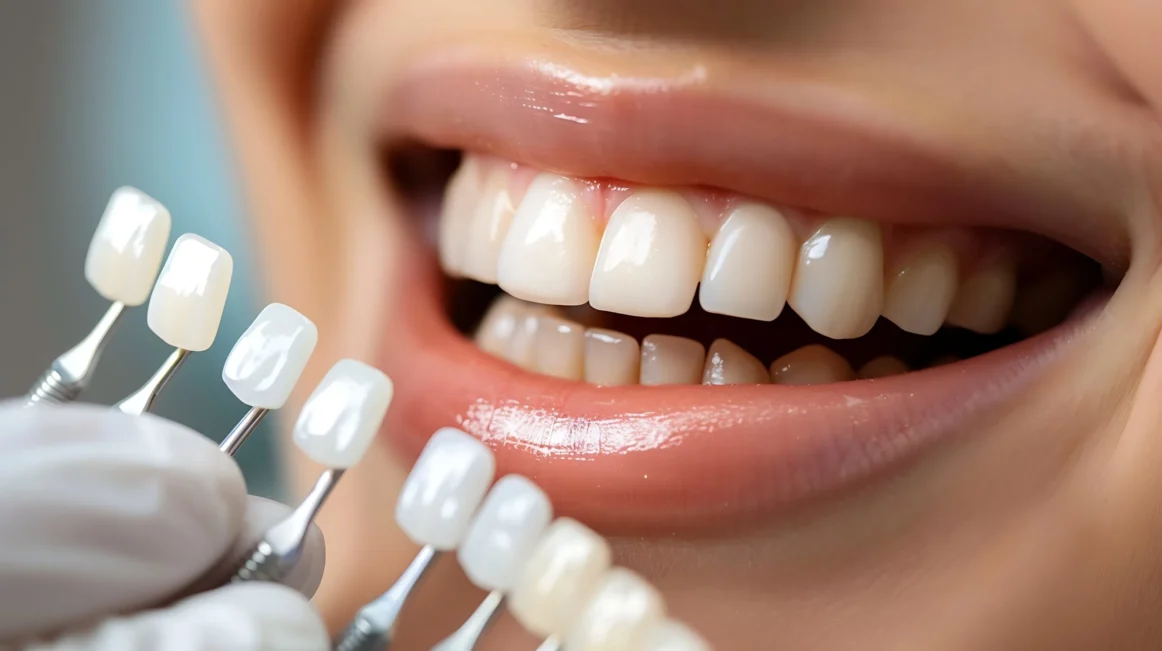
Dental veneers are thin shells bonded to the front surface of teeth to improve appearance and overall balance. They’re commonly used to correct:
- deep or uneven discoloration
- chipped or worn edges
- small gaps between teeth
- mild crowding
- irregular tooth shapes
When veneers are designed properly, they don’t just improve individual teeth. They improve how the whole smile fits the lips and face. That’s why good veneer treatment starts with facial and bite evaluation — not just shade selection.
In modern dentistry, two main types of veneers are used:
- Porcelain (ceramic) veneers
- Composite resin veneers
Both can look very good at first. Over time, though, they behave quite differently.
Porcelain veneers are made in a dental laboratory using high-strength ceramics that closely mimic natural enamel. They resist staining, stay smooth, and hold their color for many years.
Composite veneers are built directly on the teeth using tooth-colored resin. They’re quicker and more affordable, but they tend to stain more easily and lose polish faster with daily use.
That difference matters when you’re thinking beyond year one.You can learn more about the differences between the two types — and which one might suit your case here.
Do Veneers Damage Natural Teeth?
This is one of the most common concerns, and it deserves a straight answer.
Veneers do not damage teeth when they are planned conservatively and placed correctly.
That said, porcelain veneers are usually not fully reversible. A very thin layer of enamel is often removed to allow proper bonding and natural proportions. This preparation is shallow and does not affect the tooth nerve or overall strength, but it does mean that once veneers are placed, the teeth will always need some form of coverage in the future.
Problems don’t happen because veneers exist. They happen when veneers are used in the wrong situations or placed with poor technique.
Teeth are at risk when there is:
- excessive tooth reduction
- weak bonding technique
- untreated gum disease
- bite problems that are ignored
Professional treatment planning focuses on preserving as much natural enamel as possible and placing veneers only when they are medically appropriate. In some patients, veneers can even help protect enamel that is already weakened by erosion or wear.
Veneers aren’t shortcuts. They’re restorations — and they should fit into a long-term oral health plan.
How Long Do Porcelain Veneers Usually Last?
In everyday practice, porcelain veneers tend to last a long time. Ten years is common, and many patients go much longer than that without any problems.
They hold up because porcelain doesn’t pick up stains easily and it keeps a smooth surface. It also stays strong in very thin layers, which is why it’s often used on front teeth where you want something that looks natural but can still handle daily use.
Long-term clinical studies also report high survival rates at the 10-year mark for properly bonded porcelain veneers in healthy patients — which is why planning and bonding quality matter as much as the ceramic itself.
Composite veneers, by comparison, usually last 4 to 7 years before they need repair or replacement. They’re more prone to surface wear, small fractures, and discoloration. That doesn’t make them a bad option — they can be very useful in certain cases — but expectations should match their shorter lifespan.So when patients ask, “How long do veneers last?” the real answer is:
we look at which type of veneer, and then at how that veneer will be used.
What Actually Determines How Long Veneers Last?
In practice, veneers almost never fail “for no reason.” When something goes wrong early, there is usually a clear explanation behind it.
- Veneer material
Porcelain lasts longer than composite, both structurally and visually. It resists staining, surface roughness, and shape changes much better over time. Composite is more flexible and easier to repair, but it breaks down faster under daily chewing and temperature changes. If durability is the main priority, porcelain is usually the safer choice. - Bite and jaw function
This is one of the most underestimated causes of veneer problems. Grinding, clenching, and misaligned bites place higher pressure on front teeth. Over time, that pressure increases the risk of chipping or cracking — even with strong ceramics.
That’s why professional veneer planning often includes bite analysis, jaw movement assessment, and sometimes protective night guards after treatment. Veneers should work with your bite, not against it. - Gum health and oral hygiene
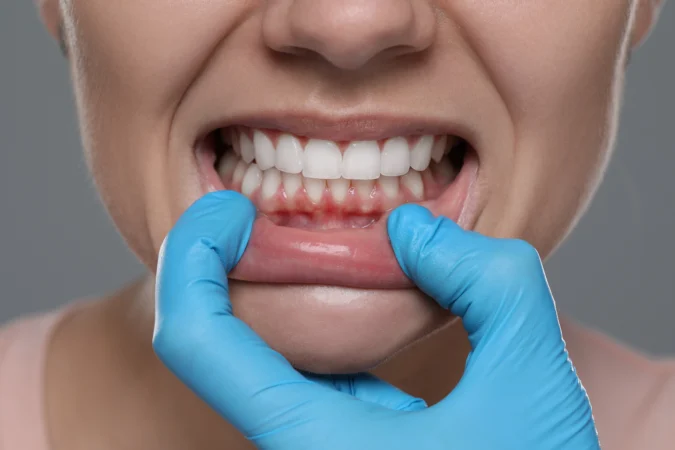
Veneers themselves do not decay, but the teeth underneath still can. If plaque builds up at the edges, it can lead to gum inflammation, decay near the margins, and weakening of the bonding over time.
Good daily care makes a big difference: gentle brushing, careful flossing around veneers, non-abrasive toothpaste, and regular professional cleaning. - Everyday habits
Many patients damage veneers without realizing it. Opening packaging with your teeth, chewing ice, biting nails, or holding objects between your teeth creates repeated micro-stress that weakens the veneer and the bonding layer. Veneers are strong — but they’re not designed for impact or tool-like use. - Clinical skill and laboratory quality
Even excellent materials can fail if they’re poorly designed, incorrectly bonded, or placed on unstable foundations. Preparation technique, scan/impression accuracy, shade matching, and cementation protocols all matter. The quality of the dental laboratory also affects fit and margin strength — which directly impacts longevity.
This is why choosing an experienced cosmetic team matters as much as choosing porcelain.
Cost vs Long-Term Value
Many patients naturally focus on the initial cost of veneers. What matters more is how often they’ll need repairs or replacement over time.
Porcelain veneers usually mean fewer replacements, better long-term aesthetics, and less maintenance. Composite costs less at first, but repeated polishing, repairs, or replacement can increase overall cost across several years.
This is why treatment choice should be based on lifestyle, bite function, and long-term expectations — not price alone.
Why Many Patients Consider Dental Tourism
Once patients understand how much planning and precision veneers require, many start asking where they can receive this level of care without extremely high local costs.
Patients who travel for dental treatment usually aren’t looking for shortcuts.
They’re looking for clinics that can organize the whole process properly, from diagnosis to final checks, within a limited time.
When the planning is careful and the team is used to treating international patients, dental travel becomes less about price and more about access to experienced cosmetic care that’s delivered safely and responsibly.
Why Choose DentSpa for Veneers
Over the years, DentSpa has treated more than 50,000 patients, many of whom traveled specifically for cosmetic and restorative dental care. That volume of real clinical cases has shaped how veneers are planned — with strong emphasis on long-term function, not just day-one aesthetics.
Patients choose DentSpa because:
- Care is planned by a multidisciplinary team
Cosmetic dentists work alongside periodontal and prosthodontic specialists when needed, so gum health, bite forces, and long-term stability are considered from the start. - Smile design is personalized
Veneers are designed around facial proportions, lip movement, and bite — not copied from standard templates. - Tooth structure is preserved whenever possible
Preparation is kept conservative to protect natural enamel and support strong, stable bonding. - High-quality ceramic systems are used
Materials are selected for strength, natural translucency, and long-term color stability — not just brightness. - Full diagnostics happen before cosmetic work begins
Bite alignment, gum condition, and jaw movement are assessed to reduce the risk of future chipping or discomfort. - International patients receive structured care
Treatment schedules, healing time, and post-treatment guidance are coordinated for patients traveling from abroad. - Clear communication in your own language
Multilingual medical teams and patient coordinators ensure treatment options, risks, and aftercare instructions are fully understood — not lost in translation, especially for complex cosmetic and restorative cases. - Expectations are discussed honestly
Patients are informed about maintenance, lifespan, and future replacement needs — no shortcuts and no unrealistic promises.
Placing veneers is not the hardest part.
Making them last is where real clinical experience matters.
That’s what DentSpa focuses on.
Veneer Longevity Starts Before Placement
How long veneers last is largely determined before they are ever bonded to your teeth.
Diagnosis, bite analysis, material choice, and preparation design often matter more than daily brushing alone. For most patients, what they want isn’t just a nicer smile — it’s the peace of mind of knowing it won’t turn into another problem to fix a few years later.
If you’re considering veneers, the most important question is not only which veneer, but how your case will be planned.
A smile should look beautiful — and feel comfortable — for many years, not just for the first few photos.
If you want answers before you commit, start with a conversation — not a contract.
Our dental team will walk you through your options and help you understand what will truly last for your bite, your teeth, and your lifestyle. Schedule your free consultation with DentSpa today.
Frequently asked questions
What’s the biggest mistake patients make after getting veneers?
Using their teeth like tools. Damage commonly comes from opening packaging, biting threads, chewing ice, and cracking hard foods. Veneers are strong, but they’re not designed for that kind of force. Treating them gently makes a bigger difference than most people expect.
Are expensive veneers always better?
Not always — but good veneers are rarely cheap. Longevity depends more on diagnosis, dentist experience, laboratory quality, and bonding technique than on branding. You can have costly veneers that fail early if planning is poor, and moderately priced veneers that last very well when placed carefully.
Does grinding always mean veneers will fail?
No, but it increases the risk. Grinding and clenching place higher pressure on front teeth, especially at night. That’s why dentists may recommend night guards, bite adjustments, or stronger ceramic choices. With the right precautions, many patients who grind still do very well long-term.
Do veneers get weaker as they age?
Not really — porcelain itself doesn’t “wear out” the way people sometimes imagine. It doesn’t suddenly get soft or stop working after a certain number of years.
What usually changes over time isn’t the veneer, but what’s around it: the bonding layer, the tooth underneath, and the gum line. Those can slowly shift, especially if there’s grinding, gum inflammation, or small areas that are hard to clean.
That’s why regular check-ups matter. Dentists can spot tiny issues early — long before they turn into a crack, a loose veneer, or something that needs full replacement.
Think of veneers less like something that expires, and more like part of your natural teeth. They don’t need panic — they just need normal, sensible monitoring.
Do all veneers need to be replaced at the same time?
Not at all. Each veneer is evaluated individually. Only the affected veneers usually need replacement. Some patients choose to replace several at once for cosmetic reasons, but medically, replacement is based on condition — not the whole set.
If a veneer chips, can it be fixed?
Honestly, it depends on the type.
If it’s composite, a small chip is usually not a big issue. Most of the time it can be smoothed out or touched up pretty easily.
If it’s porcelain, that’s different. When porcelain chips, fixing it rarely works well. Even if it looks okay for a while, it usually doesn’t hold up, so replacing the veneer is the safer option.
But this isn’t something most patients deal with. When veneers are planned properly and the bite is checked, chipping is actually pretty rare.
Do veneers on front teeth last longer?
Often, yes. Front teeth aren’t used for heavy chewing, so they experience less constant pressure. However, they’re more exposed to accidents — biting very hard foods, nail biting, or holding objects between the teeth can still cause damage. Longevity depends on both location and behavior.
How long should I expect my veneers to last?
Most patients fall into these ranges:
- Porcelain veneers: usually 10 to 15 years, sometimes longer
- Composite veneers: usually 4 to 7 years
But this isn’t like a warranty that suddenly expires. Some patients keep veneers for nearly two decades, while others need repairs earlier due to grinding, gum problems, or heavy wear. Planning and habits make a big difference.
What does the “4–8–10 rule” for veneers mean?
It’s not a medical formula. It’s a simple way some dentists explain why veneers don’t all last the same amount of time.
Roughly speaking: if someone has strong bite forces or grinds their teeth, composite veneers may start needing replacement after about 4 years. With gentler bite patterns and good care, some composite or mixed cases may last closer to 8 years. Porcelain veneers, when well planned and protected, often last 10 years or longer.
It’s not about chasing a number. It’s about understanding that material, bite, and habits all matter.













 70%
70%