Table of content
Table of content
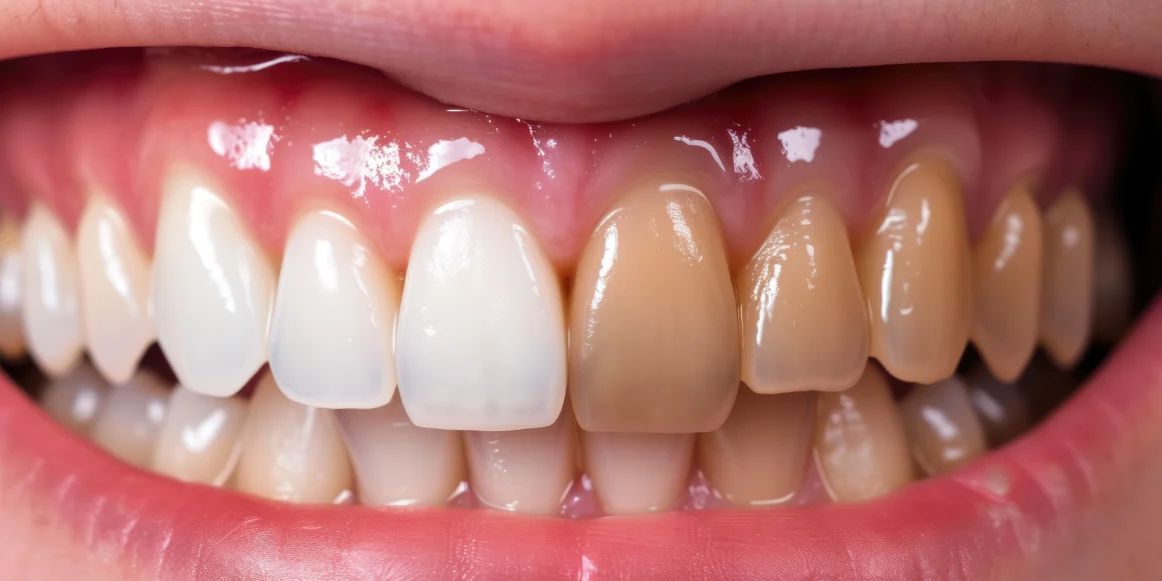
You don’t usually notice brown stains on your teeth all at once. It’s more annoying than that. One day you’re brushing, you look in the mirror, and something just feels… off. Maybe it’s a darker line near the gum line. Maybe it’s a spot between two teeth. At first you tell yourself it’s nothing. Bad lighting. Toothpaste foam. Whatever. Then you see it again a few days later. And that’s when it starts to bug you.
Most people have the same thoughts at that point. Is this just from coffee or food? Did I mess something up? Is this only about how my teeth look, or is there actually a problem? The frustrating part is that there isn’t one simple answer. Some brown stains really are just sitting on the surface of the teeth, and those are usually easier to deal with. Others come from inside the tooth itself, and those don’t go away just because you buy a new toothpaste or brush a bit harder.
If you don’t know which one you’re dealing with, it’s very easy to keep trying random fixes and get nowhere. That’s why it helps to first understand where the stain is coming from, what’s actually safe to try on your own, and when it’s better to let a dentist take a proper look and tell you what will really work.
Why Do Brown Stains Appear on Teeth?
Teeth are hard, yes, but they are anything but indestructible. Teeth have a hard outside called enamel. It’s as hard as a glass or a steel razor blade, but there are spaces in this hard outside, where colors from coffee, tea, or food can seep deep inside them and stay a while.
Underneath that outer layer, we have a very hard layer that we call dentin. Dentin isn’t really as white as our enamel is, so when the enamel gets thinner, or more stained, that darker shade underneath starts to show through. That’s why teeth don’t just look “dirty” sometimes—they can actually look more yellow or brown even if you’re brushing regularly.
Some of the most common reasons people experience brown discoloration on teeth include:
- Regular coffee, tea, red wine intake, or cola
- Presence of plaque or tartar, particularly around the gum line
- Smoking or tobacco usage
- Inconsistent brushing and/or flossing
- Change in enamel due to age or acid wear
- Certain medications or too much fluoride when tooth development takes place
Tooth discoloration, according to the American Dental Association (ADA) is a very common phenomenon and can be caused both by external factors, which come into contact with the teeth, and internal factors within the structure of the teeth themselves.
Extrinsic vs Intrinsic Tooth Stains: Why This Matters
Not all brown stains are the same, and that’s why some treatments work for one person but not for another.
Extrinsic stains are surface stains. They sit on the outside of the enamel and are usually linked to:
- Dark-colored foods and drinks
- Smoking
- Plaque and tartar buildup
These often show up as brown stains on teeth near the gums or between teeth, where brushing doesn’t always reach perfectly.
Intrinsic stains, on the other hand, are inside the tooth. They happen when:
- The tooth structure changes
- The enamel becomes thinner
- The inner dentin darkens
- Past trauma or certain medications affect tooth color
Intrinsic stains are usually harder to treat with simple cleaning or over-the-counter products. They often need professional whitening or cosmetic solutions like veneers or crowns.
Sudden Brown Stains on Teeth: What Could Be Going On?
If you notice sudden brown stains on teeth, especially near the gum line, it’s often related to:
- Fast tartar buildup
- Changes in brushing or flossing habits
- Gum inflammation
- Acid erosion or enamel weakening
Sometimes it’s purely surface staining. Other times, it can be a sign that plaque is turning into tartar or that the gums are becoming irritated. Either way, new or quickly changing stains are a good reason to have your teeth checked, just to be safe.
How to Get Rid of Brown Stains on Teeth
There isn’t one single solution that works for everyone. The right option depends on how deep the stain is and how healthy your teeth and gums are.
Professional Dental Cleaning
For many people, the first and most effective step is a professional dental cleaning. This can remove:
- Surface stains
- Tartar near the gum line
- Buildup between teeth
Often, people are surprised by how much better their teeth look after a proper cleaning alone.
Teeth Whitening for Brown Stains
If the stains are mostly surface stains or mild internal discoloration, professional teeth whitening can help lighten the overall tooth color. Whitening works by breaking down stain molecules in and on the enamel.
Whitening is usually a good option for:
- General tooth discoloration
- Yellow to light brown stains
- Teeth that are otherwise healthy
Very dark or deep intrinsic stains may not respond well to whitening alone.
If you want to learn the difference between teeth cleaning and teeth whitening, check our article here. Also, don’t forget that a free consultation call with one of our professionals can help you decide best what suits your case.
Microabrasion
In some cases, dentists use microabrasion, a technique that gently removes a very thin layer of enamel to reduce certain surface stains. This can be helpful for specific types of discoloration that don’t improve much with whitening.
Veneers and Crowns
When stains are deep inside the tooth or when the tooth also needs cosmetic or structural improvement, porcelain veneers or crowns may be a better solution.
These are usually considered when:
- Discoloration is severe or uneven
- Whitening doesn’t give satisfying results
- The tooth needs shape or strength correction
Veneers cover the front surface of natural teeth, while crowns cover the entire tooth.
Restorative Fillings
If brown discoloration is related to old fillings, decay, or damaged areas, restorative fillings may be part of the treatment plan to restore both function and appearance.
Safe Home Care: What Helps (and What Can Hurt)
Daily habits make a real difference when it comes to preventing and reducing stains:
- Brush your teeth twice a day
- Floss daily
- Use whitening toothpaste gently
- Rinse after dark-colored foods and drinks
- Keep up with regular dental check-ups
What’s better to avoid:
- Don’t overuse baking soda or abrasive powders
- Don’t scrub hard trying to “polish” stains away
- Don’t rely on DIY whitening trends from social media
Abrasive methods can damage enamel, which can make teeth more sensitive and sometimes even more discolored over time.
Brown Stains on Teeth Treatment in Turkey
For many patients, professional care is the most reliable way to deal with stubborn or long-standing stains. This is why brown stains on teeth treatment in Turkey has become an option people consider, especially when they’re looking for high-quality care with more accessible pricing.
Depending on the case, treatment may include:
- Professional cleaning
- Teeth whitening
- Microabrasion
- Veneers or crowns
What matters most is choosing a clinic that focuses on proper diagnosis first, rather than offering the same cosmetic solution to everyone.
Why Choose Dentspa Dental Clinic in Turkey for Brown Stains
The decision to receive dental care in another country is not like deciding where to have a holiday! People need to feel confident that they can rely on: the accuracy of what they are being told in terms of their dental condition; the safety of treatments; and the standard of care they will continue to receive when everything is done and dusted! This is why at Dentspa Dental Clinic in Turkey, nothing is rushed and nothing begins without careful planning.
Prior to any form of treatment, all cases are individually considered and planned using digital programs such as Digital Smile Design or Dental GPS. This allows for an explanation to be given regarding what happens and why it happens. The process isn’t based on any formula, but rather very specific details:
- your face and smile proportions,
- your bite and tooth structure,
- and your actual dental needs, not just what looks good in photos.
Similarly, experience plays a role, especially in the case of international patients. Having treated more than 50,000 patients around the world, the staff at Dentspa knows how to deal with both simple and complicated cases. Of course, this experience translates into the way in which care is actually provided. For example, the care provided incorporates a team-oriented and specialized way of addressing problems, involving the relevant expertise depending on what the actual problem really is.
While also winning the Top European Clinic Award 2024, DentSpa has a profile of testimonials that stands out. For patients coming from all around the world, it is not only the dentist chair that makes them feel comfortable, but how they get picked up at the airport, how the dental schedule is made for them, and how everything is being explained to them in their own language for less confusing and more confident decisions.
Most of all, decisions about how to treat patients are governed by one sole dictate: in every case, the patient’s ultimate oral health will always be the priority. Whatever form treatment may take — cleaning, whitening, veneers, or other procedures — the objective is not to achieve some fleeting, superficial improvement, but one that honors the health and nature of natural teeth.
It’s this combination of medical planning, dental experience, and mindful concern for patient comfort that eventually makes dental treatment possible—rather than something people might postpone indefinitely.
Keeping Your Teeth Looking Good After Treatment
Once stains are treated, results usually last much longer with consistent care:
- Brush and floss daily
- Be mindful of staining foods and drinks
- Visit your dentist for regular cleanings
- Follow any specific advice given for your teeth
Small habits, done regularly, often make the biggest long-term difference.
If you’re not sure why you have brown stains on your teeth — or whether they’re just surface stains or coming from deeper changes in the tooth — the best place to start is with a proper dental check-up. At Dentspa Dental Clinic, you can book a free consultation to have your teeth assessed, talk through your treatment options, and get a clear, honest plan based on your tooth structure and oral health, without any pressure.
Taking care of tooth discoloration early is one of those simple steps that can protect both your smile and your teeth for the long term.
Frequently asked questions
Is professional treatment safe for enamel?
Yes, provided it is done under dental supervision. This is because your dentist will choose what kind of treatment to use depending on the state of your enamel and overall oral health. Therefore, the overall aim is to enhance the color while maintaining good oral health.
Is whitening toothpaste or a home kit sufficient?
These products may help a bit with small surface stains, possibly even with some thought in choosing the right products for the cause. However, they will probably have little overall effect on deeper stains. Additionally, some of the abrasive products can even remove the enamel of the teeth with regular use, making sensitivity and stains long-term issues.
How to get rid of brown spots on teeth?
Of course, this all depends on the depth of this stain. If this stain has an origin beyond the surface, dentists can possibly offer their patients a variety of options, including microabrasions, veneers, and crowns.
Why do I have brown stains around my gum line?
This is an area which is just a little harder to keep immaculately clean. Plaque often builds up in this area, which might cause tartar to eventually form; accumulating various stains from the food or drinks you consume. Since a toothbrush cannot always clean this area well, a stain around the gum line is very common.
What causes brown stains on teeth?
It can be a combination of daily habits and how your teeth are designed. For instance, coffee, tea, red wine, and some types of teeth can all slowly deposit color on your teeth. In addition to that, the plaque and tartar buildup can hold all of this color and make the stain more prominent. In some cases, the color does not remain on the surface of the tooth; instead, it can be an inherent change in the structure of the tooth. This is why some stains are easy to remove and some are more difficult to remove.














 70%
70%