
Table of content
Table of content
Teeth Whitening in Istanbul, Turkey: What to Expect Before You Book
Most people researching teeth whitening in Istanbul have already made their decision. They know the prices are lower, they’ve seen before-and-after photos, and they’ve looked at a few clinics. What they’re actually trying to figure out at this stage is whether it will work for their specific situation — and whether the results are worth travelling for.
That’s what this covers.
Does professional teeth whitening actually work — and how?
Professional teeth whitening works by applying high-concentration bleaching agents — typically hydrogen peroxide or carbamide peroxide — directly to the tooth surface. These whitening agents penetrate the enamel and break apart the chemical bonds holding stain molecules together, lightening the underlying tooth structure rather than just the surface.
The key difference between professional and over-the-counter treatments isn’t the chemistry — it’s the concentration. Products available without a prescription are legally limited in how much hydrogen peroxide they can contain. In a dental clinic, the concentration is significantly higher, and the process is controlled by a clinician who can monitor sensitivity and ensure the gum tissue is properly protected throughout.
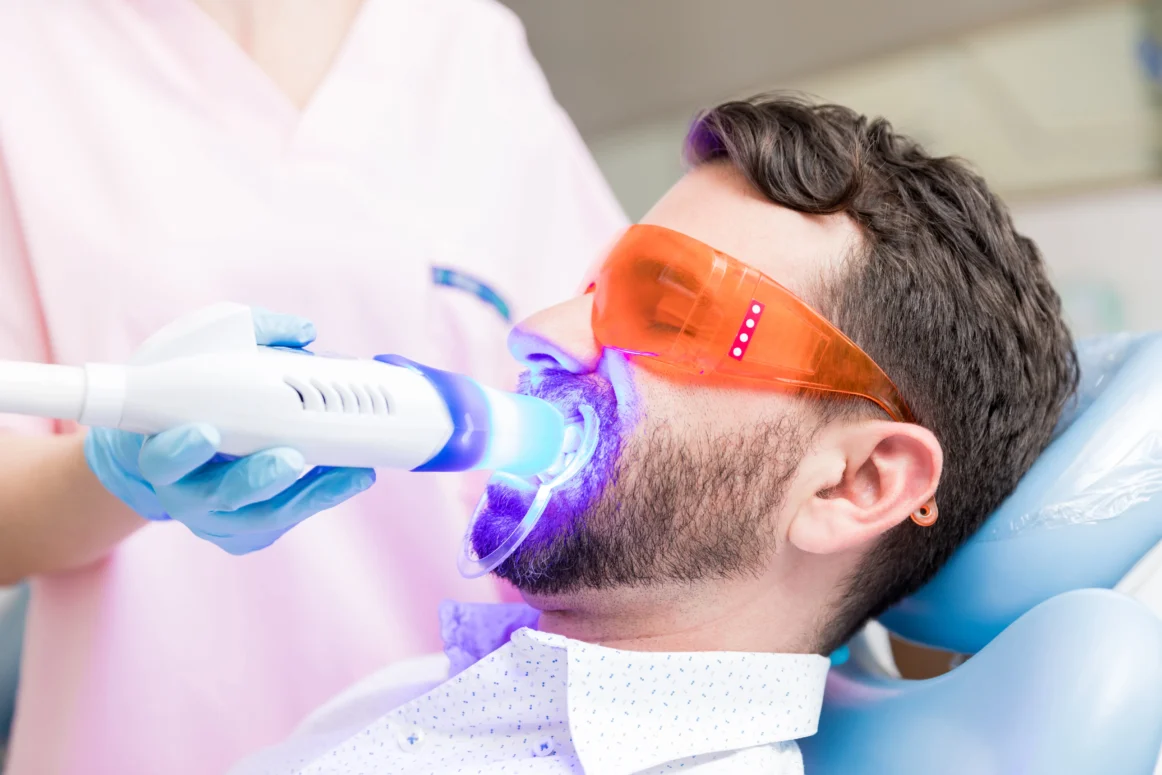
At DentSpa, we use a multi-step process: a thorough cleaning first to remove surface deposits, protective isolation of the gums, application of the whitening agent, and in some cases light or laser activation to accelerate the chemical reaction. Most patients see a visible difference immediately. The degree of whitening depends on the nature of the staining, not the duration of the appointment.
Who is a good candidate — and who isn’t?
Teeth whitening treatments are effective for extrinsic staining — discoloration caused by food, drink, tobacco, and general ageing. Coffee, tea, and red wine are the most common culprits. These respond well to bleaching agents because the stains sit within the enamel structure.
Not everyone is a straightforward candidate. Worth knowing before booking:
Intrinsic staining responds differently. Discoloration caused by tetracycline antibiotics, excessive fluoride during tooth development, or internal tooth injury tends to be resistant to standard whitening. It may improve to some degree, but the outcome is less predictable, and it usually takes more sessions.
Existing restorations won’t change colour. Crowns, veneers, and composite fillings don’t respond to whitening agents. If you have visible restorations on your front teeth, the whitened natural teeth may no longer match them after treatment.
Active gum disease needs to be treated first. Applying bleaching agents to inflamed gum tissue causes unnecessary discomfort and increases sensitivity. This is assessed during the initial examination.
Pregnancy and adolescence. We don’t perform whitening on patients under 16 or during pregnancy. It’s a precautionary position rather than evidence of known harm, but it’s the standard clinical approach.
What does the procedure actually involve?
A professional teeth whitening session at DentSpa typically runs between 45 minutes and one hour.
The appointment begins with a clinical assessment — checking for any decay, gum issues, or other concerns that should be addressed before whitening. A professional cleaning follows to remove plaque and tartar that could interfere with how the whitening agents penetrate the enamel. Then the gums and soft tissue are isolated with a protective barrier before the whitening gel is applied to the tooth surfaces.
Depending on the level of discoloration and the target shade, the gel may be activated with light or laser technology. Some cases require more than one application within the same appointment. Sensitivity during the procedure is common and normal — it usually resolves within 24 to 48 hours. We apply a fluoride treatment at the end of the session to help reduce post-procedure sensitivity.
Results are immediate. Teeth whitened professionally in a clinical setting will typically come out several shades lighter in a single session.
How long do results last?
Whitening results last anywhere from several months to three years, depending almost entirely on what you do afterward.
The enamel is more porous in the days immediately following treatment. During this window — usually the first 48 to 72 hours — teeth are more susceptible to restaining. Dark-coloured beverages (coffee, tea, red wine, cola), highly acidic foods, and tobacco should be avoided. After that initial period, normal dietary habits can resume, though limiting staining foods and drinks over time will extend the results.
Maintenance whitening at intervals — once or twice a year — is straightforward and requires less treatment than the initial session.
There’s no version of professional whitening that produces permanent results. Teeth naturally re-stain and re-yellow with time. That’s not a flaw in the treatment; it’s just how enamel works.
Why do patients come to Istanbul for teeth whitening?
The cost difference is significant and it’s worth being direct about it. A professional teeth whitening session at a UK dental clinic costs between £200 and £800. At DentSpa in Istanbul, comparable treatment is considerably less expensive — not because the process is different, but because operating costs in Turkey are structurally lower. The bleaching agents, the equipment, the clinical protocols — all the same.
Istanbul is a straightforward destination from most of Europe. Direct flights from London, Paris, and other major cities run under four hours. For patients combining whitening with a longer dental treatment plan — implants, veneers, composite work — it makes obvious logistical sense to complete everything in a single trip.
DentSpa was awarded Best Dental Odontology Clinic in Europe in 2024, with over 50,000 international patients treated since 2018. Our patient coordinators speak English, French, Arabic, Spanish, Russian, Italian, and German, and handle logistics from airport transfer to hotel coordination as standard.
What about combining whitening with other treatments?
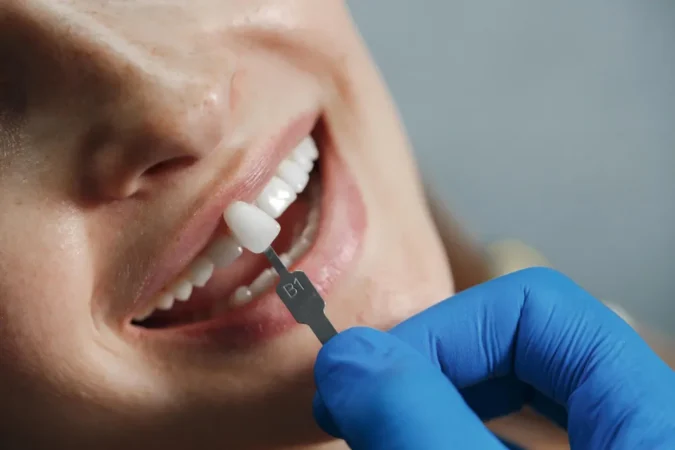
Teeth whitening works best on natural tooth structure. If you’re considering veneers or composite bonding alongside whitening, the correct sequence matters: whiten first, then match the restoration colour to the post-whitening shade. Applying bonding before whitening means the restoration shade will no longer match after treatment.
If you have existing composite fillings on visible teeth, discuss this during your consultation. We may recommend replacing them after whitening to ensure a consistent colour match across the smile.
For patients who want a more comprehensive smile transformation, composite bonding versus veneers covers the key differences between the two approaches and which situations each is better suited to.
What should I avoid after whitening?
For the first 48 to 72 hours: no coffee, tea, red wine, cola, tomato-based sauces, dark fruit juices, or tobacco. If you drink anything other than water, use a straw to minimise contact with the tooth surface.
After that initial period: limit staining foods and drinks generally, maintain regular brushing with a fluoride toothpaste, and attend routine dental check-ups. Using a whitening toothpaste for maintenance is fine — it helps remove new surface staining between professional sessions.
If sensitivity persists beyond a few days after treatment, or if it’s particularly pronounced, contact us directly. This is uncommon but manageable and usually indicates the concentration or duration of application should be adjusted in future sessions.
Book a free consultation
If you’re not sure whether your specific discoloration is likely to respond to whitening, or if you want a clear picture of what to expect from treatment, a free online consultation with our clinical team is the right starting point. No commitment, no travel required.
Book your free consultation →
Sources
- Carey CM. Tooth whitening: what we now know. Journal of Evidence-Based Dental Practice. 2014;14 Suppl:70–76. doi:10.1016/j.jebdp.2014.02.006
- Matis BA, et al. Extended at-home bleaching of tetracycline-stained teeth with different concentrations of carbamide peroxide. Quintessence International. 2006;37(2):115–120.
- Joiner A. The bleaching of teeth: a review of the literature. Journal of Dentistry. 2006;34(7):412–419. doi:10.1016/j.jdent.2006.02.002
- American Dental Association. Teeth Whitening. ADA Oral Health Topics.
- NHS. Teeth whitening. National Health Service, UK.












 70%
70%