Table of content
Table of content
While the mention of the word “dental cyst” does have an alarming sound at first, many people immediately think of it as being some kind of life-threatening condition. In reality, however, many dental cysts develop at a slow rate, causing no pain at all, but are usually found by accident via routine X-rays for dental care.
It is true that an untreated dental cyst could have a negative impact on the teeth, bone, or tissues, but learning more about what a dental cyst is, as well as the process of getting one treated, is always a good idea, rather than making an uninformed decision based on fear of the word itself.
This guide is an effort to help educate patients in an understandable manner, based on dental science, as well as recommendations from the NHS and American Dental Association (ADA) on how to easily deal with a dental cyst.
What Is a Dental Cyst?
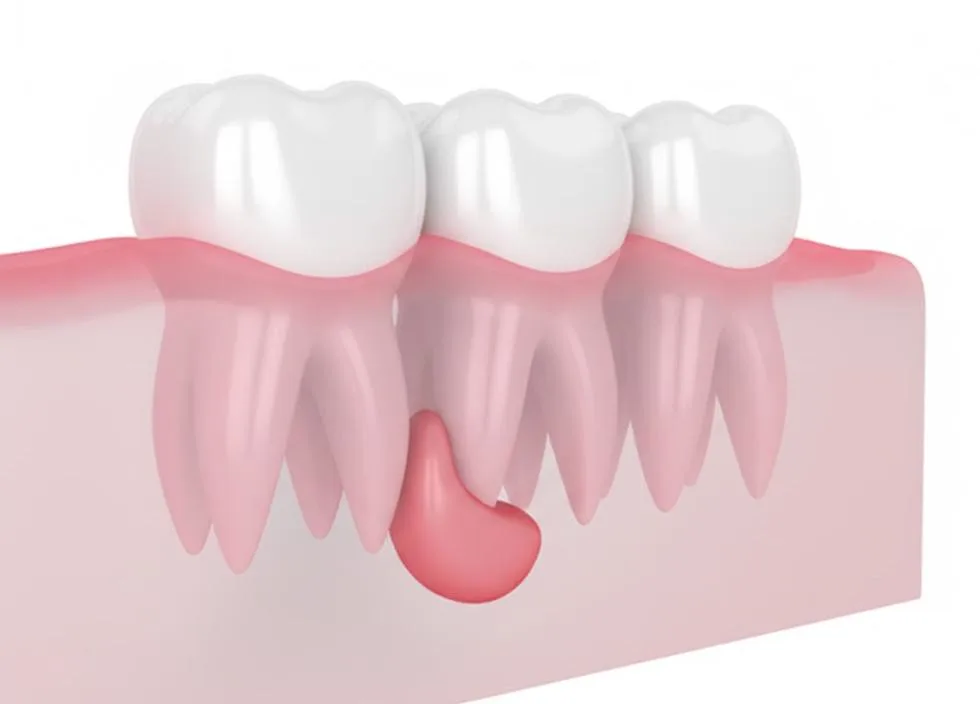
A dental cyst is a closed sac that forms in the tissues of the mouth or inside the jawbone. It is typically filled with fluid or soft material and is usually non-cancerous. Dental cysts are not infections themselves, but they often develop as a result of long-standing inflammation or damage related to a tooth.
These cysts can form:
- At the root of a tooth
- Around impacted or unerupted wisdom teeth
- In soft tissues such as the lip or cheek, the floor of the mouth, or near a salivary gland
In some cases, a dental cyst can also develop after a root canal treatment that didn’t fully eliminate the infection or where bacteria persist around the root tip. Over time, this ongoing irritation can trigger the body to form a cyst around the area.
Because dental cysts grow slowly, many people live with them for years without realizing it.
While dental cysts can develop in soft tissues or around teeth, many of them actually form inside the jawbone itself. In these cases, they are called jaw cysts or intraosseous cysts.
Types of Dental Cysts
The different types of dental cysts exhibit unique causes which lead to different medical outcomes:
Periapical Cyst
The dental cyst named periapical cyst represents the most common type of dental cyst which develops at tooth root ends. This cyst develops from tooth decay, dental trauma, or from a failed root canal which results in pulp death.
Dentigerous (Follicular) Cyst
This cyst develops around an impacted tooth crown which frequently involves wisdom teeth that are not able to emerge. The cyst takes sufficient time to displace all adjacent teeth from their original positions.
Mucous Cyst (Mucocele)
A mucous cyst develops in oral tissue when a salivary gland duct becomes obstructed or completely damaged. This condition typically arises on the lower lip or in the inner cheek area.
Other Jaw Cysts
The cysts form from tooth-forming tissues which continue to expand until they reach a point where symptoms become noticeable.
Now that you know each type and its unique cause, let’s have an overall look of all the causes behind dental cysts.
Dental Cyst Causes
Dental cysts occur due to several factors which include the following major causes:
- Untreated tooth decay
- Chronic gum disease (periodontitis)
- Dental trauma (such as a blow to the tooth that damages the pulp)
- Impacted or unerupted wisdom teeth
- Long-standing inflammation around a tooth
- Poor oral hygiene
- Delayed or irregular dental care
- A dead (non-vital) tooth
- Failed or incomplete root canal treatment, where infection persists around the root tip
- Long-standing infection at the tip of a tooth root (periapical infection)
Cysts often develop when the body tries to isolate an area of irritation, infection, or dead tissue instead of fully resolving the problem, leading to the formation of a fluid-filled sac over time.
Dental Cyst Symptoms
Dental cysts are often silent at first, but as they grow, dental cyst symptoms may include:
- Swelling of the gums, jaw, lip, or cheek
- A feeling of pressure rather than sharp pain
- Tooth movement or loosening
- Recurrent infections
- Facial asymmetry
- Numbness if nearby nerves are affected
Any swelling or unexplained change in the mouth should be assessed by a dental professional, even if pain is minimal.
Dental Cyst vs Abscess: What’s the Difference?
It is important to know about dental cyst vs abscess. An abscess is an infection filled with pus and usually painful, while a cyst is usually non-infectious and grows slowly.
Dental abscesses are usually painful and urgent conditions, while dental cysts are treated in a planned manner. However, a cyst can also be an emergency if it becomes infected and has not been treated.
Are Dental Cysts Dangerous?
They can be—especially if ignored.
Untreated dental cysts may:
- Destroy jawbone
- Damage surrounding teeth
- Cause chronic infection
- Lead to tooth loss
- But rarely become life-threatening if complications develop.
Early dental cyst diagnosis greatly reduces these risks. But what does this diagnosis involve?
Dental Cyst Diagnosis
Diagnosis usually involves:
- A clinical oral examination
- Dental X-rays or CBCT scans
- Occasionally, biopsy of the cyst lining
Imaging allows the dentist or oral surgeon to determine the size, type, and location of the cyst, which is essential for choosing the right treatment approach.
Guidance from organizations such as the National Health Service and the American Dental Association emphasizes the importance of imaging and early intervention for jaw and oral cysts.
Dental Cyst Treatment Options
If diagnosis is confirmed, the treatment of a dental cyst will depend on the origin of the cyst, its size, and the effect of the cyst on the surrounding structures.
Cystectomy
The most effective way of treating a dental cyst is by completely removing it. This treatment is usually applied when the cyst is well defined and accessible.
Marsupialization
When dealing with a dental cyst of considerable size, this treatment is applied by opening up the cyst and allowing it to shrink over time. The procedure is usually applied to preserve the jawbone.
Root Canal Treatment
In cases where a dental cyst is caused by a non-vital tooth, a root canal treatment can cure the condition and allow the cyst to heal.
This treatment can be carried out by an oral surgeon on a jaw cyst.
Dental Cyst Prevention
While not all cysts can be prevented, dental cyst prevention starts with:
- Consistent oral hygiene
- Treating tooth decay early
- Monitoring impacted wisdom teeth
- Regular dental check-ups and X-rays
- Addressing gum disease promptly
Early intervention remains the most effective protective strategy.
When Patients Begin to Consider Treatment Abroad
As treatment options become more defined, patients begin to consider treatment outside their native country. This is especially true if surgery is necessary or if waiting times, access to specialists, and costs become an issue.
Dental cysts are far more common and far less difficult to treat than patients realize. When properly treated and diagnosed, results are always excellent. In fact, complications are completely avoidable.
Dental treatment abroad offers patients access to specialists and professional help if a reputable clinic with good communication is chosen.
Why Choose DentSpa for Dental Cyst Treatment in Turkey?
Going to another country for medical care is not simply like choosing where to go for your holidays. Patients need to be sure about the accuracy of their diagnosis, the security of their surgery, and continuity in their care. Dentspa Dental Clinic, in Turkey, has state-of-the-art facilities for diagnosis, offers organized care, and follow-up for patients.
Nothing is rushed into
No care is initiated before your case is carefully planned out with specialized software like Digital Smile Design and Dental GPS, so you can be aware of exactly what is going on and why. Your care is not based on any standard formula but is designed around your own face, your own bite, and your own actual needs.
Experience counts, especially when it comes to international patients
At DentSpa, we have cared for over 50,000 international patients, giving us deep experience in managing both routine and complex dental conditions from all around the world.
Treating a dental cyst properly depends on its cause, size, and location. That’s why your case at DentSpa is handled through a team-based, specialist approach — ensuring you receive the right treatment, not a one-size-fits-all solution.
- If the cyst affects the bone or requires surgical removal, your treatment is handled by our oral surgeons, Dr. Serdar and Dr. Şükran, who specialize in surgical and bone-related procedures.
- If the cyst is caused by infection inside the tooth or a failed root canal, your treatment is managed by our endodontist, Dr. Mehmet, who specializes in root canal and internal tooth infections.
This collaborative approach ensures that each dental cyst is treated at its root cause — whether that means surgical care, root canal treatment, or a combination of both — with the right specialist involved at every step.
Quality is recognized beyond patient reviews
Our dedication to quality has earned us the title of Top European Clinic Award 2024. At DentSpa, you’re choosing award-winning care that patients from around the world trust.
You’re supported throughout the whole journey, not just in the chair
Airport pickups, appointments, and explanations are all part of the experience in your own language, which should not be stressful, confusing, or overwhelming.
Long-term tooth health always comes first
Treatments are chosen on the basis of their ability to support the long-term health of the natural teeth, rather than bringing a quick, superficial change.
It is this combination of medical skill, thought, and genuine interest in the comfort of the patient that makes the experience of dental treatment a positive one, rather than something that the patient has been dreading for years.
Your Next Step to Treating Dental Cysts
Dental cysts are not as common or unmanageable as most people think. In fact, as long as the right diagnosis and treatment are made, the results are excellent, and any complications can be avoided. It is all about early detection, knowledge, and treatment by skilled hands. Paying attention to this and regularly visiting your dentist for check-ups is the way forward into a healthy future for your teeth.
Get a free professional consultation today and receive your personalized treatment plan to open the door into a future of comfort, confidence, and a happy smile.
Frequently asked questions
Why do people travel abroad for dental cyst treatment?
Patients seek dental cyst treatment in foreign countries because they require experienced oral surgeons and shorter waiting lists. Countries like Turkey are popular for dental treatments when provided in accredited medical centers with transparent medical standards.
Is dental cyst treatment painful?
While it is understandable to worry about the level of pain associated with dental cyst treatment, it has to be said that the treatment itself is far less painful than you might imagine. Dentists administer local anesthesia during dental cyst treatment, which means you won’t feel a thing during the procedure. In fact, there are also other forms of sedation available to help you cope with the treatment, depending on your individual case and preferences.
While there might be a level of pain and soreness for a few days after treatment, it is very much comparable to the level of pain you might feel after a root canal or tooth extraction. In fact, most people say it was worth it, as the feeling of relief you get afterwards far outweighs the level of pain you feel before treatment.
How serious can a dental cyst be?
The seriousness of a dental cyst depends on the size of the cyst, as well as its location and age. There are instances when the cyst is small and does not manifest any significant complications. In these cases, the problem is usually discovered by accident when an X-ray is performed.
The complications of a dental cyst are usually experienced when the problem is left undetected for a very long time; that’s when the jaw gets slowly compromised as the cyst grows. In some instances, teeth may be displaced due to the presence of the cyst. The good news about dental cyst complications is that they can be avoided in case the problem is detected early. This is the reason why regular dental checkups are important.
Is a dental cyst an emergency?
Not always, and that’s why many people don’t even realize they have one until it shows up during a routine dental check-up. A cyst can exist for quite some time without causing pain or noticeable changes, so it isn’t automatically considered a dental emergency.
However, the situation changes if symptoms begin to appear. Swelling in the gums or face, increasing pain, difficulty chewing, a bad taste, or numbness in the area may indicate infection or pressure on surrounding tissues. When this happens, it’s a sign that the cyst may be causing complications and should be checked as soon as possible.
Can oral cysts heal by themselves?
The answer in most situations is no. A dental cyst can be thought of as a small closed sac of tissue. The human body cannot dissolve or drain it by itself. Many oral cysts develop slowly and do not hurt. So, it is easy to imagine that the problem will go away by itself. It does not.
The reality is that the cyst will continue to get bigger over time. It will do so silently, affecting the bone or teeth in the area. When the problem does manifest itself, it can be quite serious. This is why dentists always advise early evaluation and treatment of the problem, even when it is discovered by accident on an X-ray and is causing no pain.














 70%
70%