Table of content
Table of content
Most people don’t wake up one day planning to compare dental bridges and implants. It usually starts with something small. A tooth cracks. One gets taken out. Or you’ve had a gap for a while and finally decide to deal with it. Next thing you know, you’re in a dental chair and the dentist says, “So… we can do a bridge, or we can do an implant.”
At first, it sounds like two different names for the same fix. But they’re not. They work in different ways, they’re priced very differently, and they don’t affect your mouth the same way over time. This isn’t really about choosing the “best” or “most modern” option. It’s about figuring out what actually makes sense for your teeth, your budget, and how you want things to hold up years from now.
In this guide, we’ll go through it in plain language. We’ll look at how bridges and implants work, what they really cost, how long they tend to last, and what they mean for your jawbone and the teeth next to the gap. We’ll also touch on why some people end up comparing dental bridges vs implants in places like Turkey, especially when they’re weighing up long-term results and cost.
First, What’s the Difference in Simple Terms?
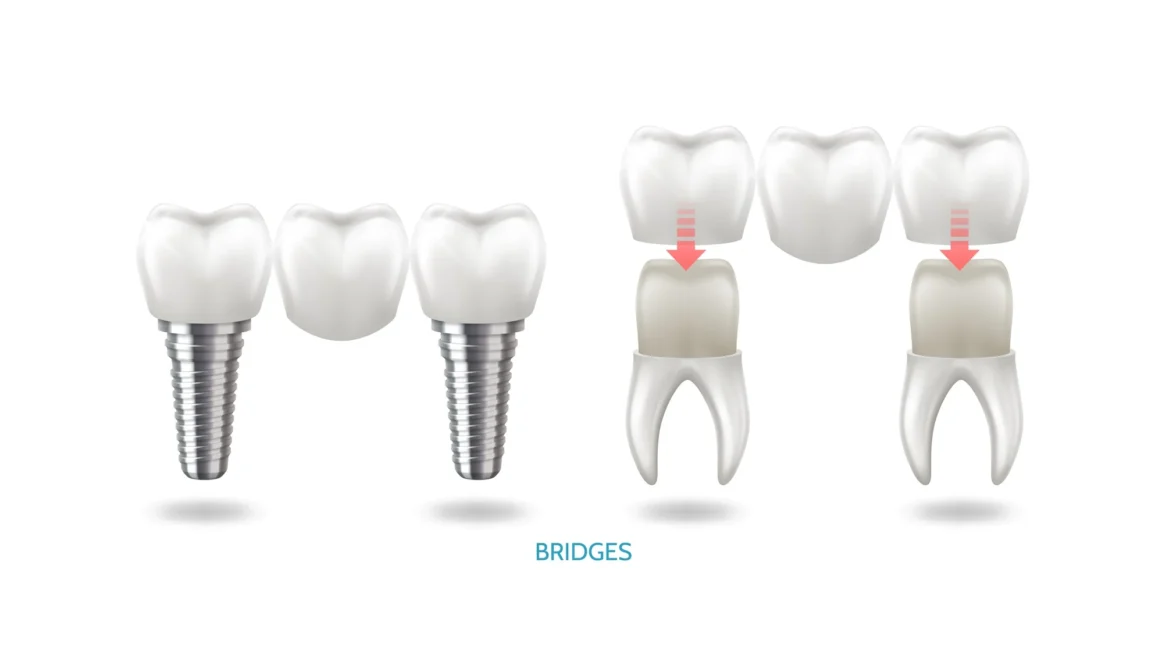
A dental bridge fills the gap left by a missing tooth by “bridging” between the teeth next to it.
- The teeth on either side are used as support (or sometimes implants)
- A false tooth sits in the middle
- The bridge is fixed in place and doesn’t come out
Think of it like this: the neighboring teeth act like pillars, and the missing tooth is replaced by a tooth that sits between them.
Bridges have been used for decades, and they’re still very common today.
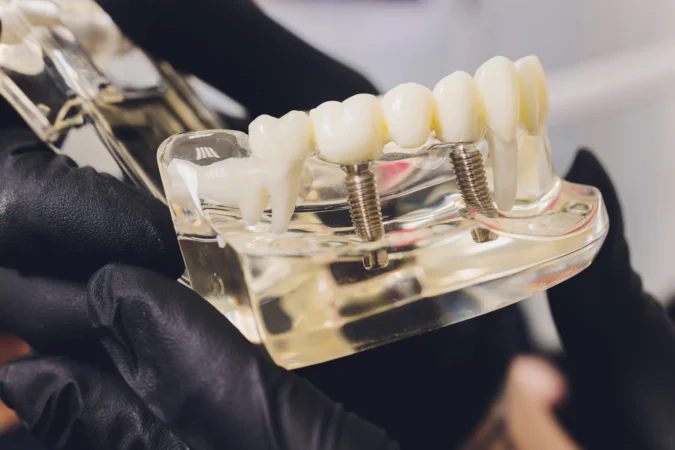
A dental implant, on the other hand, replaces not just the visible tooth, but also the root.
- A titanium post is placed into the jawbone
- The bone heals around it and holds it in place
- A crown (the visible tooth) is placed on top
So instead of relying on nearby teeth for support, an implant stands on its own foundation, just like a natural tooth.
The Big Practical Differences
Here’s where things start to matter in real life.
1. Bone health and long-term changes
Most people don’t think about what happens to the bone when a tooth is gone. You can’t see it, so it’s easy to forget about. But your jawbone actually needs pressure from chewing to stay “active.”
With an implant, there’s basically a new root sitting in the bone. So when you chew, that area still gets used. And bone that gets used tends to stick around. Over time, that usually means the jaw keeps its shape better in that spot.
In more advanced cases, implants aren’t just used for single teeth. They can also support full-arch bridges using systems like the Malo Bridge.
With a bridge, the space is closed from the top, which is great for how things look and how you chew. But underneath, in the bone, there’s nothing there anymore. Since that part isn’t doing any work, the bone can slowly start to shrink. You won’t wake up one day and suddenly notice it — it’s a gradual thing.
That’s why dentists don’t see tooth replacement as “just fixing the smile.” It’s also about how your bite holds up and how your jaw changes over the years.
And no, this doesn’t mean a bridge is a bad idea. For plenty of people, it’s a perfectly good solution and works really well. It just means that if you’re talking strictly about keeping the bone as close to normal as possible, implants have the edge.
2. Impact on neighboring teeth
Here’s something dentists look at that most people don’t think about right away: the teeth next to the gap.
If you get a regular bridge, those teeth usually have to do some of the work. The dentist trims them a bit so the bridge can sit on top. If those teeth already have big fillings or old crowns, that’s often not a big deal. In fact, a lot of the time it makes sense to use them, because they needed work anyway.
An implant doesn’t work like that. It doesn’t lean on the teeth next to it at all. It goes into the bone and stands there on its own. The teeth beside it stay exactly as they are.
So in real life, it’s usually pretty simple:
If the teeth next to the gap are already worn out or full of fillings, a bridge can be a very reasonable choice.
If those teeth are healthy and untouched, an implant often feels like the nicer option because you’re not shaving down good teeth just to replace one that’s missing.
There isn’t a “right” answer that works for everyone. It really depends on what shape your own teeth are in to begin with. And that’s why two people with the same missing tooth can end up choosing totally different treatments, and both choices can still make sense.
3. How long do they last?
In real life, a lot of bridges hold up for about 10 to 15 years if they’re looked after properly. Some last longer, some don’t — it really comes down to how the teeth and gums around them behave over time.
Implants are built to be more of a long-term thing. If the bone and gums stay healthy, an implant can last a very long time — sometimes 20 years or more. The tooth on top of it (the crown) might need changing at some point, just like anything that gets used every day, but the implant itself is meant to stay put.
What really makes the difference isn’t just the material. It’s things like:
- How well you brush and clean between your teeth
- Whether you actually show up for check-ups
- If you grind or clench your teeth (a lot of people do without realizing it)
- And how healthy your gums and bone are to begin with
A well-made bridge or implant in a mouth that’s taken care of can last a long time. The same treatment in a mouth that’s neglected or under a lot of stress… usually won’t. That’s the part nobody likes to hear, but it’s the honest part.
4. Maintenance and daily care
Good news: both are easy to live with.
- Implants are brushed and cleaned like natural teeth
- Bridges need a bit more attention around and under the bridge, using floss threaders or special brushes
Neither option is “high maintenance,” but both need proper care.
How the Procedures Actually Differ
When people compare a dental bridge and a dental implant, they usually hear big words like “surgery,” “crowns,” or “healing time.” But what most patients really want to know is simple: What will actually happen to me in the chair? How many visits will this take? And what’s different between the two?
Here’s a clear, side-by-side look at what the process usually involves for each option:
| Aspect | Dental Bridge | Dental Implant |
| Initial exam | Dentist checks the gap, nearby teeth, gums, and bite. X-rays or scans are used to make sure the supporting teeth are strong enough. | Dentist checks bone density, gums, bite, and anatomy using X-rays or 3D scans to plan implant position safely. |
| What gets prepared | The teeth next to the gap are shaped to hold crowns that will support the bridge. | No neighboring teeth are touched. A titanium post is placed into the jawbone to replace the tooth root. |
| Surgery involved | Usually no surgery. The work is done on the supporting teeth. | Yes. A minor surgical procedure is needed to place the implant into the bone. |
| Scans | Taken after tooth preparation to design the bridge so it fits your bite and smile. | Taken before and after surgery to plan placement and design the final crown. |
| Temporary solution | A temporary bridge is usually worn while the final bridge is made. | Sometimes a temporary tooth is used, depending on the case and stability of the implant. |
| Healing phase | No bone healing needed. Gums and teeth may be slightly sensitive for a short time. | Healing time is needed (usually a few months) for the bone to fuse with the implant (osseointegration). |
| Final restoration | The permanent bridge is cemented onto the supporting teeth. | After healing, an abutment and then a crown are placed on top of the implant. |
| Total treatment time | Usually a few weeks from start to finish. | Usually a few months because of the healing phase. |
| What supports the tooth | The neighboring teeth carry the load. | The jawbone carries the load through the implant. |
| Effect on nearby teeth | Neighboring teeth are reshaped and permanently involved. | Neighboring teeth are not touched. |
| Bone involvement | Does not replace the root, so the bone under the missing tooth is not stimulated. | Replaces the root and helps keep the bone active and stable over time. |
| Long-term maintenance | Needs careful cleaning around and under the bridge; supporting teeth must stay healthy. | Cleaned like a natural tooth; bone and gums around the implant must stay healthy. |
Seeing the steps laid out like this helps explain why dentists don’t give the same answer to everyone. The right choice depends on your bone, your teeth, your health, and how you want this solution to hold up years from now—not just what happens in one appointment.
Dental Bridge vs Implant: Cost Comparison
In general:
- Bridges are cheaper upfront
- Implants cost more at the beginning
Why implants cost more:
- Surgery is involved
- Healing time is needed
- More components and planning
Why bridges cost less:
- No surgery (in most cases)
- Faster treatment
- Fewer steps
However, over a long period:
- A bridge may need replacement sooner
- An implant may last longer and need fewer major replacements
So it’s often:
- Bridge = lower short-term cost
- Implant = higher initial cost, potentially better long-term value
This is why many people compare dental implant vs bridge cost very carefully before deciding. For a more detailed comparison of actual prices across different countries, you can read our full guide here.
Which One Is “Better”?
Honestly? Neither is automatically better for everyone.
A bridge often makes more sense if:
- You want a faster solution
- You want to avoid surgery
- The neighboring teeth already need crowns
- You’re working within a tighter budget
An implant often makes more sense if:
- You want to preserve bone
- Your neighboring teeth are healthy
- You’re thinking long-term
- You want a solution that stands on its own
This is why good clinics don’t push one option for everyone—they look at your mouth, your bone, your teeth, and your goals first.
What About Dental Bridges and Implants in Turkey?
Many patients from the US, UK, and Europe compare dental bridges vs implants in Turkey because:
- Treatment costs are often 40–60% lower than in Western countries
- Clinics use modern technology and international materials
- Treatment planning is often optimized for international patients
The difference in cost usually comes from:
- Lower operating costs
- Different healthcare pricing structures
- High-volume specialized clinics
- The chance to combine treatment with a short break, relax, and experience a different culture and local tourism
Not from lower-quality materials.
Why Patients Choose Dentspa Dental Clinic for Tooth Replacement
Replacing a missing tooth isn’t just about filling a gap in your smile. It affects how you chew, how clearly you speak, how your bite works, and even how your jawbone and facial structure change over time. That’s why at Dentspa Dental Clinic, tooth replacement is never treated as a quick cosmetic decision or a standard package solution. It’s approached as a medical, functional, and long-term choice that needs proper planning.
Every case starts with a careful, detailed evaluation. Before any decision is made, the team looks closely at:
- Bone density and jaw structure
- Gum health and healing capacity
- The condition of neighboring teeth
- Bite alignment and long-term stability
To do this properly, Dentspa uses modern diagnostic tools such as 3D cone-beam imaging and digital treatment planning software. This allows the team to:
- Plan implant placement with high precision
- Identify potential sinus or nerve considerations
- Choose an approach that reduces risks and avoids unnecessary complications
Material choice is another area where details matter. Dentspa works with reputable implant brands and high-quality restorative materials chosen for both durability and biocompatibility. Depending on your case, this may include:
- Custom porcelain or zirconia restorations
- Carefully designed bridges that balance strength with natural appearance
With an in-house dental lab, restorations are not only produced faster, but also refined through close collaboration between dentists and technicians. This means better fit, better function, and a result that looks like it truly belongs in your mouth.
Tooth replacement is rarely a one-person job, and that’s exactly how Dentspa approaches it. Your care may involve:
- Dental surgeons for implant placement
- Prosthodontists for bite and restoration design
- Lab technicians for precision fabrication and adjustments
This team-based approach is especially important for more complex treatments like implant-supported bridges or full-arch restorations, where surgery, prosthetics, and bite mechanics all have to work together seamlessly.
For international patients, the experience is designed to be as smooth and stress-free as possible. With experience treating over 50,000 patients from abroad, Dentspa provides:
- Clear communication in multiple languages
- Help with appointment planning and treatment scheduling
- Guidance on aftercare, healing, and long-term maintenance
- Ongoing support, even after you return home
After treatment, you’ll receive straightforward instructions about what to eat, how to clean around your bridge or implant, and what to expect during healing—so you’re never left guessing.
In the end, patients don’t choose Dentspa simply to replace a missing tooth. They choose it for careful planning, modern technology, experienced hands, and an approach that treats tooth replacement as what it really is: a long-term investment in how your mouth works, feels, and ages over time.
Start with the Right Question, Not Just the Right Treatment
If you’re stuck between a bridge and an implant, try not to think of it as “which one is the best.” That question usually just makes things more confusing. The real question is which one makes sense for you — for your mouth, your budget, and how much work you actually want to deal with.
At Dentspa, you can just go in for a free consultation and talk it through. They’ll take a look, explain what’s going on, and tell you honestly what would work and what probably isn’t worth it in your case. No pressure, no rushing, no sales talk.
The point isn’t just to fill the space where a tooth used to be. It’s to fix it in a way that feels normal when you eat, talk, and forget about it — instead of worrying about it again in a year or two.
Frequently asked questions
How many dental implants can be placed at one time?
There isn’t a magic number.
It comes down to what’s going on in your mouth. Some people walk in missing just one tooth, so they get one implant and that’s it. Simple case, simple fix.
Other people are missing a few teeth in a row, so the dentist might place two or three implants in the same visit. And then there are bigger cases — like when someone has lost most of their teeth. In those situations, it’s actually pretty common to place four, five, or even six implants in one appointment to support a full set of teeth.
If your bone looks strong and everything is healthy, doing several at once is usually no big deal. If your bone needs time to heal, or there’s an infection, or things are just a bit more complicated, the dentist might split it into stages instead.
Do implants prevent bone loss?
Short answer? Yes, they do — and that’s actually a big deal.
When a tooth is missing, the bone under it doesn’t just stay the same forever. Over time, it starts to shrink a bit because it’s not getting any work anymore. Bone likes being used. When it isn’t, it slowly thins out.
An implant changes that, because it sits in the jaw like a real tooth root. When you chew, that pressure goes into the bone, and that helps keep it “alive” and stable.
A bridge fixes the visible gap, which is great, but it doesn’t replace the root. So the bone underneath still isn’t being used, and it can still slowly change over the years.
That doesn’t make bridges a bad option — they work really well for a lot of people. It just means implants have an extra advantage when it comes to protecting the bone long-term.
Is a bridge or an implant better for front teeth?
Honestly, both can look really good in the front. The “better” one depends on what’s going on in your mouth. If you’ve got enough bone and the teeth next to the gap are healthy, an implant might make sense.
If the nearby teeth already need work, a bridge could be the simpler option. This is one of those cases where you really can’t decide from Google alone — someone actually has to look at your teeth and show you what works in your situation.
Which is cheaper: a dental bridge or an implant?
Up front? Almost always the bridge. It’s quicker, there’s no surgery, and you’re done faster. Implants cost more because it’s a bigger process — surgery, healing, a few more visits.
Some people still go for implants anyway, not because they’re cheaper (they’re not), but because they’d rather fix it once and not think about it again for a long time.
Which lasts longer: a bridge or an implant?
If you ask dentists, most of them will tell you implants usually outlive bridges. From what people actually see, a bridge can be totally fine for years — ten years, sometimes more if you’re careful with it. But implants are kind of in a different category. They’re fixed into the bone, so they’re not leaning on other teeth.
That’s why you hear stories of people still having the same implant 20 years later. Of course, that only works if you don’t ignore your gums and you actually look after your mouth.













 70%
70%